
Journey To ChinaLast updated
Lujiazui guide
A financial district built in one generation
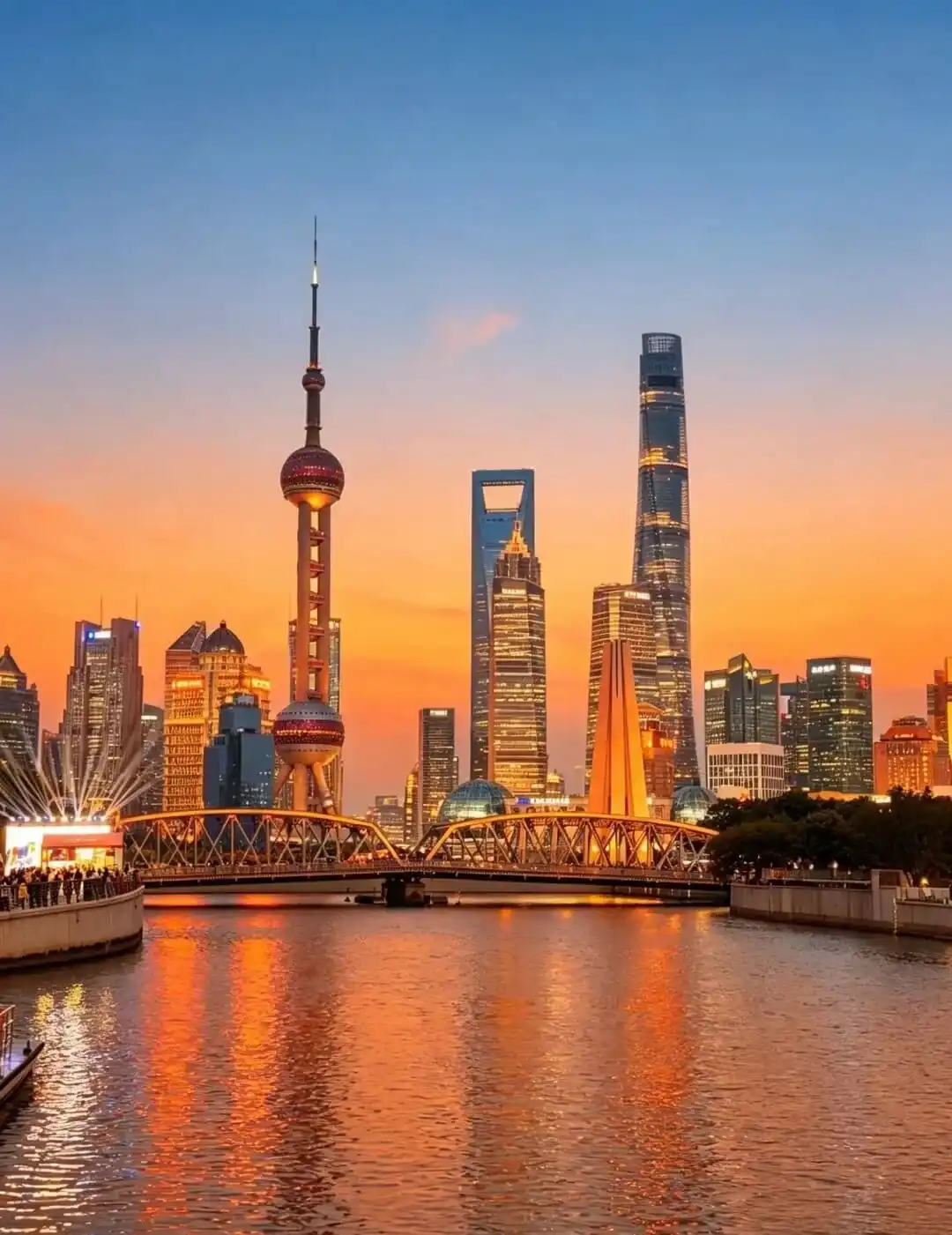
Before the 1990s, Lujiazui was a waterfront of warehouses, factories and neighbourhood streets whose name recalled the Lu family of the Ming dynasty. Pudong's development strategy transformed the river bend into a national financial centre. The district is therefore both a skyline and a record of how Shanghai redirected its growth east across the Huangpu.
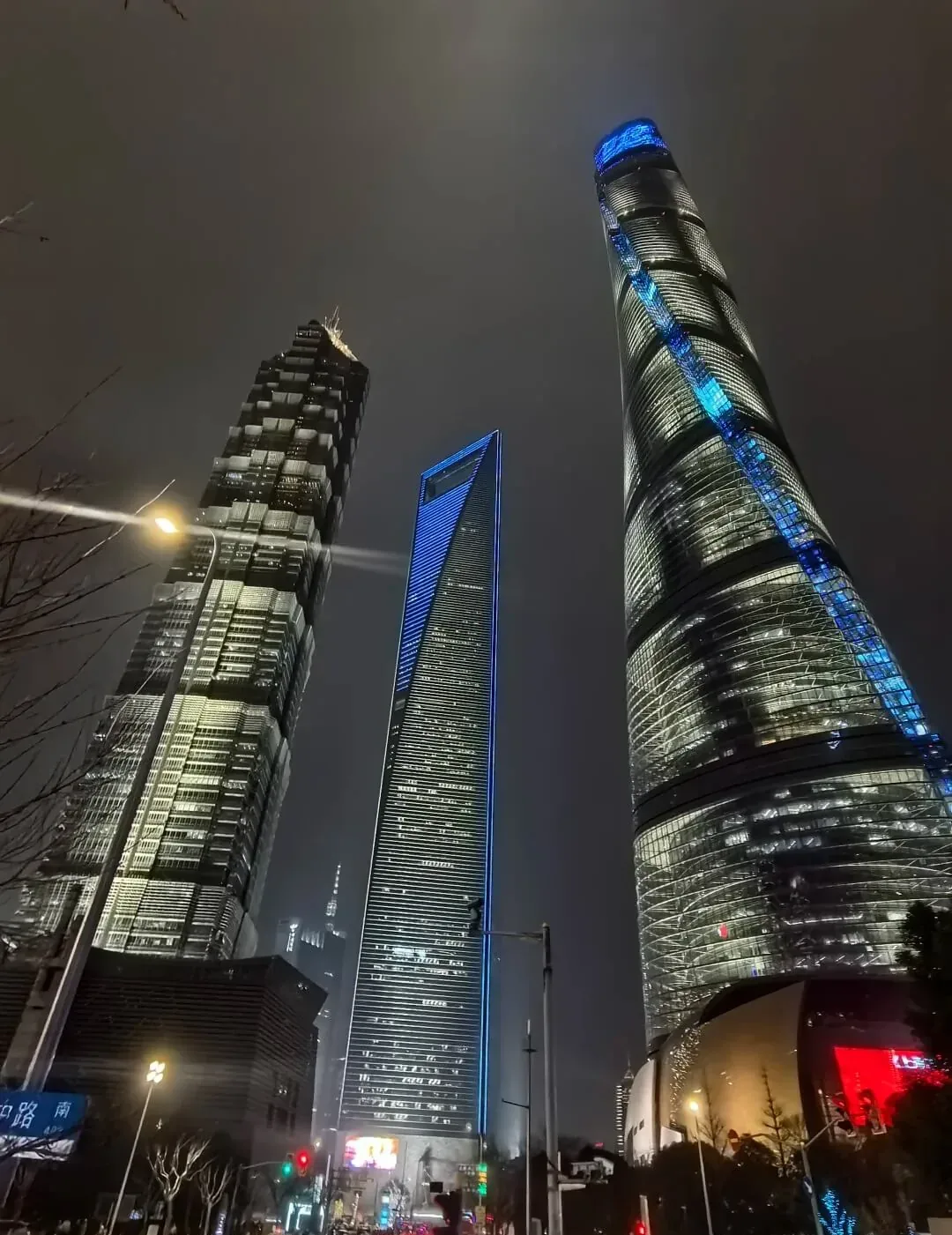
From left: Jinmao Tower, Shanghai World Financial Center and Shanghai Tower, three stages in the district's rise.
Read the architecture from the ground
Jinmao Tower adapts the tiered rhythm of a Chinese pagoda to a modern skyscraper. Shanghai World Financial Center is recognised by its rectangular opening, while Shanghai Tower twists upward around a series of vertical neighbourhoods. The Oriental Pearl Tower, completed earlier, gives the riverfront its most familiar silhouette. Walking between them reveals plazas, elevated walkways and the scale hidden by distant skyline photographs.
Central Green offers a lower, landscaped view of the towers. The Pudong riverside promenade shifts attention west to the Customs House, former banks and trading buildings of the Bund. One observation deck can add a high-level view: the Oriental Pearl sits nearer the river, while Shanghai Tower rises from within the supertall cluster. Visibility, current access and ticket products vary by day.
Link the skyline with the waterfront
Lujiazui station → Central Green → the three supertalls → riverside promenade forms a coherent half-day walk. Line 2 connects the district with East Nanjing Road on the opposite bank. Public ferries add a short river crossing when the relevant pier is operating, turning the contrast between historic Puxi and modern Pudong into part of the journey.