Journey To ChinaLast updated
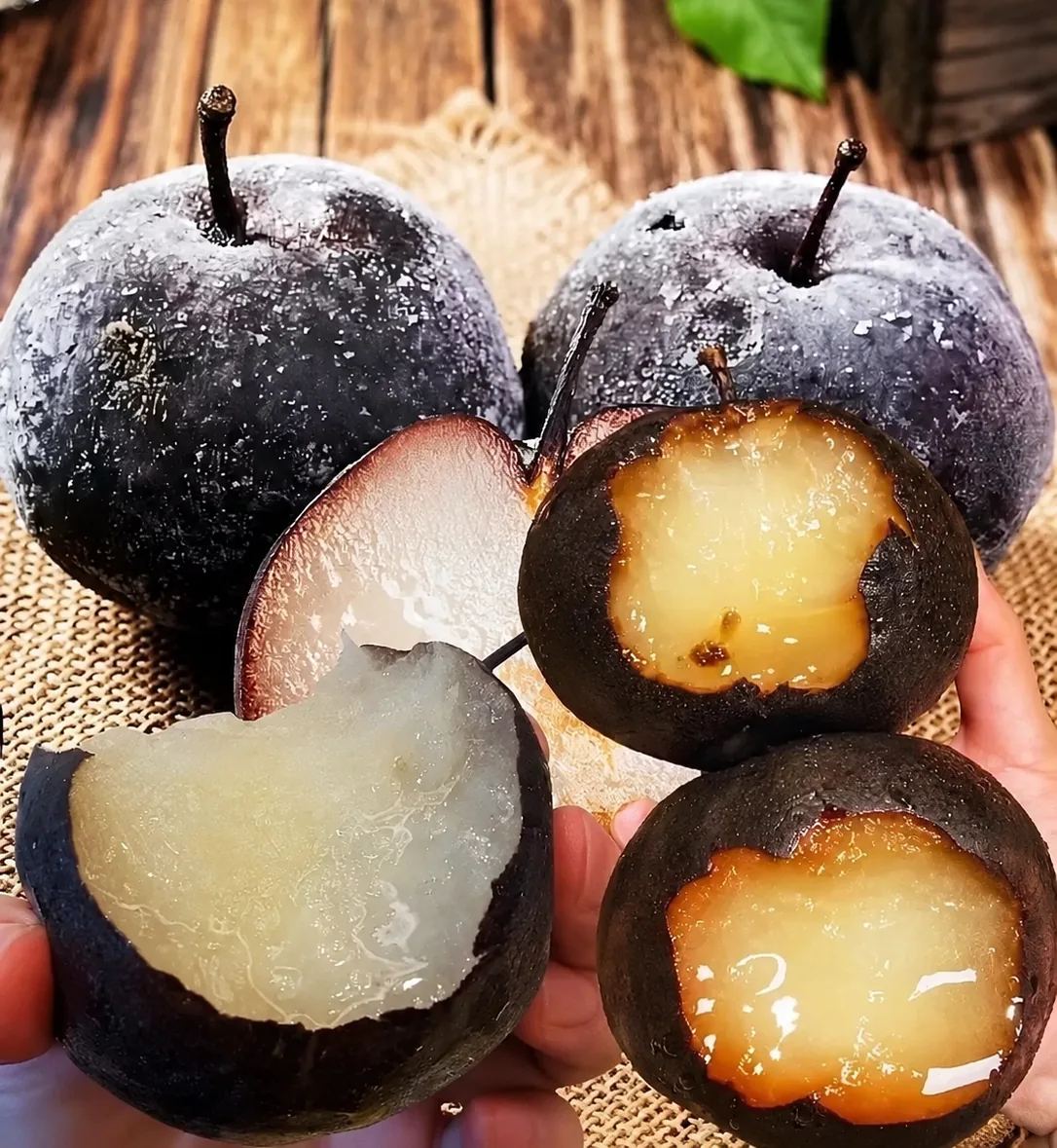
Frozen pear is a common winter-preserved fruit across Northeast China and appears in Harbin's seasonal frozen-food markets. After late-ripening pears freeze through winter, the skin often turns dark brown and the flesh becomes distinctly soft when thawed. Bite a small opening in a thawed pear to drink the juice, then eat the softened flesh. The fruit also continues a Northeastern habit of eating fruit after winter meals.
Dark skin and softened flesh
Frozen pears usually have dark brown skin. Once thawed, their flesh is soft enough that juice can be drawn through a small bite. Comparisons of Nanguo, Jianba and Huagai pears before and after freezing also found darker skin and softer texture. In those three samples, total sugar and total acid both declined, while aroma varied by variety. Actual flavour therefore differs, and the dark skin alone does not identify the pear variety.
Thaw a whole pear and drink the juice
The traditional method places a fully frozen pear in cool boiled water to thaw. When a thin shell of ice forms outside, remove that shell, bite a small opening, drink the pear juice and then eat the softened flesh. If you want to eat it immediately, ask whether the seller has already-thawed whole pears. A pear that is still frozen solid needs time to soften.
Eat it cored and freshly cut
Harbin markets may sell thawed whole pears or cored fruit cut into a container. What is available varies by stall. For immediate eating, ask whether the fruit is thawed or whether a cut portion is available. A cut serving gives direct access to the flesh and juice, while a whole frozen pear needs thawing time.