Journey To ChinaLast updated
Roll, press, turn, and brown
Cong bao hui (葱包烩) wraps a length of youtiao and scallions inside a thin pancake. The seam meets the griddle, then the cook turns and presses the parcel so both faces and edges brown. The wrapper develops a thin crisp shell while the youtiao flattens and absorbs scallion fragrance without losing all of its air pockets.
The sound and aroma belong to the snack: the pancake crackles against the hot surface, the fried dough warms again, and the scallion's raw sharpness becomes sweeter. A well-pressed wrap combines browned pancake, porous youtiao, and juicy scallion in one bite.
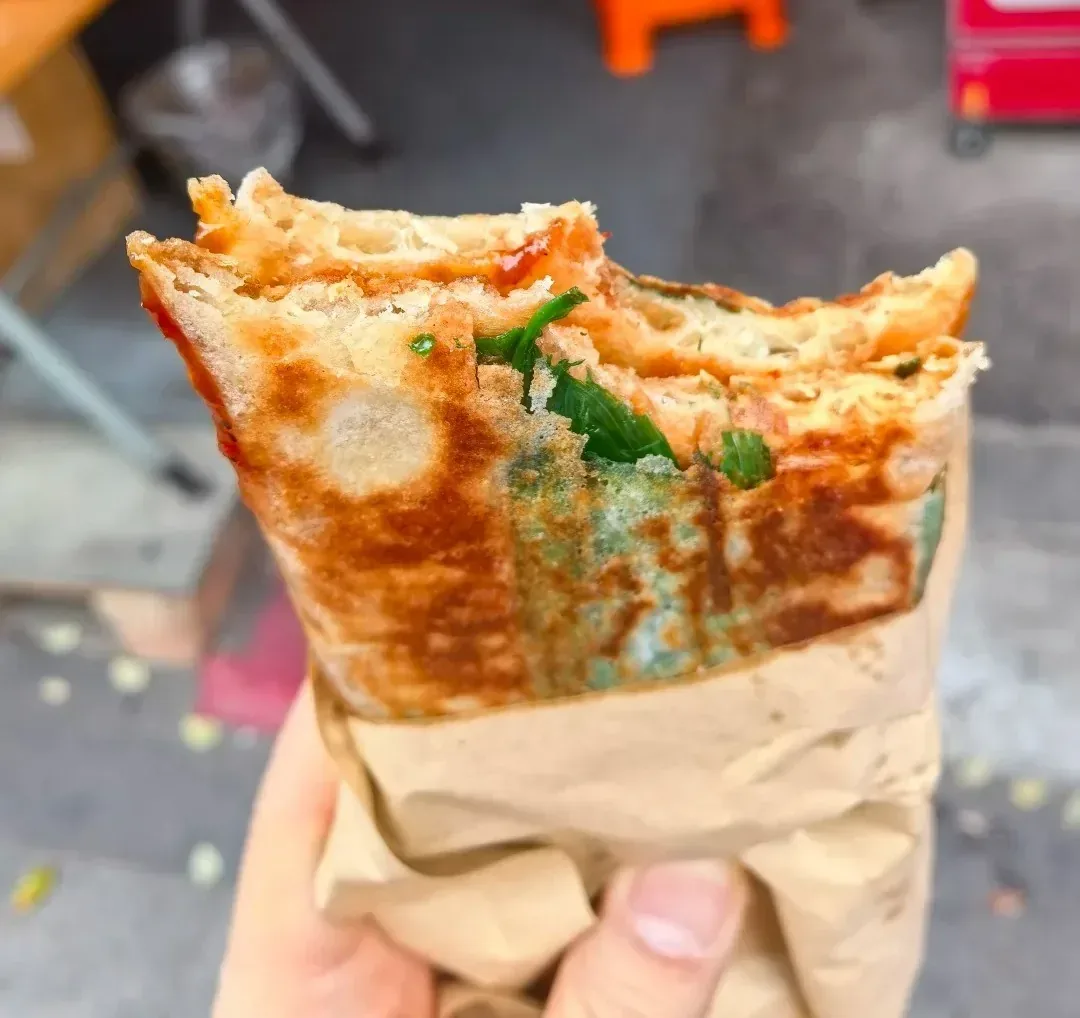
The browned wrapper encloses youtiao, scallion, and sauce; the contrast is clearest while it is hot.
Sauce gives each stall a different finish
Sweet bean sauce adds fermented bean aroma and a salty-sweet finish; chilli sauce makes the tail brighter. Less sauce leaves the toasted pancake and scallion more exposed. Ask for the chilli and sauce amount while the cook is assembling the wrap.
Versions vary in pancake size, youtiao thickness, pressure, and folding style. Some are narrow and very crisp, while softer versions carry more sauce. It is generally sold by the piece and eaten straight from the griddle.
The name is often linked to Hangzhou's folk story of “fried Qin Hui,” in which fried dough preserves popular anger toward the Southern Song official. The exact invention cannot be reconstructed from that story, but the tale shows how public memory became attached to a street-food technique.