Journey To ChinaLast updated
High heat changes shell and meat at different speeds
Laotouer youbao xia (老头儿油爆虾) commonly uses large head-on, shell-on prawns. A fast oil fry removes moisture from the thin shell and develops a roasted aroma while the meat tightens just enough to remain springy. Soy, sugar, Shaoxing wine, and vinegar then reduce quickly into a dark glaze.
Three flavours arrive together: toasted shell, sweet-savoury sauce with a vinegar lift, and sweet prawn meat inside. Thin crisp shells can be chewed; thicker shells are easily peeled. The head carries a concentrated flavour, and each diner can decide whether to eat it.
The timing distinguishes oil-flashing from a long braise. The shell must crisp before sauce is added, and the glaze must reduce before it softens the shell again. A precise version looks glossy without leaving a bowl of sauce beneath dry, overcooked meat.
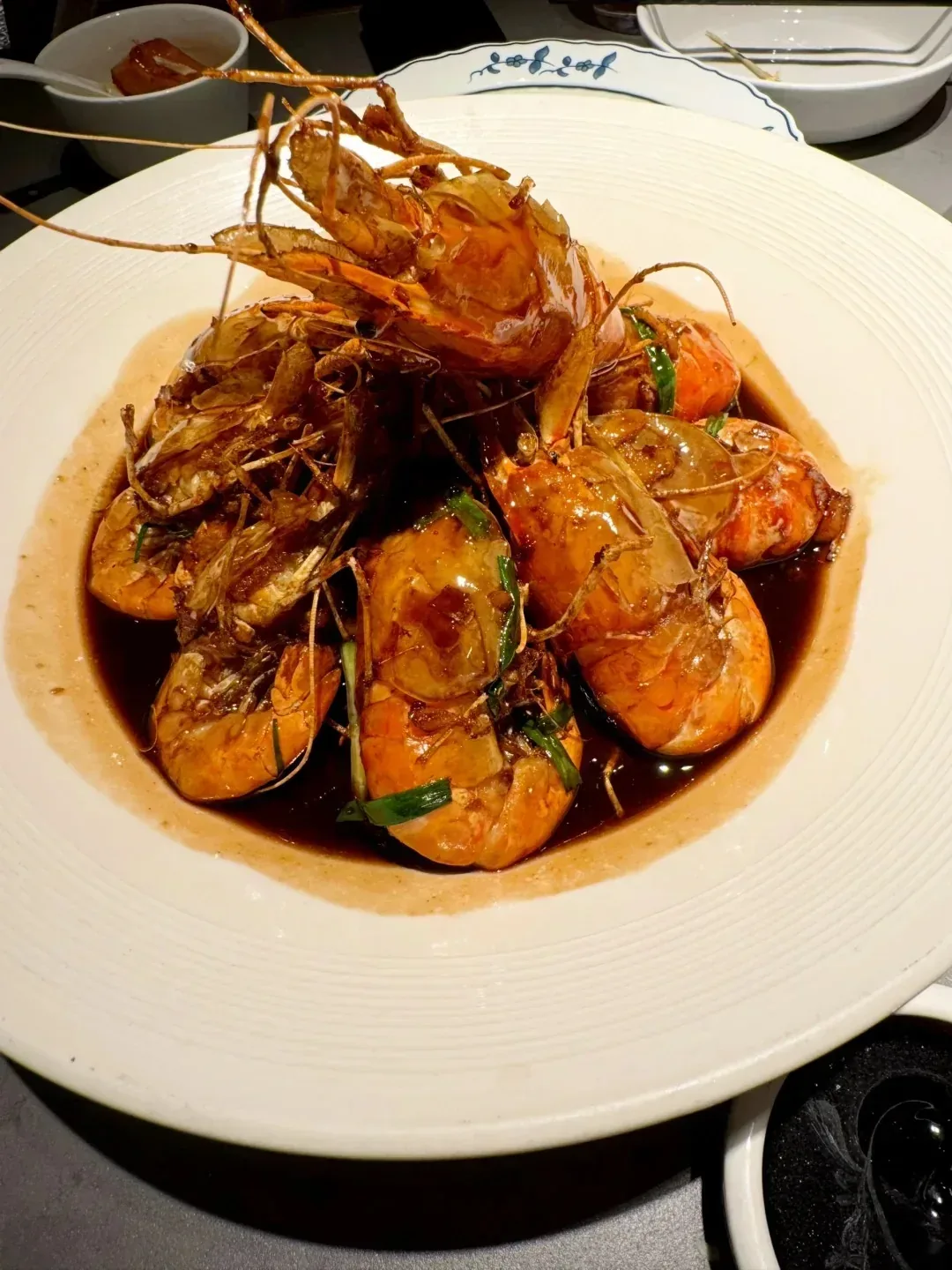
Heads, feelers, and shells remain, while most of the dark glaze sits on the outer surface.
A restaurant name became part of the dish
“Laotouer” belongs to the restaurant brand, whose history traces to a small Hangzhou restaurant opened in 1987. The founder's nickname joined the signature prawn dish and became a piece of the city's modern casual-dining memory.
Hangzhou already had a tradition of quick-frying river and lake seafood. This restaurant made larger shell-on prawns and a sweeter concentrated glaze its recognisable style. Other Hangzhou restaurants also serve youbao prawns with different species, sizes, and sauce balances, offering a way to compare contemporary home-style cooking.
The dish is designed for sharing. Rice catches the glaze, while lightly cooked greens or a clear soup add contrast. Peeling is hands-on, so a napkin or wet tissue is useful around the long feelers and firmer shell sections.