Journey To ChinaLast updated
Lotus leaf and a sealed bake
Beggar's chicken, jiaohua tongji (叫化童鸡), starts with a seasoned whole bird. Mushrooms, bamboo shoots, ham, or other aromatics may fill the cavity before lotus leaves wrap the chicken tightly. Clay, dough, or another heatproof outer layer creates a second seal.
Each layer has a role. Lotus leaf touches the bird and contributes its grassy fragrance; the shell keeps steam and rendered fat close to the meat. The filling absorbs chicken juices and returns mushroom, cured-meat, or bamboo aromas to the parcel.
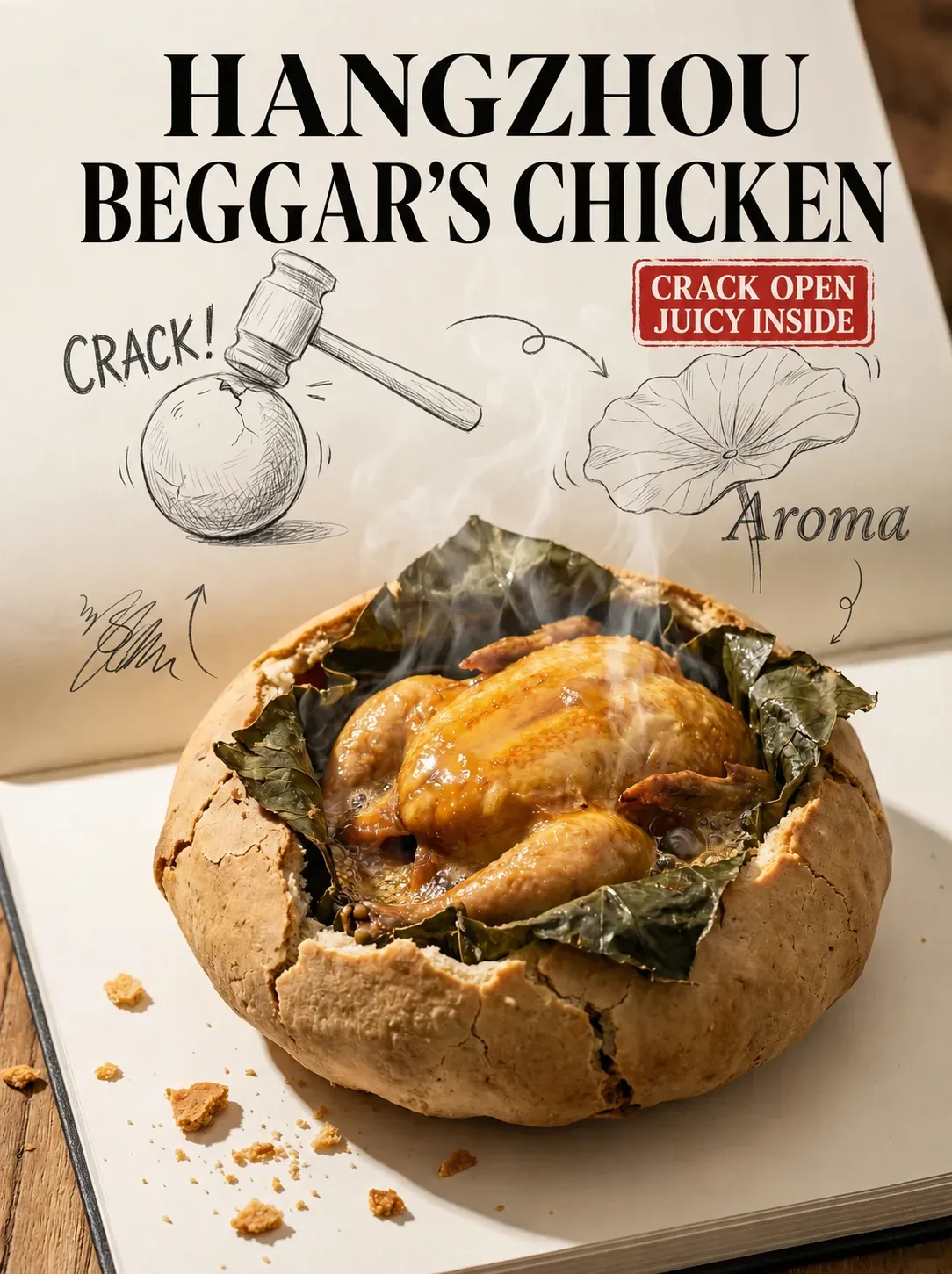
This version uses a hard shell; other restaurants may use dough or open the parcel in the kitchen.
Opening reveals several ways to taste one bird
When the leaves unfold, hot steam rises and concentrated juices collect beneath the chicken. Leg meat is rich and yielding, breast remains more fibrous, and wings and meat near the bone carry a deeper roast aroma. Sharing the bird allows those parts and the filling to be compared across the table.
Some restaurants crack a shell tableside, while others use a cuttable dough shell or handle the opening in the kitchen. The presentation varies; sealed cooking, retained juices, lotus fragrance, and the exchange of flavour with the filling define the dish.
Stories of a beggar roasting a mud-covered chicken circulate across Jiangsu and Zhejiang and do not establish one inventor or birthplace. Modern Hangzhou cooking standards turn that legend into controlled restaurant practice, with measured bird size, seasoning, wrapping, and doneness.
Ingredient note
The dish is a whole bone-in chicken. Its filling may include ham or another pork product; ask about the day's filling and whole- or half-bird portions when ordering.