Journey To ChinaLast updated
Steam joins damp rice-flour grains
Dingsheng cake (定胜糕) uses a blend of non-glutinous and glutinous rice flours. The damp flour still looks granular when it enters the mould, often around a red-bean centre. Steam binds those grains into a tender cake that is slightly sticky but does not have the continuous chew of sliced nian gao.
The flour ratio changes the texture from crumbly and light to more cohesive. A first bite may taste mainly of warm rice; the sweetness and smoother texture appear at the centre. Freshly steamed cakes are soft at the edges, while cooled or packaged versions become firmer and follow their own storage and reheating instructions.
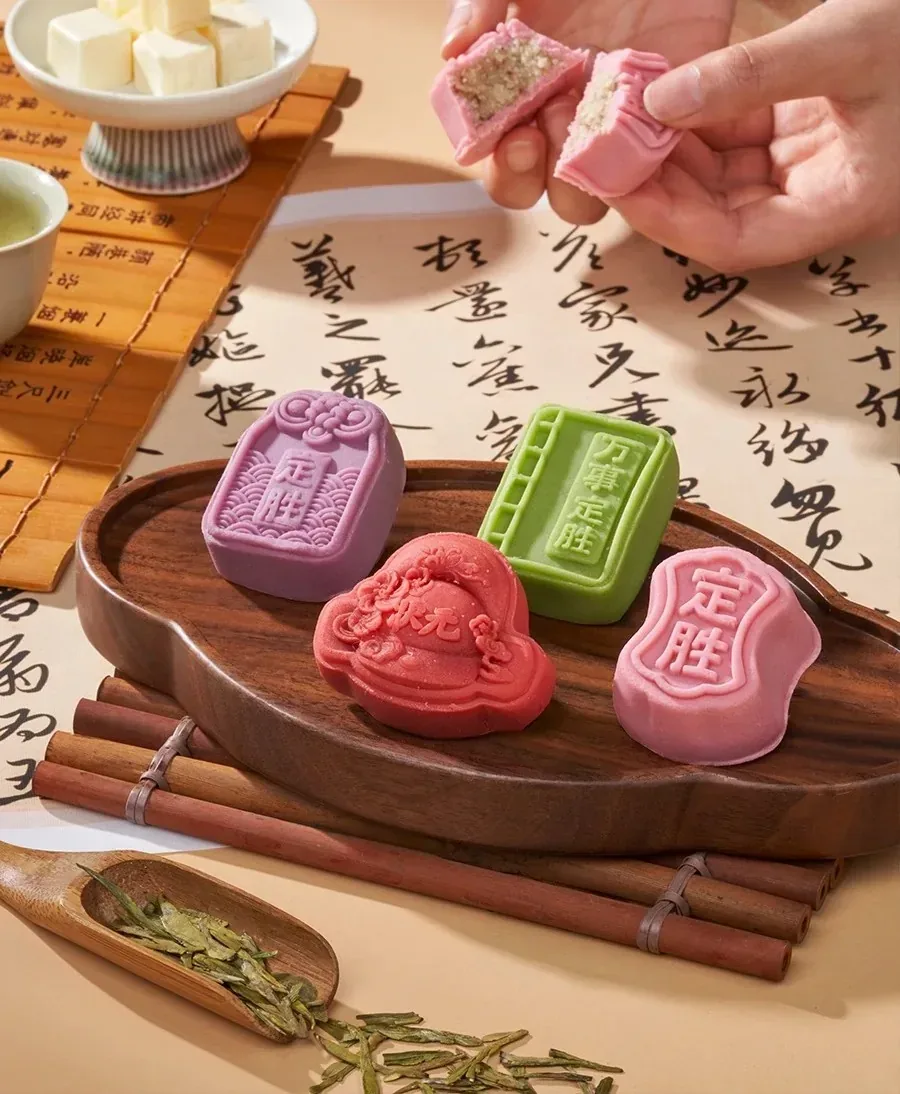
The broken cake reveals its grainy rice-flour structure and central filling; modern colours and moulds vary by shop.
A good wish pressed into a mould
Traditional cakes are often pale red, sometimes coloured with red yeast rice, and shaped with flowers, ingots, characters, or geometric patterns. The words ding sheng carry the idea of assured victory or success, allowing the cake to move from military legends into examinations, weddings, openings, birthdays, and house moves.
Hangzhou stories connect the cake to Southern Song campaigns, though names and events differ between versions. Its continuing role as an auspicious rice cake is more tangible: moulds turn a spoken blessing into a form that can be shared. Green, purple, and brightly decorated cakes are modern extensions, and the label is the reliable guide to each filling.