
Journey To ChinaLast updated
Du Fu Thatched Cottage guide
Chengdu's rain, flowers, and neighbours entered Du Fu's poems
Du Fu reached Sichuan in 759 after displacement caused by the An Lushan Rebellion. Friends helped him establish a cottage beside Huanhua Stream, where he lived for three years and nine months and wrote more than 240 poems. Spring rain, river villages, flowering paths, bamboo, medicinal plants, and neighbours appear in works such as Spring Night Rain and Guests Arrive; a storm-damaged roof inspired The Thatched Roof Ruined by the Autumn Wind and its wish for shelter for all.
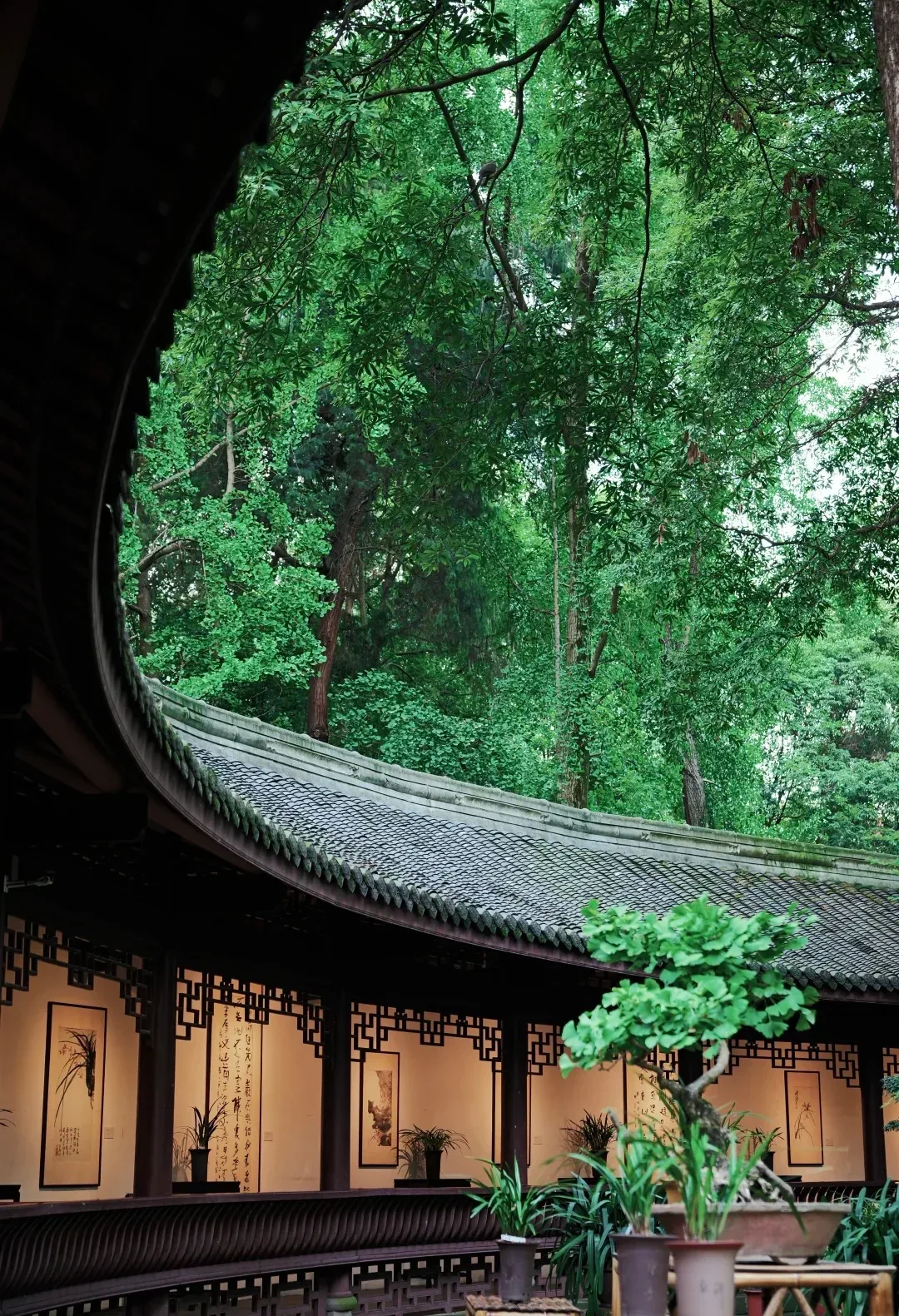
The present memorial axis was built by later generations, its low halls and trees giving the complex an inward, reflective scale.
These Chengdu years still contained war and poverty, alongside planting, receiving guests, borrowing rice, and watching flowers. The site therefore links domestic experience, national crisis, and the way poetry turns a private life into shared memory.
Rebuilding the cottage became part of its history
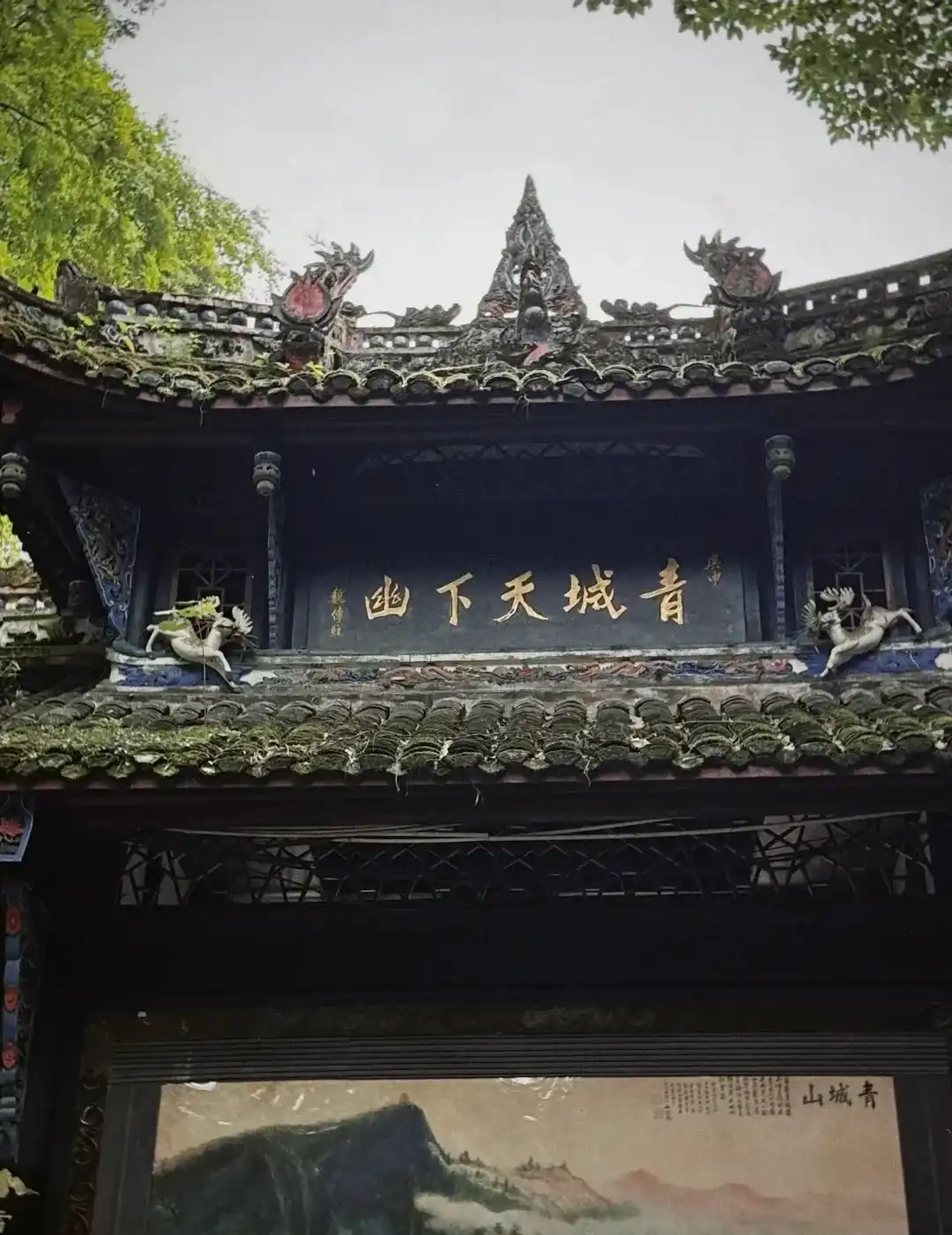
The original buildings disappeared after Du Fu left. Poet Wei Zhuang sought out the site and rebuilt a cottage in the tenth century; repairs and expansions continued through the Song, Yuan, Ming, and Qing. The present gate, Daxie Hall, Hall of Poetry and History, Chaimen Gate, and Gongbu Shrine belong to this long memorial tradition.

The formal memorial halls explain later reputation; the cottage reconstruction interprets the scale of the poet's life.
The recreated cottage draws on poems describing a brushwood gate, flower path, bamboo, herb garden, and household objects. Low buildings enclose a small yard, turning literary spatial clues into an environment that can be walked through.
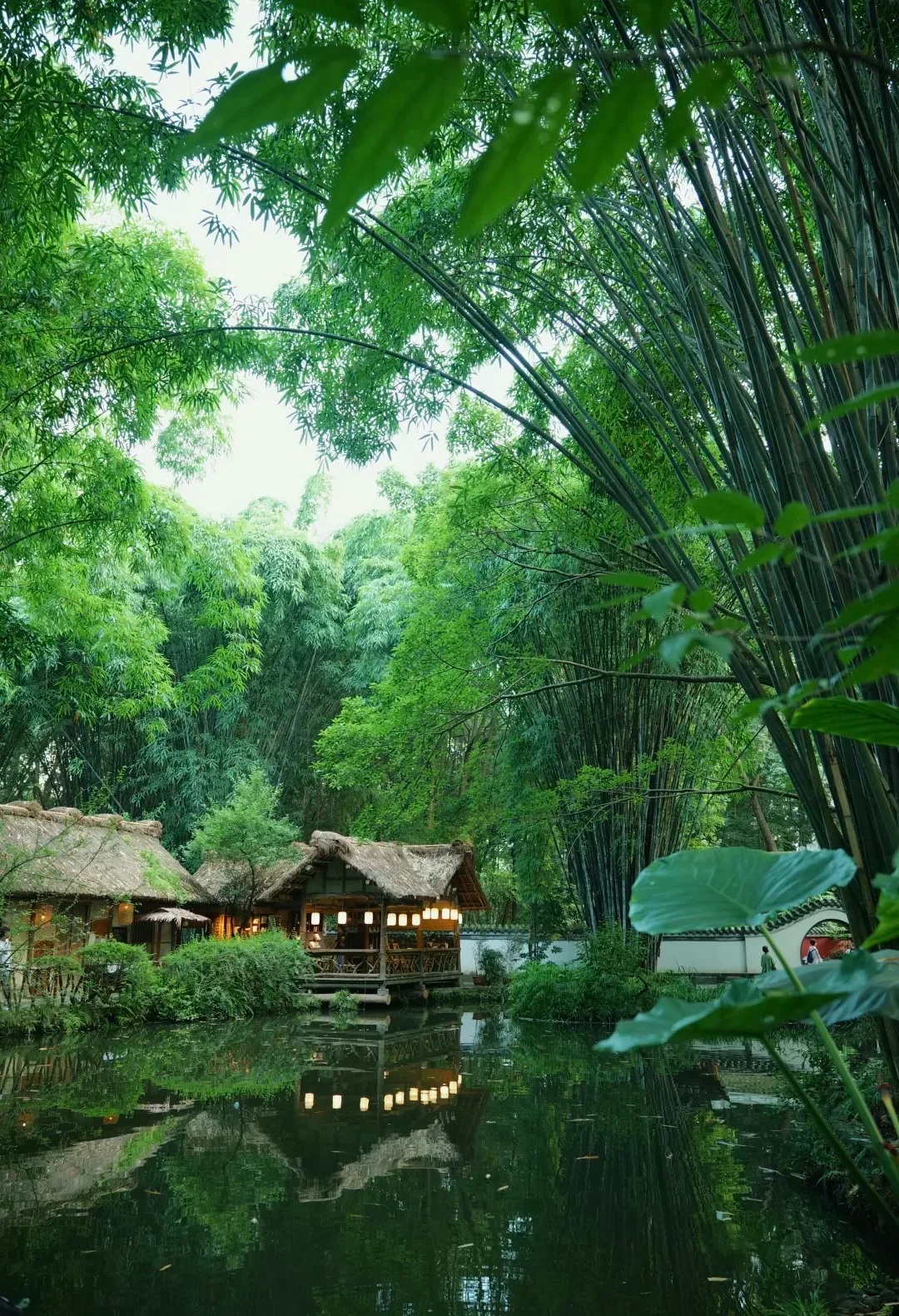
Water, bamboo, and low roofs recreate the environmental relationships described in the poems.
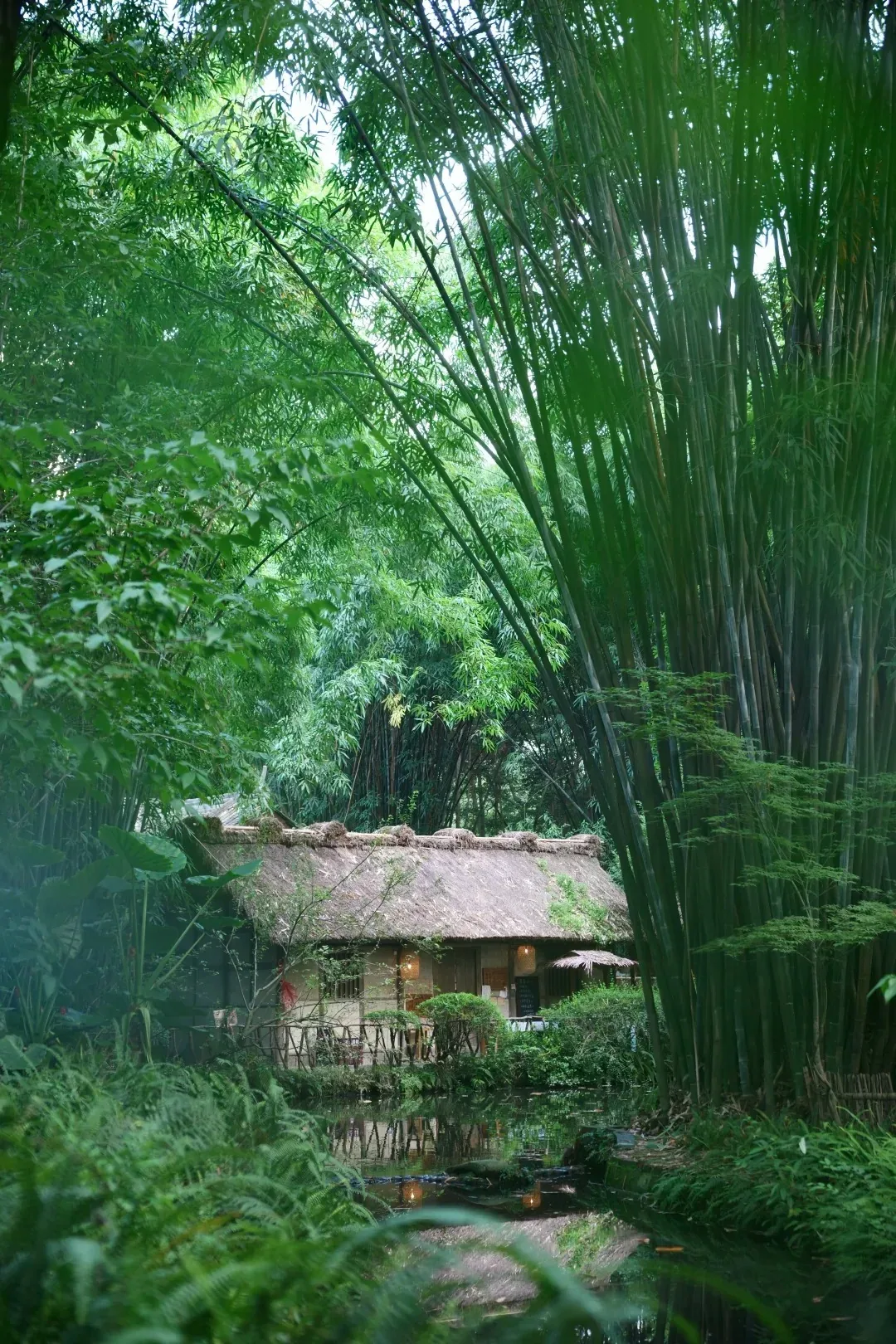
The side view makes the modest roofline and materials easier to understand.
Today's red-walled Flower Path recalls the line “The flower path has never been swept for a guest; today my wicker gate opens for you.” Modern calligraphy and couplets add another memorial layer to the literary source.
Archaeology and the Hall of Great Poets widen the story
Tang-period remains found in the northeast of the grounds provide material evidence for domestic life in Tang Chengdu. They complement the cottage: one presents archaeology, the other an interpretive reconstruction based on poetry.
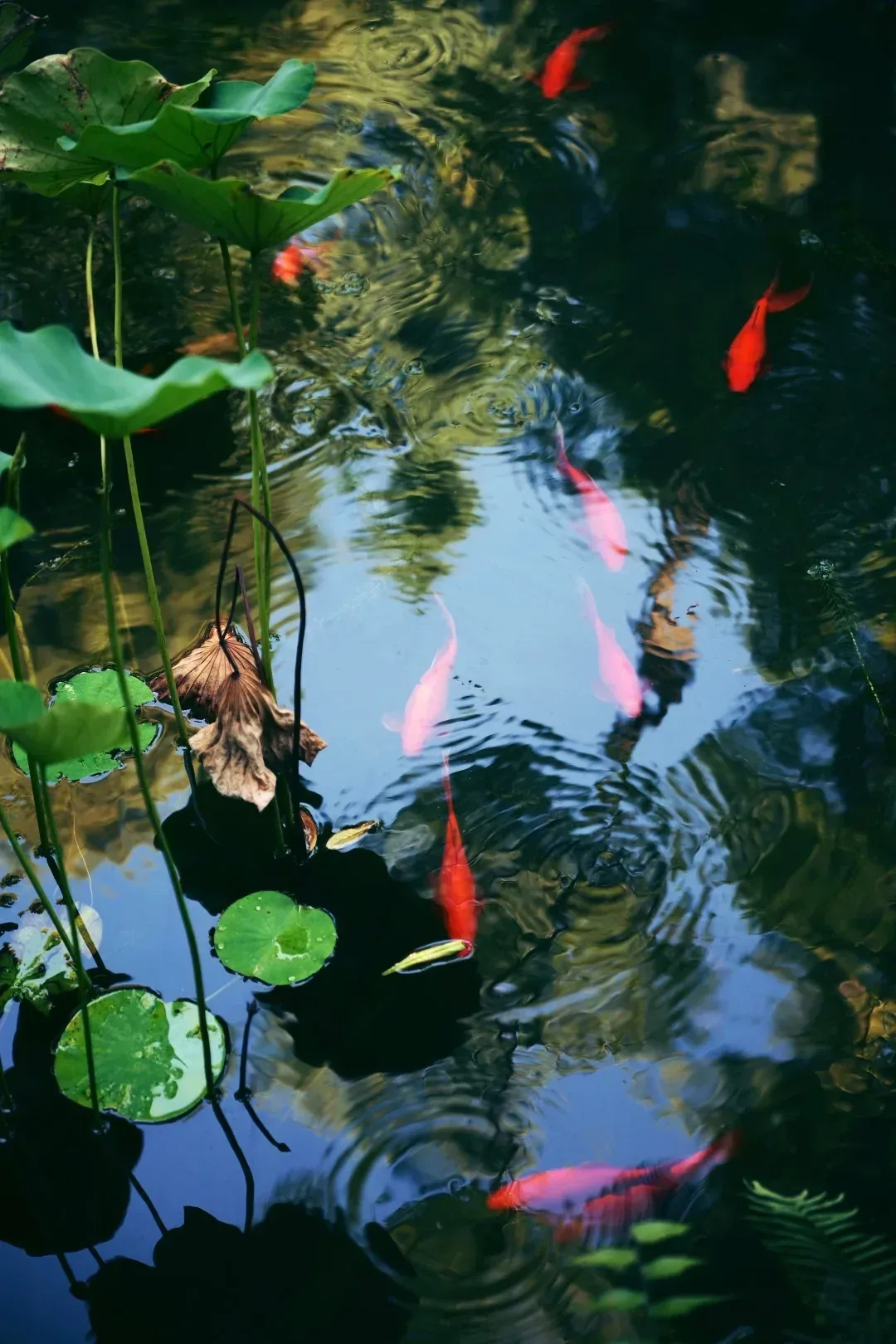
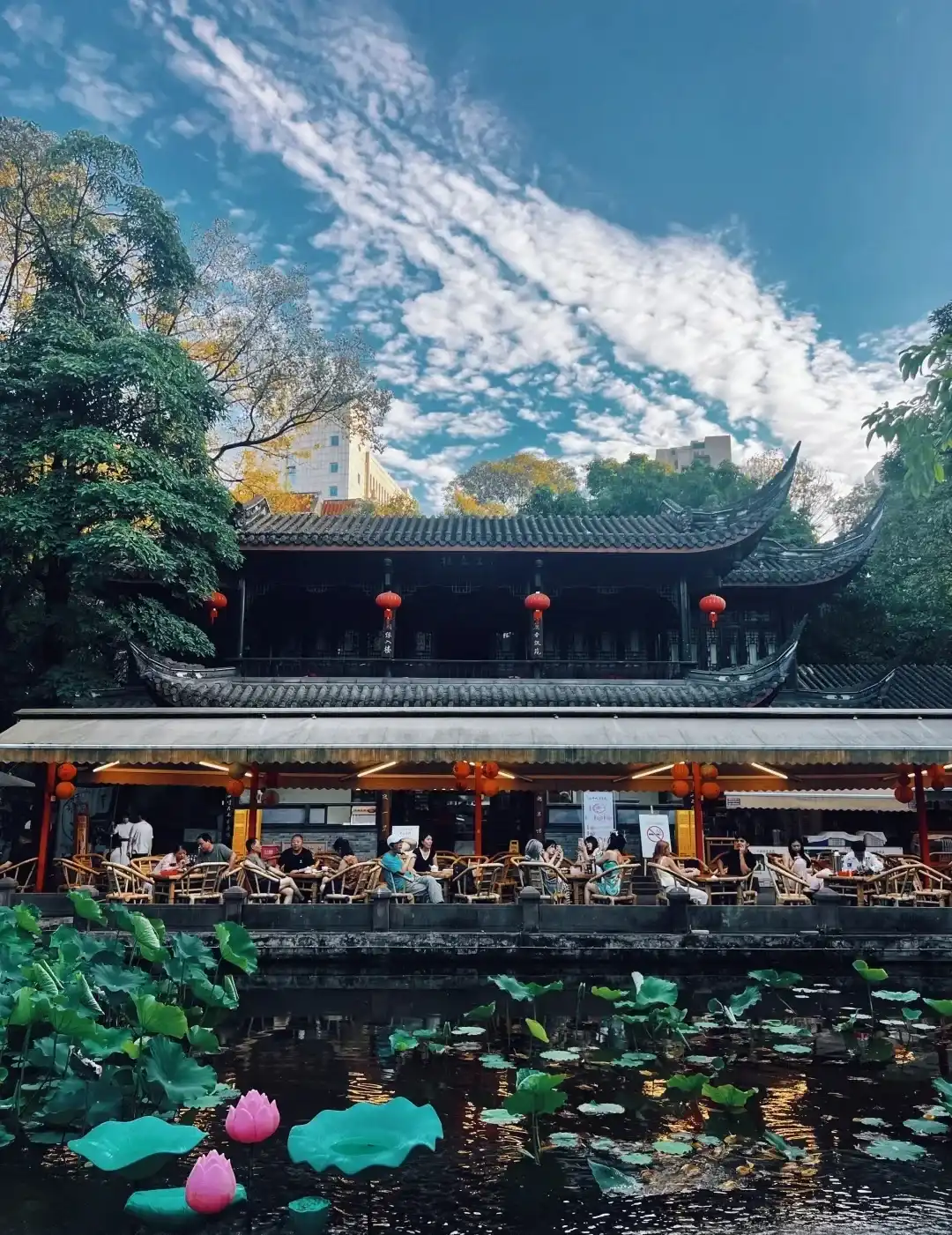
Seasonal plants and water carry the natural imagery of the poems into the present garden.
The Hall of Great Poets, adapted from a former Buddhist hall, places Du Fu within the broader history of Chinese poetry through sculpture and murals. Wanfo Tower, the Thousand-Poem Stele, manuscripts, and book displays continue the story of circulation and collecting.
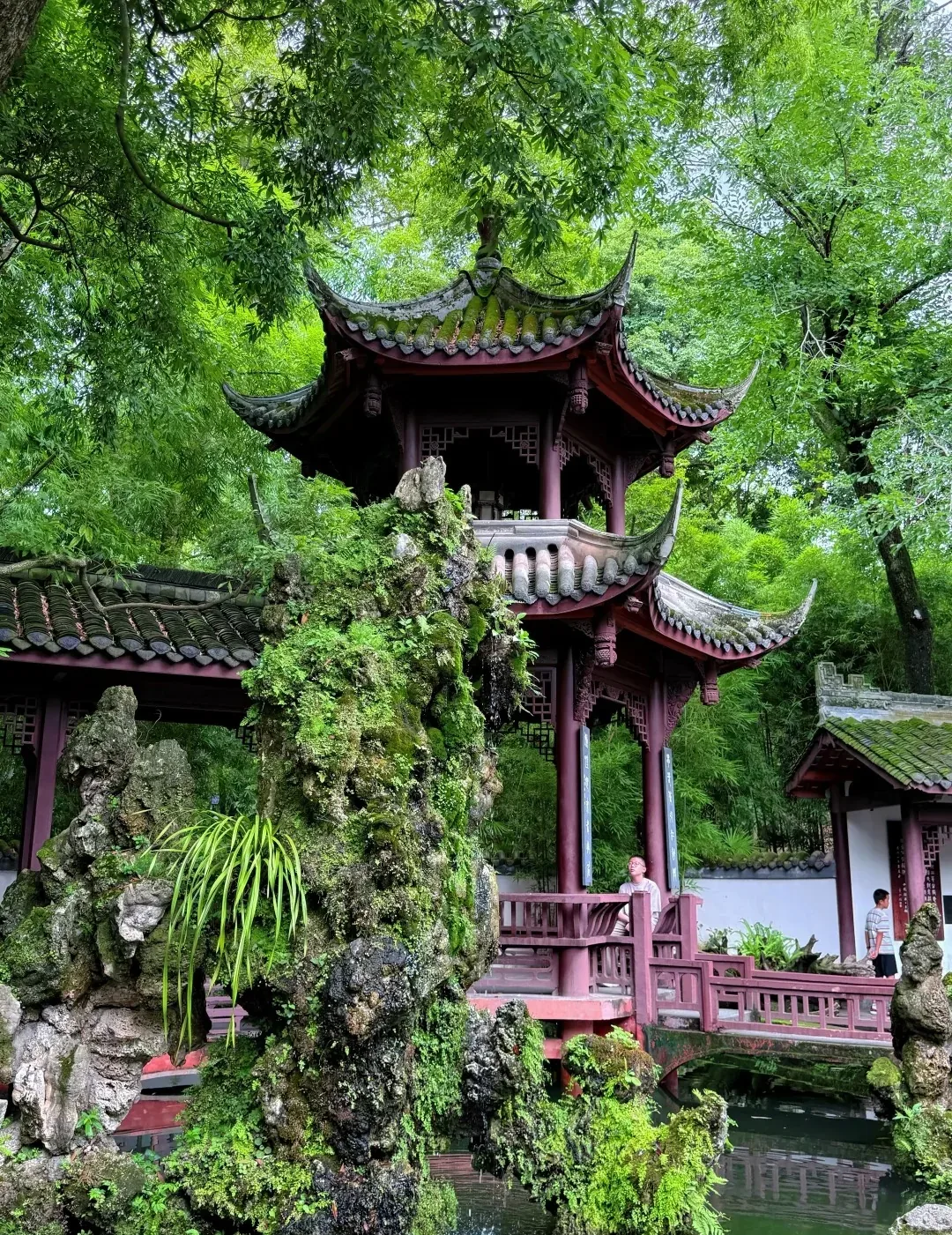
Pavilions, inscriptions, and water connect the displays and shape the pace of reading.
Huanhua Stream Park extends the waterside and planting outside the museum, while the nearby Sichuan Museum adds archaeology, painting, and folk culture. Each has its own opening arrangements.