
Journey To ChinaLast updated
Chunxi Road and Taikoo Li Chengdu guide
A commercial street, a rooftop panda, and an old temple share one district
Chunxi Road opened in 1924 and became one of central Chengdu's defining commercial streets. Its pedestrian branches, department stores, food shops, and crossroads still carry the scale of a traditional city-centre shopping district.
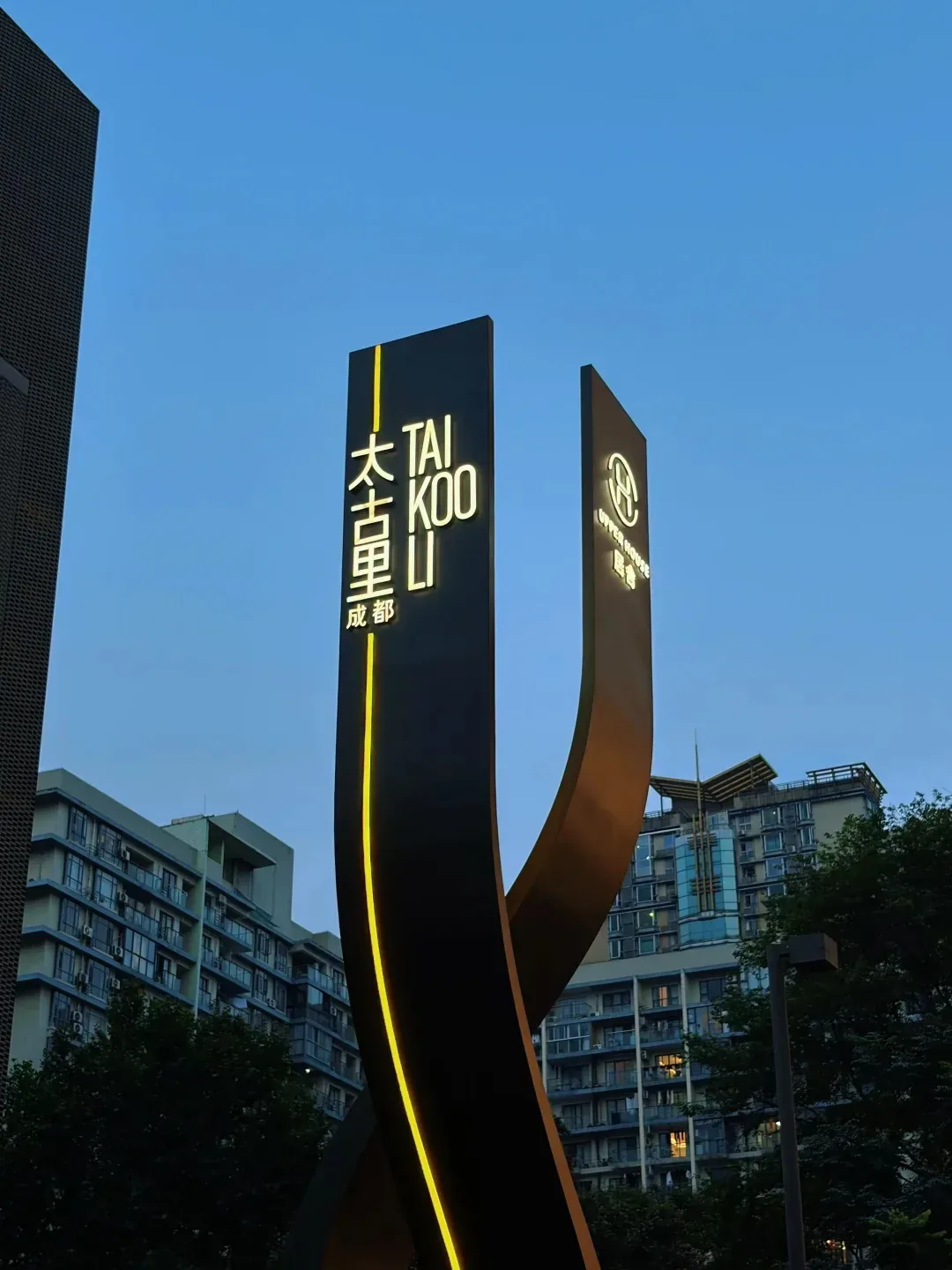
Low buildings and open lanes distinguish Taikoo Li from the surrounding high-rise retail district.
Chengdu IFS shifts the view upward. Lawrence Argent's giant panda sculpture climbs the façade, with its face appearing on the roof terrace. The work has become a contemporary city symbol and also connects street-level movement with the rooftop public space.
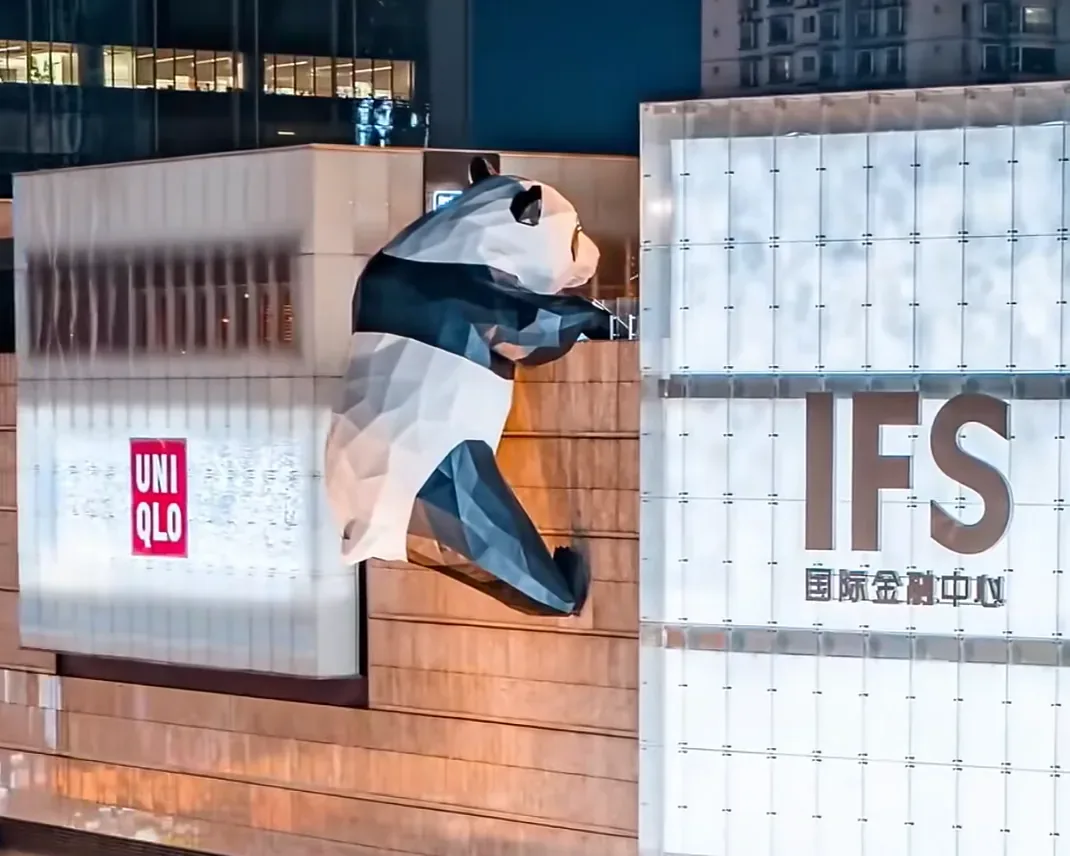
The climbing body is seen from the street; the face belongs to the roof-level encounter.
Taikoo Li uses lanes and courtyards around Daci Temple
Taikoo Li opened as a low-rise, open-plan retail district. New pitched roofs, lanes, courts, and gardens work around retained historic buildings, while Daci Temple remains an independent religious and heritage presence within the same urban fabric.
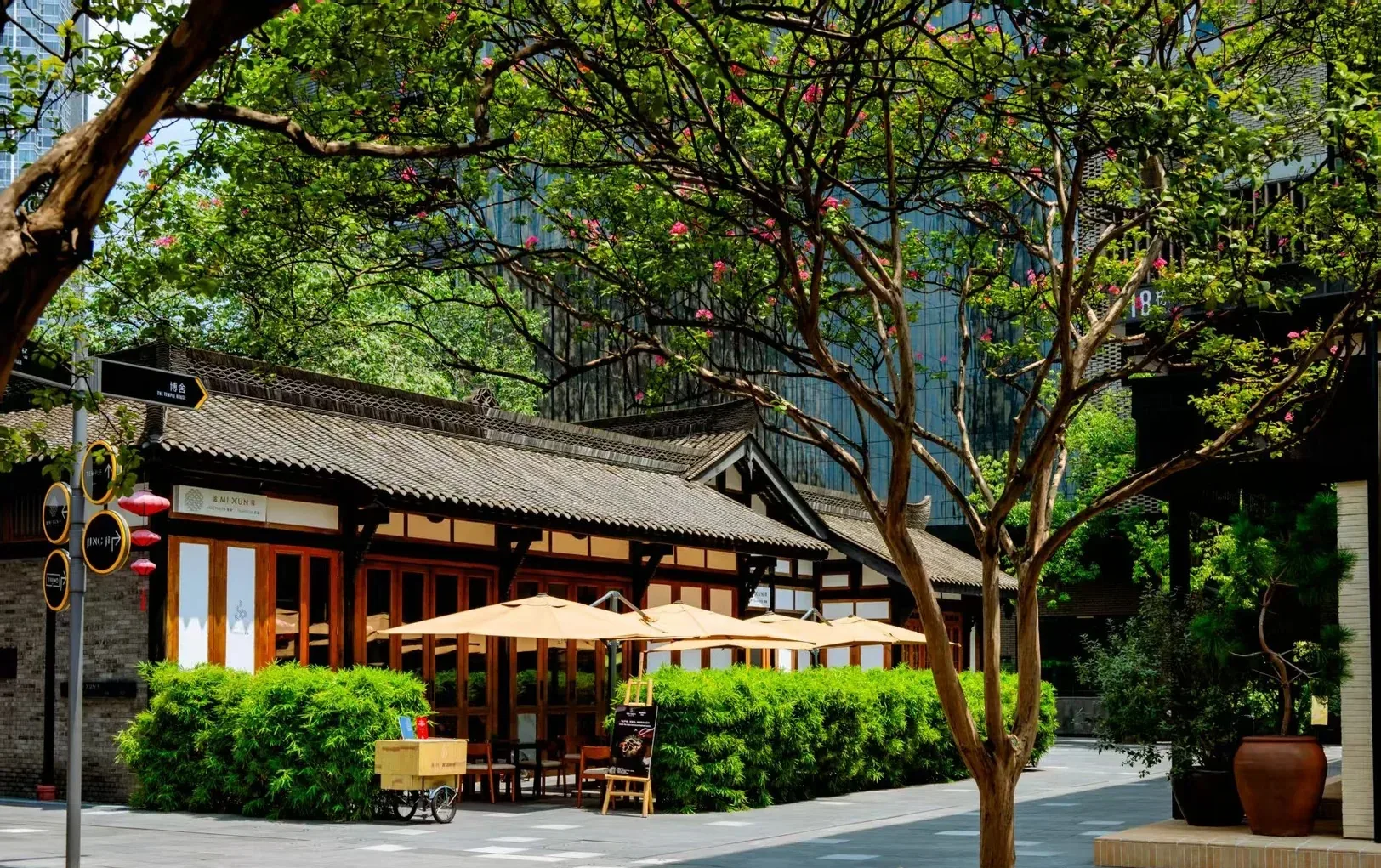
Trees, courts, and covered edges create a walkable scale below the towers.
Daci Temple has a much longer Buddhist history than the surrounding retail development. Temple halls, worship, and quiet courts give the district a different rhythm. Dress and photography should respect the current temple rules; shops and public lanes follow separate operating arrangements.
Daylight reveals materials; evening connects the whole skyline
By day, brick, timber, tile, planting, preserved fabric, and new construction are easy to compare. At night, shopfronts, signs, public art, and tower façades connect the low courtyards to the high-rise skyline.
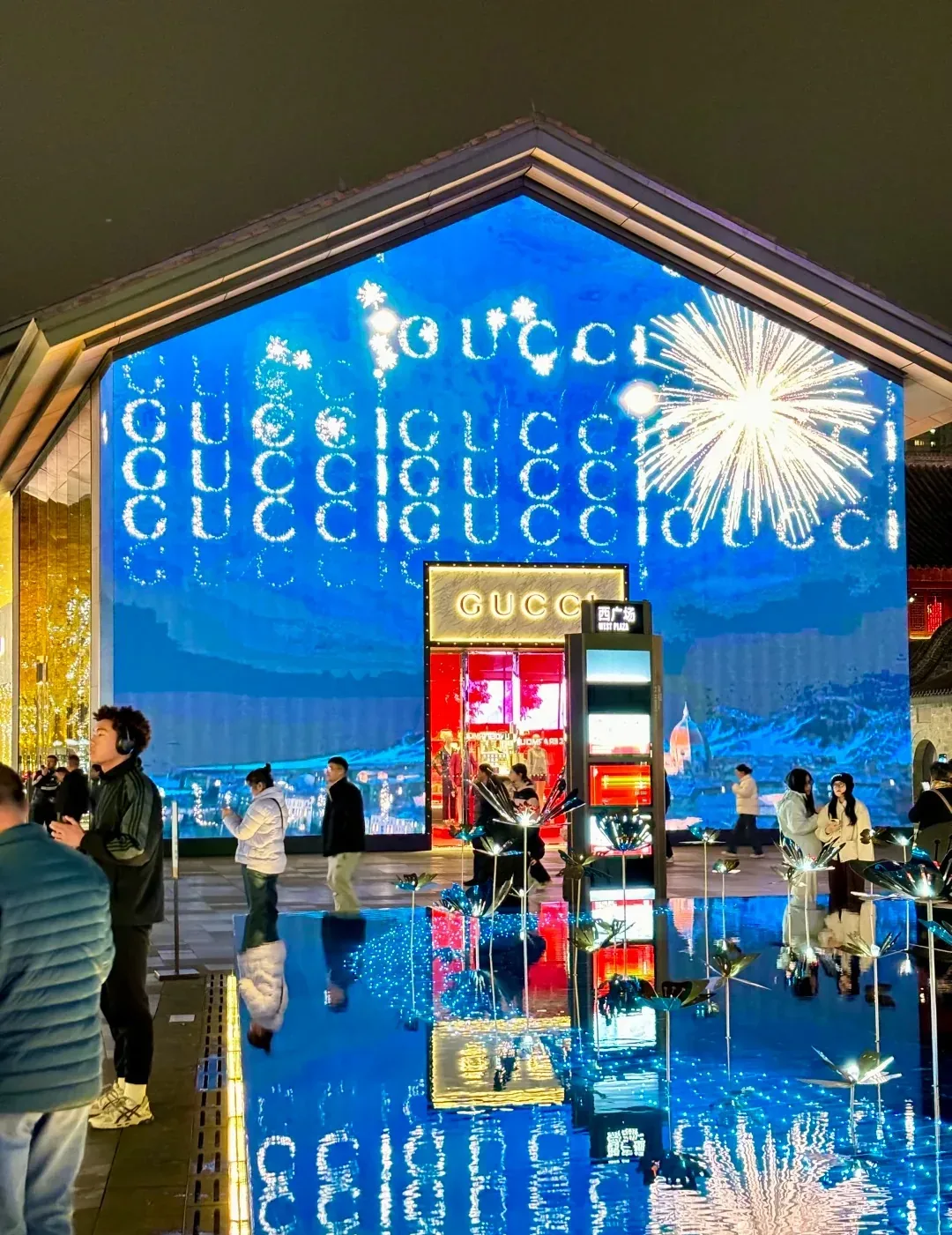
Evening lighting emphasises the contrast between contemporary storefronts and pitched roofs.
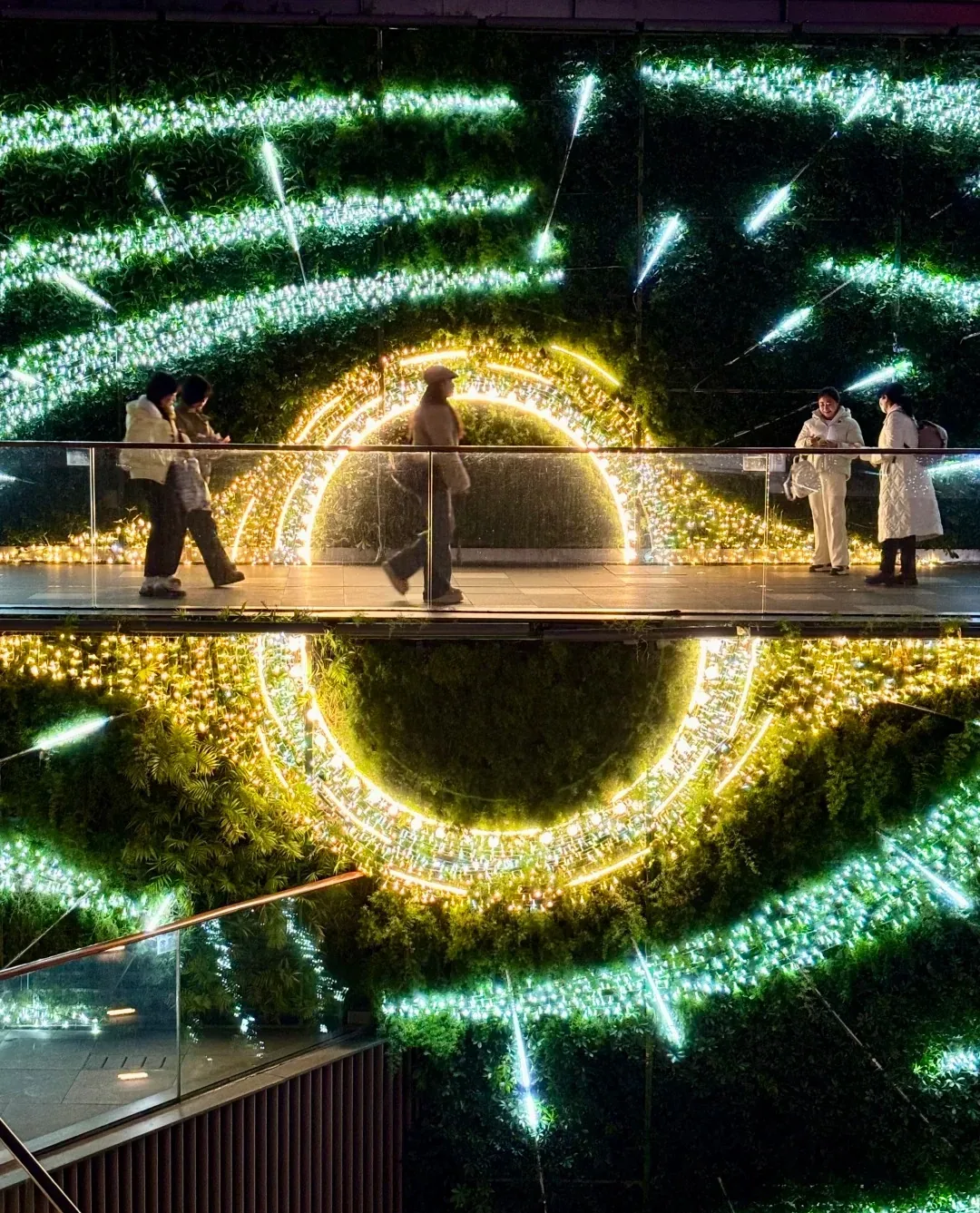
Temporary public art can add another night-time layer to the permanent lanes and courts.
Chunxi Road, IFS, Taikoo Li, and Daci Temple are close enough to explore on foot, but each represents a different period and use: twentieth-century commercial street, contemporary mall, open urban retail, and religious heritage.