
Journey To ChinaLast updated
Mount Qingcheng guide
“Secluded quiet” is built from forest, water, and turning paths
The phrase “Qingcheng is the quietest under heaven” refers to a sensory landscape: evergreen trees filter the light, stone stairs bend out of sight, water sounds rise from valleys, and temple roofs appear gradually through the forest.
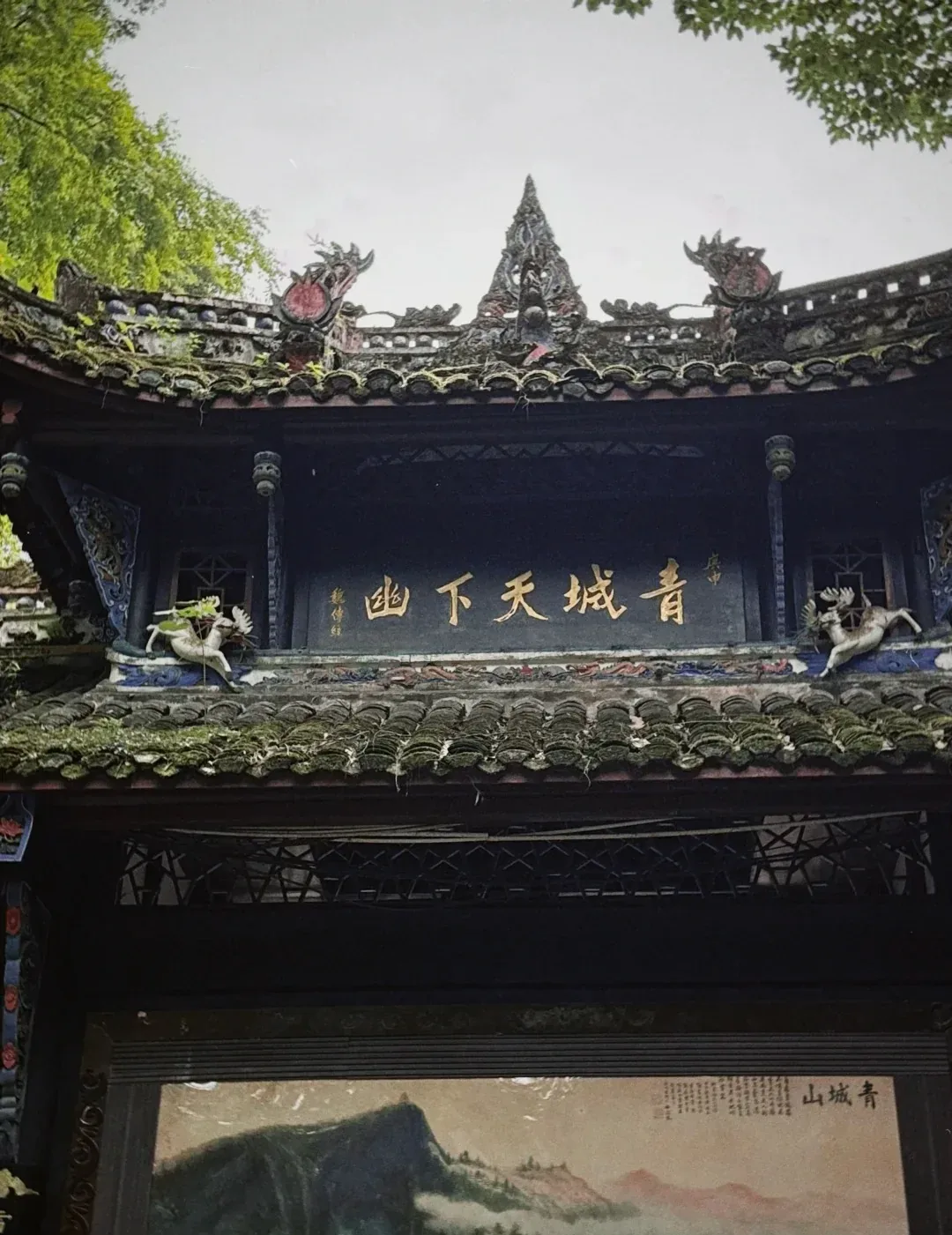
The gate announces the mountain's defining quality before the path begins to climb.
Qingcheng is closely associated with the development of Daoism. Tradition connects Zhang Daoling and early Celestial Masters activity with Tianshi Cave, while later teachers and communities developed a network of temples, inscriptions, ritual spaces, and mountain paths.
Front Mountain follows a Daoist sacred landscape
The Front Mountain route links Jianfu Palace, Tianshi Cave, Shangqing Palace, and Laojun Pavilion. Temple placement uses terraces and ridges, so each ascent opens a new architectural or forest view.
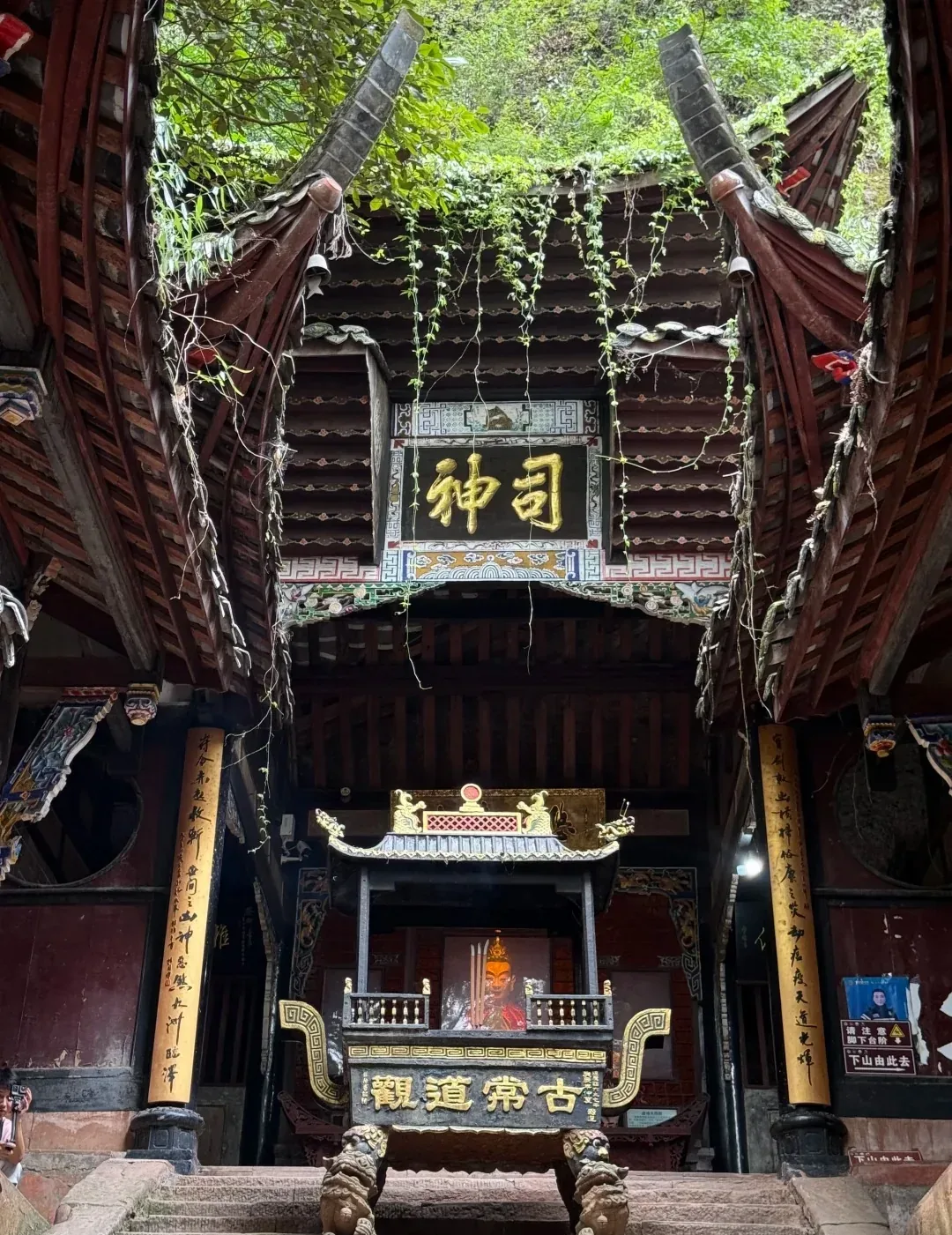
Shangqing Palace is one of the principal religious stops on the upper mountain.
Today's halls have been rebuilt and repaired across many periods. Continuity lies in religious practice, temple locations, and the relationship between the ancient path and the mountain. Inside, look for deity groupings, plaques, incense rituals, and current photography or worship rules.
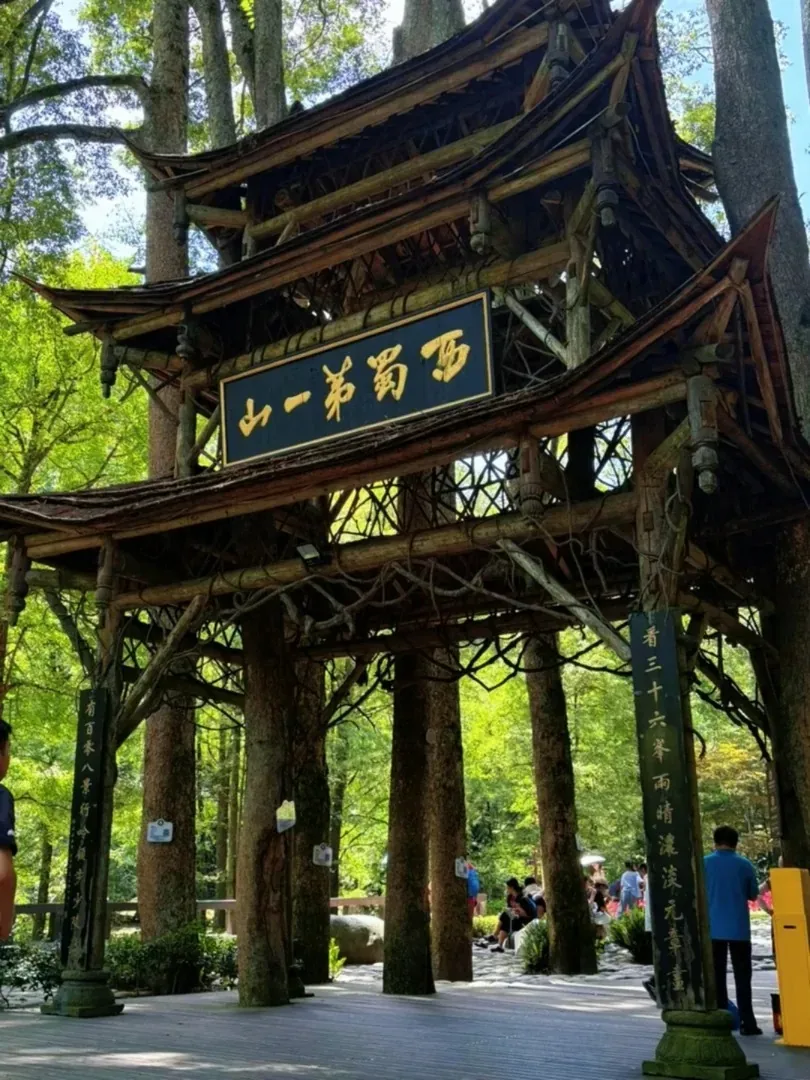
Inscriptions and gateways punctuate the climb and frame changing forest views.
Moon City Lake and the cableway can replace part of the ascent, while stairways still connect the upper stops. Rain makes stone and timber surfaces slippery, and weather or geological conditions may change access.
Back Mountain is a separate valley experience
The Back Mountain has its own entrance, ticket, and route system. Streams, waterfalls, boardwalks, and valley settlements shape a full valley experience distinct from the major Daoist temples of the Front Mountain.
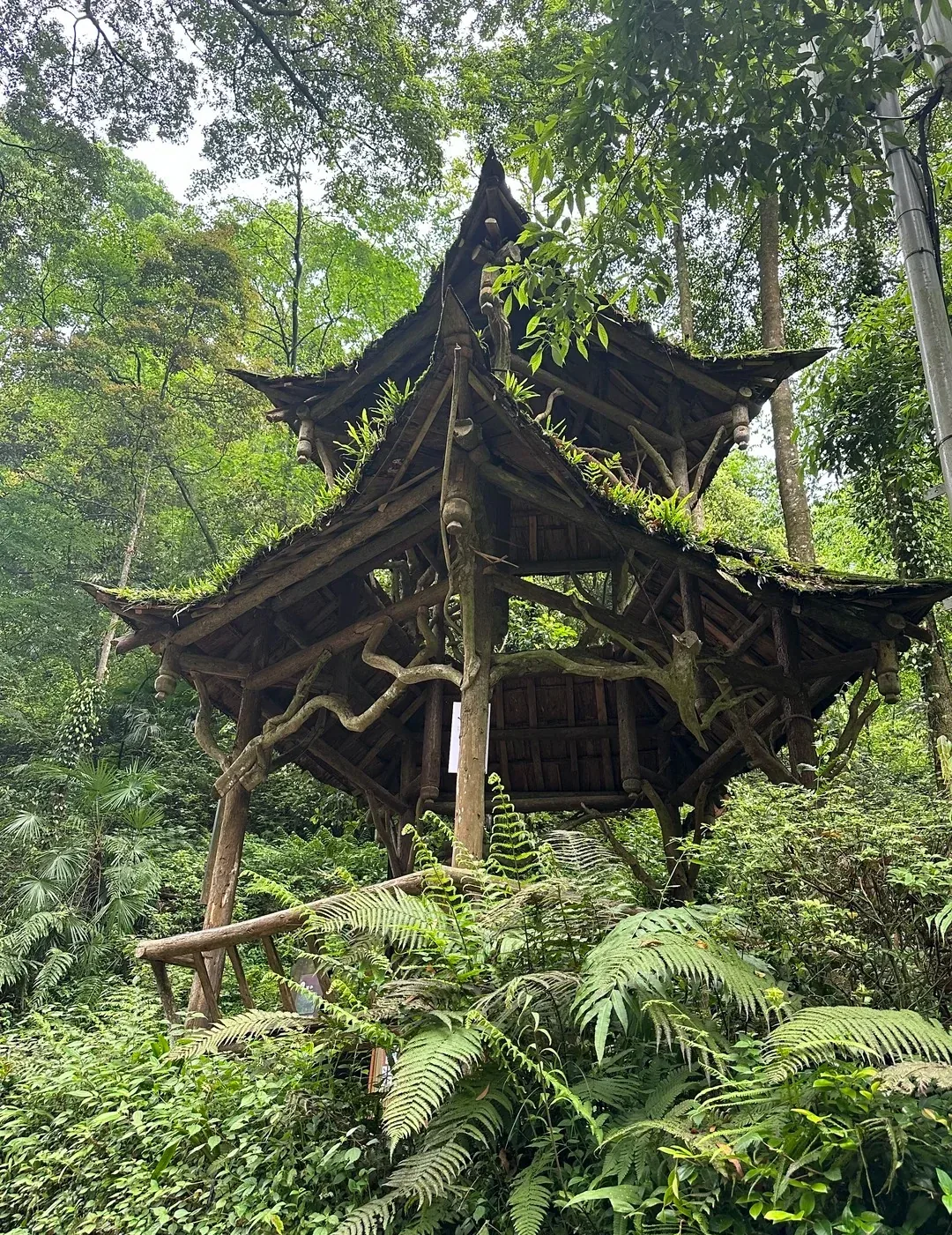
Dense vegetation and small structures express the mountain's quiet character away from the main halls.
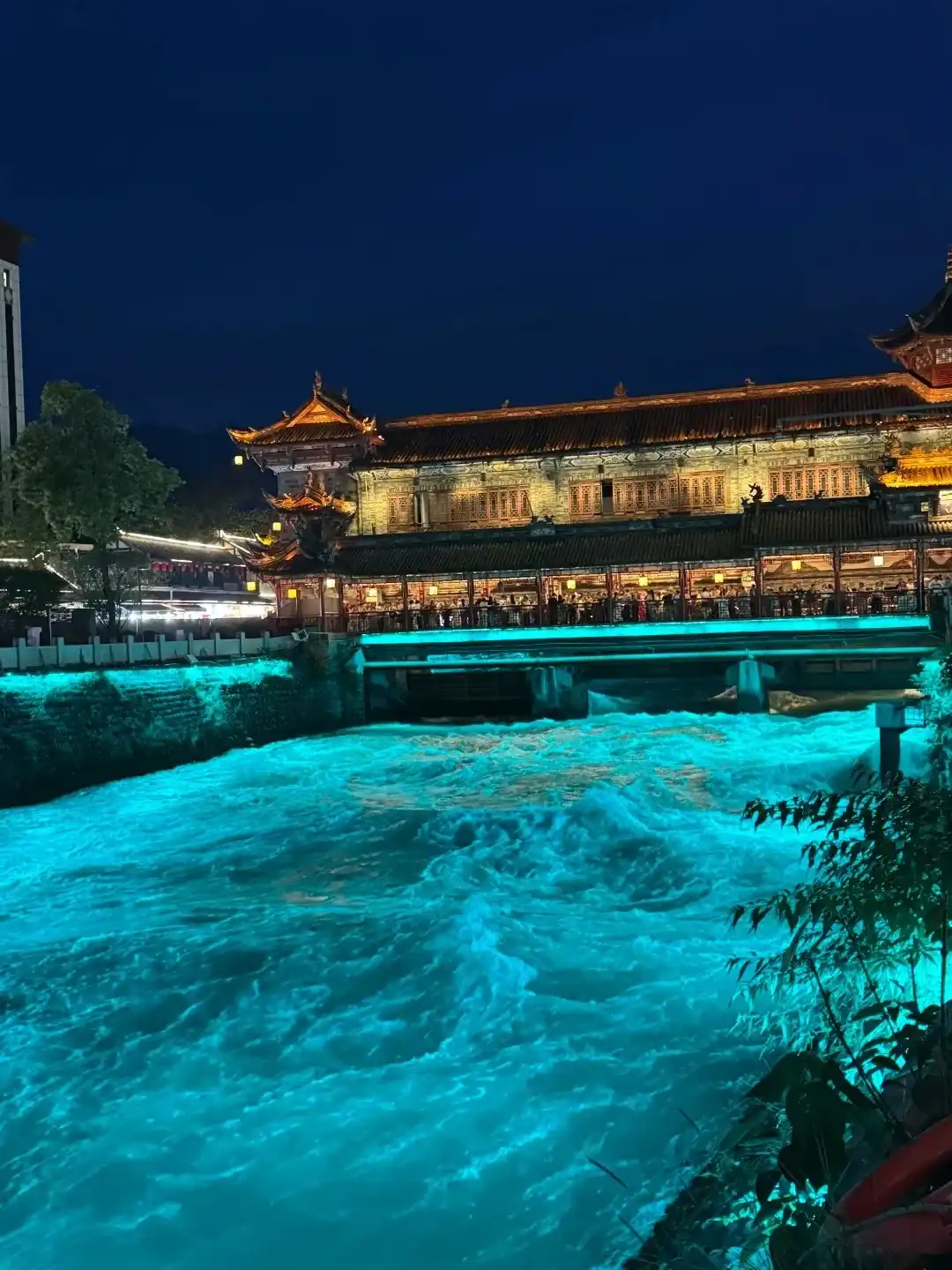
Qingcheng and Dujiangyan share one UNESCO World Heritage listing and regional transport links. Together they pair a Daoist mountain landscape with a working ancient water system, while each retains separate entrances, tickets, and a substantial visit of its own.