Journey To ChinaLast updated
Tangy cold noodles with the crunch of pig ear
Acidity and garlic lead the first bite. A thick tomato dressing, preserved vegetables and pickled garlic provide the tang; chilli oil, Sichuan pepper, garlic water and aromatic litsea oil follow with warmth and fragrance. Fresh wheat noodles are cooled after cooking so they remain smooth, while sliced pig ear is crisp and resilient. Peanuts, kelp and seasoned tofu keep changing the texture of the bowl.
“Zhunao Ke” is the name of the restaurant chain, and its most representative meat topping is sliced pig ear. A clear first order is “cold noodles with pig ear and extra tomato dressing,” a combination recorded as a familiar local order.
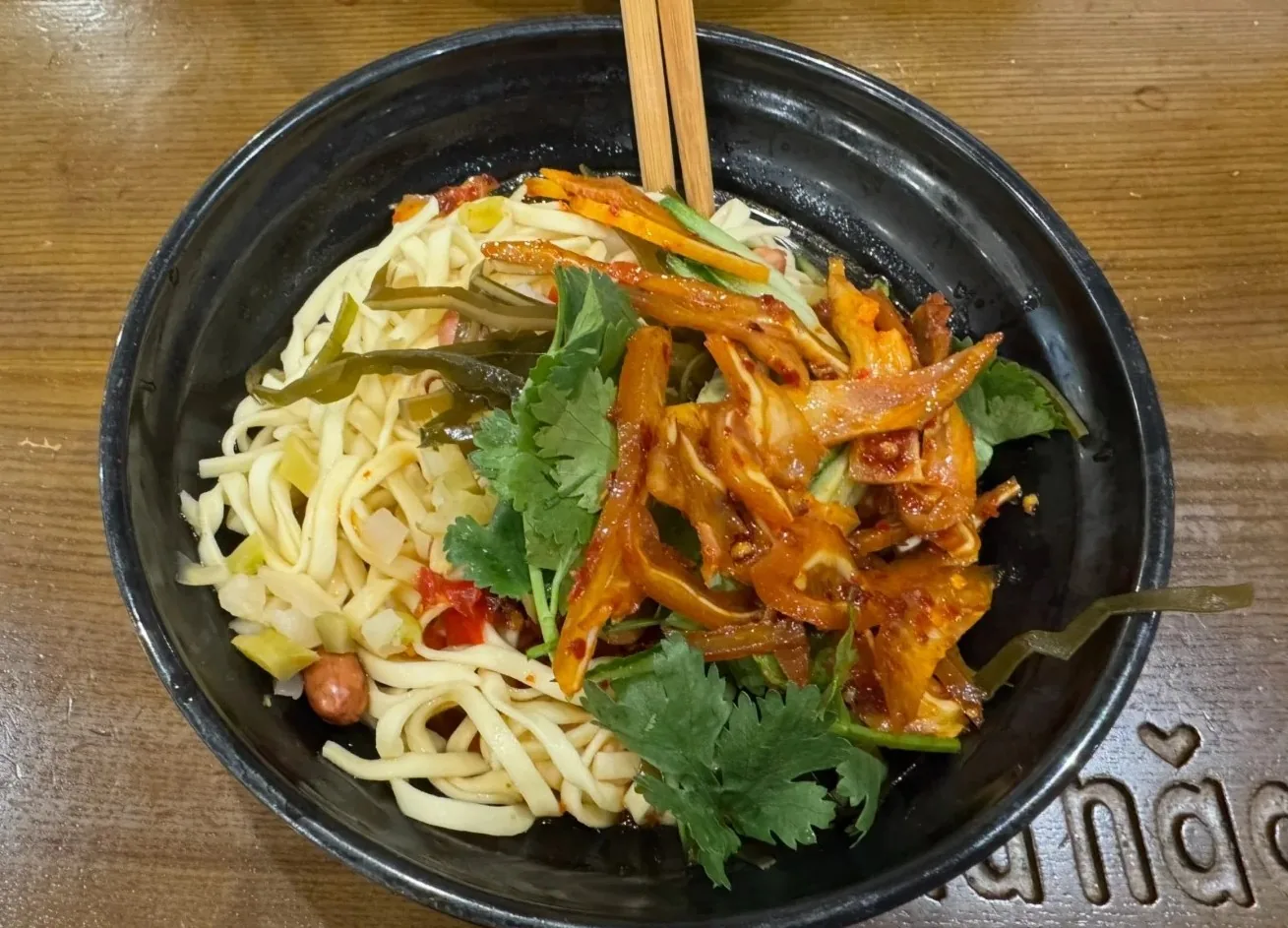
Thin slices of pig ear retain their crunch after mixing, while kelp, pickles and coriander add freshness, savour and herbal aroma.
Tomato dressing carries the smaller toppings
Asking for extra “tomato soup” means adding more of the thick tomato dressing used to mix the noodles. It makes the bowl juicier and more tangy while distributing the chilli oil, garlic water and many small garnishes across the strands.
Mix thoroughly from the bottom before eating so the pig ear, peanuts, kelp, preserved vegetables and pickled garlic spread through the noodles. More chilli oil can be added for extra heat.
A Zhangjiajie breakfast and lunch staple
Central Zhangjiajie has supported clusters of dedicated cold-noodle shops, and residents eat the dish at breakfast as well as lunch. Noodles, garnishes and a meat topping make a complete bowl for either part of the day.
Pig ear supplies the most distinctive texture, while braised beef offers a different meat aroma. Pig ear, extra tomato dressing and the fully mixed garnishes are enough to give a first-time visitor a clear impression of the local style.
Ingredient note
The recommended combination contains pork, and common garnishes may include peanuts. Ask the server to omit either ingredient when necessary.