Journey To ChinaLast updated
Chilli, cured pork and several textures meet in one pot
Sanxiaguo commonly reaches the table over a low flame. In the popular dry-pot style, a reduced sauce coats the meat and vegetables. Cured pork brings salt and a light smoky aroma; pork intestine and stomach add soft, chewy and springy textures. It is a full-flavoured shared main dish that pairs naturally with steamed rice.
Tofu, radish, potato and onion soak up the meat juices and seasoning. Their soft, floury or gently sweet textures break up the richness of the meat. This contrast within a single pot is one of the dish's defining pleasures.
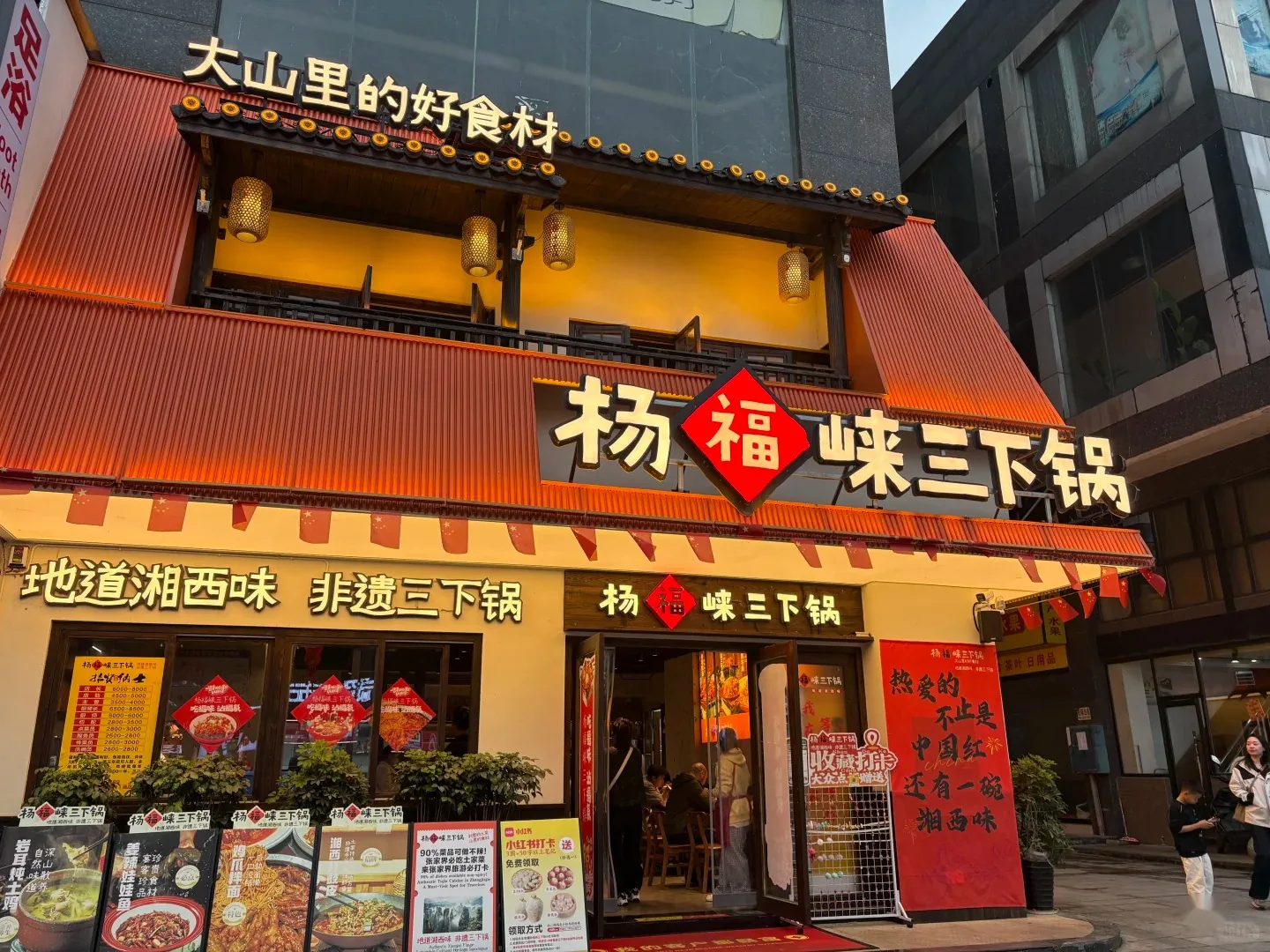
Yangfuyu is a well-known local sanxiaguo restaurant brand. A first-time visitor can simply order its signature dry-pot sanxiaguo.
For a first order, choose a mild dry pot
The clearest introduction is the restaurant's signature dry-pot sanxiaguo, ordered mild and served with rice. A common local combination uses cured pork, pork stomach and pork intestine: the cured meat supplies smoke and salt, while the two offal cuts provide distinct resilient textures. Tofu, radish or potato carries the spicy meat juices.
If you do not eat offal, say that you do not want pork intestine or stomach and ask the staff for the restaurant's available meat or tofu combination. Travellers who avoid pork completely should choose another local dish because the meat, cured ingredients and pot seasoning often contain pork.
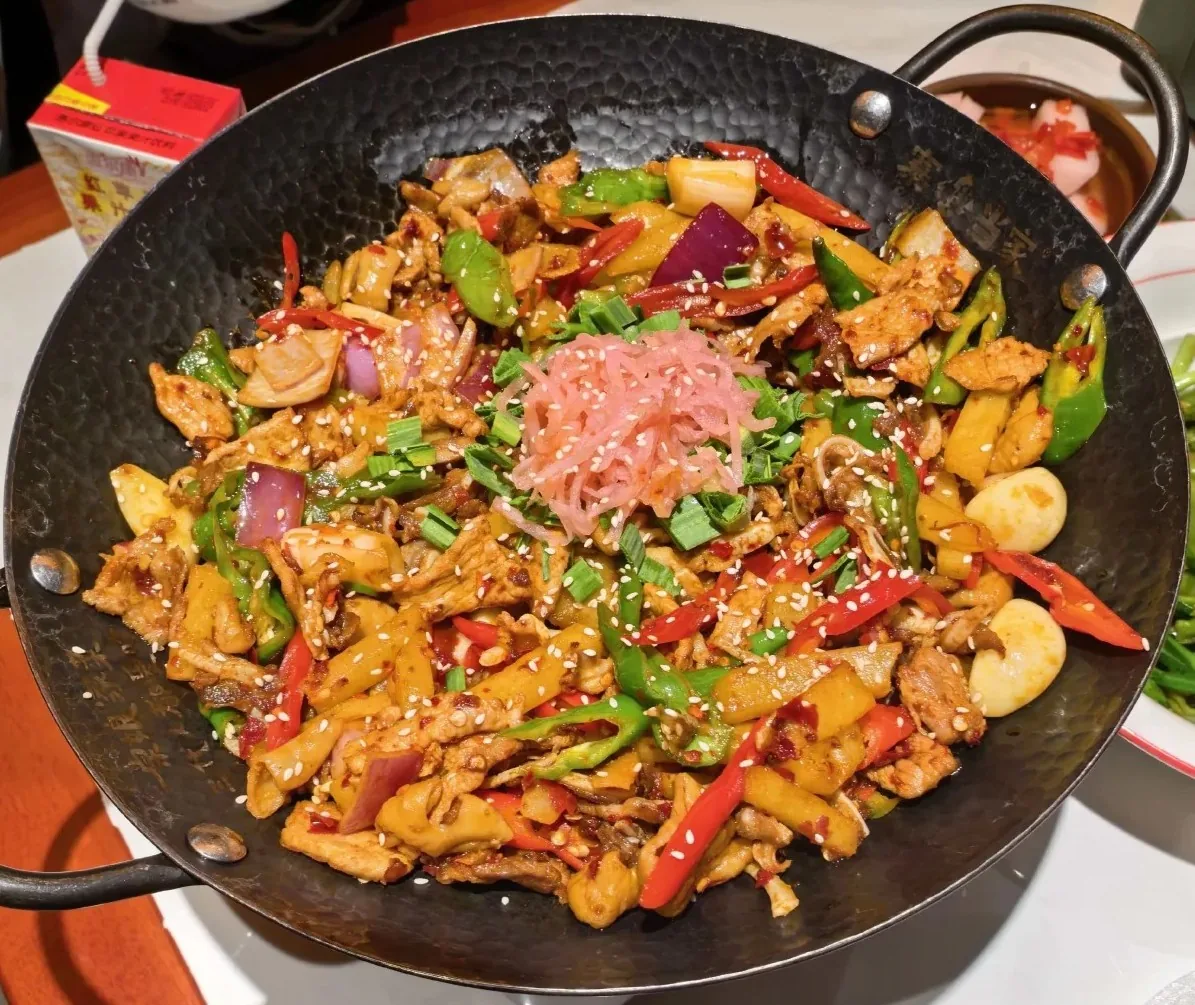
In the dry-pot style, meat, chillies, onion and vegetables reduce together until the glossy seasoning clings to every piece.
Dry pot and soup pot create different meals
A dry pot has little liquid to ladle. Its concentrated seasoning grows more roasted as the pot continues to heat, while chilli, Sichuan pepper and oil remain on the surface of the food. This version presents the cured-meat aroma and restaurant-style seasoning most clearly; ordering it mild leaves room for both the smoke and the spice.
A soup pot retains enough broth to soften the salt and chilli. Radish and tofu absorb the liquid, and more vegetables can be cooked slowly at the table. Choose it when the group prefers a gentler, more leisurely meal.
The name remembers life along the Lishui River
A Hunan government account traces sanxiaguo to food prepared for timber rafters along the Lishui River. Cooks blanched, cut, seasoned and braised ingredients in advance, then assembled a small pot when customers arrived. A representative of the Zhangjiajie catering association explains the “three” as three trips through the pot during this process.
Local cultural material also preserves an older account in which cured pork, tofu and radish were cooked together as a hecai, or combined dish, before a military departure at the end of the year. These traditions connect the dish with combined ingredients, advance preparation and quick service. Its exact origin remains part of local oral and cultural tradition.
Zhangjiajie sanxiaguo is listed as municipal intangible cultural heritage. Restaurant versions now add more meats, vegetables and the modern dry-pot format, allowing the dish to carry local memory while continuing to change on contemporary menus.