Journey To ChinaLast updated
Spring herbs perfume a soft rice cake
Haozi baba carries the flavour of young spring greens. The leaves bring a fresh herbal scent and a gentle bitter edge to the dough. Glutinous rice flour makes the centre soft and sticky, while non-glutinous rice flours give it enough structure to hold its shape. Savoury versions containing cured pork add smoke, salt and richness against the bright herbal flavour.
For a first taste, choose a savoury cured-pork version that has been steamed and then browned on both sides. Contact with the pan creates a thin, aromatic crust while the centre remains soft; herb, rice and cured-meat aromas become more concentrated.
Steaming keeps the herbal flavour gentle
A steamed haozi baba stays soft throughout. Fresh from the steamer, the rice dough is moist and sticky and the leaves are easier to smell, making it a gentle hot snack.
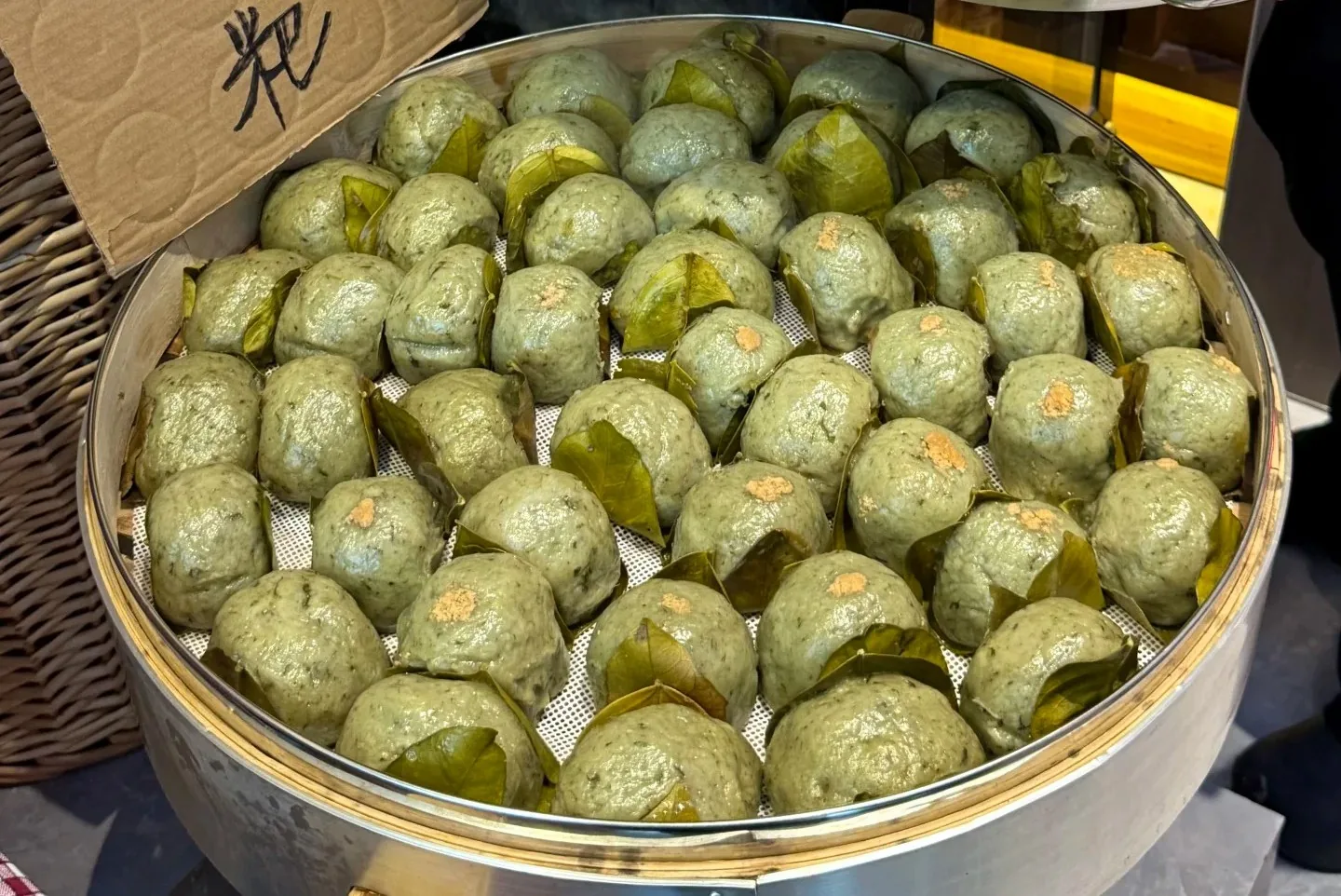
The small cakes lie flat in the steamer so the dough remains moist and tender; haozi leaves give them their natural green colour.
Zhangjiajie versions use white haozi or muhao leaves with a mixture of glutinous, japonica and indica rice flours, and may add cured pork for savour. Eating the cake straight from the steamer highlights softness; pan-frying introduces a toasted crust to the same rice dough.
A rice snack associated with the Qingming season
Eating green haozi cakes around the Qingming festival is a recognised custom in parts of Hunan. Tender spring leaves bring their aroma and natural colour into the rice dough, making a freshly prepared cake around the festival a particularly clear expression of this seasonal food.
Zhangjiajie's savoury style combines haozi leaves, several rice flours and cured pork. Travellers who avoid pork should ask whether the cake contains cured pork before ordering.