
Journey To ChinaLast updated
Zhangjiajie National Forest Park guide
See the real sandstone landscape behind the movie image
Many international visitors first recognize the park through the floating mountains of Avatar. The film landscape was computer-generated; the park's real pillars are narrow quartz-sandstone towers rising from forested ravines. After rain, mist fills the lower valleys and leaves the treed summits suspended above it.
The park joins high mountain viewpoints with valley streams. Yuanjiajie sits on the upper layer, where cliff paths look across Qian Kun Zhu, Mihun Tai and the First Bridge under Heaven. Bailong Elevator connects this layer with the valley, while shuttle buses link it with Tianzi Mountain and other sectors.
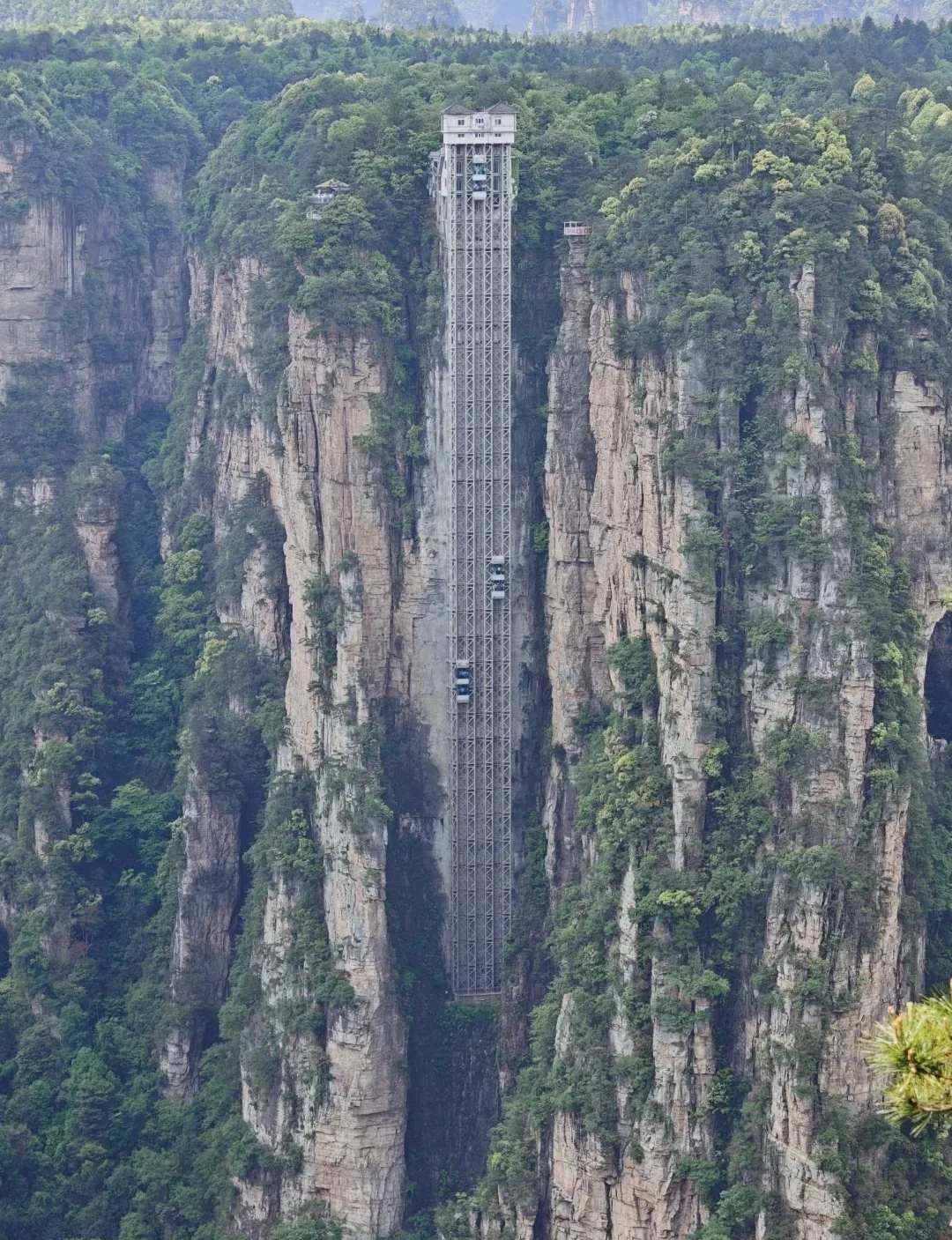
Bailong Elevator is built into a steep cliff and links a valley transport node with the upper sightseeing layer.
From the valley, the pillars appear as walls overhead; from above, the eye moves across successive ridges. Clear weather reveals horizontal bedding, vertical fractures and forested summits, while rain and wind make the same viewpoint change quickly.
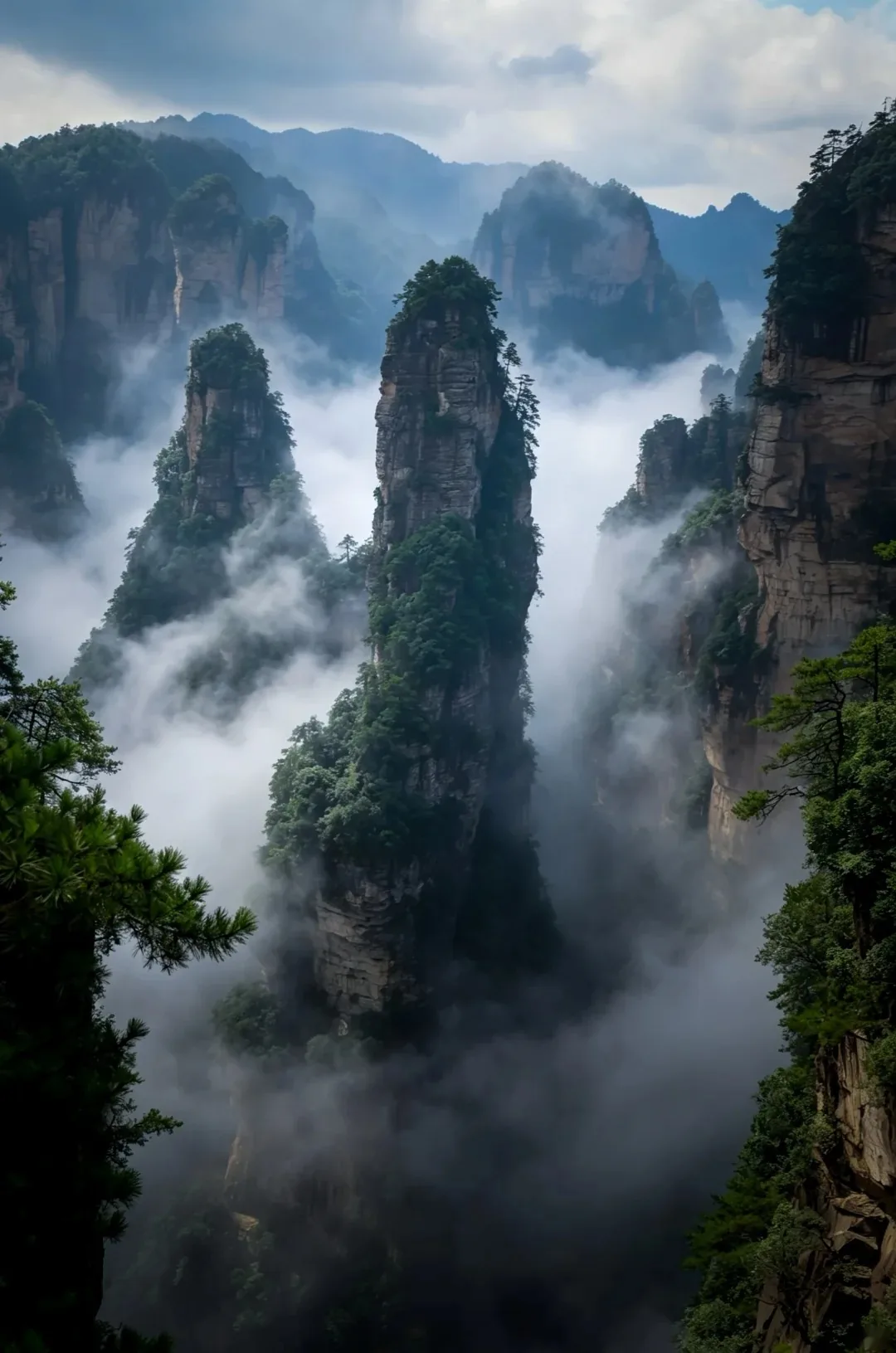
Low cloud settles between the pillars, leaving narrow rock towers and trees visible above the mist.
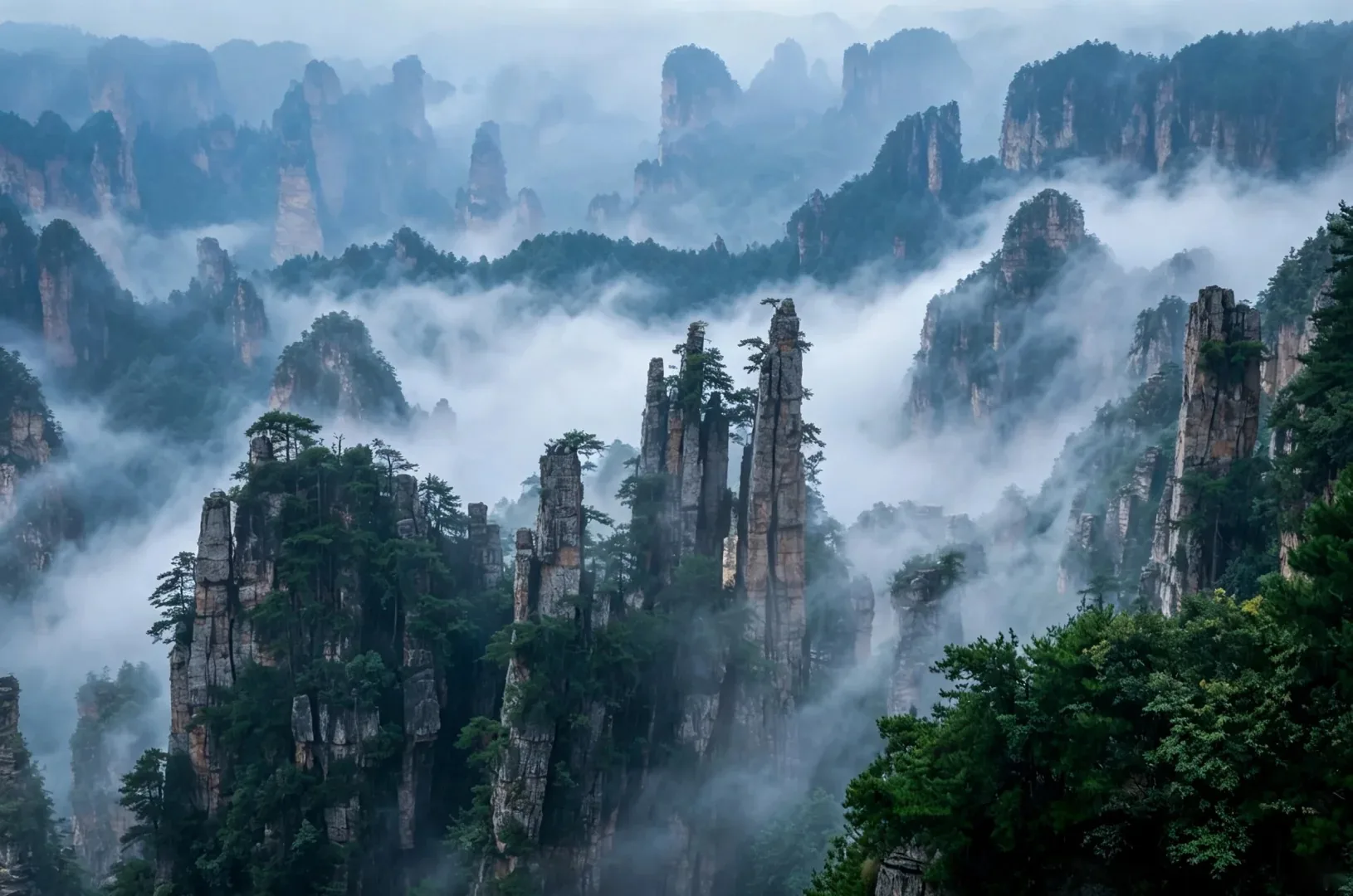
The nearer pillars remain distinct while more distant peaks fade into layers of cloud.
Upper paths alternate close pillars and wide views
At Mihun Tai, dense groups spread across a broad panorama; farther along, individual towers such as Qian Kun Zhu come closer before the First Bridge under Heaven joins two rock masses. The combination of narrow profiles, summit trees and mist explains the comparison with Pandora. Qian Kun Zhu is also widely called “Hallelujah Mountain” in tourism coverage, but Qian Kun Zhu remains the official name.
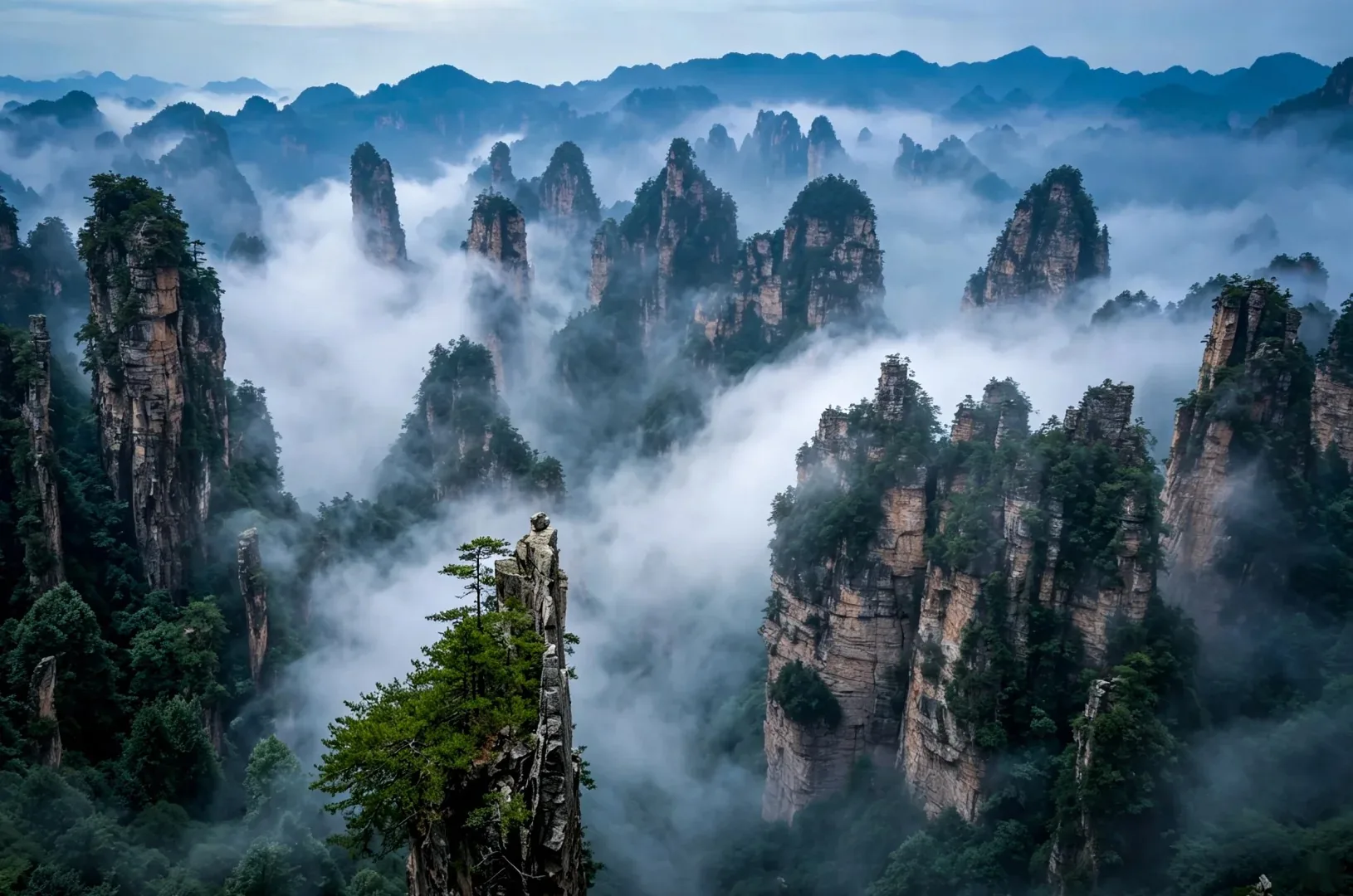
As cloud moves through the ravines, a continuous panorama becomes separate island-like silhouettes.
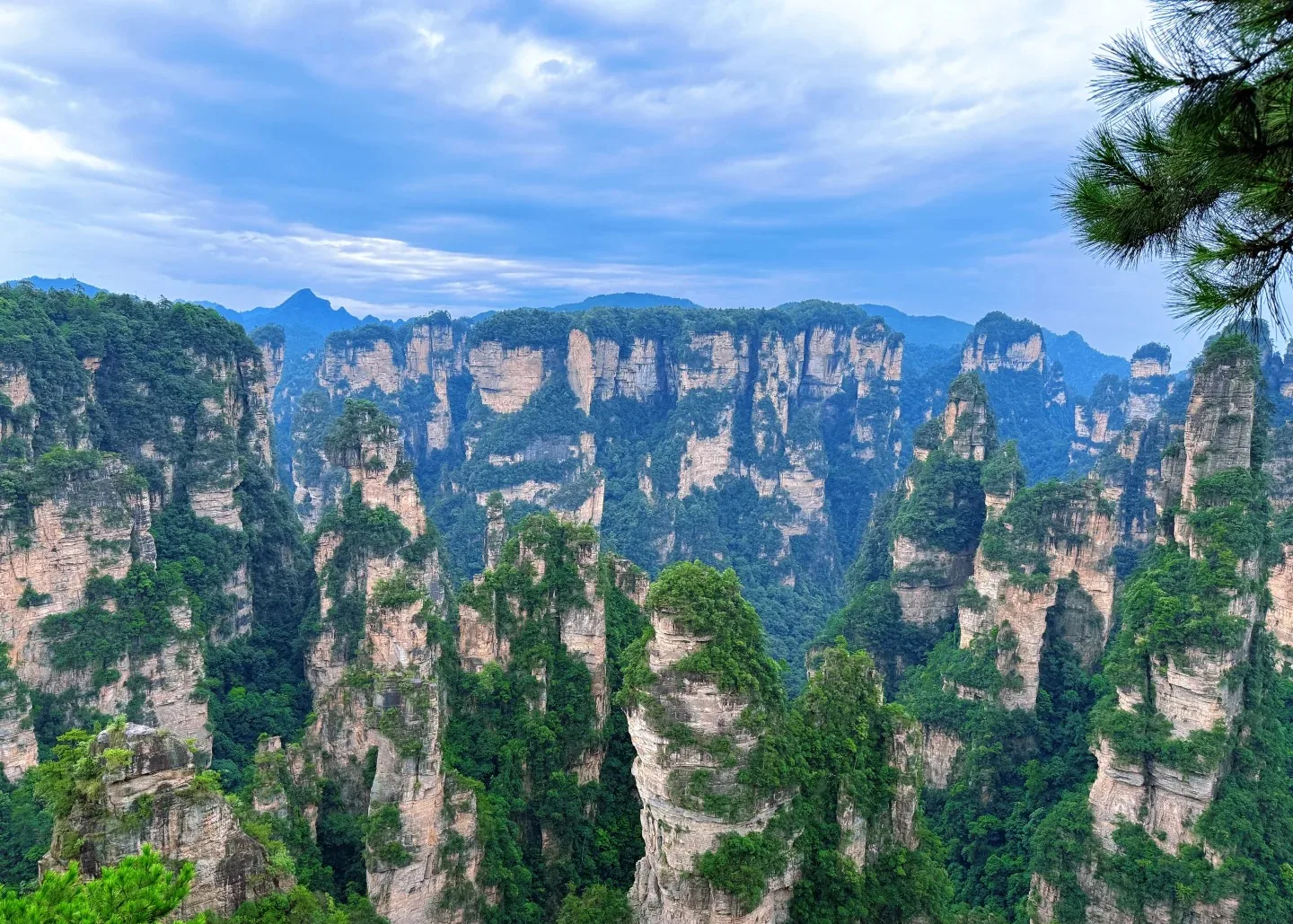
Good visibility separates summit forest, exposed rock and vegetation deep in the ravines.
Yuanjiajie and Tianzi Mountain are connected by park buses. Yuanjiajie gives closer views of individual pillars and cliff paths; Tianzi Mountain opens the range into a broader panorama. A day that includes both can progress from wide views to close formations before descending by cable car or Bailong Elevator.
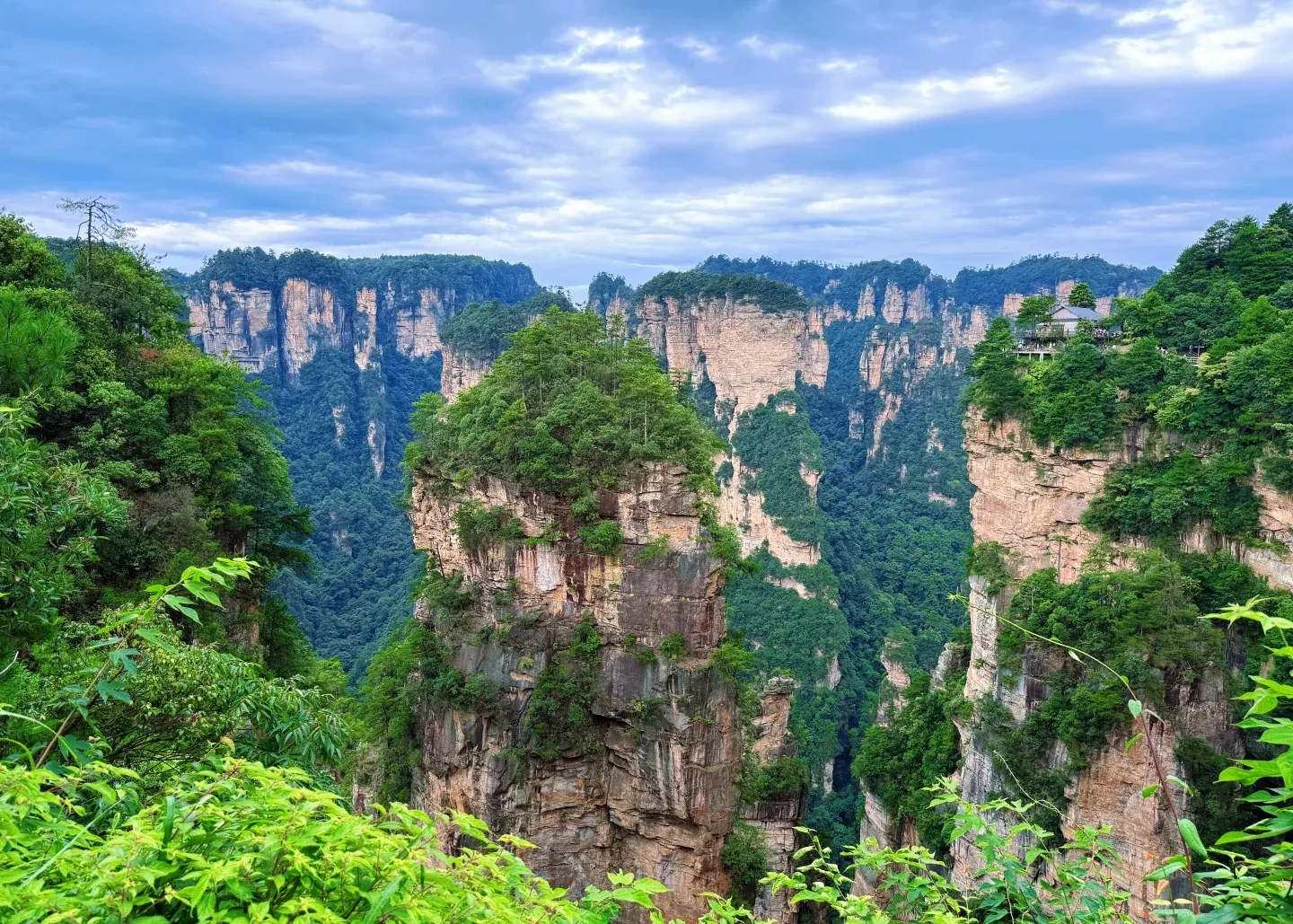
At this viewpoint the opposite wall sits at a similar height, allowing the eye to travel beyond the nearer pillars.
Quartz sandstone explains the shapes
Wulingyuan's pillars stand in thick quartz sandstone with near-horizontal bedding and dense vertical joints. Rain enters the joints, erosion cuts along them, and collapse and weathering widen the separations until broad walls become isolated towers.
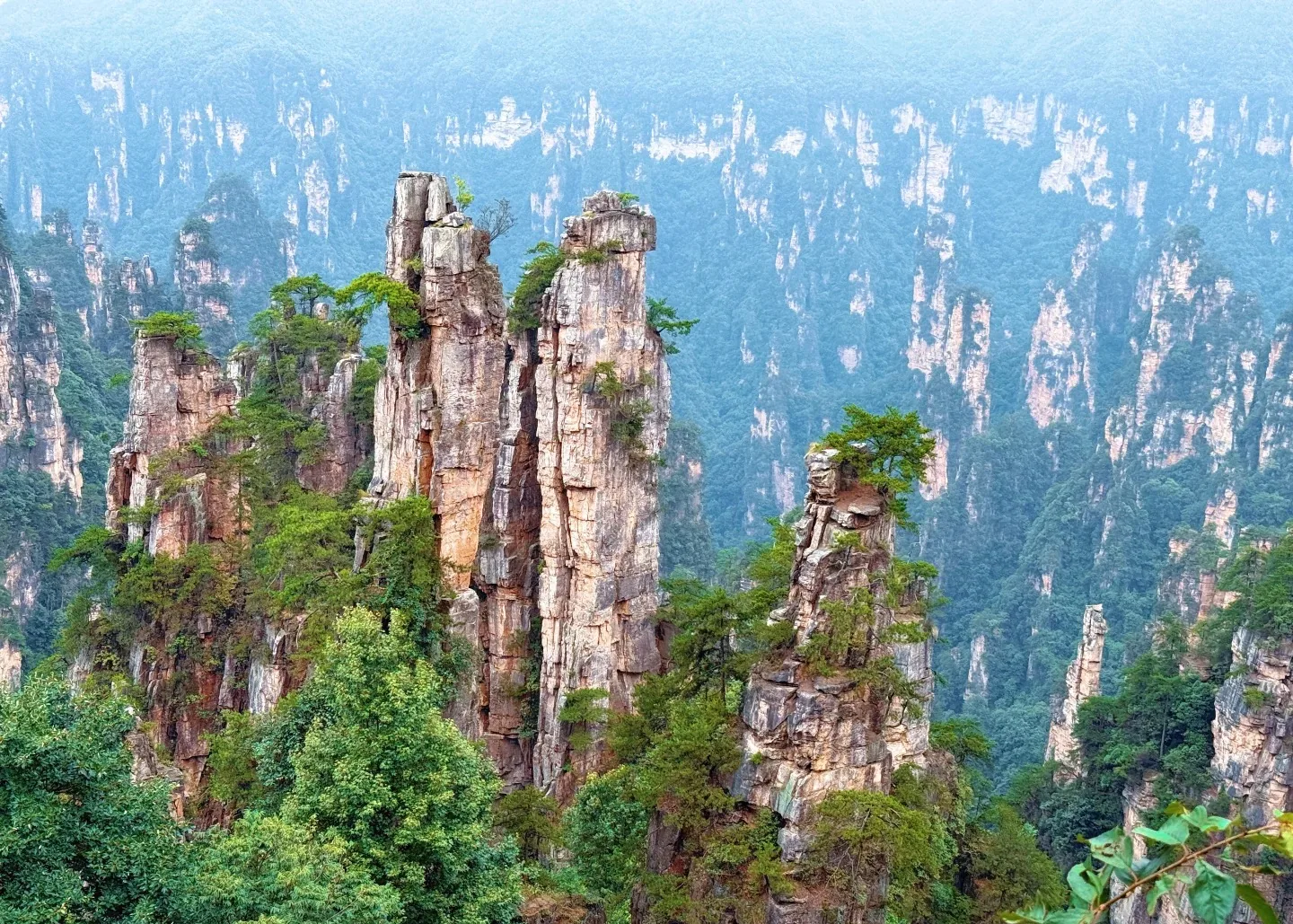
The close view shows the vertical fractures and near-horizontal layers that shape the rock profile.
Official geological descriptions group stone pillars, ravines, walls, natural bridges and platforms within the Zhangjiajie landform. The park was established in 1982 as China's first national forest park. In 1992, Wulingyuan was inscribed as a UNESCO World Natural Heritage site; the heritage area contains more than 3,000 quartz-sandstone pillars, many over 200 metres high.
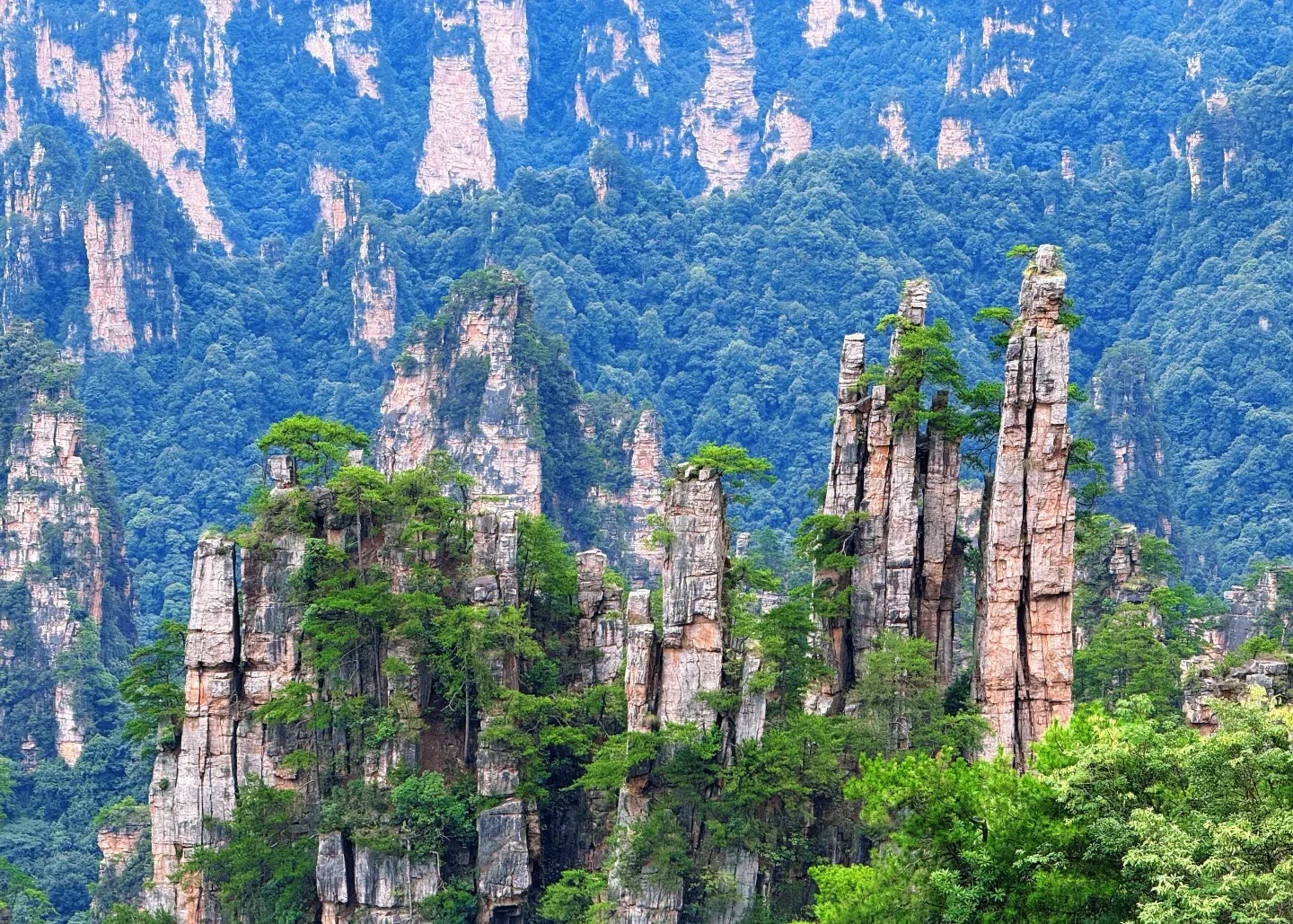
Forest on summits and in rock joints makes the vertical cutting of the larger rock mass easier to read.
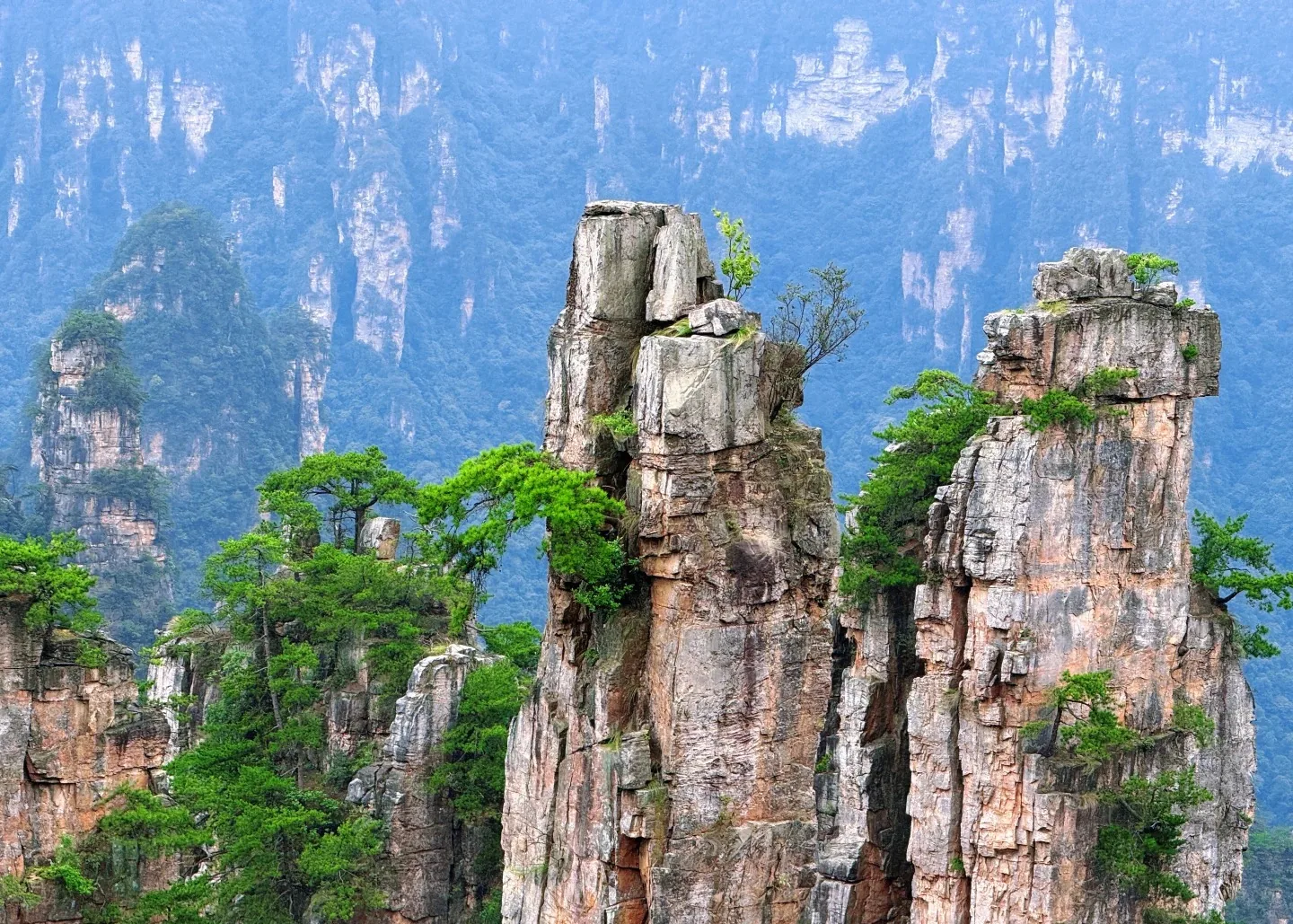
Close inspection reveals bedding, fractures and trees rooted on the summit of a pillar.
Choose the route by the order of views
East Gate A approaches Tianzi Mountain first, then crosses the upper layer to Yuanjiajie and descends by Bailong Elevator. East Gate B takes Bailong Elevator first, reaches Yuanjiajie earlier, then continues to Tianzi Mountain and descends by cable car. The two routes cover much of the same core; the choice changes which wide or close view comes first.
The South Gate route combines Huangshizhai with Golden Whip Stream. Huangshizhai offers another summit panorama, while the valley path follows water and forest below the pillars. A two-day visit can separate the East Gate mountain circuit from this summit-and-stream day.
Tickets and reservations
A normal reference opening period is 07:00–17:00, but the reserved time, gate, weather and park notices control the day. As checked in September 2026, the standard Wulingyuan core ticket was 165 yuan and valid for four consecutive days from first use; shuttle buses, cable cars and Bailong Elevator are separate.
Reservations are organized by gate, time slot and route; East Gate bookings also require A or B. Carry the original passport used for booking and confirm the current verification process. Heavy rain can close or reroute facilities, so check the official notice before departure.