
Journey To ChinaLast updated
Fenghuang Ancient Town guide
Follow the Tuo River through the old town
The Tuo River is the clearest way to orient yourself. Wooden stilt houses line the water, the North Gate dock joins river and land routes, bridges connect both banks and stone lanes climb behind them. From the river the town reads as a whole; in the lanes, doorways, courtyards, shops and daily life come close.
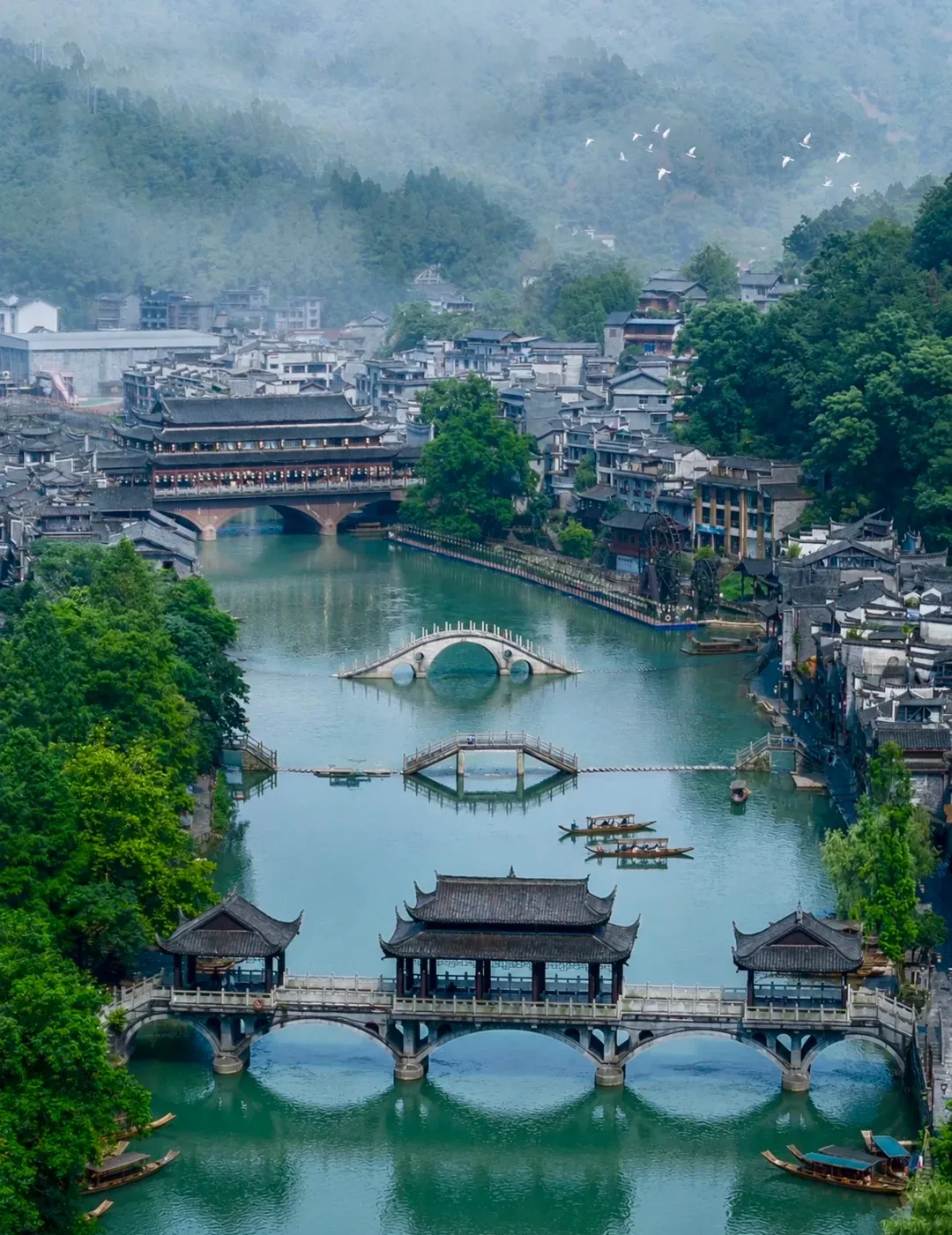
From the opposite bank, bridges, riverside buildings and hillside lanes form Fenghuang's clearest overall view.
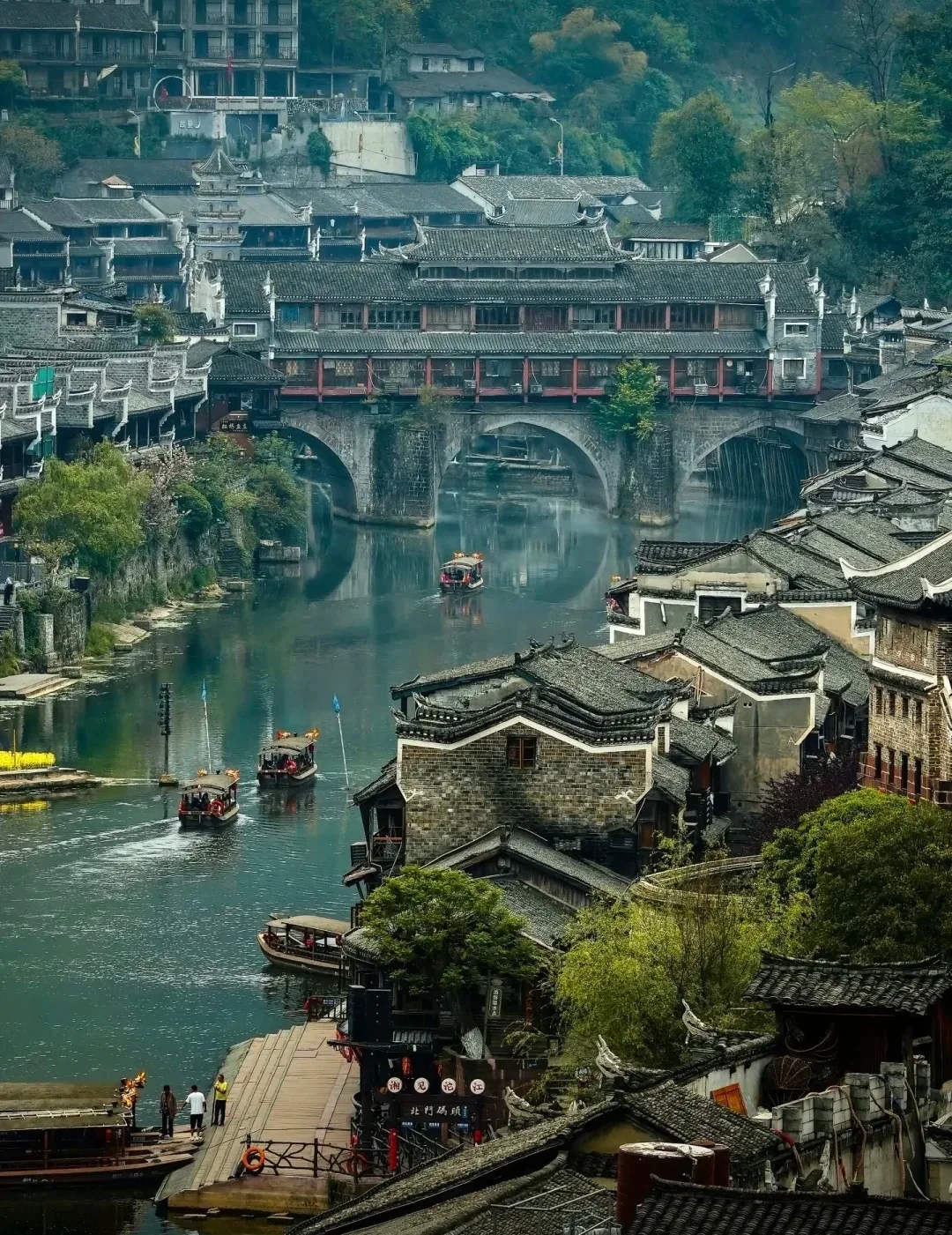
The houses follow the river's changing level, with timber supports below living spaces above.
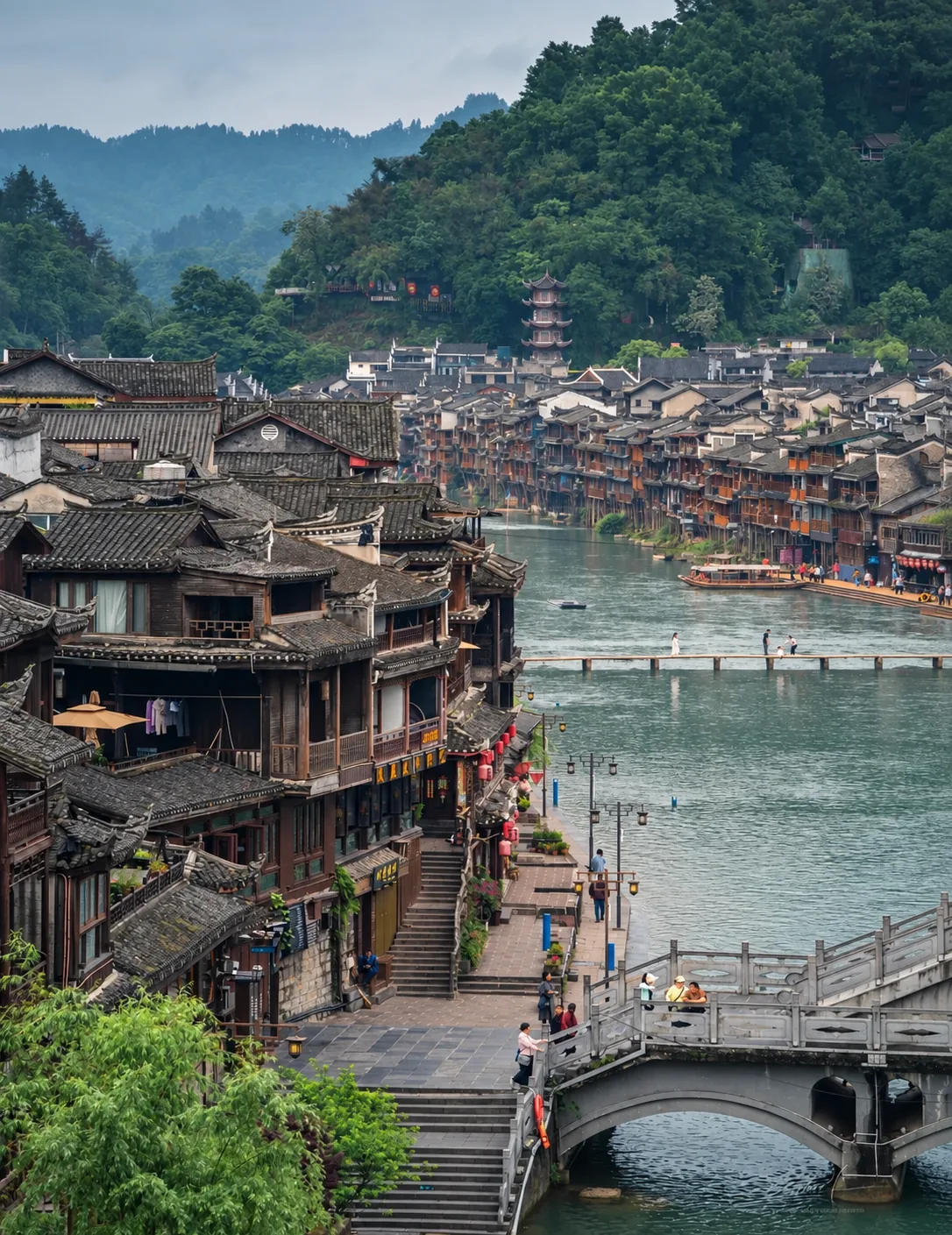
The path between buildings and river gives close views of docks and entrances to the lanes behind.
A bridge is both a crossing and a place to look back along the river axis.
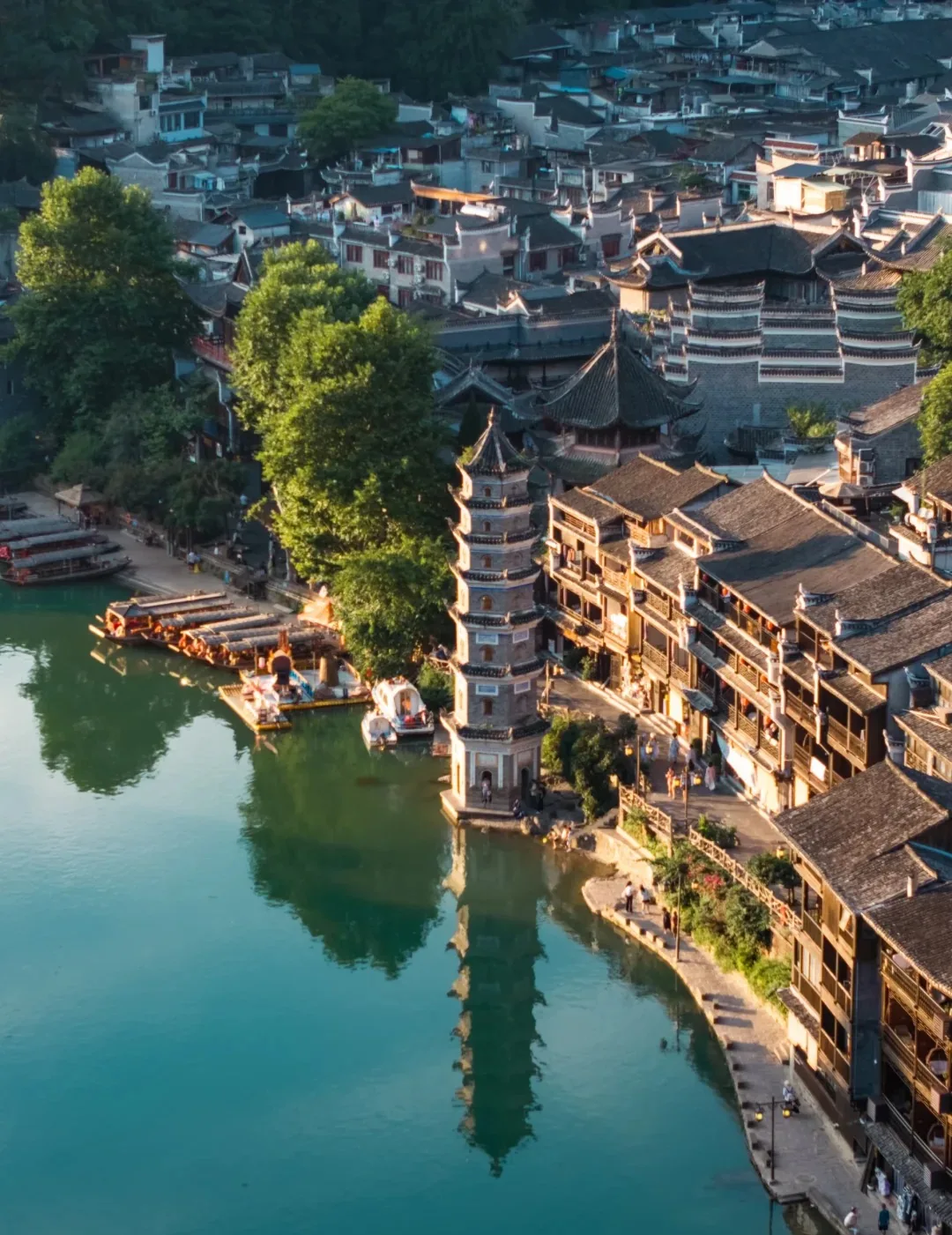
Starting near the North Gate, walk by the stepping stones and waterside path toward Hongqiao, then continue toward Shawan and Wanming Pagoda as the river opens out.
Qing frontier history in the street plan
The main form took shape around 1704. Qing administrative change, military management, crafts and commerce altered the frontier settlement. Walls, gates and docks answered defence and movement, while shops, guild halls and workshops show the role of trade. Miao, Tujia and Han communities left temples, academies, churches, stages and homes within one town.
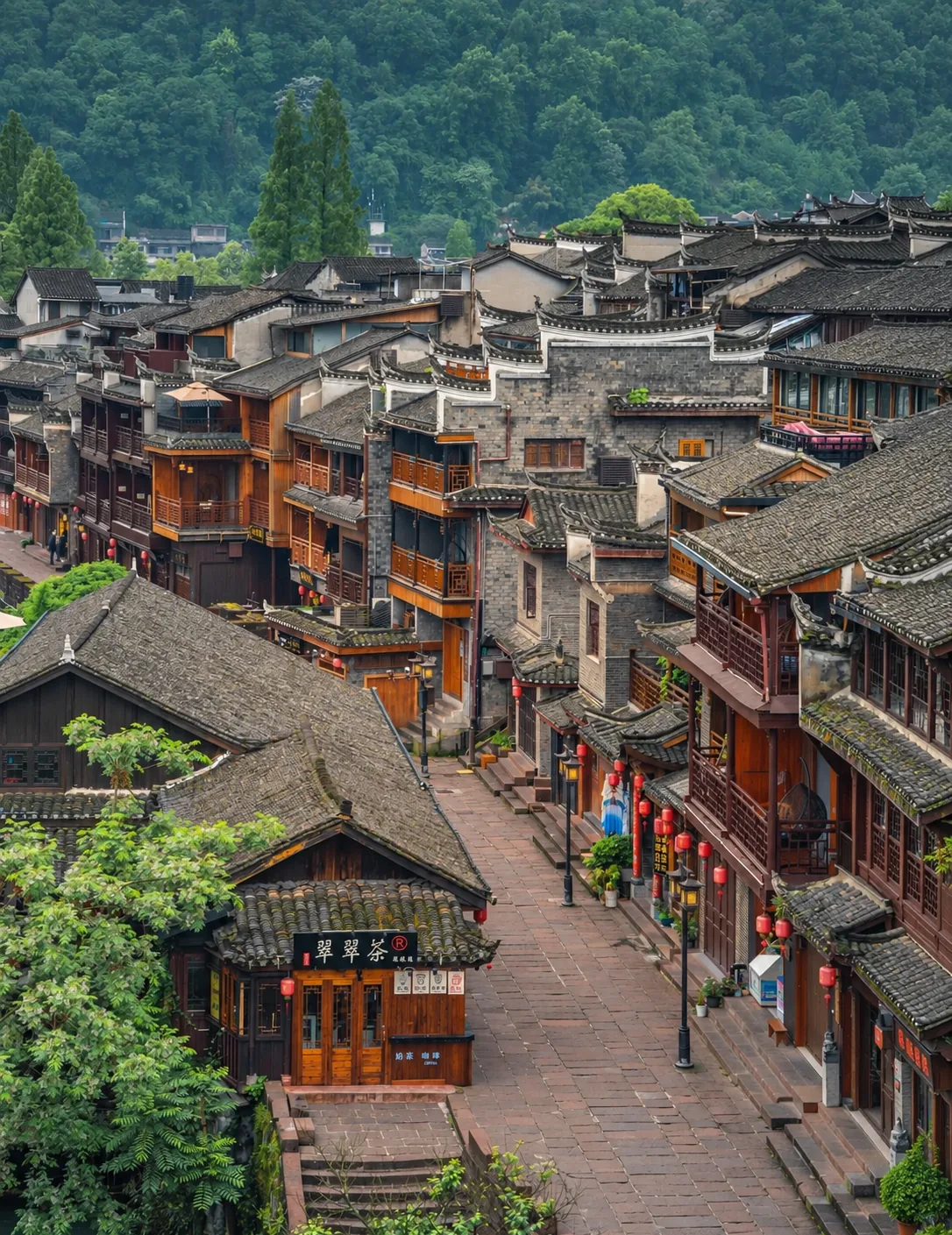
Leaving the river narrows the view to doors, courtyards and paving while the slope shows how the town climbs away from water.
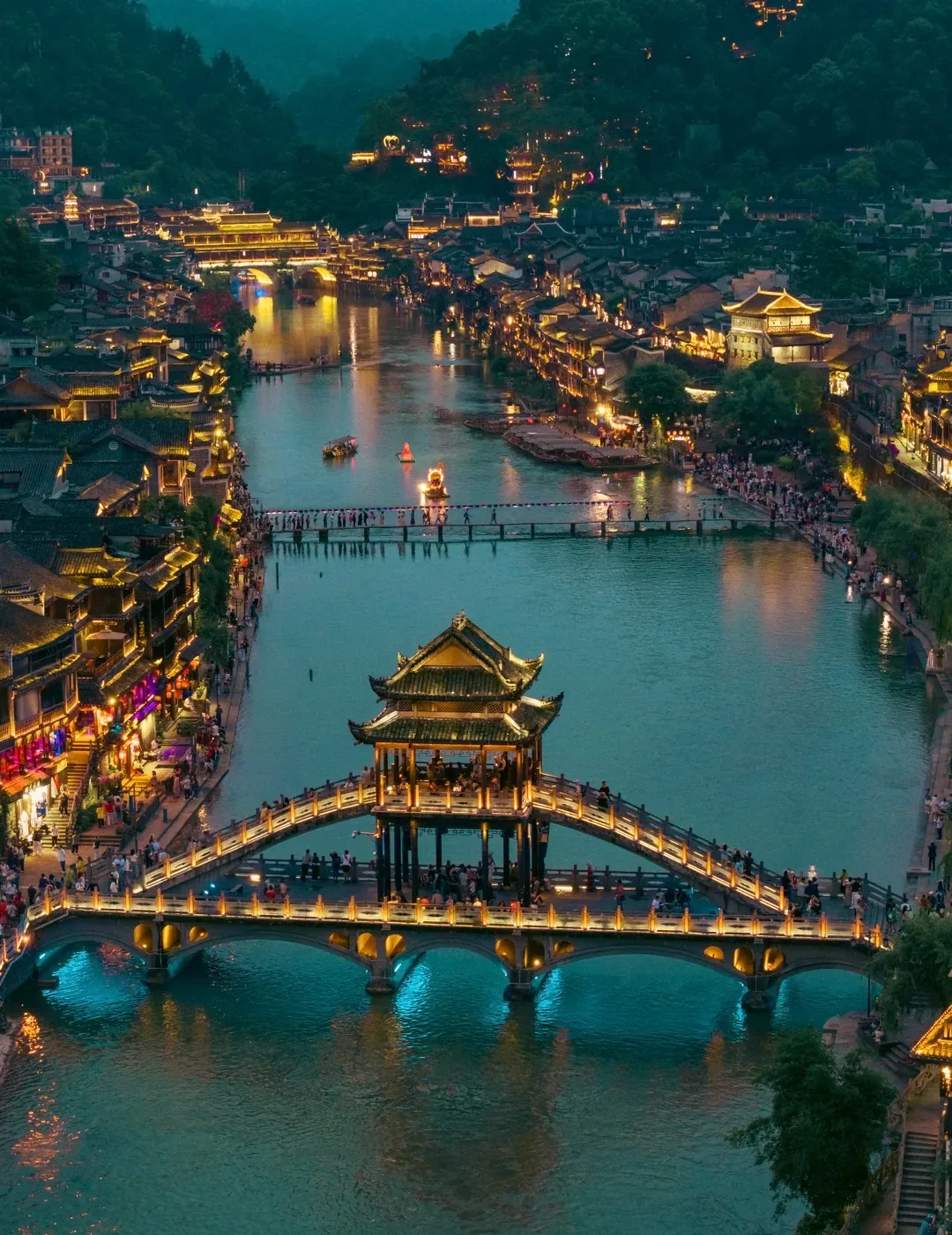
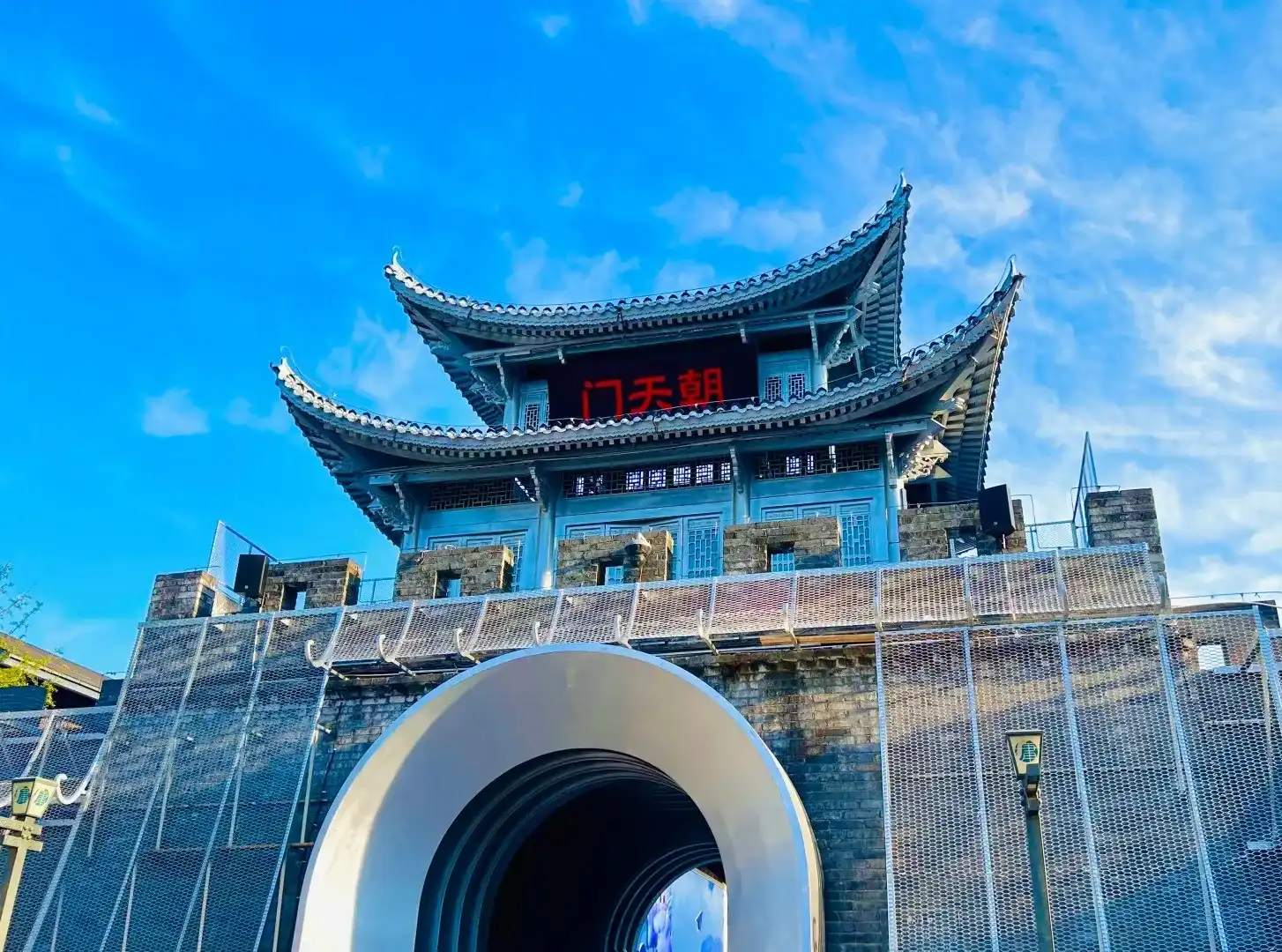
Towers, gates and bridges retain clues to old transport and defence.
Fenghuang became a National Historic and Cultural City in 2001. Shen Congwen's former residence connects the built environment with the writer's memory of western Hunan.
Dawn, day and night
Dawn reveals residents' opening and delivery routines; daylight separates timber, grey tile, wall stone and hillside layers; dusk holds those materials together with the first lights.
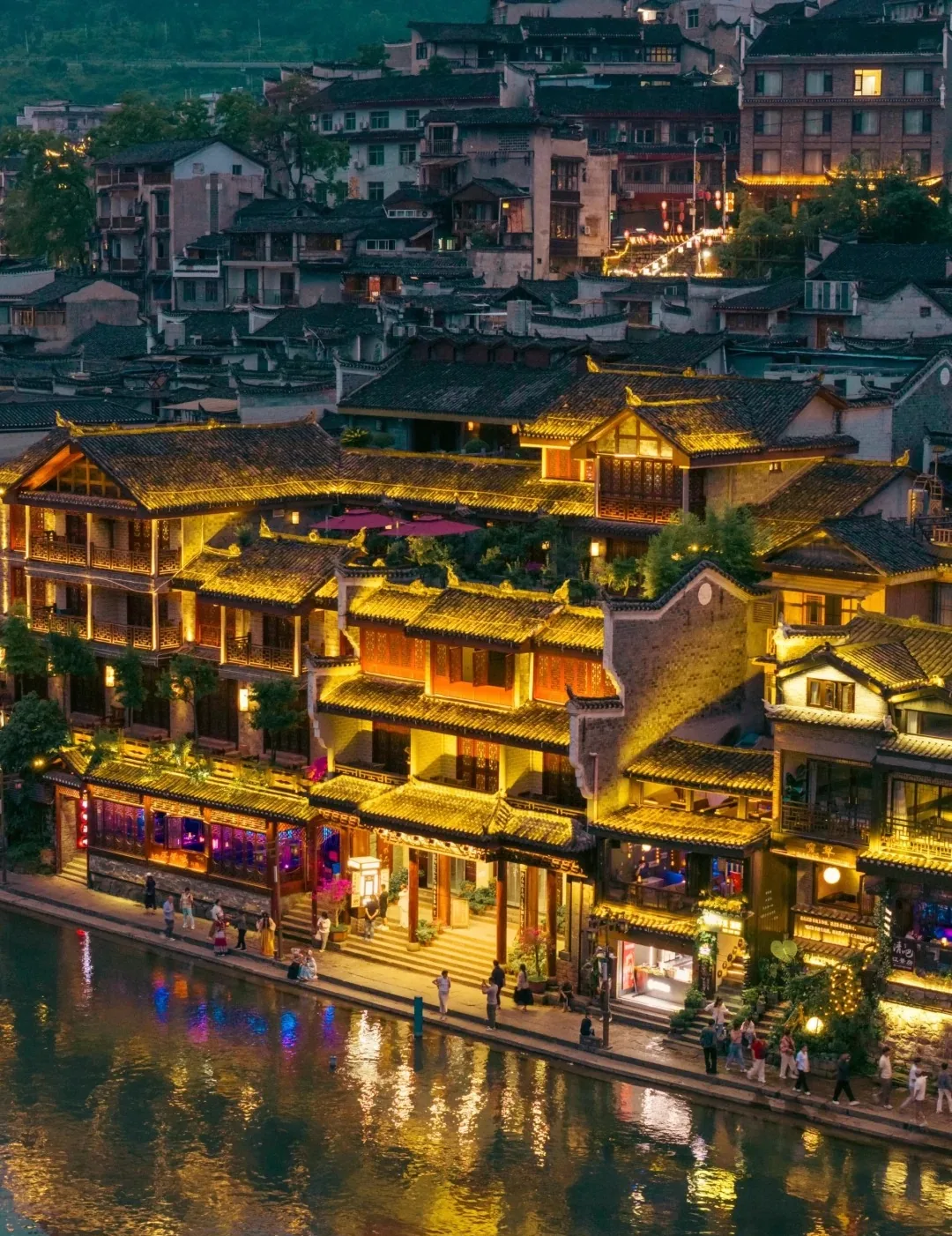
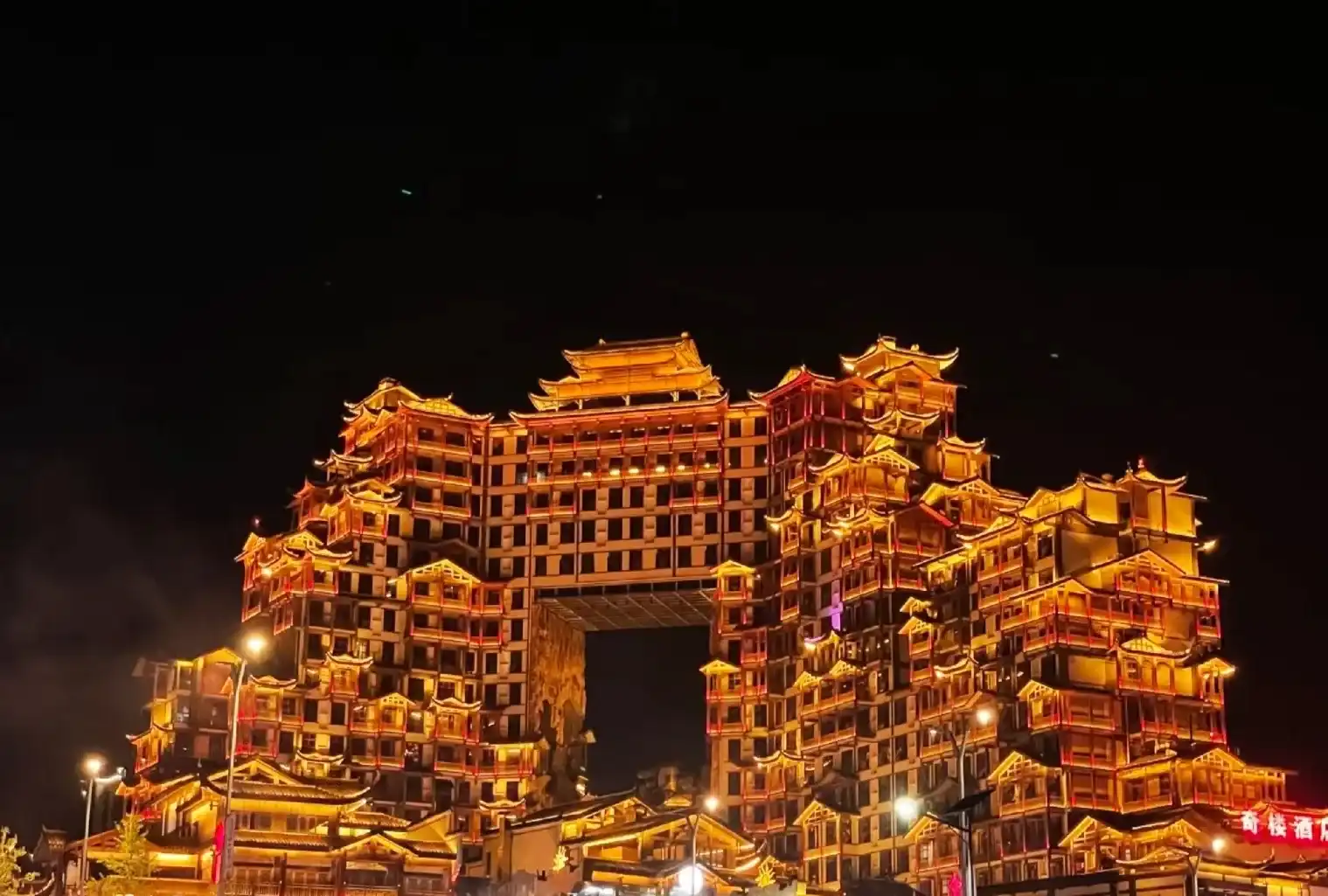
Dusk makes the change from daylight to illuminated roofs and bridges easy to see.
After dark, lights reflect in the river and boats, bridge crowds and Hongqiao food stalls quicken the pace. A night stay separates the evening view from the next morning's quieter lanes.
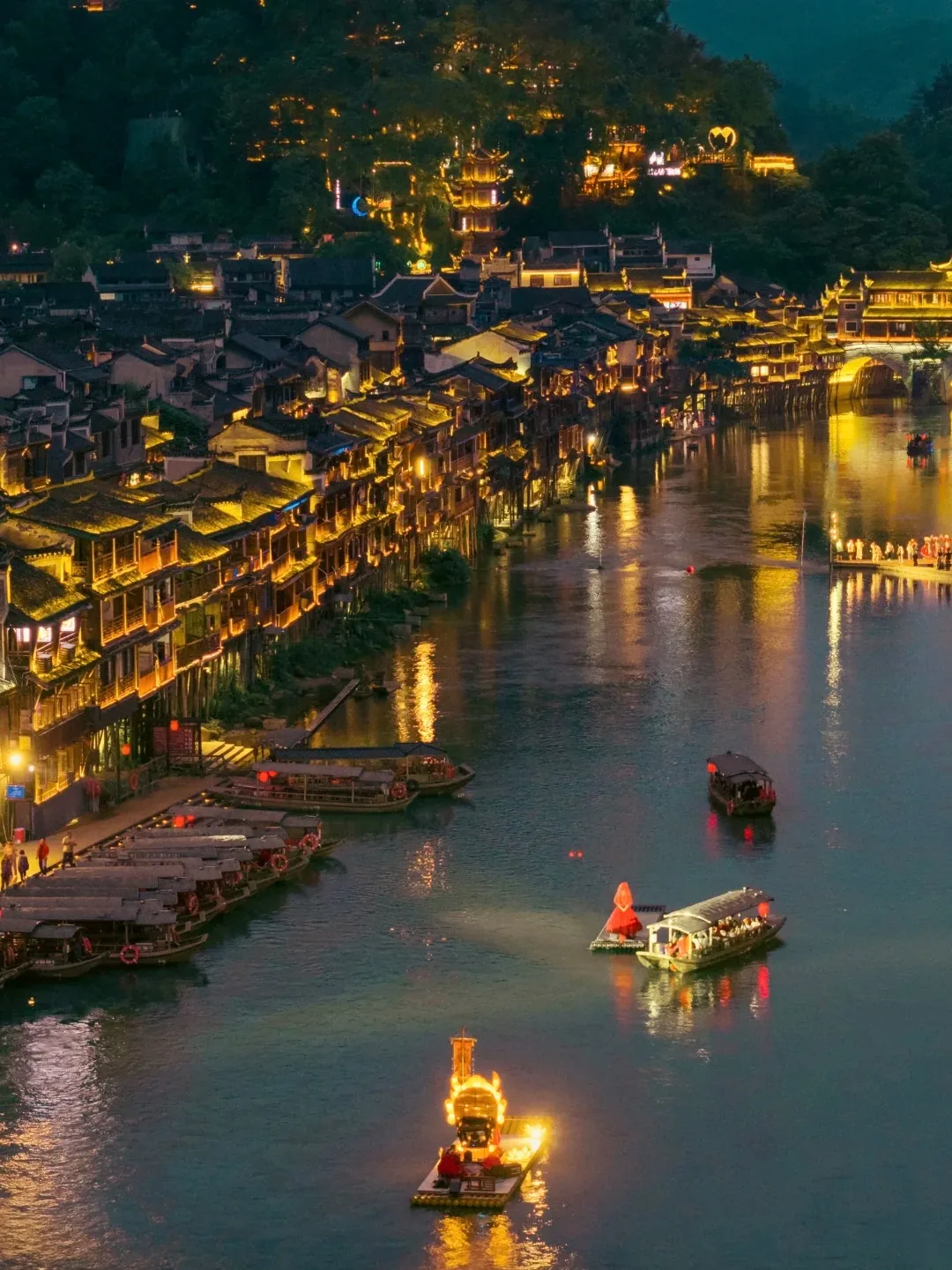
At night, riverside paths and bridges become the main activity areas.
Free streets and the rail connection
Public streets require no entrance ticket. Former residences, gate towers, river boats and some interior sites charge separately. From Zhangjiajie West, take high-speed rail to Fenghuang Gucheng station, then the sightseeing maglev or the announced connection into town; the official reference single fare is 28 yuan, subject to the arrival-day service.