
Journey To ChinaLast updated
Tianmen Mountain guide
Tianmen Cave makes the mountain's scale immediate
Tianmen Cave opens 131.5 metres high, 57 metres wide and 60 metres deep in the middle of the mountain. From the square below, the opening fills the cliff face and 999 steps gather toward it, placing cave, slope and valley in one vertical view.
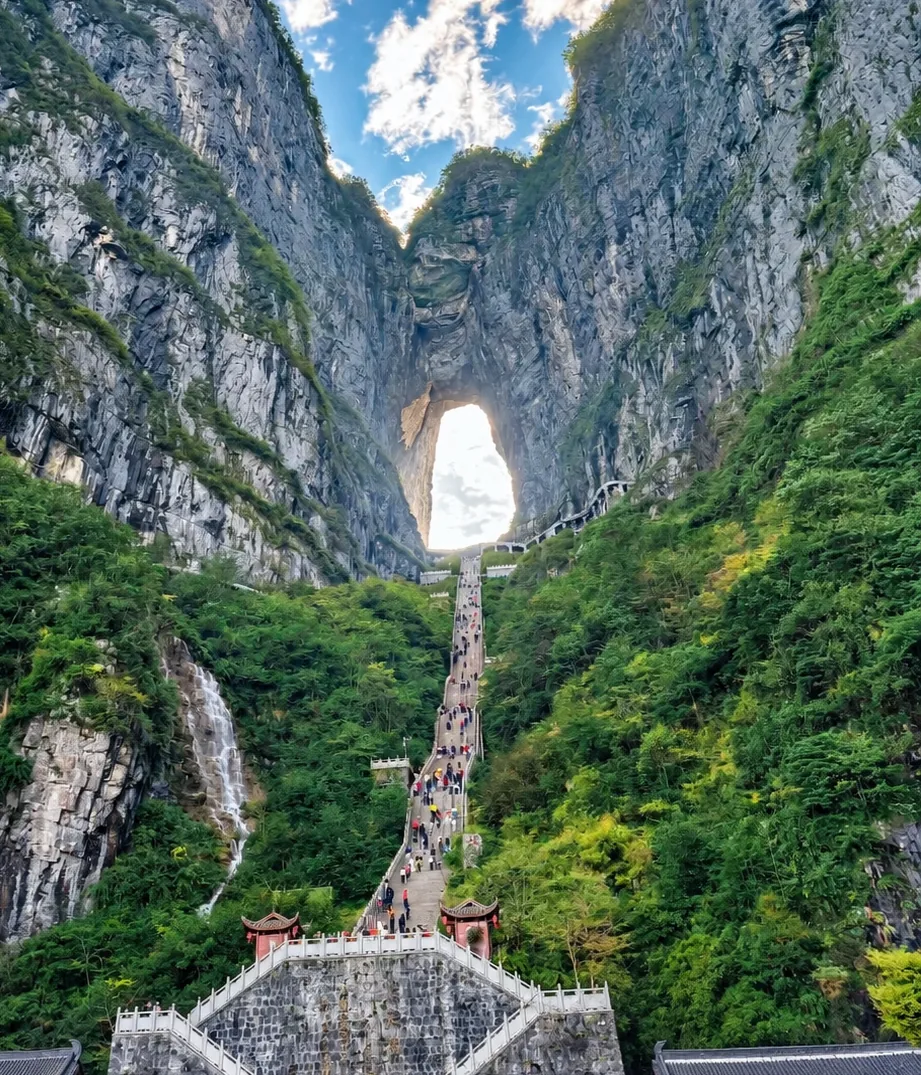
The square below the cave lets visitors read the climb's slope and length before setting out.
Looking back from inside frames the steps, square and winding road. A mountain escalator links the cave area with the summit in about 20 minutes. The mountain is formed in carbonate rock shaped by uplift, running water and dissolution; local records date the “opening” to 263 CE, when Sun Xiu renamed Songliang Mountain Tianmen Mountain.
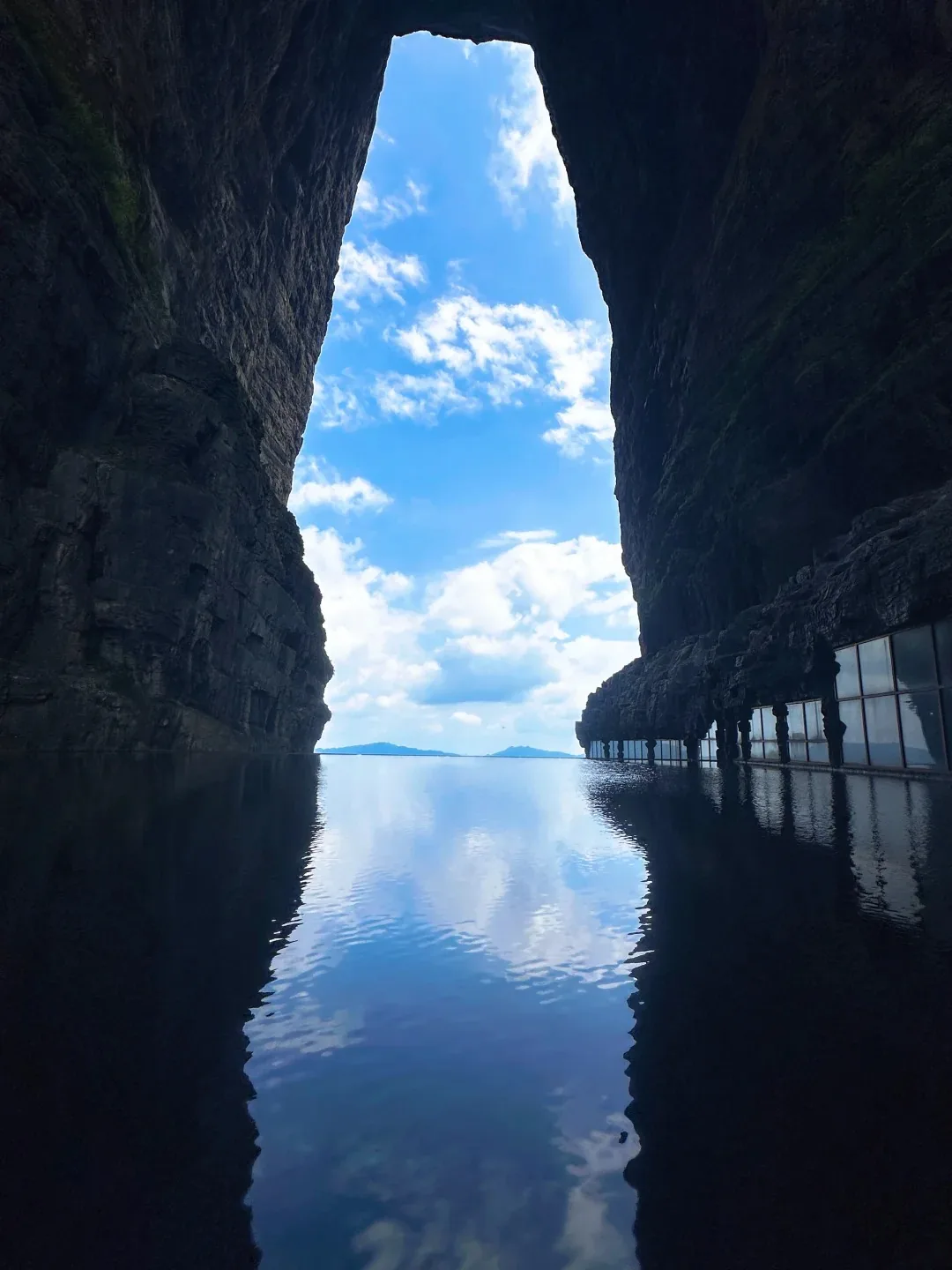
From inside, the cave becomes a natural frame for the steps, square and valley.
The city cableway becomes part of the ascent
The lower station stands in Zhangjiajie's urban area. Cabins leave buildings, cross fields and valleys, then approach the mountain beside the road that repeatedly bends up the slope. The line is about 7,454 metres long, rises roughly 1,277 metres and takes about 28 minutes.
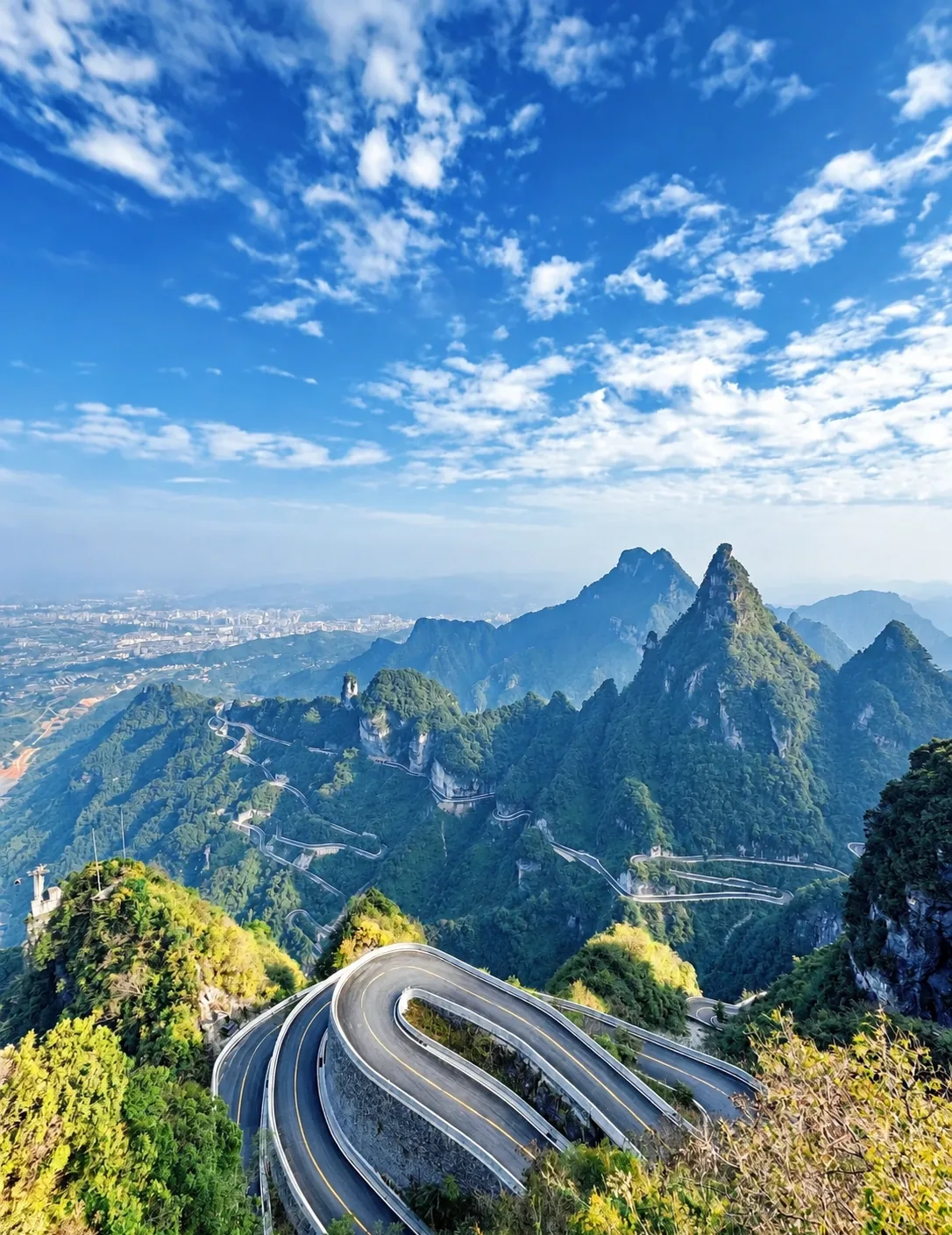
From the cableway and high viewpoints, the road can be traced through its repeated turns.
Summit paths follow the mountain edge
At the top, vertical ascent becomes a lateral walk. East and west paths cross forest, cliff edges and viewpoints; the 1,600-metre Ghost Valley Plank Walk hugs the cliff, while Lingxiao Terrace opens a wider outlook. The glass walkway is about 60 metres, a short section within a circuit of timber paths, steps and woodland trails.
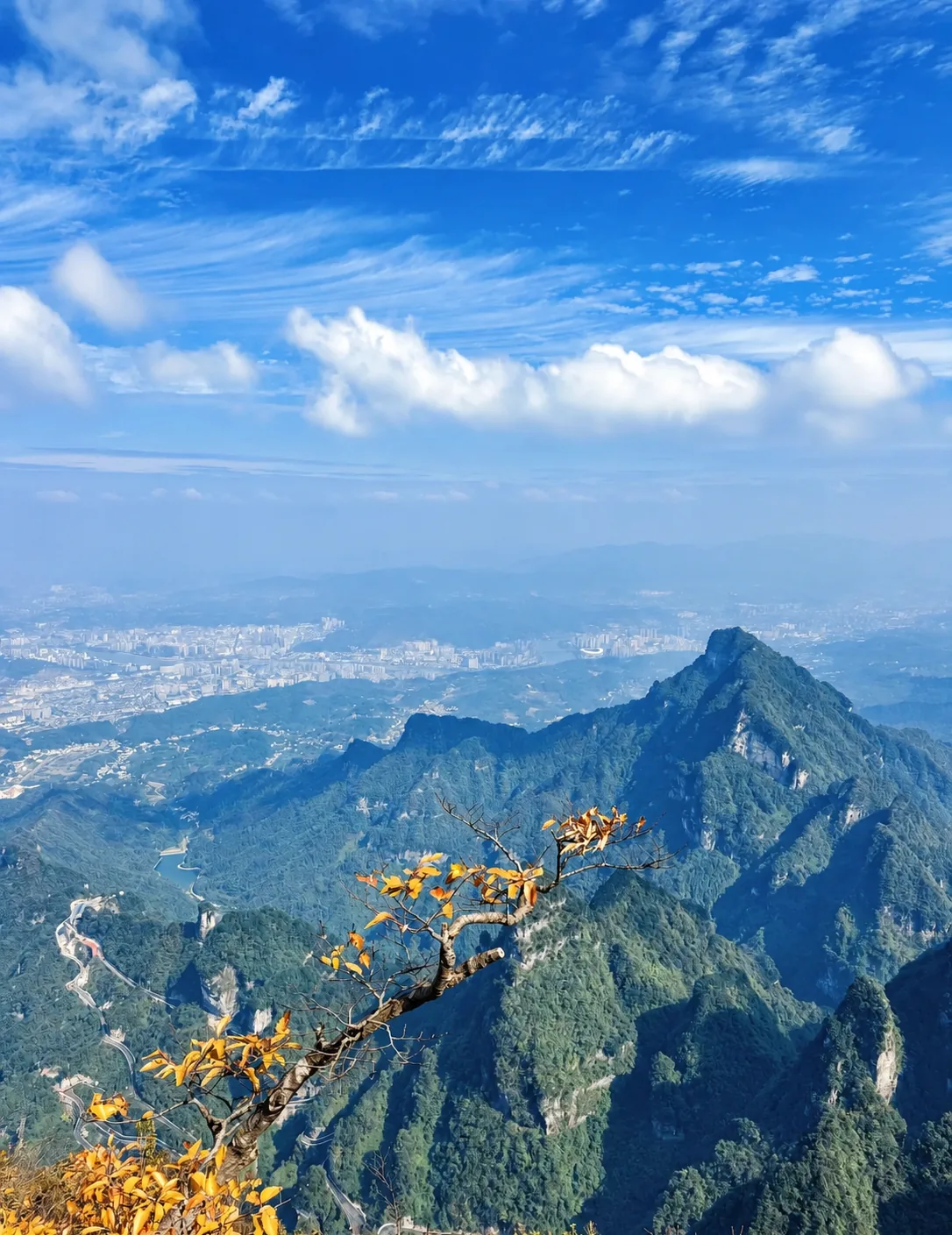
The summit puts the plateau edge, deep valley and distant mountains in a wider frame than the cave square.
Tianmen Temple adds a long religious history
Tianmen Temple began in the Tang period, when Buddhist and Daoist activity coexisted, and later became primarily Buddhist, flourishing in the Ming period. The present complex was rebuilt on the original site in a Qing-style layout with a gate, bell and drum towers, the Hall of Heavenly Kings, the Mahavira Hall and Guanyin Pavilion.
Routes A, B and C reorder the three levels
A starts at the city cableway, changes to a sightseeing vehicle for Tianmen Cave, uses the mountain escalator to reach the summit and descends by the fast cableway. B starts on the mountain-gate side, reaches the cave earlier and returns by sightseeing vehicle and the full city cableway. C mainly uses the fast cableway in both directions and concentrates on the cave and summit. Weather or operations can temporarily organize A or B like C.
Reservation and ticket details
Common packages include admission, return cableways, the sightseeing bus and mountain escalator. The government-listed base admission is 62 yuan; the package total depends on the route and included transport. Real-name, time-slot reservations require A, B or C. Book with a passport, carry the same original document and check the official notice for weather or maintenance changes.