
Journey To ChinaLast updated
Yellow Dragon Cave guide
A layered cave alternates paths, chambers and water
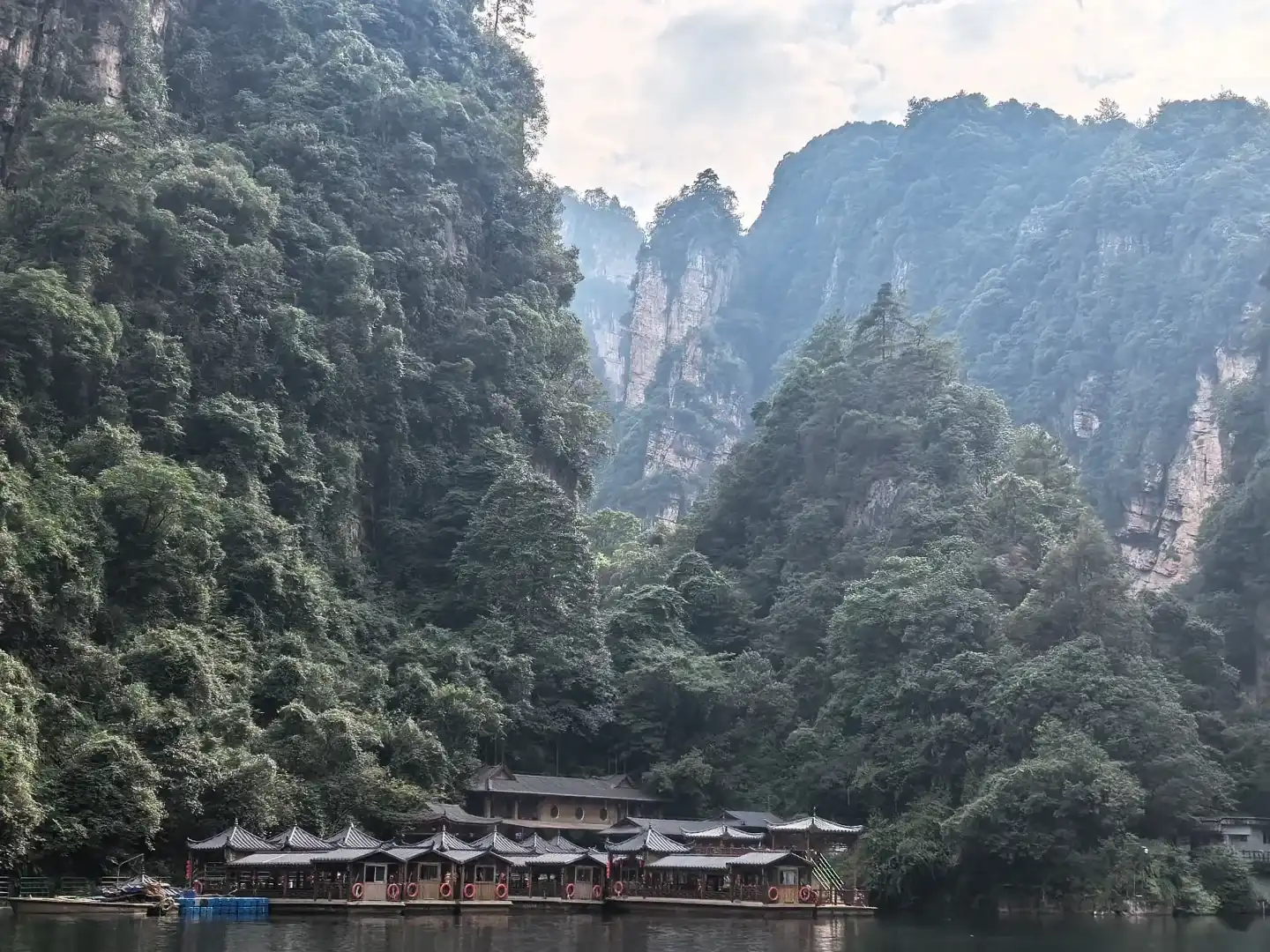
The route shifts from narrow passages to large halls. Close to a stalagmite, mineral textures become legible; in a high chamber, formations gather into a field and make visitors look small. The cave developed in thick dolomitic limestone across four levels, two dry and two water levels; the explored system is about 11 kilometres long with a vertical difference of about 160 metres.
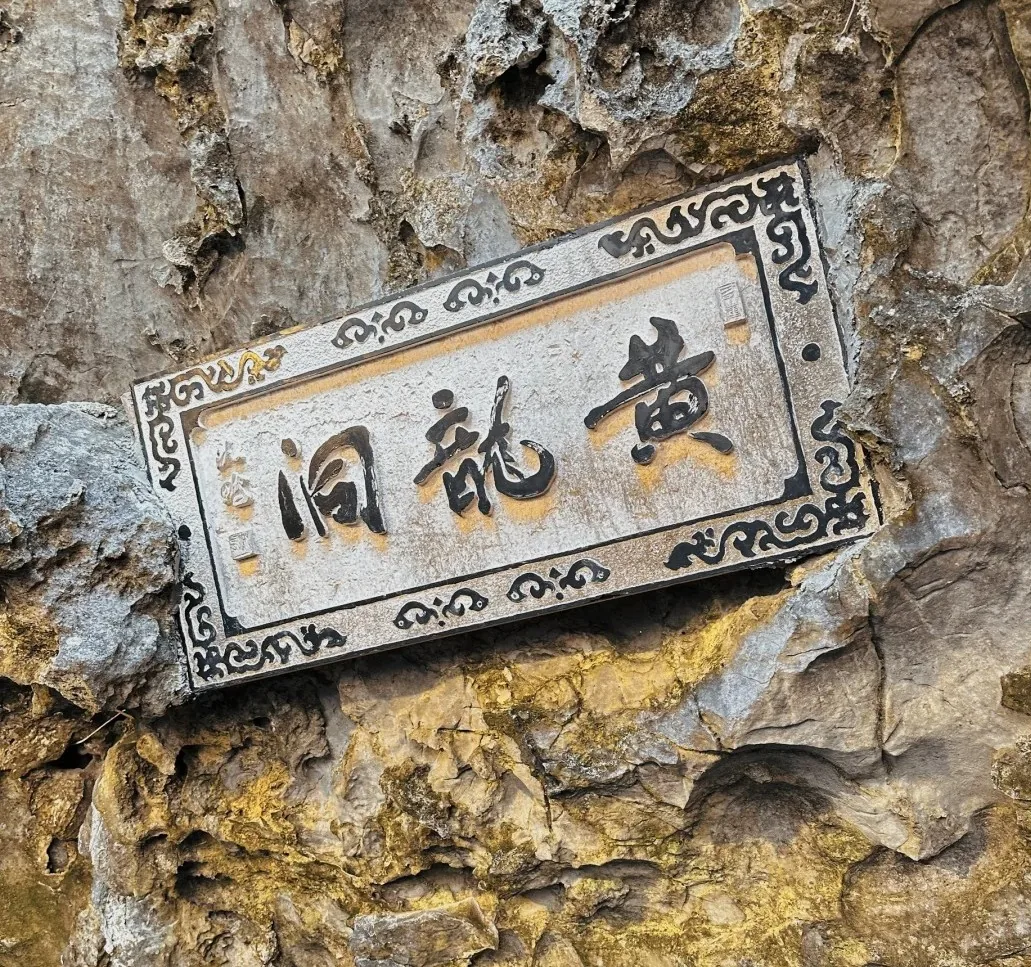
The entrance changes the journey from the surface to the underground route; the exit is nearby but different.
Xiangshui River changes the viewing position
After walking, the route reaches an underground dock for a boat of about 15 minutes, then continues on foot. Xiangshui River lies on the second level, is about 2,800 metres long and averages roughly 6 metres deep.
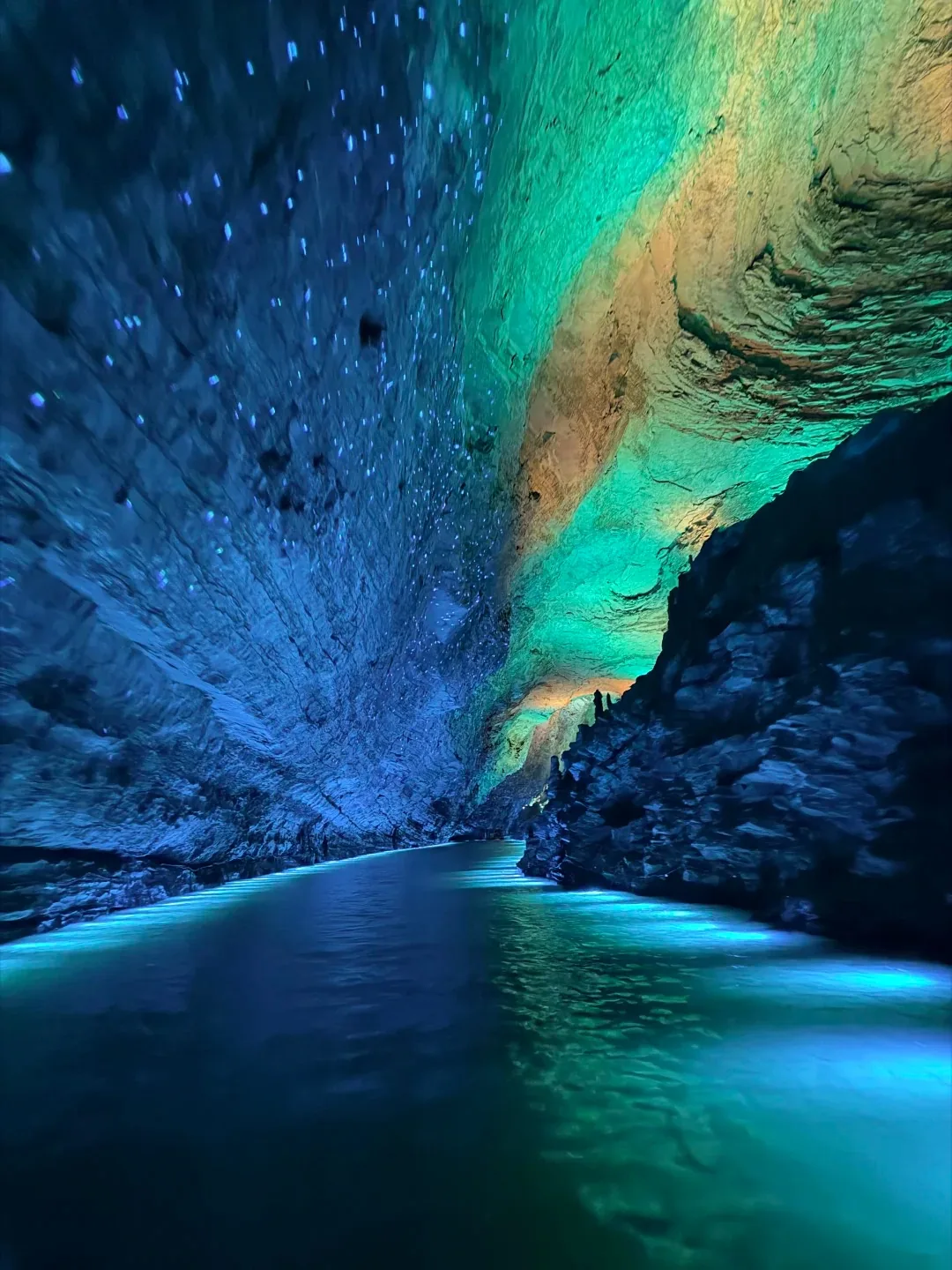
The boat lowers the viewpoint to the underground river.
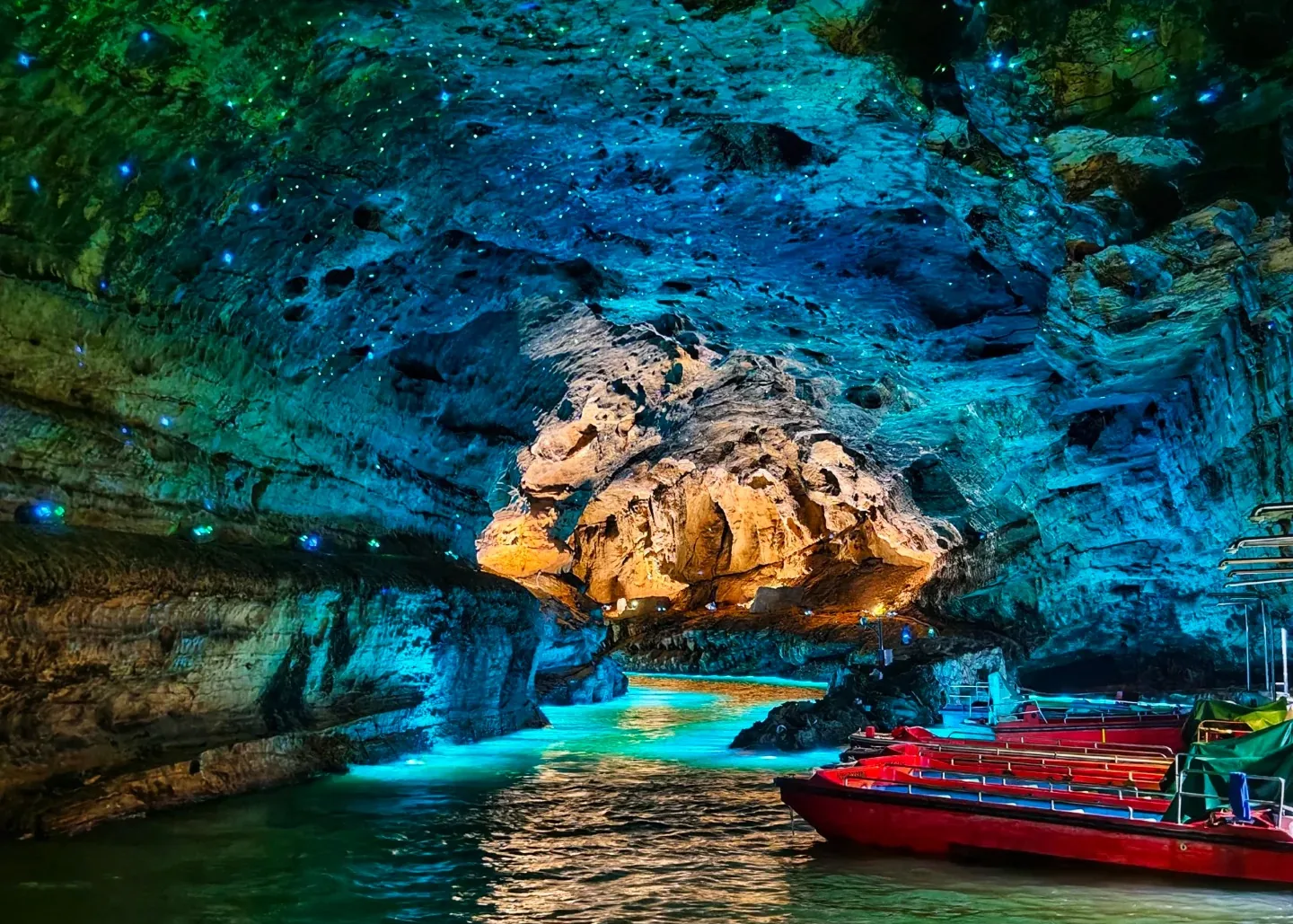
The dock is a clear transfer point; chambers and steps remain after landing.
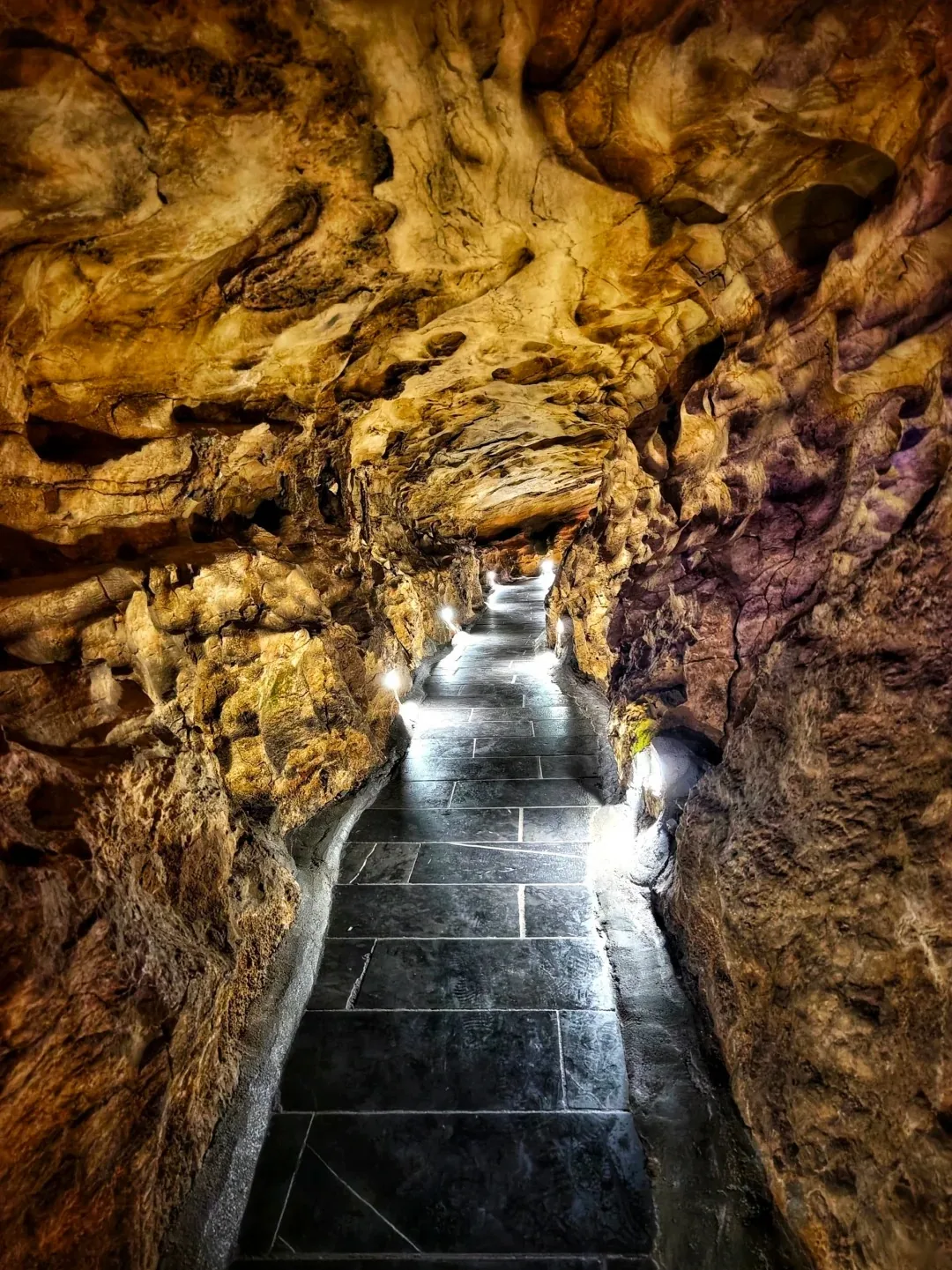
After the water section, steps narrow the view back to nearby rock.
Dragon Palace and the Needle show two scales
Dragon Palace is about 15,000 square metres and roughly 40 metres high, with more than 2,000 stalagmites. The Needle of the Sea concentrates the same process in one slender formation, about 19.2 metres high and around 10 centimetres across at its narrowest point.
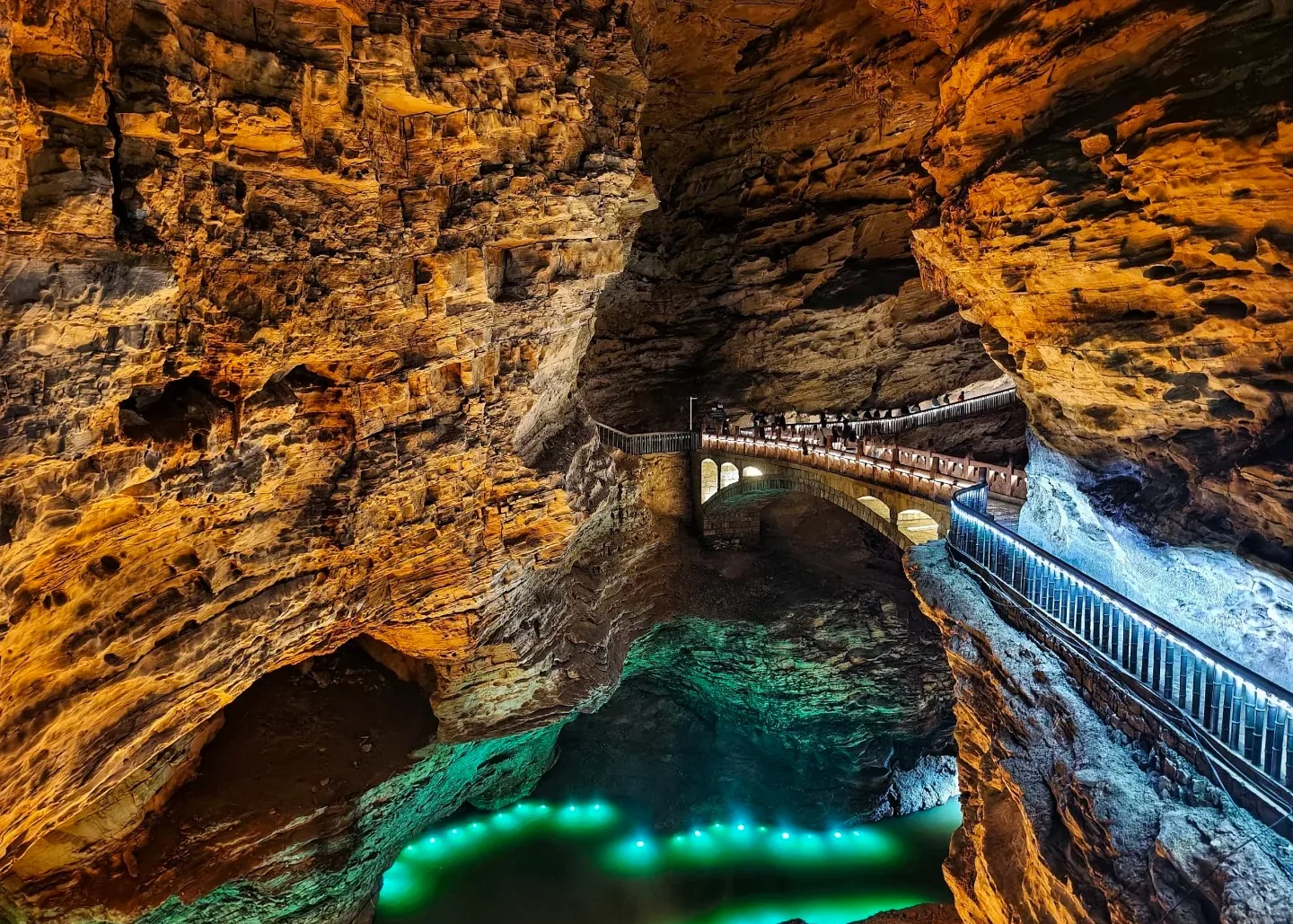
The open path shows the relationship between chamber height, formations and visitors.
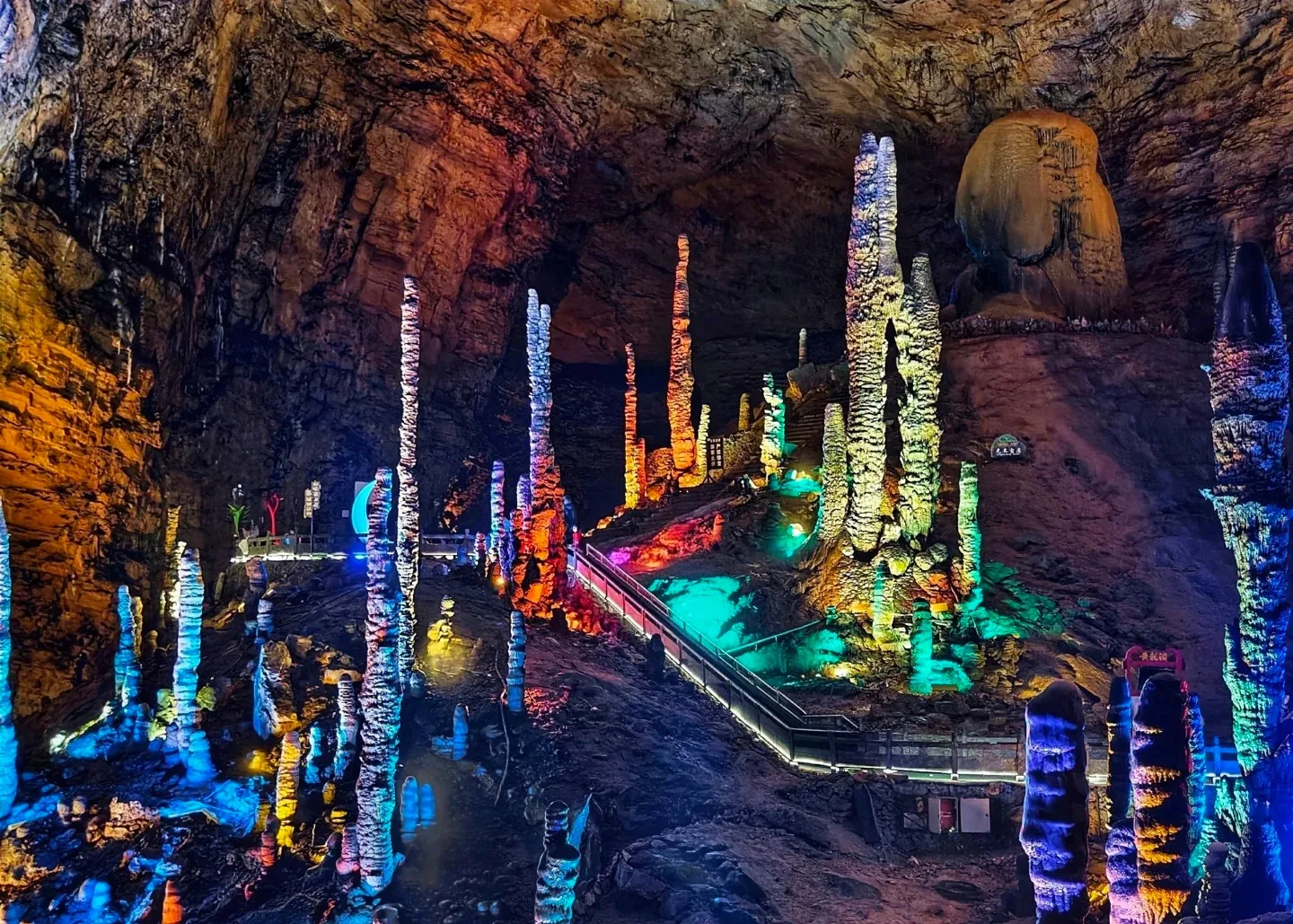
The group can be read close up for surface deposits or from farther away as a field filling the hall.
Water makes the cave's forms
Carbonated water dissolves limestone and deposits minerals while dripping or flowing. Downward growth forms stalactites, upward growth forms stalagmites, and joined forms become columns; sheets across a slope form curtain-like draperies. The cave also has stone flutes, flowers and an underground waterfall. A 2025 lighting upgrade emphasizes natural contours with colour and projection.
Route and admission
The regular visit is walking, a roughly 15-minute underground boat and more walking, with many steps. Allow about half a day. The base ticket was 60 yuan as checked, with the river boat included; confirm the live product and opening period on the booking page.