
Journey To ChinaLast updated
Baiyang Ancient Temple guide
Gates lead from the city into courtyards
The street quickly becomes a sequence of gates, courtyards and timber halls. The roughly 8,618-square-metre complex centres on Puguang Temple and retains Guandi Temple and Wenchang Shrine. Each gate changes the distance and sightline around the next hall.
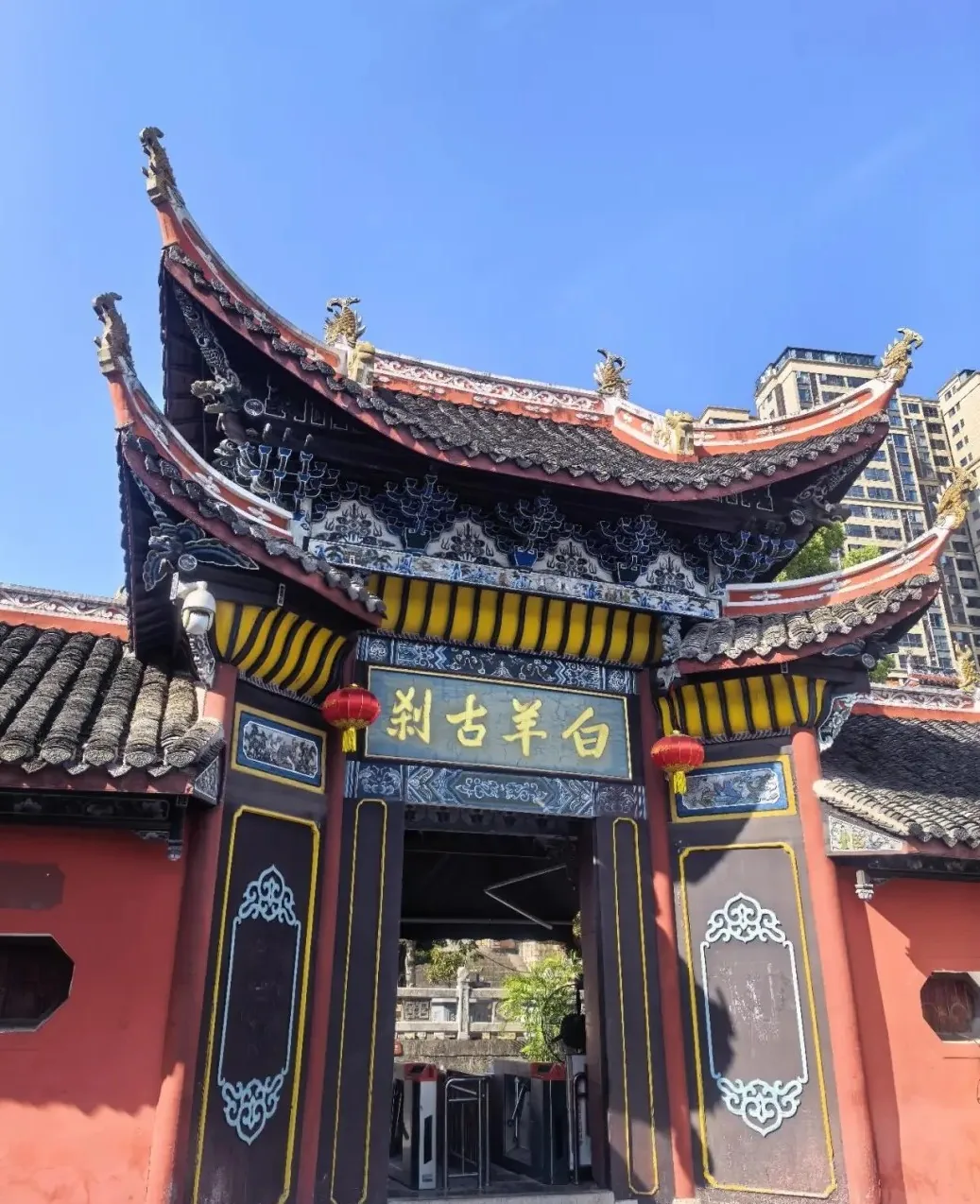
The entrance connects the city street with the first courtyard.
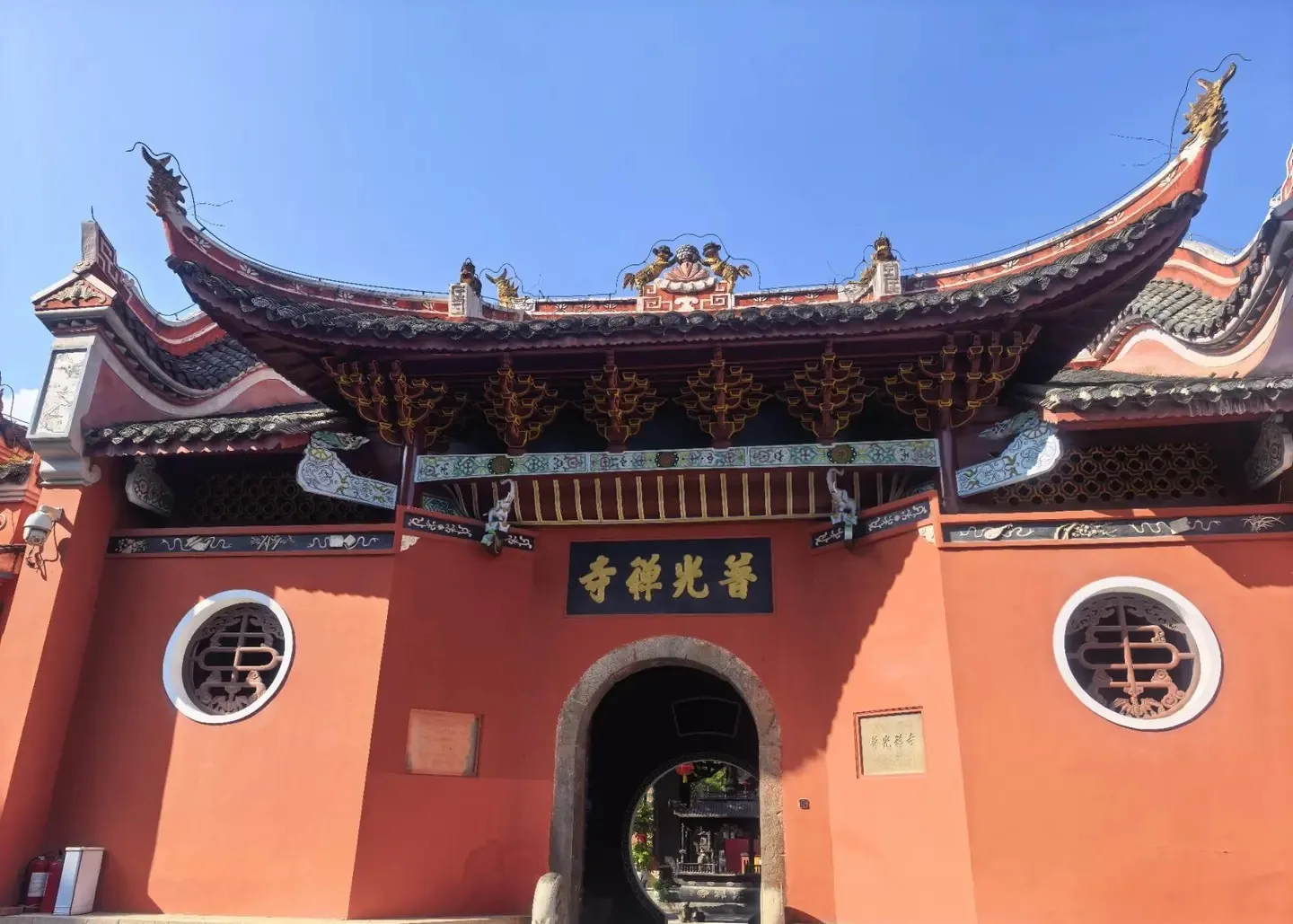
Puguang Temple forms the principal Buddhist axis.
The main sequence includes the Great Gate, Second Gate, Mahavira Hall, Arhat Hall, Guanyin Hall and Jade Emperor Pavilion. Moon gates connect side courtyards.
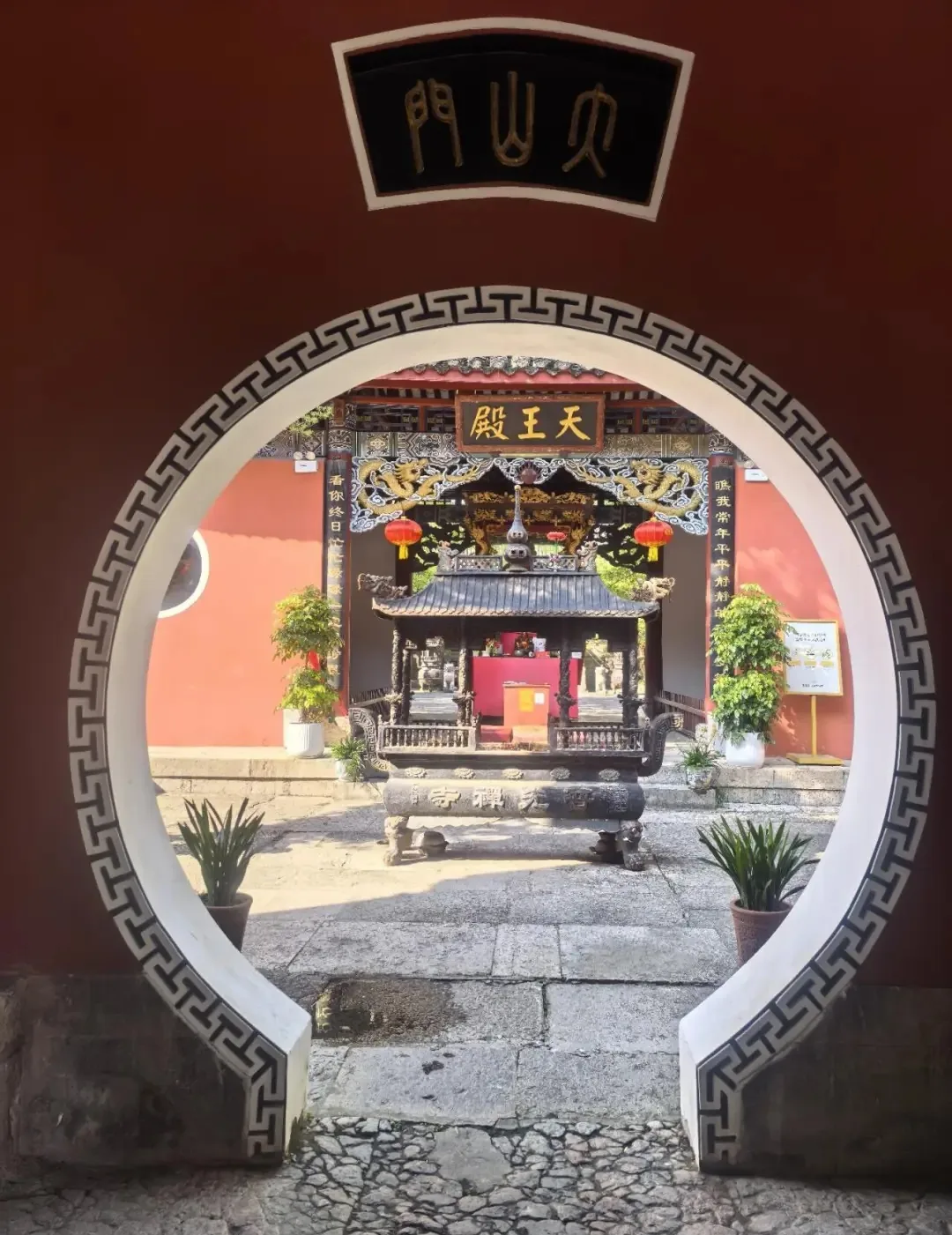
A moon gate links a side courtyard to the main sequence.
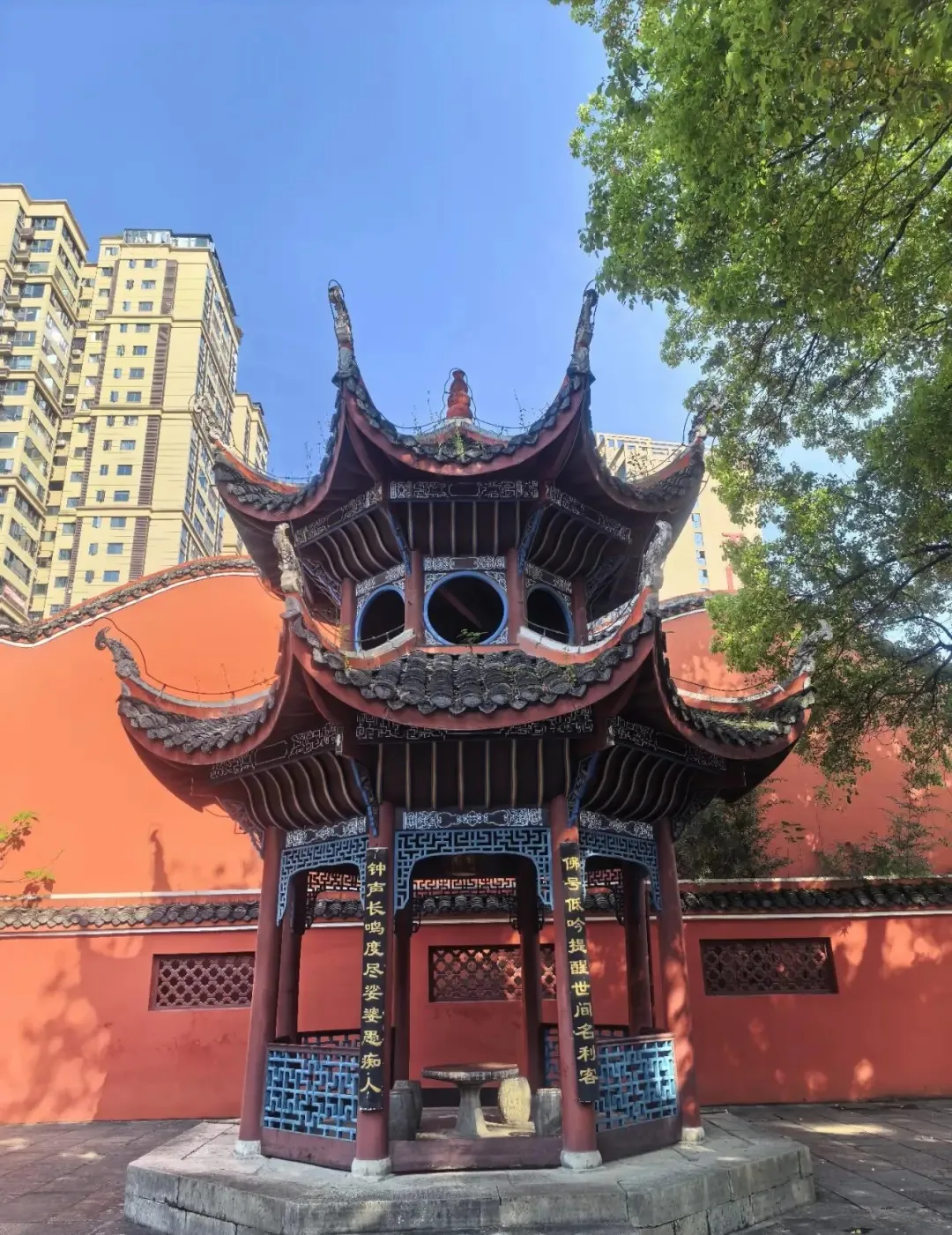
The small bell pavilion gives the larger halls and eaves a readable scale.
Three surviving functions in one complex
The wider site once included a Confucian temple, City God Temple and Songliang Academy. War, fire and other losses narrowed what survives to Puguang Temple, Guandi Temple and Wenchang Shrine. Their positions and names explain how Buddhist, civic-belief and educational functions shared an urban site.
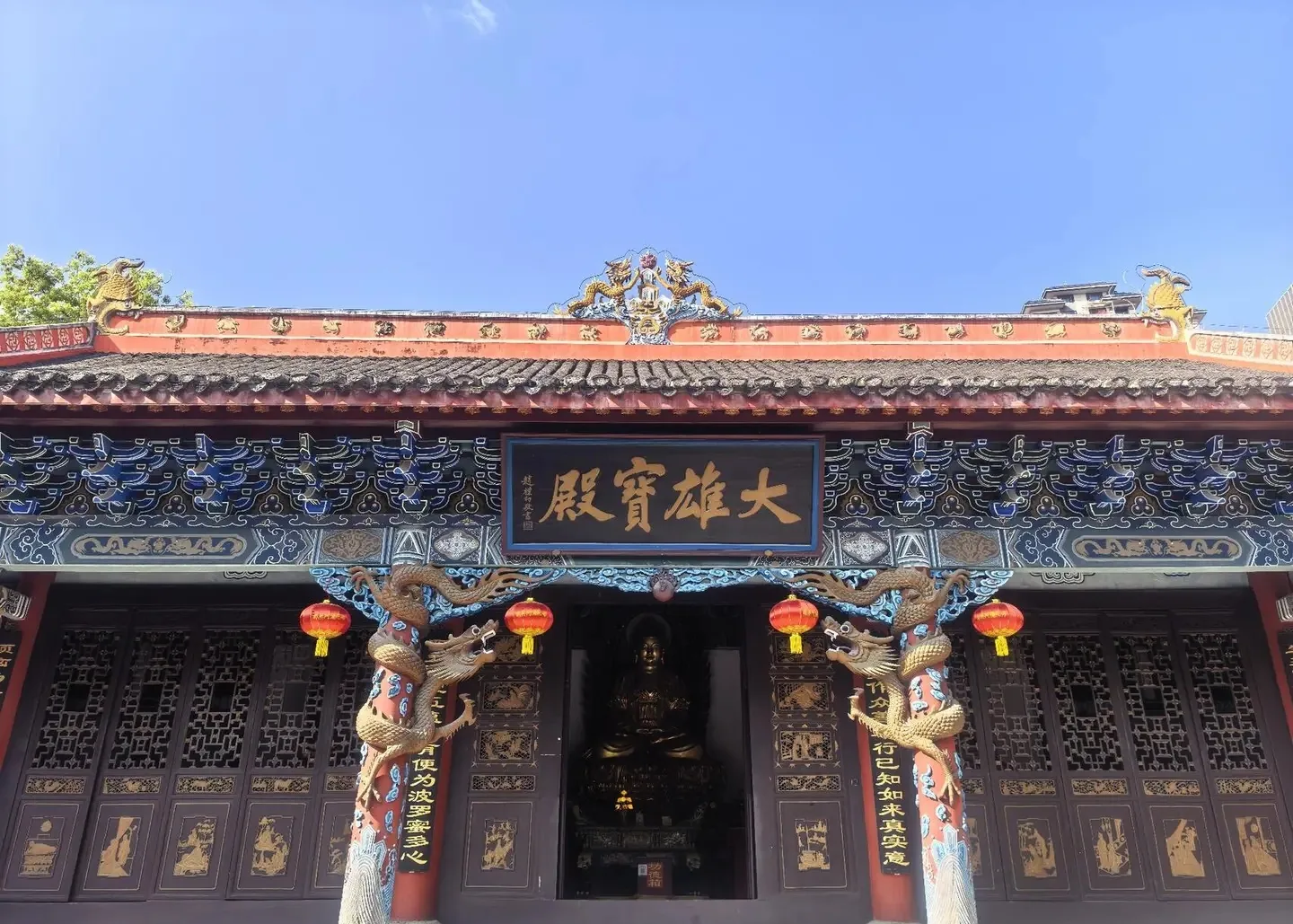
The Mahavira Hall is the central Buddhist worship space.
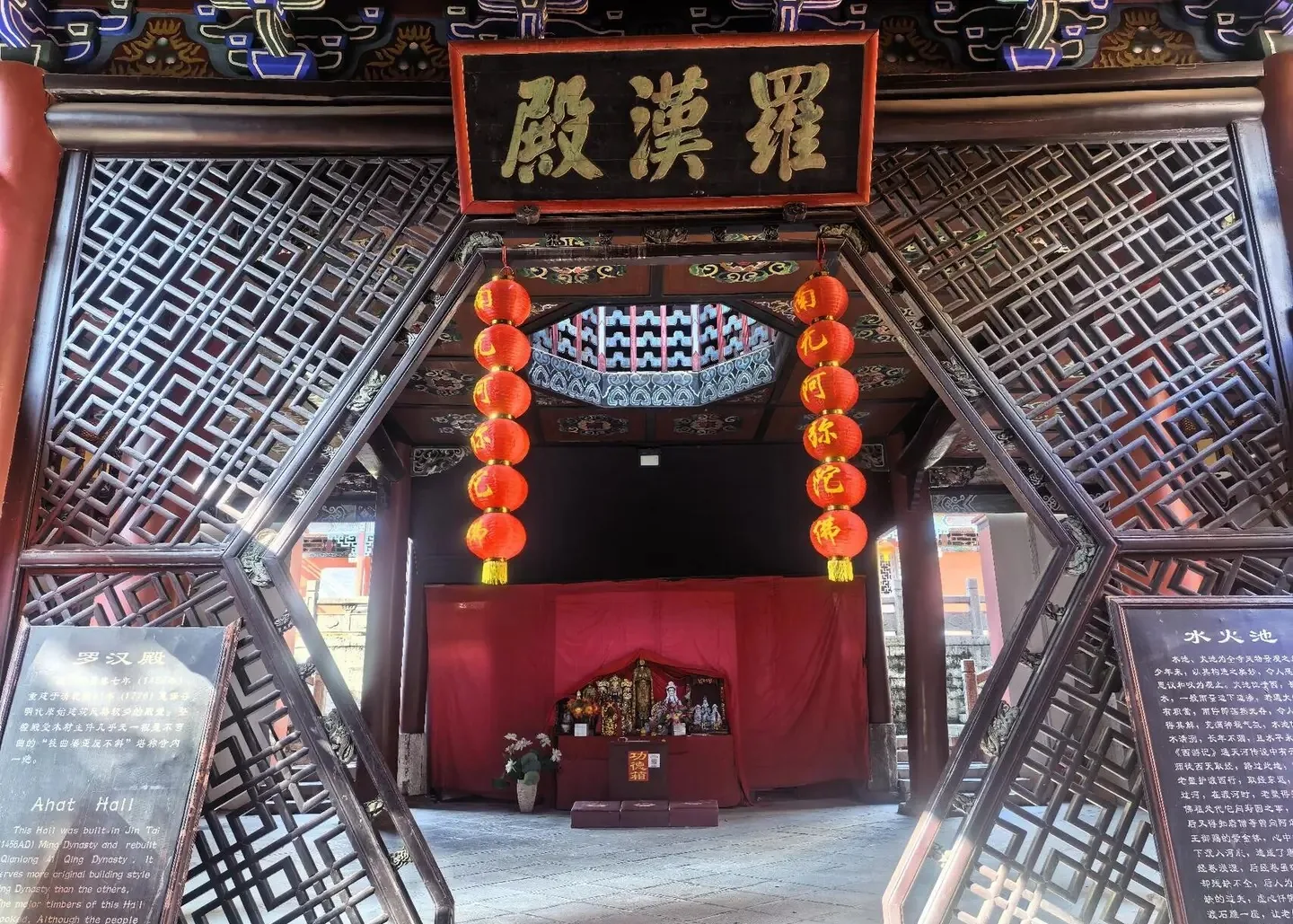
Arhat Hall continues the temple sequence.
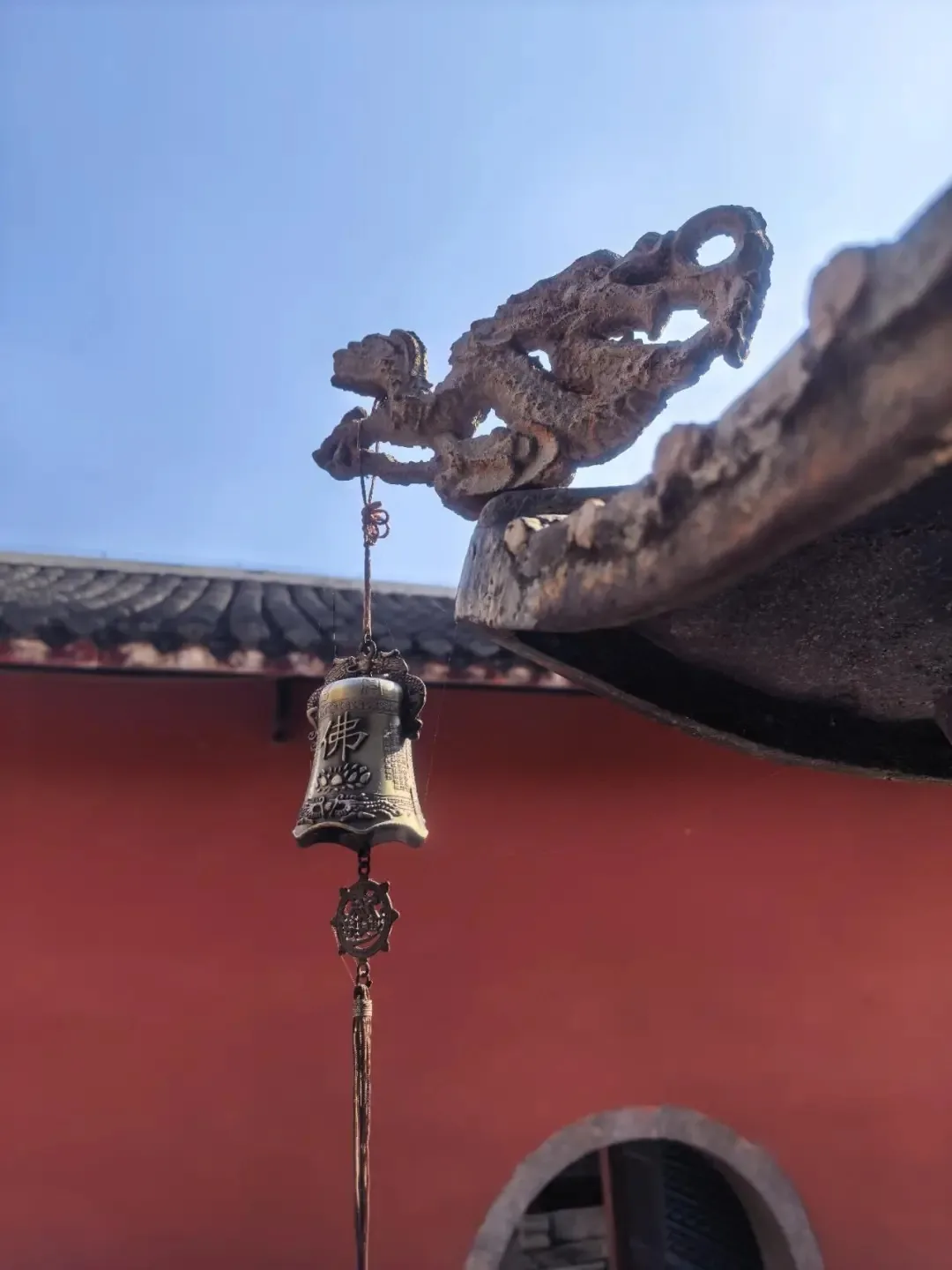
The bell can be read with the timber frame and courtyard.
Following the axis from the two gates to Mahavira Hall, then turning to Arhat Hall, Guanyin Hall and Jade Emperor Pavilion, makes the surviving temple legible as one place. Guandi Temple and Wenchang Shrine add the other cultural functions within a short walk.
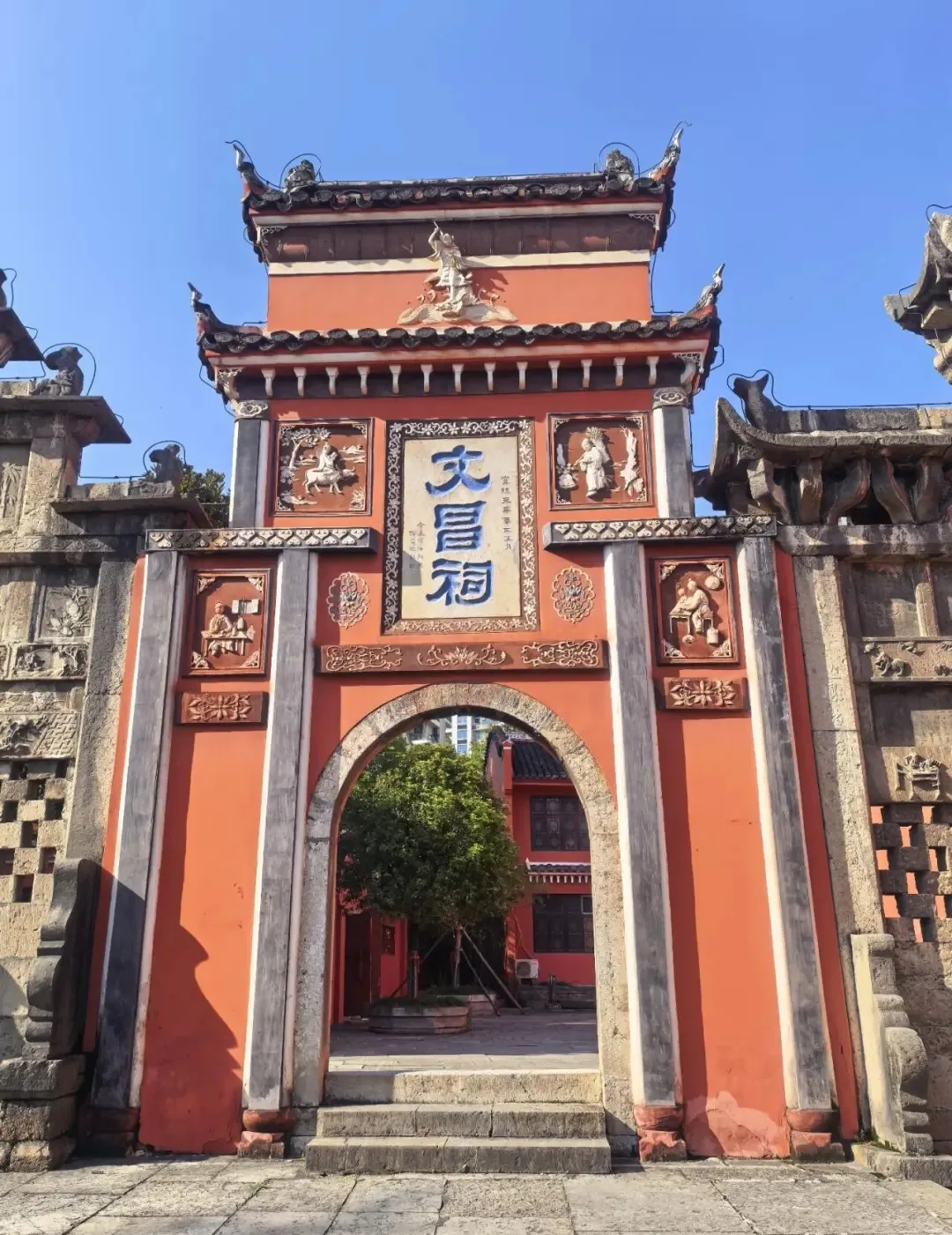
Wenchang Shrine shares the complex with Puguang Temple while serving a different tradition.
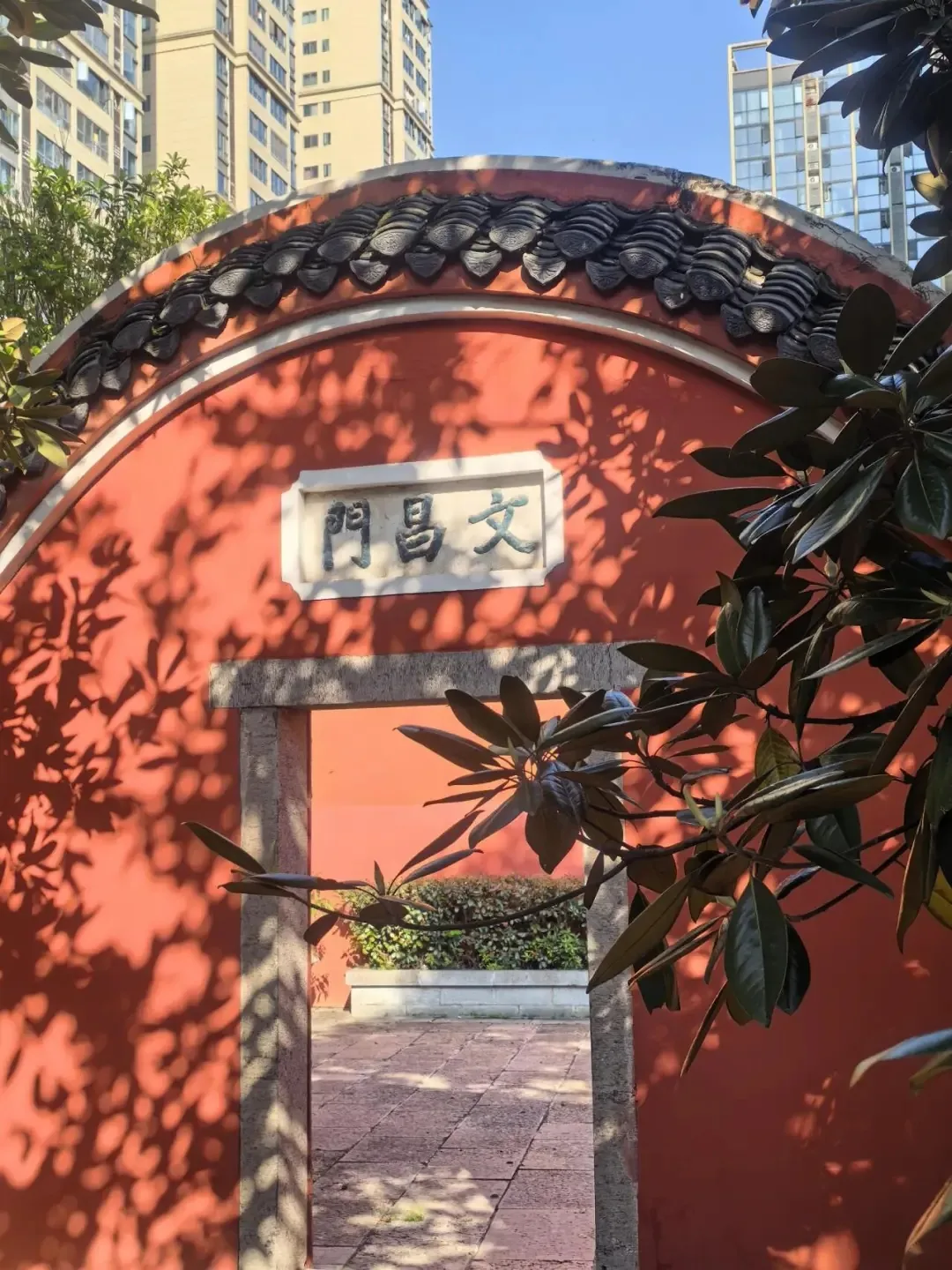
The urban-facing entrance shows how the complex remains embedded in city life.
Founded in 1413, altered by loss and repair
Puguang Temple was founded in 1413. The site expanded over the following centuries, then contracted through war, fire and damage. The complex became a Hunan provincial cultural relic in 1959 and is now a National Key Cultural Relic Protection Unit; some gates and buildings reflect later restoration.
A short urban heritage visit
Allow 30–60 minutes to walk through the gates, temple halls and Wenchang Shrine. It fits with a central-city meal, Dayong Ancient City or Zhangjiajie Railway Station. Lower your voice inside halls and follow signs about photography and access; restoration can change the open area.