Journey To ChinaLast updated
Pork belly in a sweet-savoury glaze
Shanghai-style hongshao rou (红烧肉) uses cubes of skin-on pork belly cooked slowly with soy sauce, sugar, Shaoxing wine and aromatics. The finished meat is dark and glossy. Its skin turns soft, the fat yields easily and the lean layers keep a little texture. It is generally not spicy; soy, pork and the sweet edge associated with local cooking lead the dish.
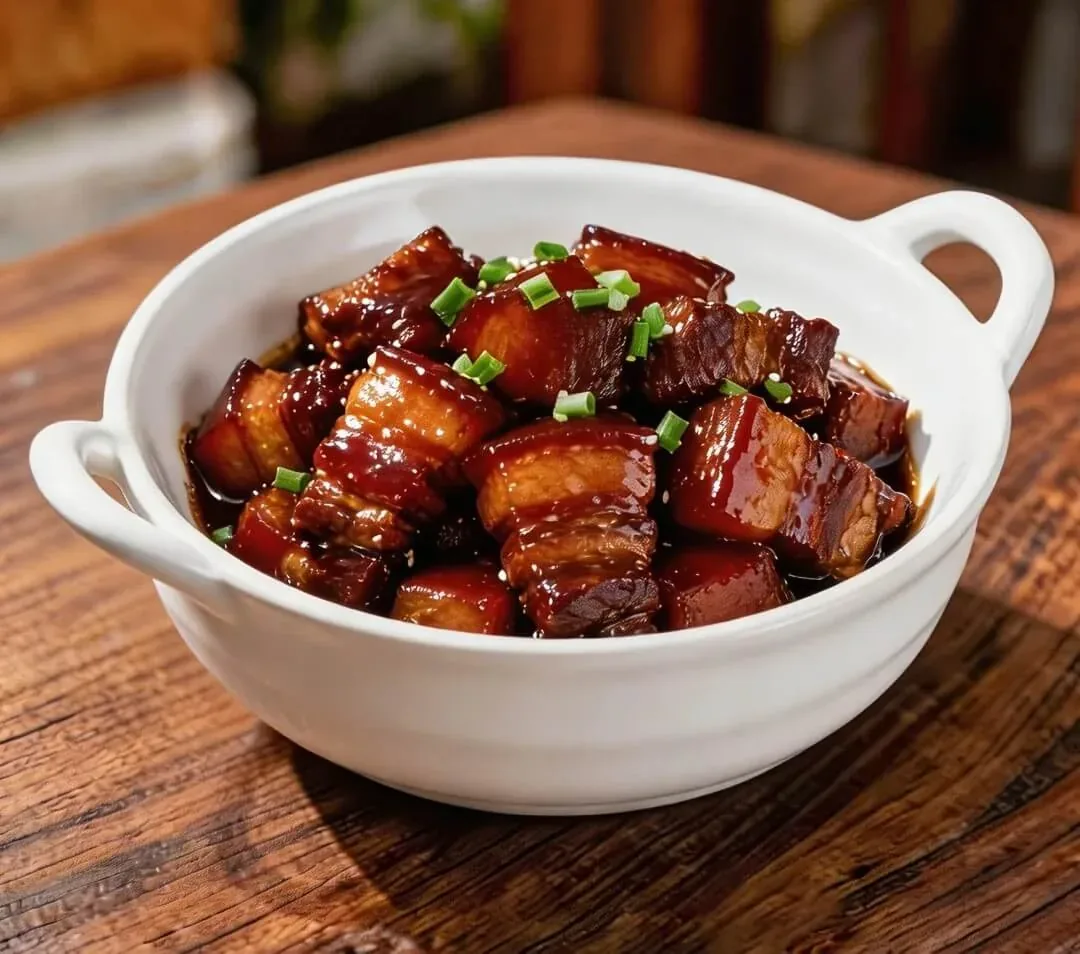
Skin, fat and lean meat form clear layers. The concentrated sauce is easier to enjoy with plain rice.
Treat it as a shared dish
Red-braised pork is commonly served as a shared table dish with rice and stir-fried greens. Restaurants may also offer smaller set-meal portions or sell it by the cube, so the same dish can suit a solo meal or a larger group.
The fat is supple and the sauce fluid while hot. Once cool, the fat sets and the seasoning feels heavier. Bean-curd knots, bamboo shoots, eggs or abalone sometimes join the braise; they soak up sauce and make the serving larger.
Every kitchen sets its own sweet-savoury balance
The dish changes from restaurant to restaurant. One kitchen may emphasise caramelised sugar, while another leans on soy and Shaoxing wine. Bean-curd knots, bamboo shoots, eggs or abalone can share the braising liquid and absorb its flavour. The phrase 这道偏甜吗 asks how pronounced the sweetness is.