
Journey To ChinaLast updated
Harbin Ice and Snow World guide
A city of ice rebuilt for a brief winter season
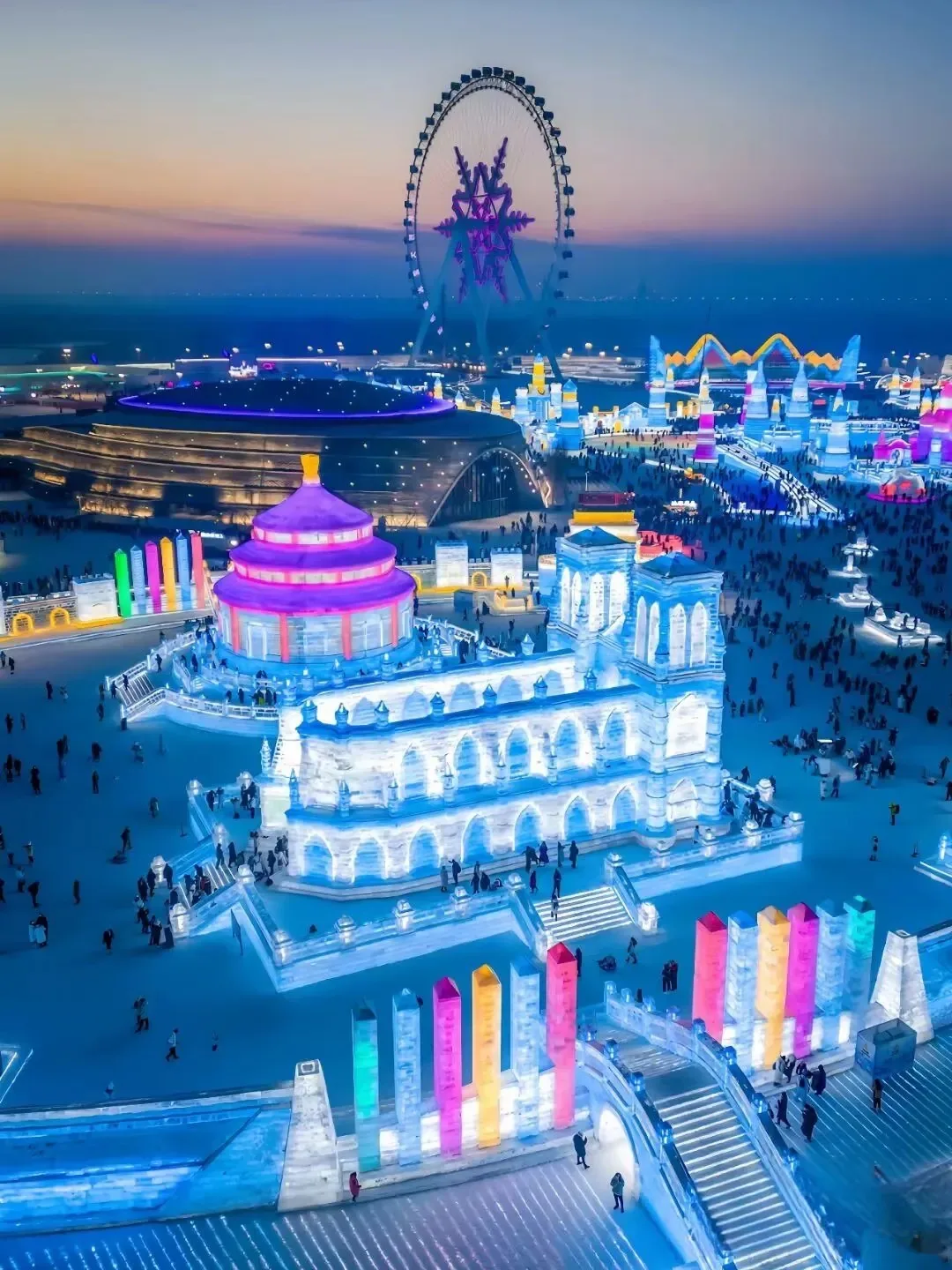
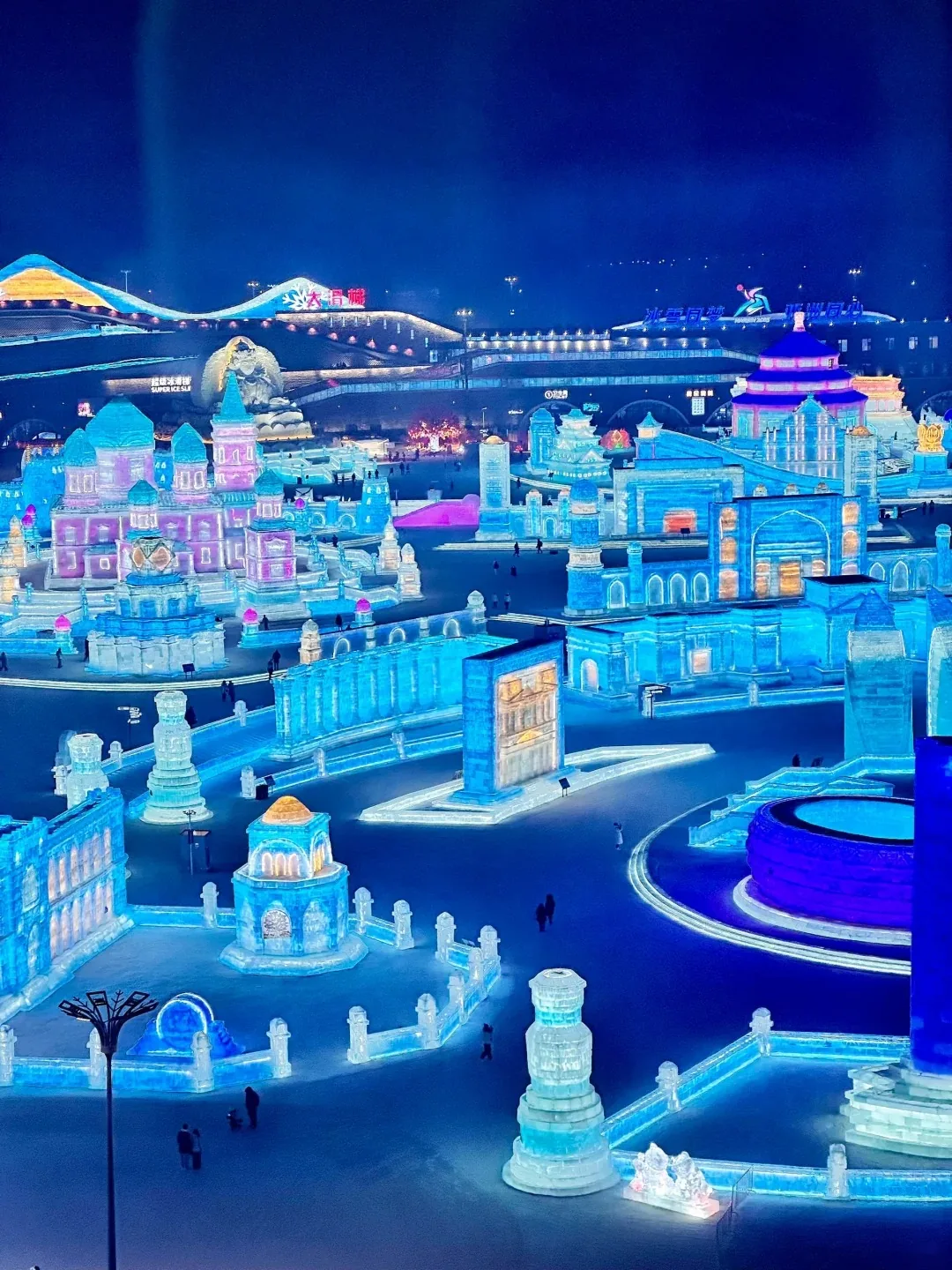
Harbin Ice and Snow World is more than a collection of individual sculptures. Ice walls, towers, gates and halls form streets and squares that visitors can walk through. From a raised path, the height and density of the buildings become clear; at ground level, the carved surfaces and translucent blocks invite a closer look. The 25th edition covered 816,600 square metres and earned a Guinness World Records title as the world's largest ice and snow theme park. That figure describes one edition: the layout and attractions change each year.
Recent editions were open for 61 to 71 days, broadly from mid or late December until late February. Weather can delay opening or bring an early closure as temperatures rise. Check the current edition's official opening notice and operating status, especially for a trip planned near either end of the season.
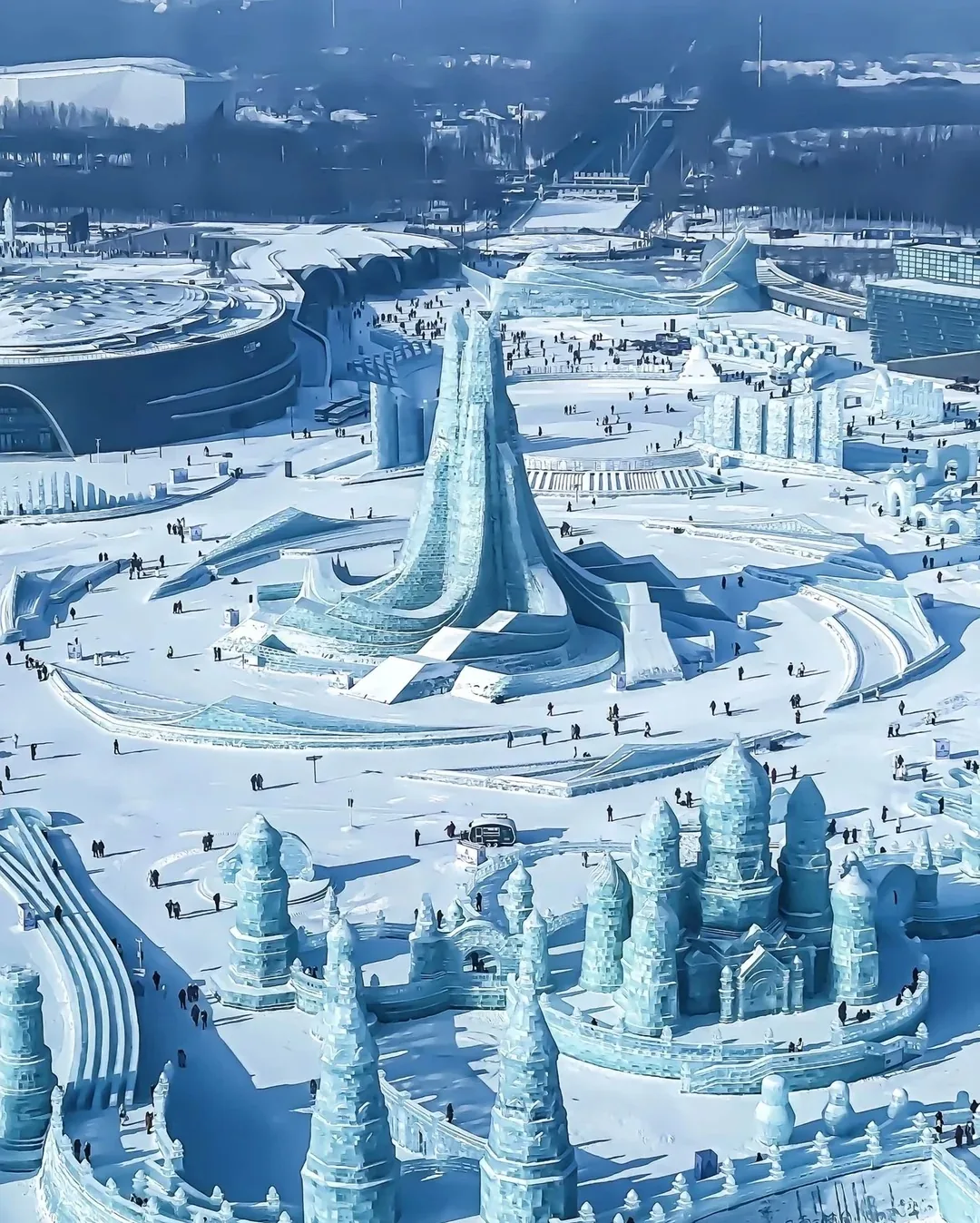
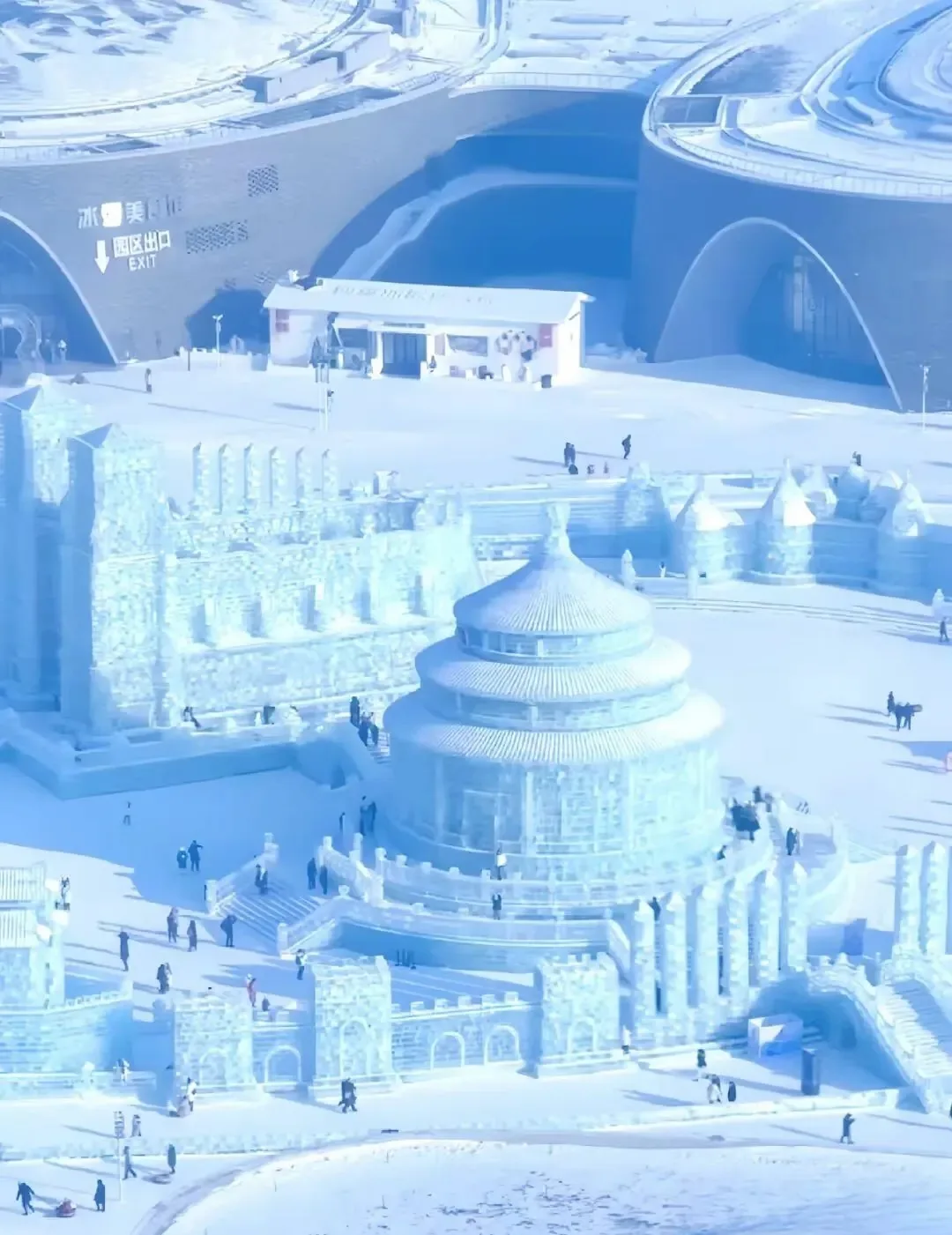
Moving between high ice walls and open squares gives the park its scale. A higher viewpoint shows how the paths connect buildings rather than treating each sculpture as a separate stop.
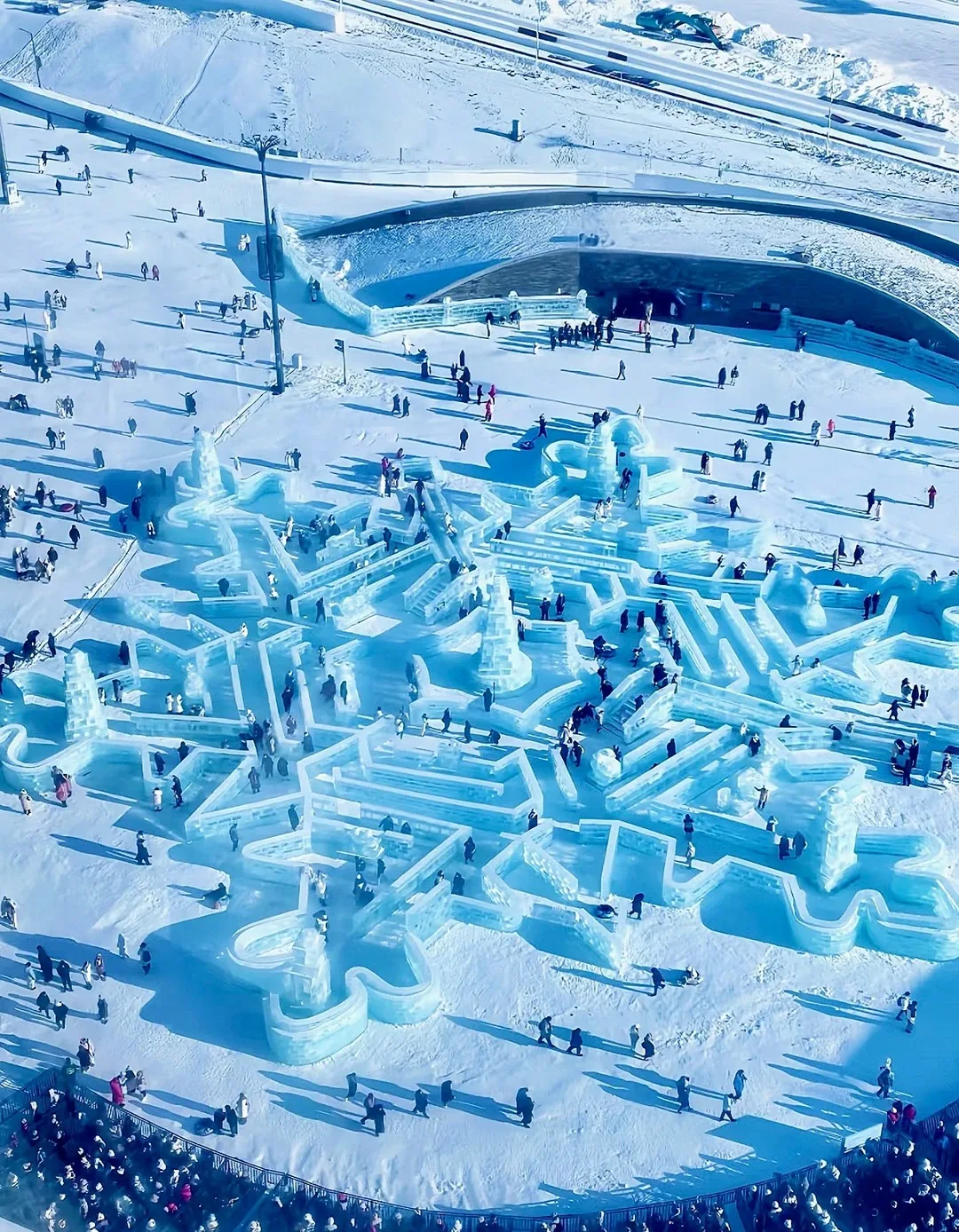
Towers, castles and familiar forms made from ice
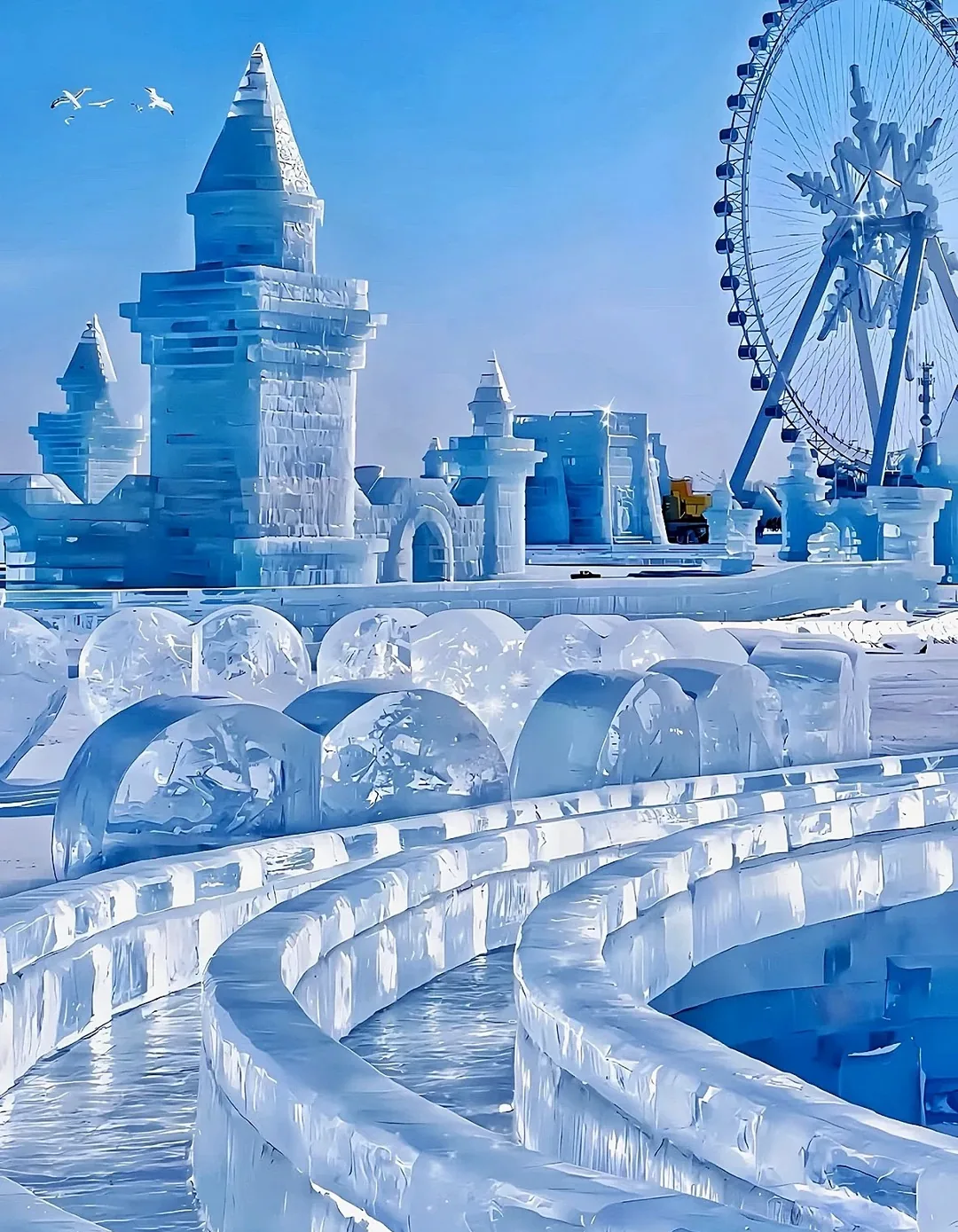
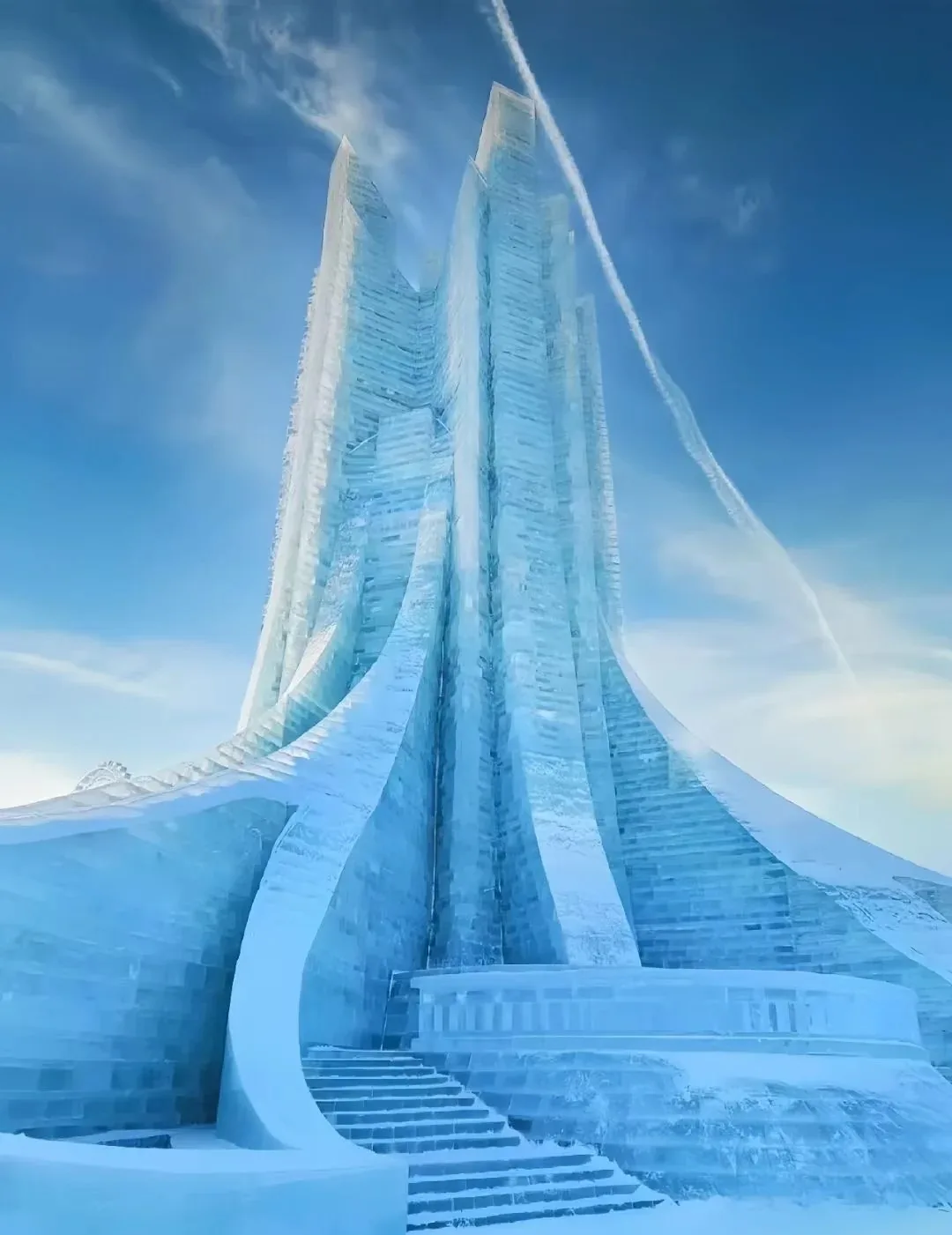
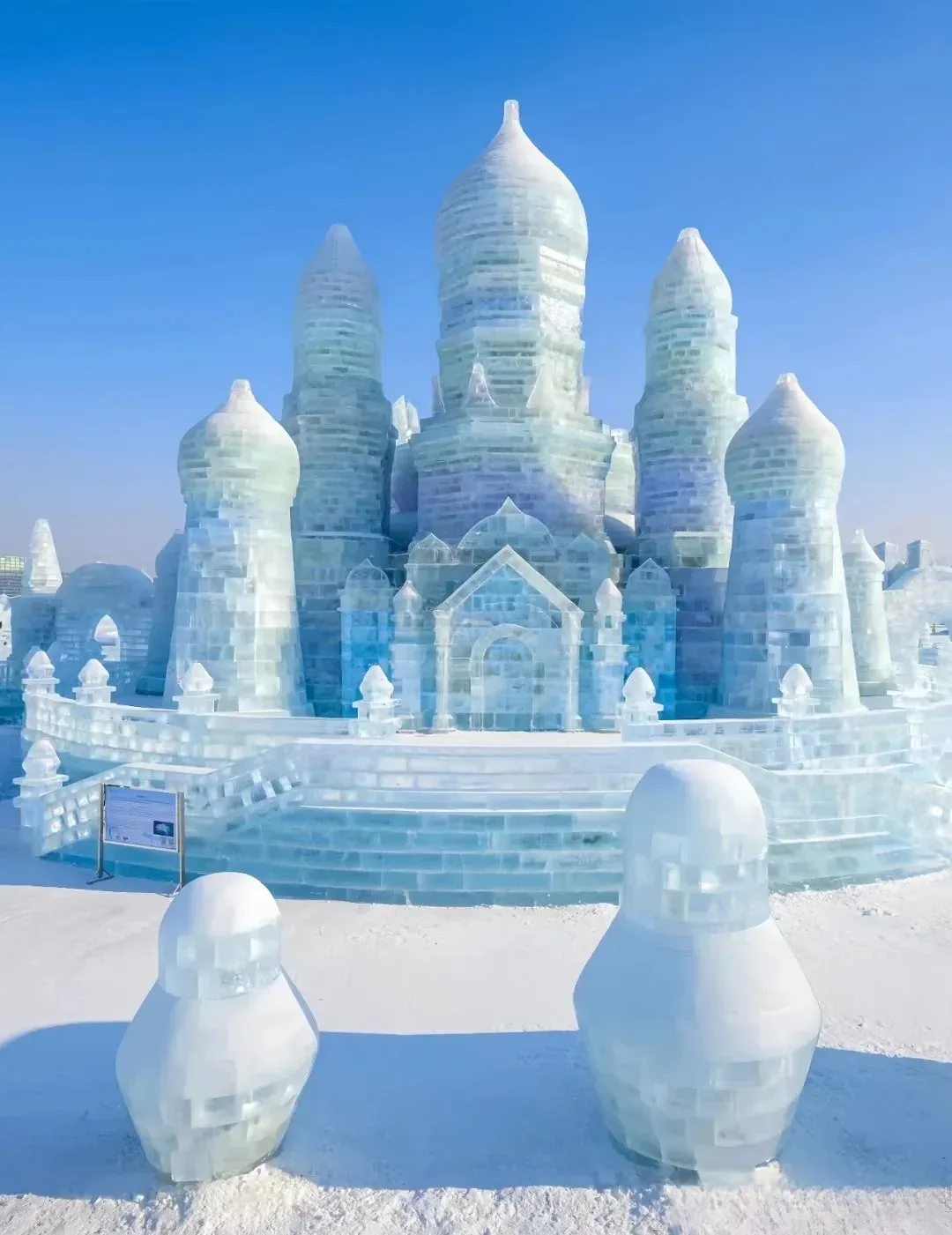
The year's theme determines the architectural mix. Visitors may encounter a central tower, castle-like groups of pointed roofs, round halls recalling traditional Chinese architecture and playful objects such as an ice train. Arches, stairs and passages make many structures part of the walking route. Close up, reliefs and floral carvings reveal the work beyond the park's skyline.
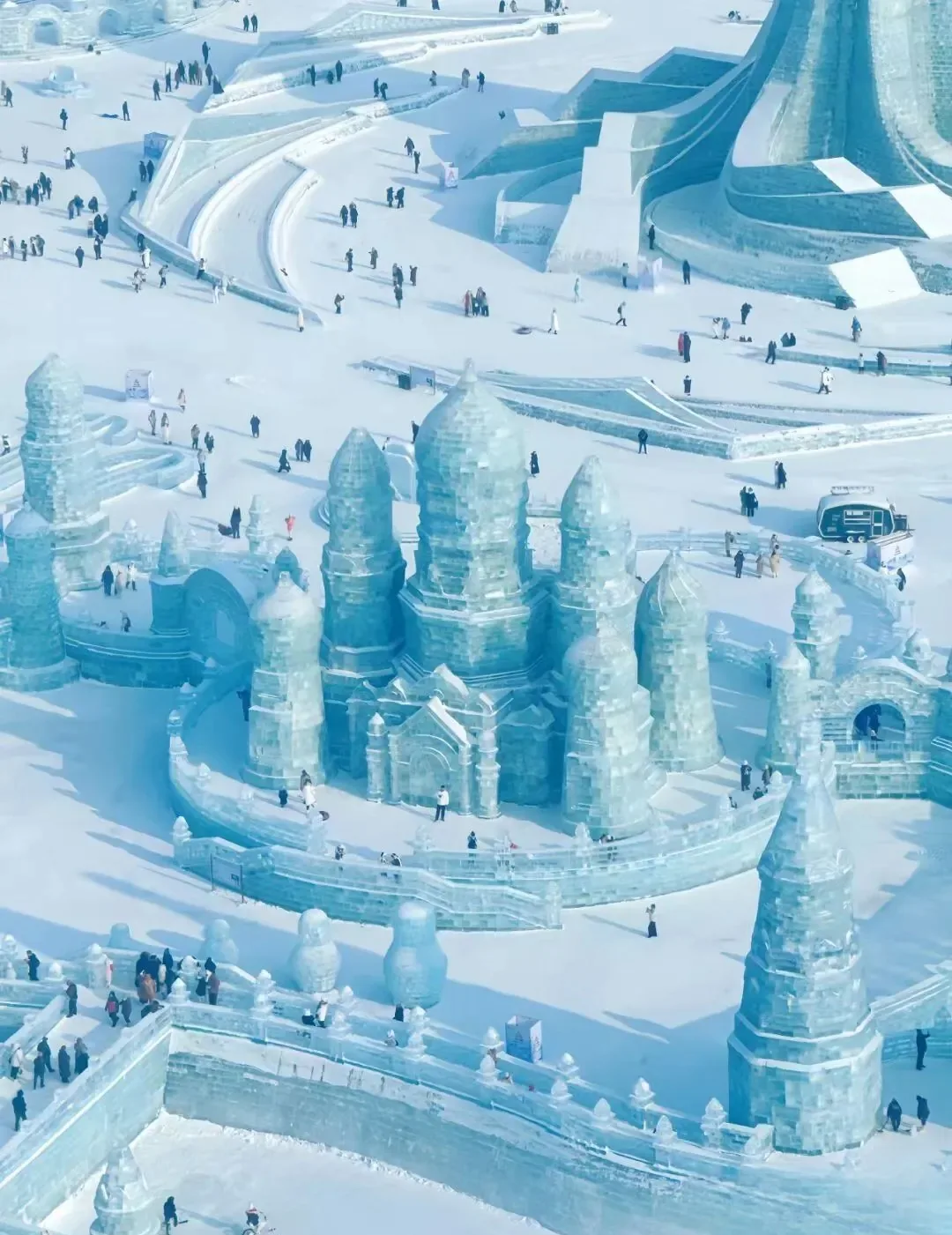
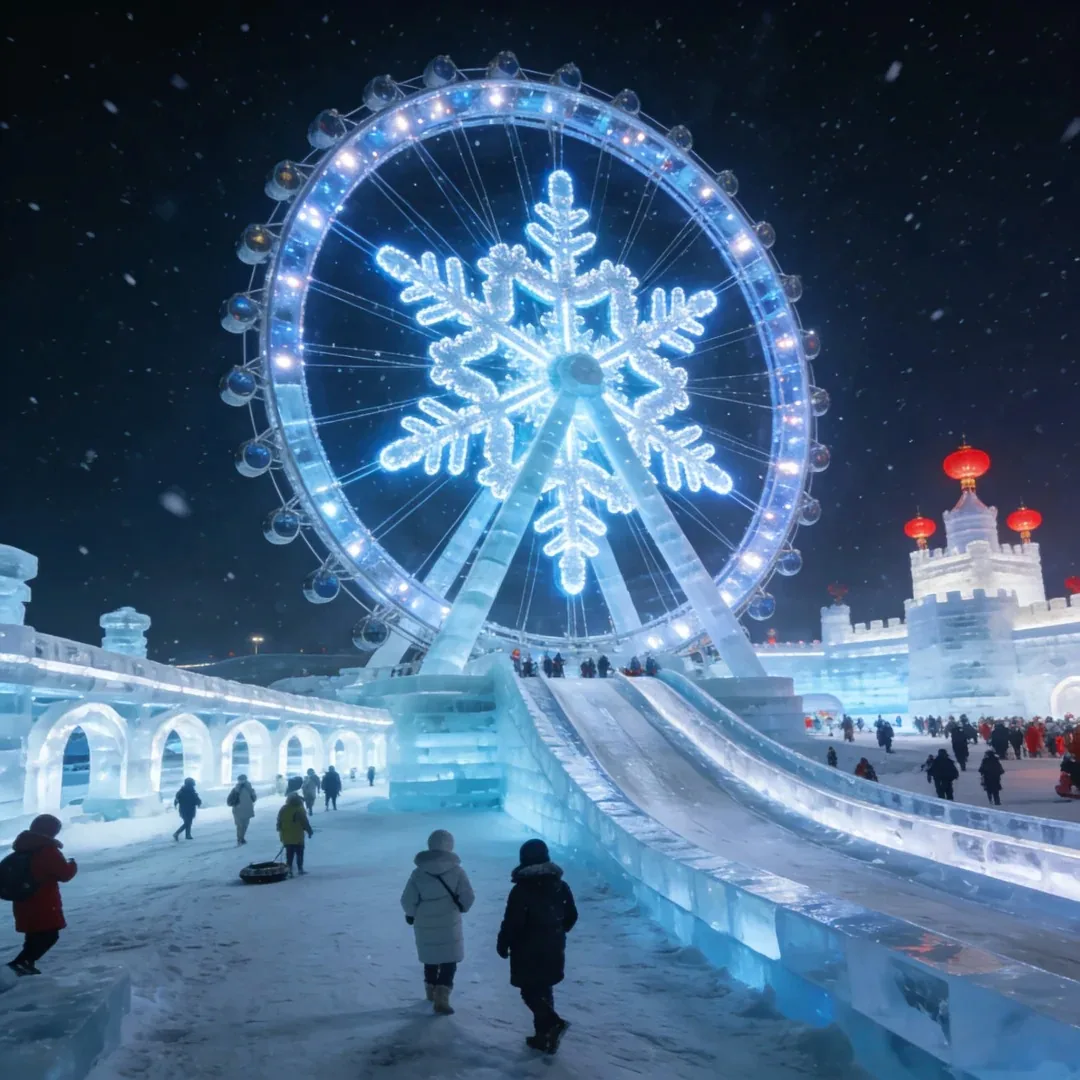
A Ferris wheel and large snow slopes add another scale to the ice buildings. Their operation and the surrounding facilities vary by edition.
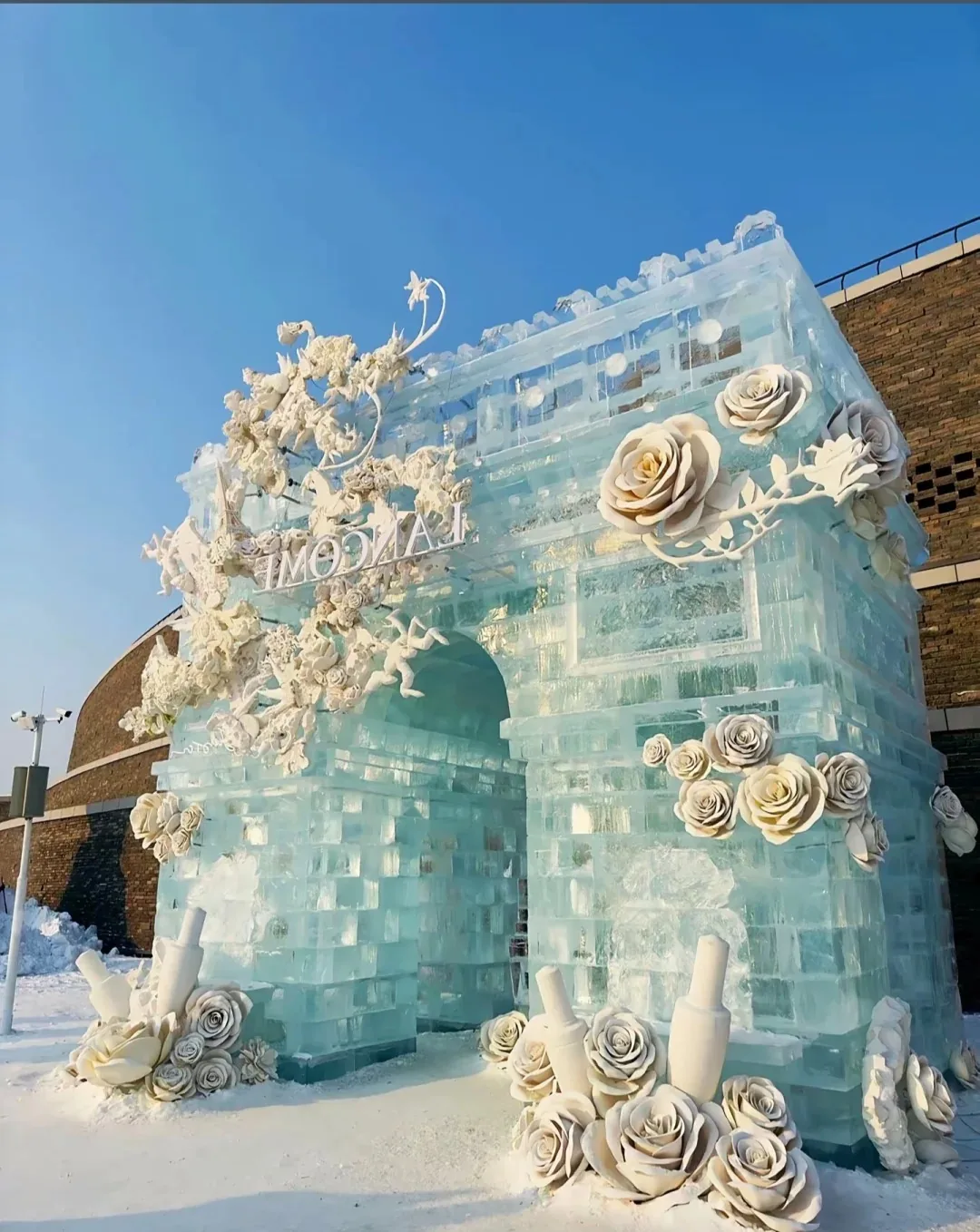
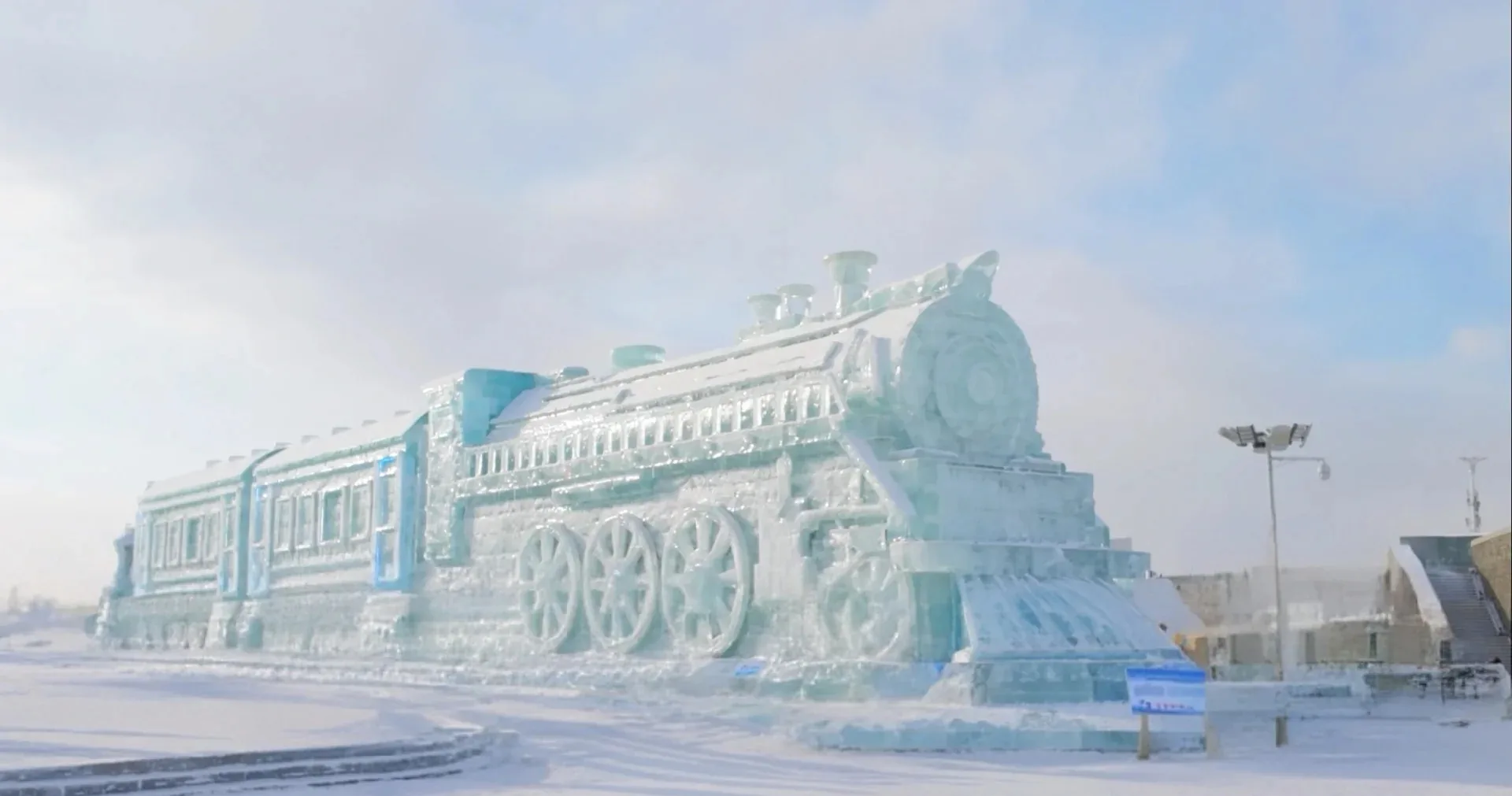
Daylight reveals the structure; evening changes the city
In daylight, the transparency of the ice, joins between blocks and relationship between buildings are easier to see. After dark, coloured lighting glows through the ice and picks out towers, gateways and slides. Arriving before dusk lets a single visit include both experiences. Daily opening hours, lighting and show schedules should be checked against the current park notice.
The giant ice slide and other winter activities
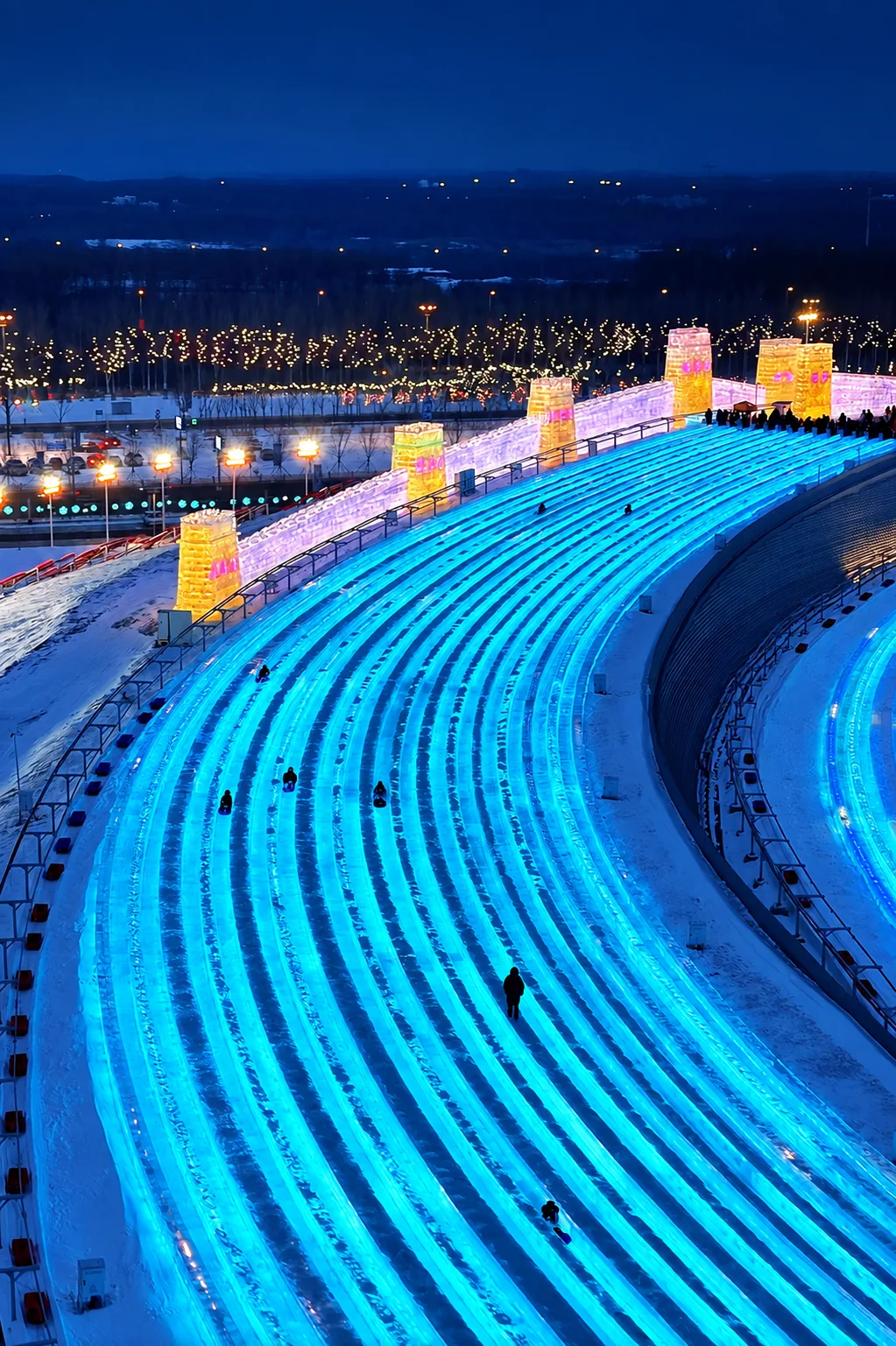
The multi-lane giant ice slide is one of the park's most sought-after experiences and often involves a wait. Its opening, booking rules and queue information change with the day's conditions; the official park channel is the useful source when deciding how to fit it into a visit. Other editions may offer a Ferris wheel, snow tubing, ice and snow activities, and live shows. Choose among the current programme rather than assuming a past edition's rides are still available.
How Harbin builds an ice city every year
Harbin held an ice-lantern garden party in 1963, developed an ice and snow festival in 1985 and launched Ice and Snow World in 1999. The modern park expands that tradition into architecture people can walk around and through. Preparations begin before opening: ice stored across seasons and blocks cut from the frozen Songhua River supply material, while teams cut, stack and carve the structures and install lighting and rides. When temperatures rise, the park closes and the landscape is built anew the following winter.