
Journey To ChinaLast updated
Saint Sophia Cathedral guide
A red-brick landmark best seen from the square and inside
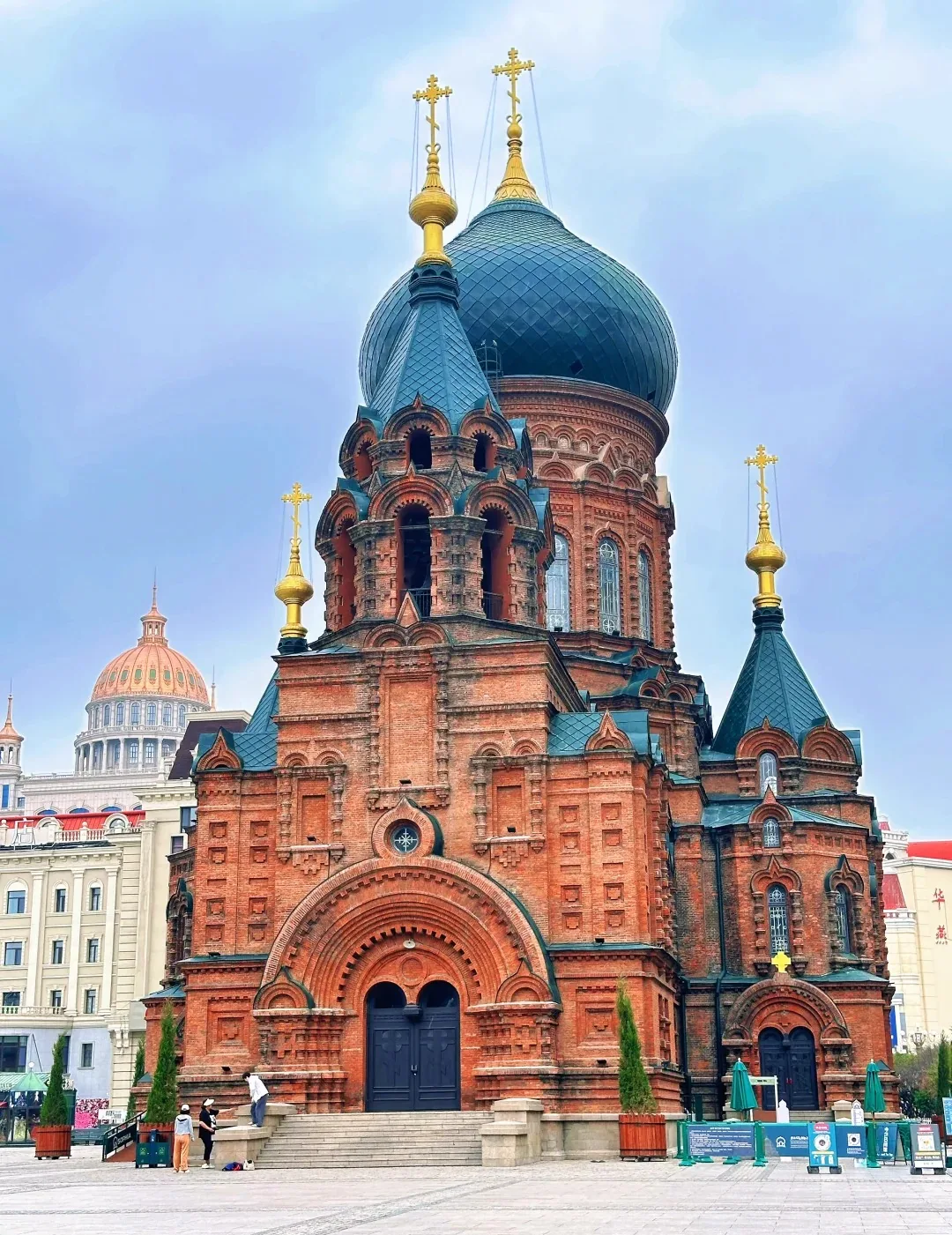
Saint Sophia Cathedral offers two distinct ways to understand the same building. From the open square, the central onion dome rises above four lower wings and the red-brick exterior forms a recognisable silhouette. Inside, the high cross-shaped plan, arches and roof structure become legible at a human scale. The building now houses the Harbin Architectural Art Museum, where exhibitions explore the city's architecture and development.
The dome gives the exterior its shape
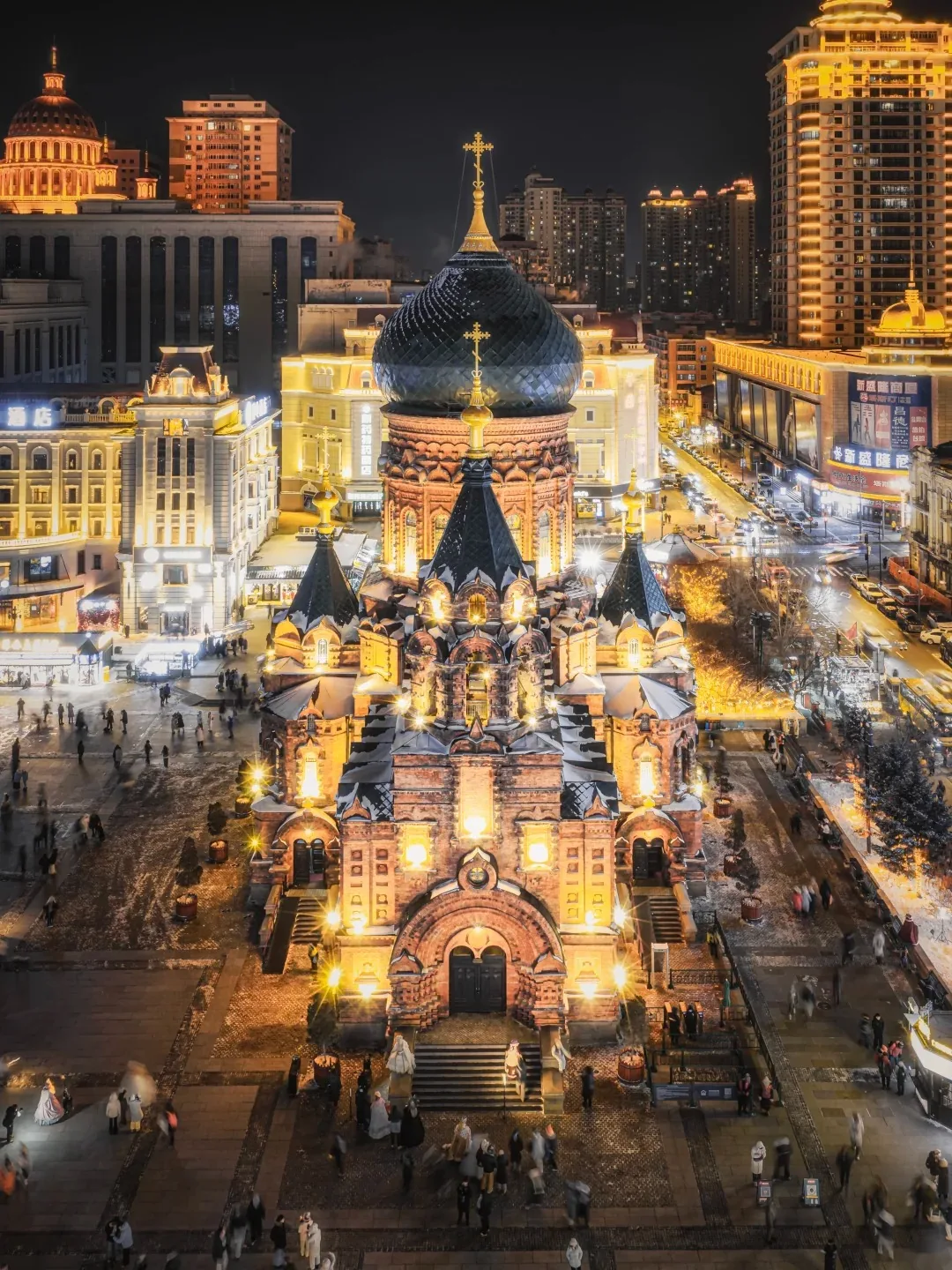
The Byzantine-style building has a cross-shaped plan, a central dome, lower tent-like roofs on its wings, and a bell tower above the main entrance. Arched openings and exposed red brick add depth to the façade. Step back in the square to see the relationship between the central mass and its wings. Daylight reveals the brickwork; evening lighting outlines the dome and tower; after snowfall, the red walls contrast with the white roofs.

Inside, the structure and exhibitions add another dimension
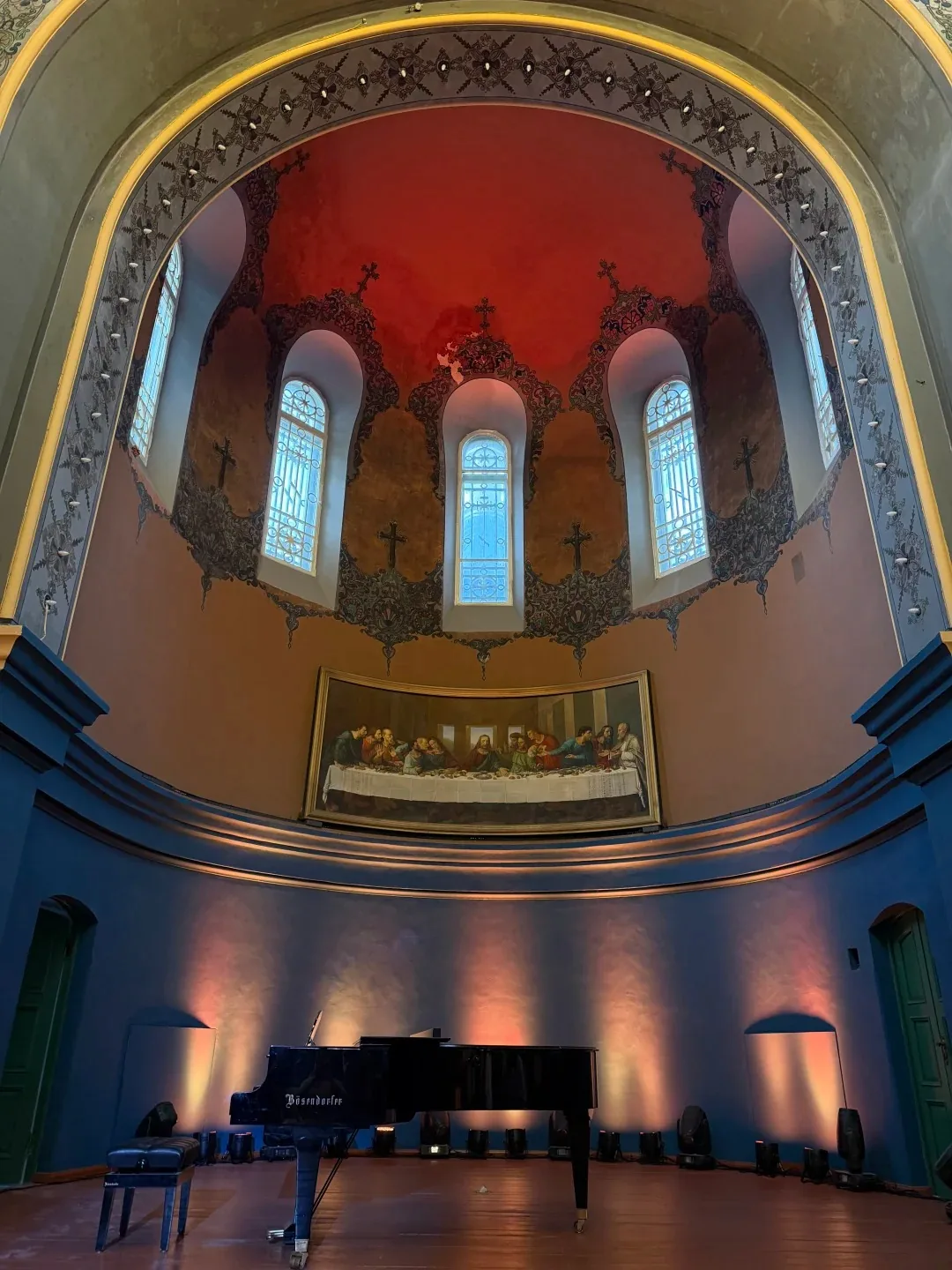
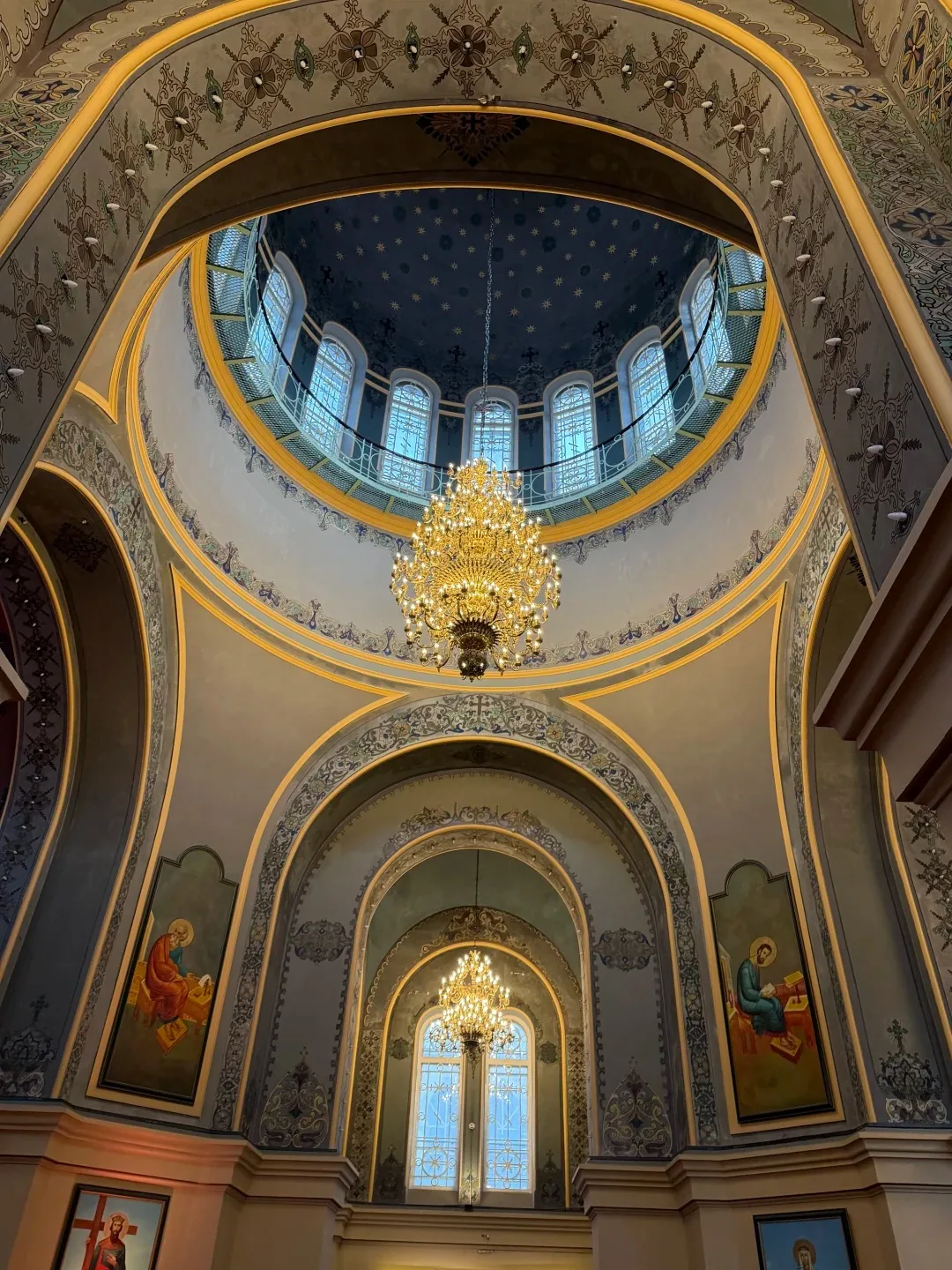
Entering changes the scale: the dome seen from outside becomes a roof over the central interior, framed by a series of arches. Displays about Harbin's historic buildings and urban development give context to what visitors see around the city. Exhibitions and access can change. The hall also hosts music programmes whose schedules may differ from ordinary visiting hours. A mural conservation project closed the interior temporarily in 2025, so current museum notices matter when planning an indoor visit.
The square is also a public cultural space
The square allows views from several angles and sometimes hosts music, projection and lighting events. Programmes and installations vary, while the building's brickwork, bell tower and domes remain the constant reference points. Even without an event, walking around the square reveals how the cathedral sits within modern central Harbin.
The first church was built in 1907 as a wooden military chapel. It was later rebuilt in masonry into the form visible today, ceased religious use in the 1960s and opened as the Architectural Art Museum in 1997. Its present use connects a former place of worship with a public introduction to Harbin's built environment.