Journey To ChinaLast updated
Three toppings with three jobs
Pian'erchuan (片儿川) is built around preserved mustard greens, bamboo shoots, and sliced pork. The greens contribute fermented saltiness, the shoots bring crispness and a clean aroma, and the pork adds fat and savoury depth. Their flavours are released in the wok before broth and noodles bring the bowl together.
Fresh shoots change with the season. Spring bamboo is delicate and sweet, while winter shoots are denser and crisper. Some shops add mushrooms, pork crackling, or other house toppings, yet the classic three-part combination remains easy to recognise.
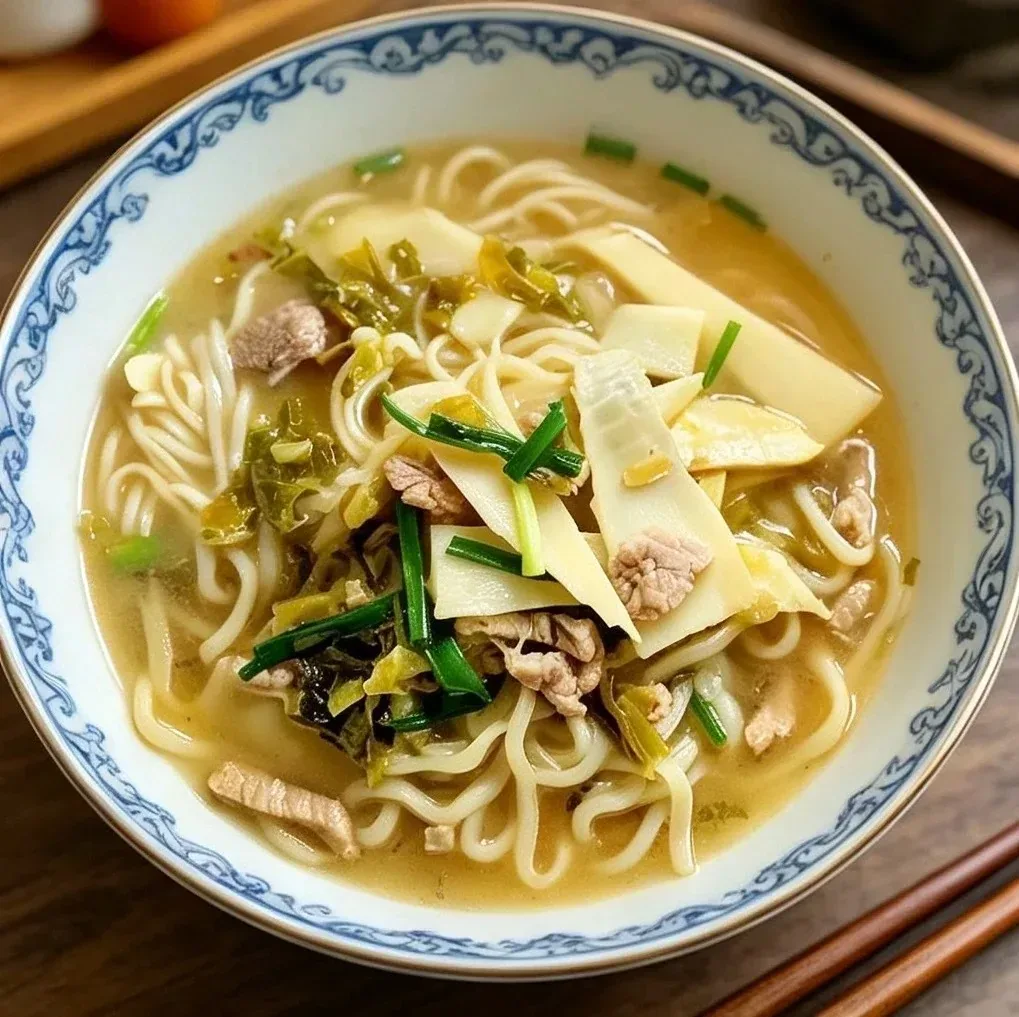
The broad shoot slices, chopped preserved greens, and pork show how the topping distributes texture through the bowl.
The wok matters before the broth
Frying the topping releases the greens' fermented aroma and lets pork fat coat the bamboo. The broth may look pale, but it carries the fragrance of that wok step. Noodle thickness, cooking time, broth volume, and the moment the topping is added all affect how firm or absorbent the final bowl feels.
“Guotiao'er” usually refers to noodles lifted directly from the pot with less soaking, giving a firmer bite. Ban chuan (拌川) is a different Hangzhou format: noodles and topping are tossed in the wok with much less broth and more toasted aroma. Both names often appear on the same menu.
Old noodle houses such as Kuiyuan Guan made pian'erchuan part of Hangzhou's urban memory. Stories of examination candidates and inexpensive bowls contain legendary details, but they also capture its enduring role: a quick, complete meal with staple food, vegetables, and pork, far removed from the pace of a formal banquet.