Journey To ChinaLast updated
A Hangzhou dish built around pale colour and light fragrance
Longjing shrimp (龙井虾仁) arrives almost white: plump shrimp, unfurled green tea leaves, and only a thin layer of clear juices. Sweet seafood leads, followed by the roasted-bean, tender-chestnut, or fresh vegetal notes associated with Longjing tea. Beside dark soy-braised dishes, both the colour and flavour feel deliberately light.
The shrimp are peeled, cleaned, and given a very thin starch-and-egg-white coating before a quick pass through warm oil. This surface protects moisture without becoming a heavy batter. Brewed tea and the leaves enter late, allowing the shrimp to finish cooking while the tea keeps its fragrance. The narrow margin between raw, tender, and overcooked makes this a technically demanding dish despite its simple appearance.
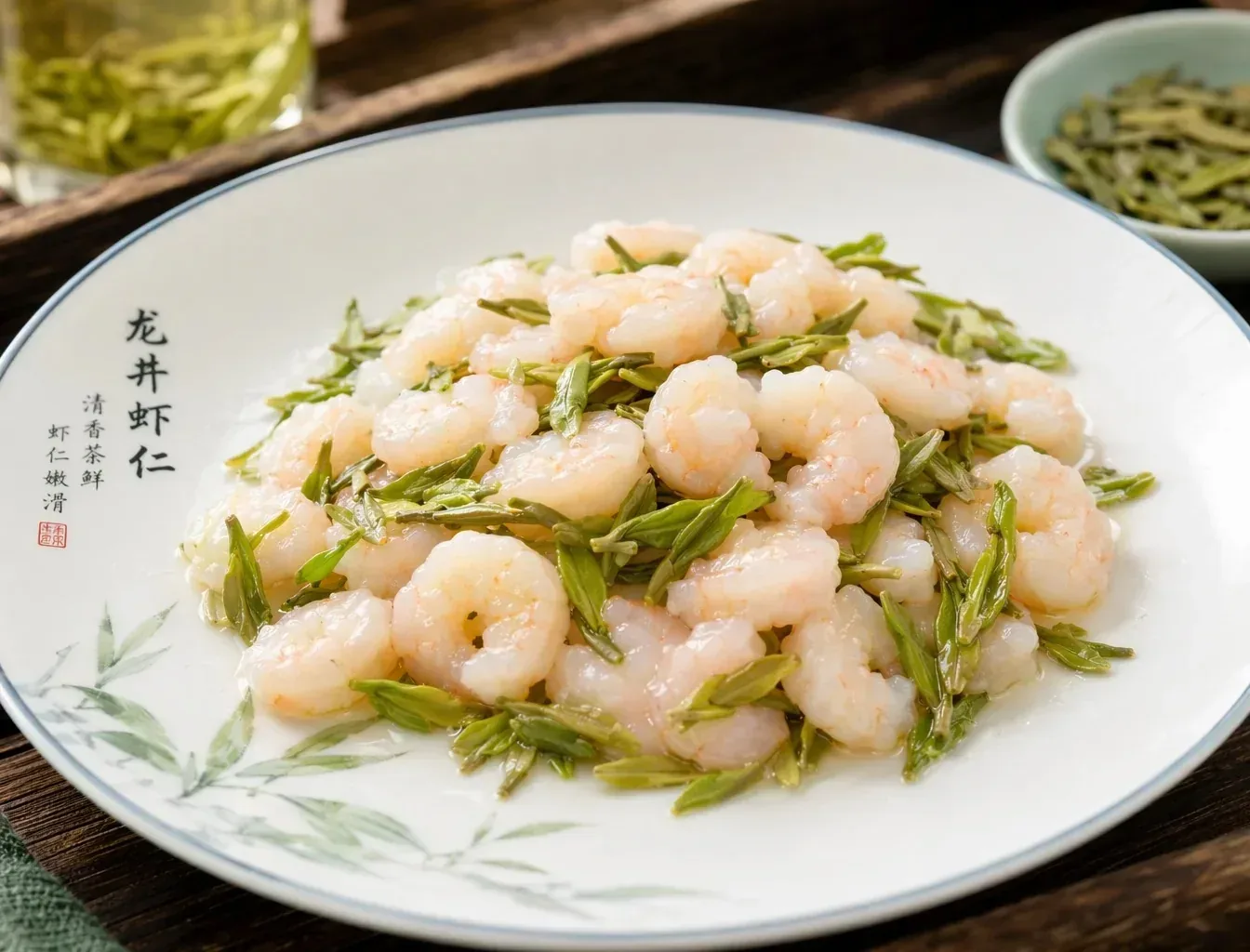
Whole leaves, plump shrimp, and clear juices show the balance between seafood and tea.
Tea appears in the steam, sauce, and leaf
The leaves are edible. Smelling the dish while hot reveals the most volatile aroma; eating a shrimp shows how lightly the tea seasons the juices; chewing a leaf gives a more direct vegetal note and slight astringency. Trying those elements separately and together makes the progression easier to notice.
West Lake Longjing varies by origin, harvest period, and grade, while a menu name alone does not prove which grade a restaurant uses. Ask what tea and shrimp are used that day if the detail matters. Kitchens also differ in tea strength, starch, and seasoning, making this a useful dish for comparing restrained Hangzhou cooking.