Journey To ChinaLast updated
Read the dish from its three-layered side
Dongpo pork (东坡肉) begins with a thick cube of skin-on pork belly tied with cotton string or straw. The skin sits on top, followed by a generous band of fat and a layer of lean meat. Tying helps the cube retain its shape through prolonged cooking, so all three layers remain visible beneath the glossy sauce when it reaches the table.
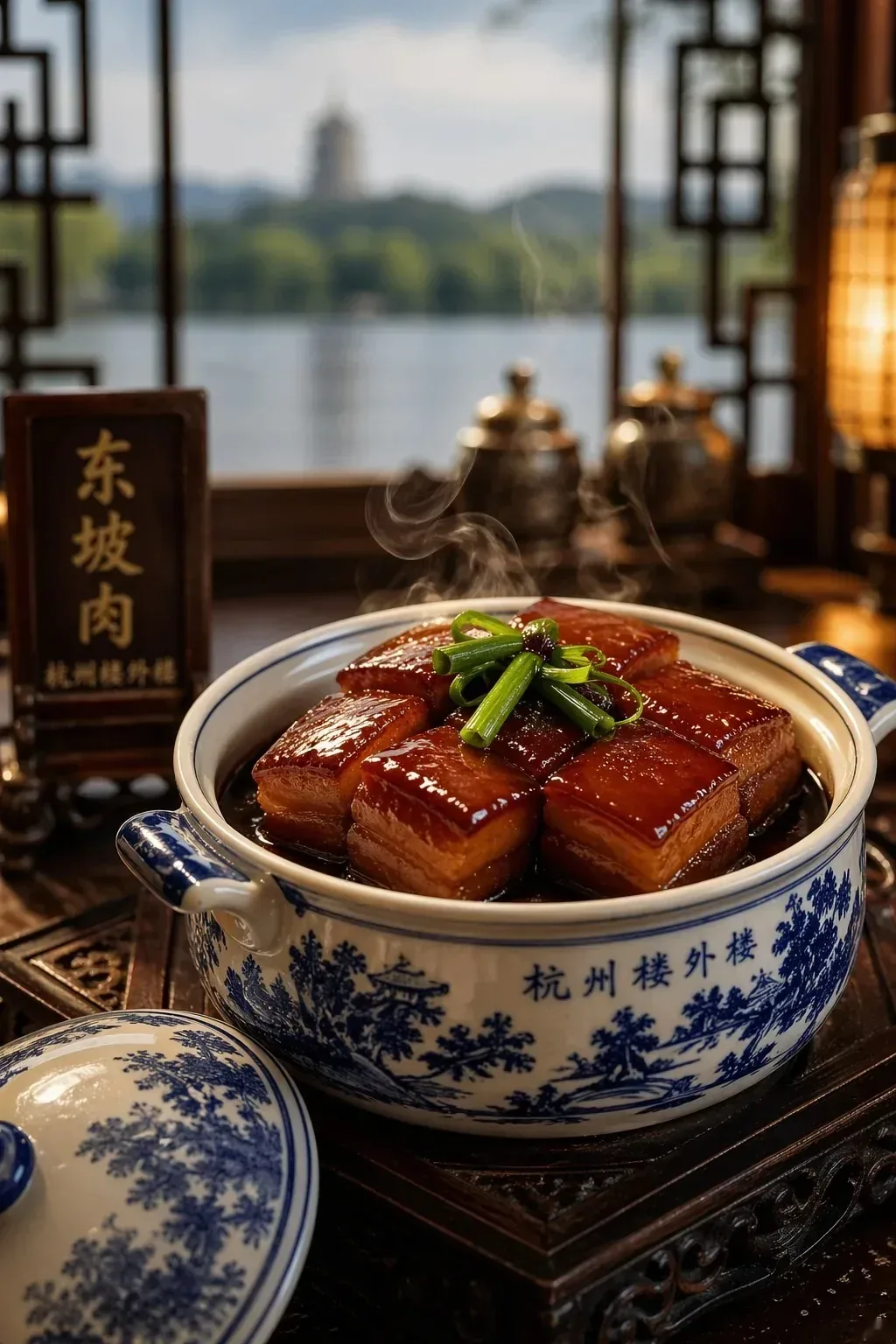
The cubes sit skin-side up, with a red-brown glaze over clearly visible layers of skin, fat and lean pork.
That structure shapes every bite. The skin becomes soft and gelatinous, the fat turns yielding, and the lean meat keeps fine fibres while separating easily with chopsticks. A vertical portion brings all three textures together; tasting across the layers makes their differences much clearer.
Braised skin-side down, steamed skin-side up
Hangzhou's current local standard for Dongpo pork specifies the main ingredients, preparation and finished qualities. Individual kitchens retain their own seasoning and timing, but the recognisable process starts with tied pork cubes arranged over aromatics such as spring onion and ginger. Shaoxing wine, soy sauce and sugar enter the braising liquid, while the skin faces down to absorb colour and soften during gentle cooking.
After braising, excess fat is removed and the cubes are transferred to small clay pots or a steamer with the skin facing up. This second stage softens the skin further and relaxes the lean fibres without breaking the cube apart in a moving pot of sauce. The finished pork keeps its neat outline yet yields to light pressure from chopsticks.
Cube size changes the experience. A thick piece displays the three textures most clearly, with sauce concentrated around the surface and between the fibres. Restaurants may serve one cube in an individual covered pot, or several pieces in a casserole or on a shared plate. A menu photograph showing the side layers is useful for understanding both the portion and serving style.
Shaoxing-wine aroma carried by a rounded sweet-savoury sauce
Soy sauce, sugar and prolonged heating give Dongpo pork its deep red-brown sheen. Steam from the pot carries fermented Shaoxing-wine notes alongside soy, ginger, spring onion and pork. The sweetness is usually gentle and supports the savoury sauce rather than turning it into a dessert-like glaze; the Hangzhou style normally has very little chilli heat.
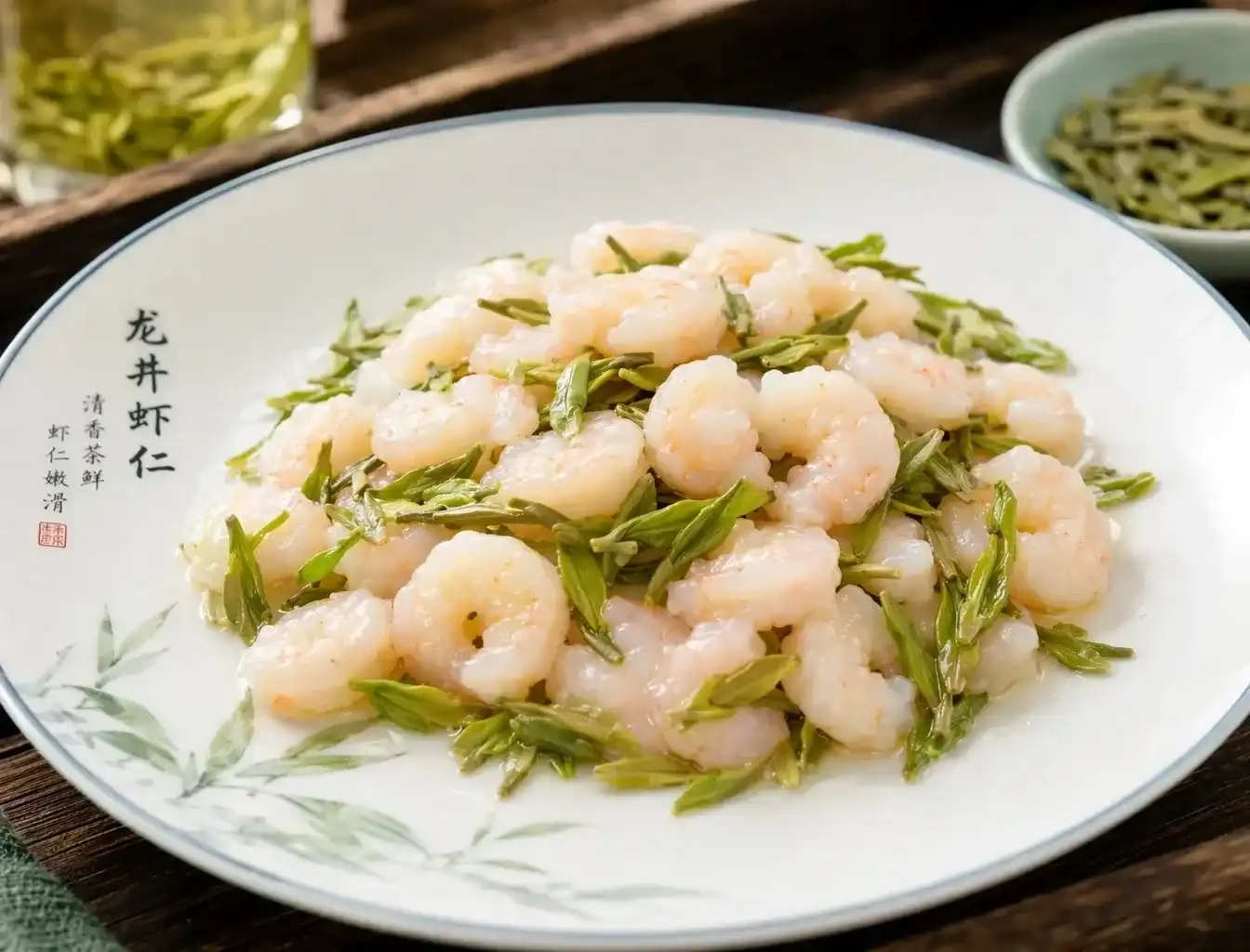
The sauce is thick enough to season a small amount of plain rice. Bamboo shoots, green vegetables, water-shield soup or another lightly seasoned dish add contrasting textures and aromas between bites. On a table with delicate dishes such as Longjing shrimp, Dongpo pork often supplies the darkest colour, longest cooking and richest flavour.
Su Shi, the Su Causeway and a Hangzhou table story
During the Yuanyou era of the Northern Song dynasty, the poet and official Su Shi oversaw the dredging of West Lake. Records of the project describe his concern for the lake's roles in water supply, irrigation and transport. Silt and aquatic plants removed from the lake were used to build the long causeway now known as Su Causeway, the clearest surviving link between Su Shi and Hangzhou's landscape.
Hangzhou's food memory adds a popular story. Residents are said to have presented pork and wine in thanks, and Su Shi had the meat cooked and distributed to labourers who worked on the lake. The wine entered the cooking in later retellings, eventually connecting the dish's name with the project. Its details belong to local tradition, but the story reveals how Hangzhou joined civic history, affection for Su Shi and a pork dish into one cultural memory.
Su Shi's poem on pork praises slow fire, little water and the beauty produced by sufficient cooking. That idea closely matches the spirit of Dongpo pork, while the familiar tied cube, soy-and-wine seasoning and braise-then-steam method developed through later recipes and restaurant practice. Culinary records from the late Qing and Republican periods already describe forms close to the modern dish. What arrives at the table is therefore a continuing tradition: Su Shi's attitude to food and Hangzhou's memory form its cultural starting point, while generations of cooks shaped its present form.
Individual clay pots and shared casseroles
An individual covered pot usually contains one cube set skin-side up, concentrating the Shaoxing-wine aroma when the lid is lifted. Shared casseroles or platters make the number and size of the pieces easier to see. Cutting vertically gives each serving a portion of skin, fat and lean pork; any string used to hold the cube together is removed by the restaurant or set aside while eating.
Tasting a small vertical portion with its sauce shows the continuous change from gelatinous skin to yielding fat and tender lean meat. Rice and lightly cooked vegetables create different pairings without obscuring that structure. Although the cube looks firm, sufficient cooking leaves it soft enough to separate gently from the side with chopsticks, releasing more of the wine aroma with the heat.
Ingredient note: Dongpo pork is made from skin-on pork belly and retains clearly visible layers of pork skin and animal fat.