
Journey To ChinaLast updated
Chengdu Wuhou Shrine guide
An imperial temple remembered by a minister's title
The formal gate bears the words “Temple of Emperor Zhaolie,” the posthumous title of Liu Bei. “Wuhou” comes from Zhuge Liang's noble title and posthumous name. The emperor and his minister therefore give the site two names, yet everyday usage has long favoured Wuhou Shrine—a measure of Zhuge Liang's place in popular memory.
Liu Bei died in 223 and was buried at Huiling in Chengdu. A temple to the emperor stood near the tomb; around the Southern and Northern Dynasties, Zhuge Liang's shrine was moved beside it. In 1391, the Ming prince Zhu Chun promoted their integration, shaping the rare ruler-and-minister memorial complex seen today. War destroyed the late-Ming buildings, and the principal surviving halls were rebuilt in 1671–72.
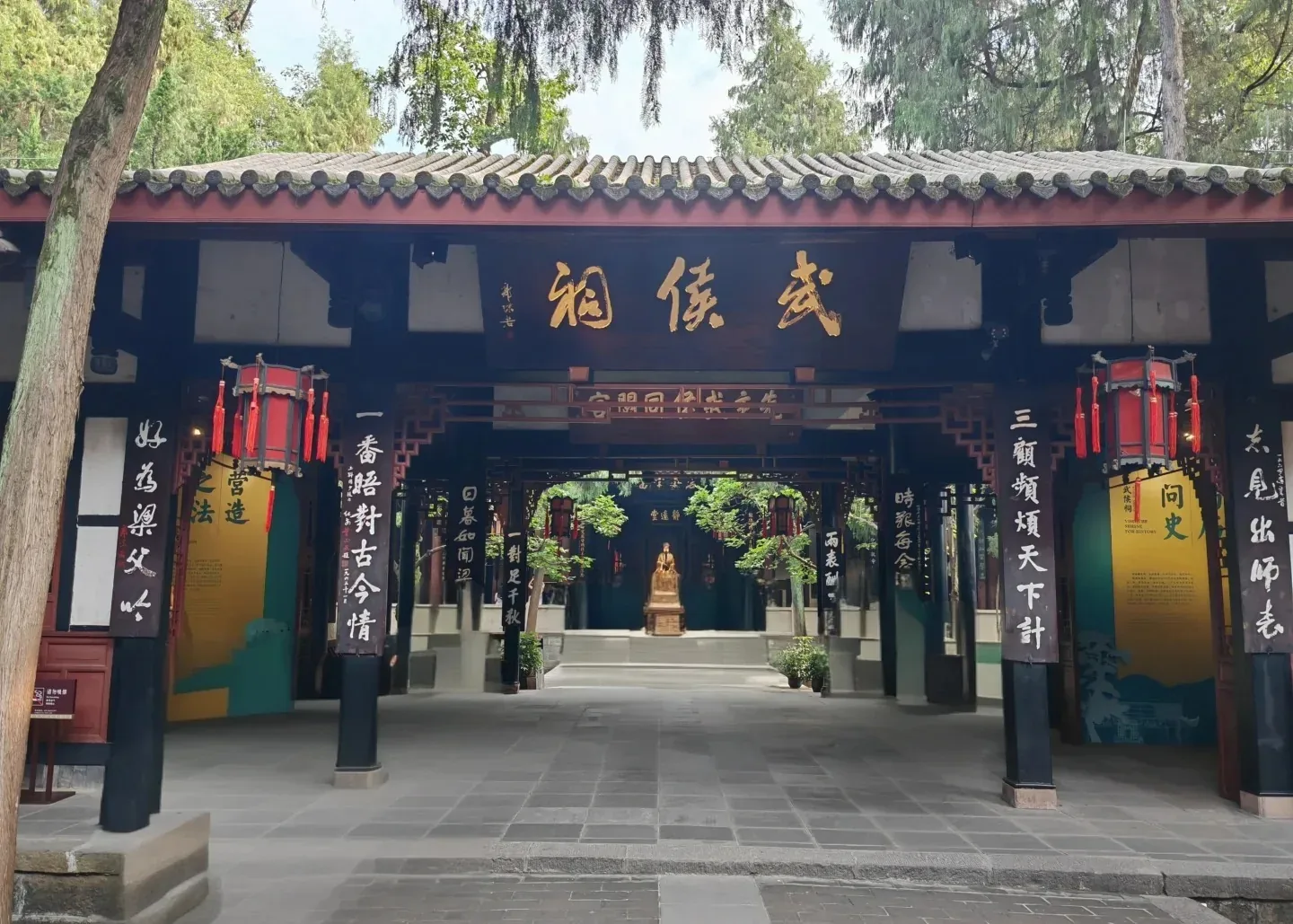
The gate says “Temple of Emperor Zhaolie,” while the familiar site name honours Zhuge Liang; that contrast introduces the whole complex.
Architecture turns hierarchy into space
The central route passes Liu Bei's hall and the civil-and-military galleries before reaching Zhuge Liang's hall, Sanyi Temple, and Huiling. Liu Bei's hall stands forward, higher, and on a larger scale. Zhuge Liang's smaller hall behind it follows ritual hierarchy, while its dense plaques and couplets reveal the minister's extraordinary later reputation.
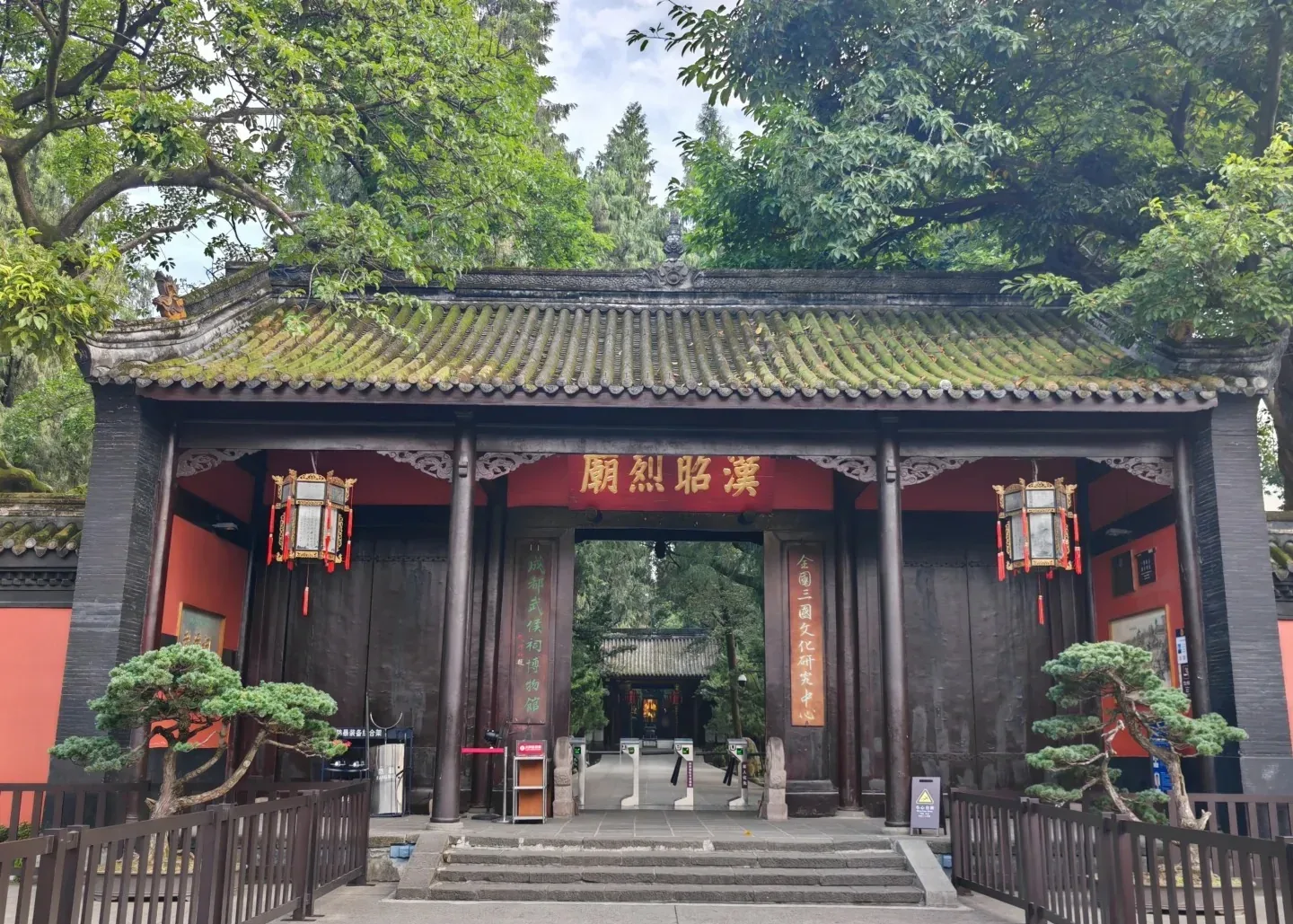
The order, height, and scale of the courts express the ruler–minister relationship before any label is read.
The side galleries contain 28 figures of Shu Han civil and military officials. Labels place Pang Tong, Jiang Wan, Fei Yi, Zhao Yun, and others within the state that Liu Bei and Zhuge Liang governed. Their Qing-era theatrical dress also shows how historical people were reimagined through later visual culture. Sanyi Temple, moved here from Tidu Street in 1998, presents the oath-brotherhood tradition made famous by Romance of the Three Kingdoms.
Stone inscriptions record later readings of Zhuge Liang
The Tang stele dated 809 is celebrated for its text, calligraphy, and carving. Its political authors used Zhuge Liang to discuss government, appointments, and relations between ruler and minister. In and around Zhuge Liang's hall, plaques and couplets continue that conversation; Zhao Fan's famous “attack the heart” couplet considers persuasion, circumstances, severity, and leniency in governing Sichuan.
Huiling anchors the site in the Shu Han capital
Huiling is Liu Bei's tomb and the most direct physical link between the memorial complex and Chengdu's role as the Shu Han capital. The mound, spirit path, and walls create a quieter space after the portrait-filled halls.
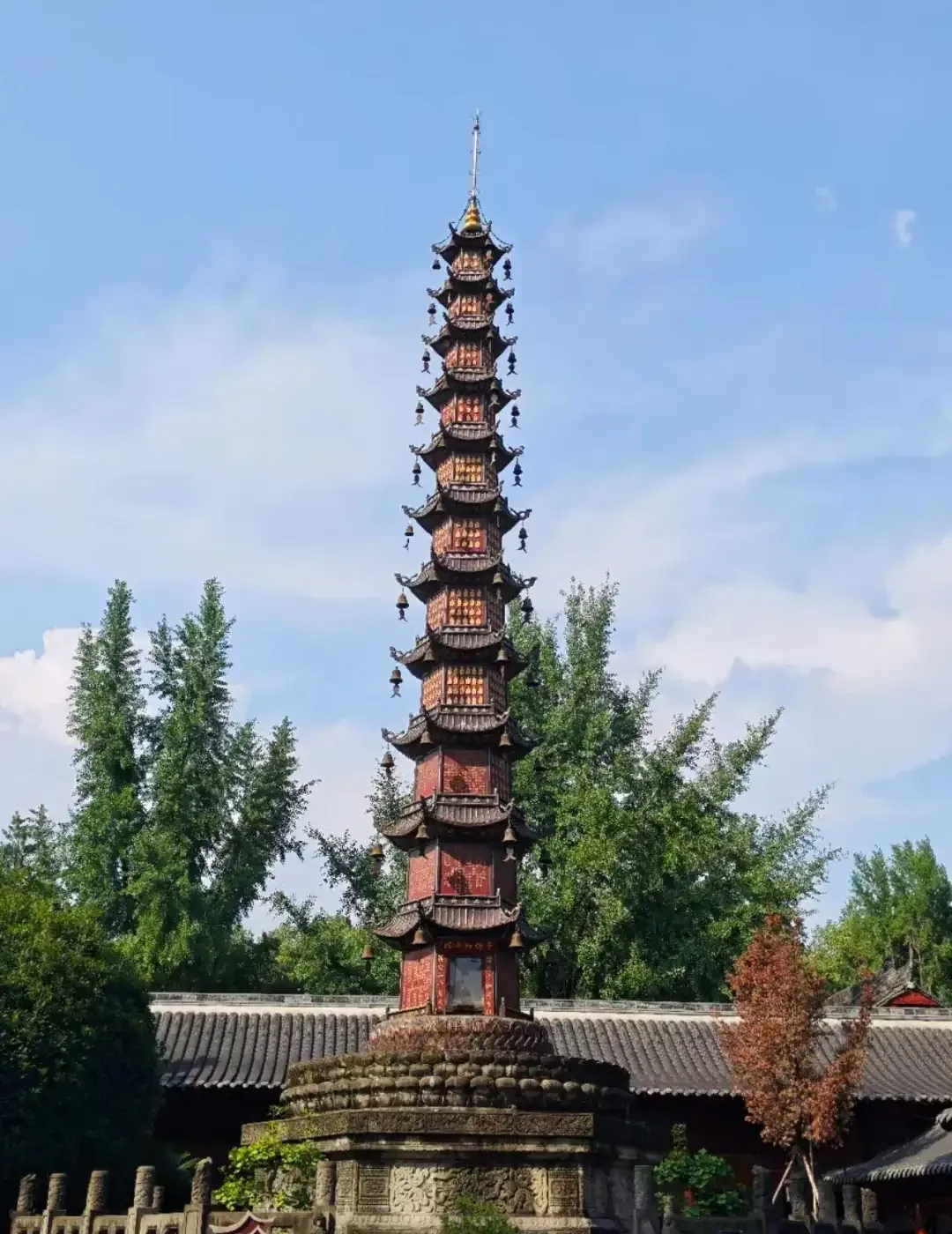
Garden paths and the tomb precinct shift the visit from crowded memorial imagery to a real burial landscape.
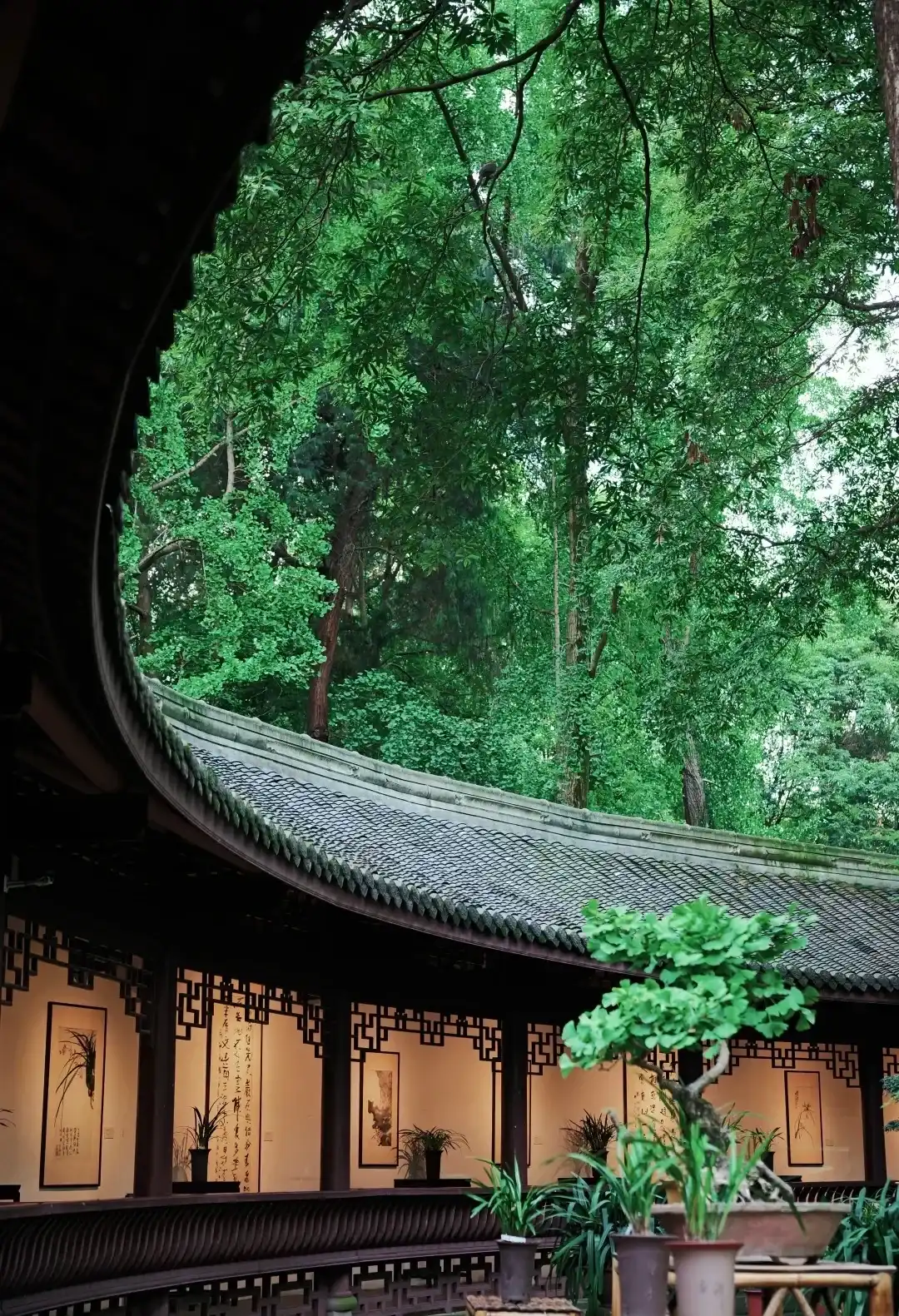
The red-walled passage beside the bamboo grove is part of this transition. Red plaster, grey tiles, gateways, and bamboo shadows change with the light and also reveal the garden character of the shrine beyond its most photographed view.
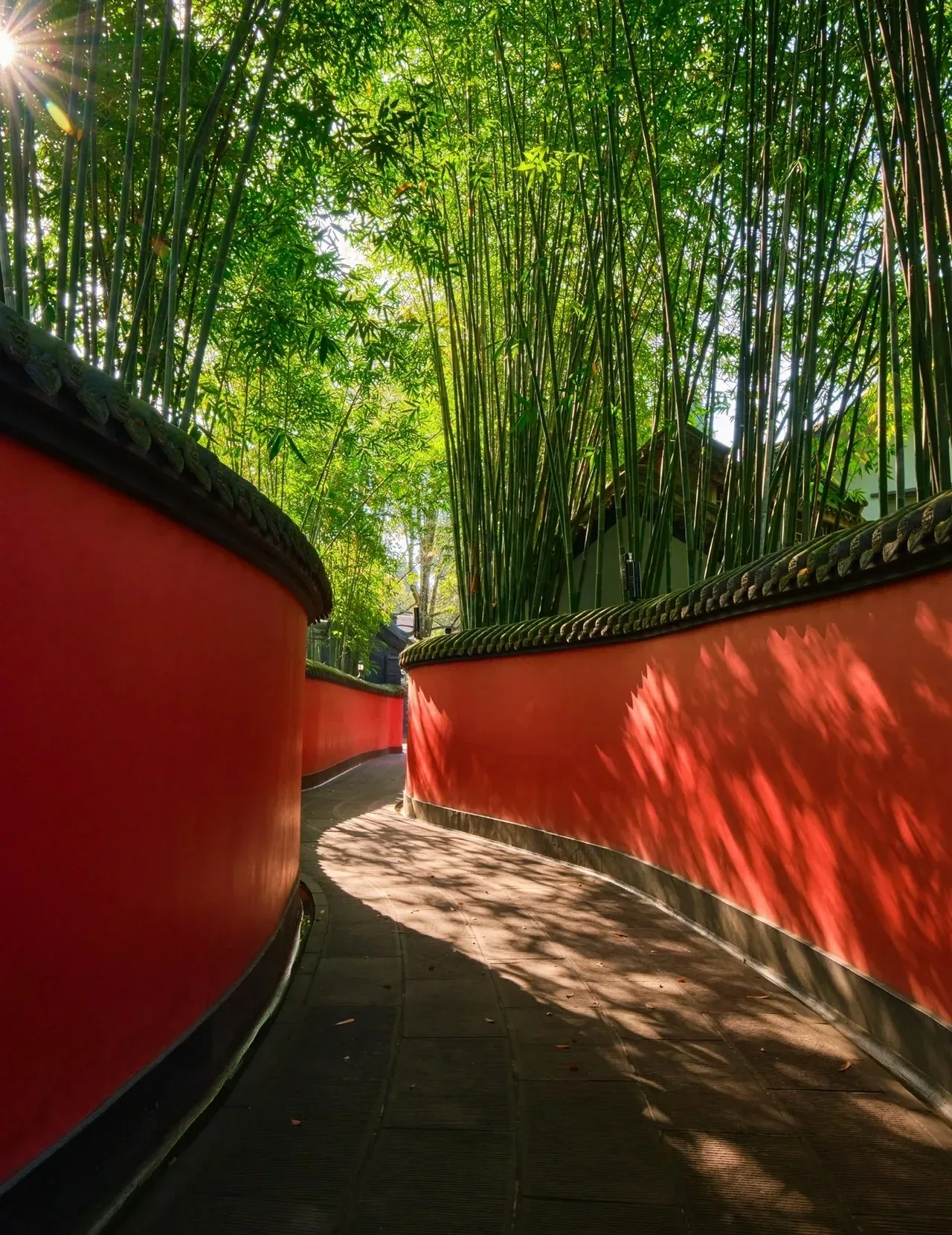
The passage connects heritage and garden areas, so it works as a spatial transition as well as a photograph.
Continue into modern history and Jinli
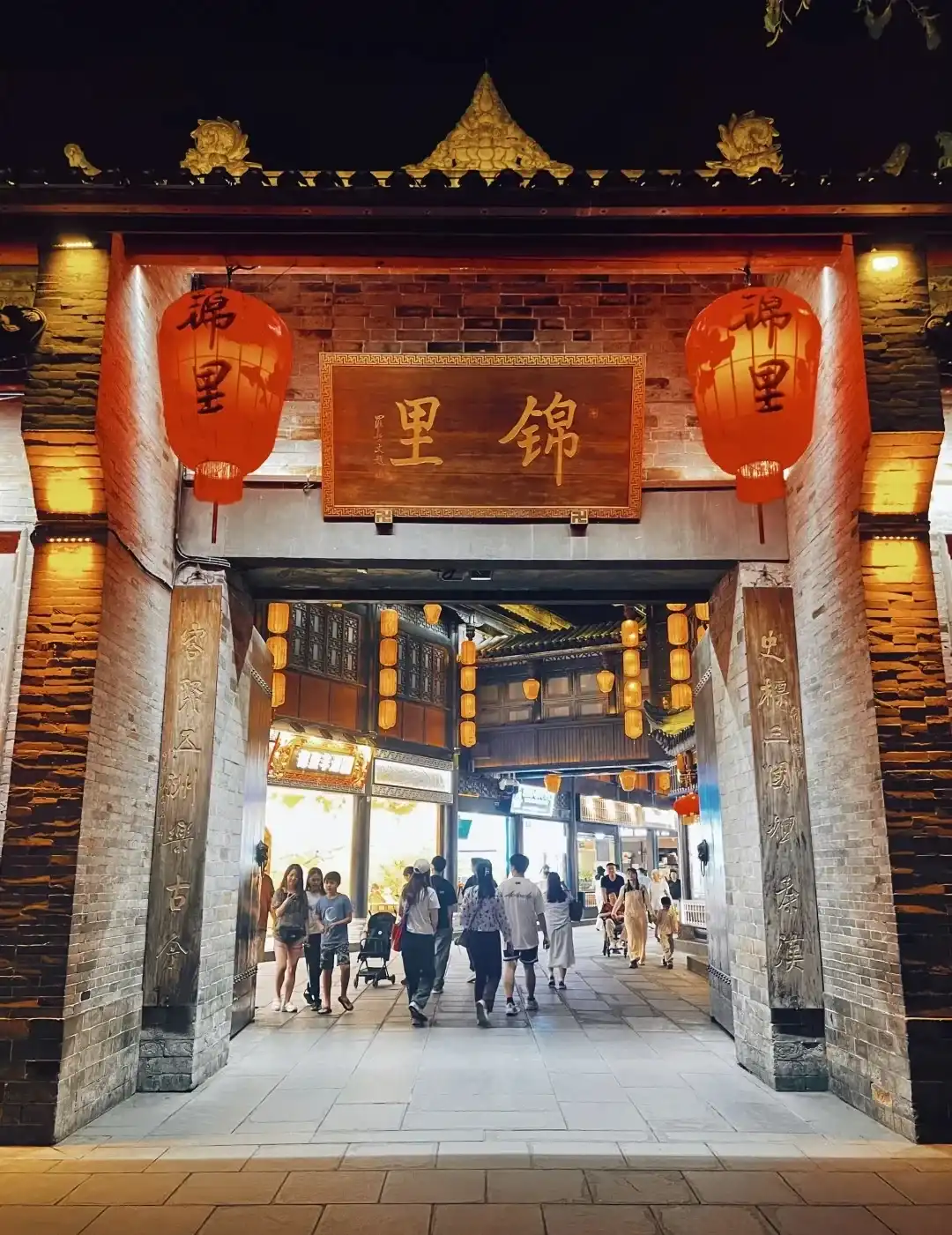
The western area incorporates the former Nanjiao Park and the tomb precinct of Republican-era Sichuan general Liu Xiang, adding a modern layer to the Three Kingdoms memorial. Jinli, next to the museum, is a contemporary folk-commercial street with separate content and opening arrangements. The heritage halls suit daylight and close reading; Jinli's crafts, food, and lantern-lit water edge provide a natural evening continuation.
The paid heritage area uses official ticket channels, with opening hours and special programmes subject to current notices. Official routes range from roughly two to four hours. The core sequence is the main halls, galleries, inscriptions, and Huiling; exhibitions and the western garden can extend the visit.