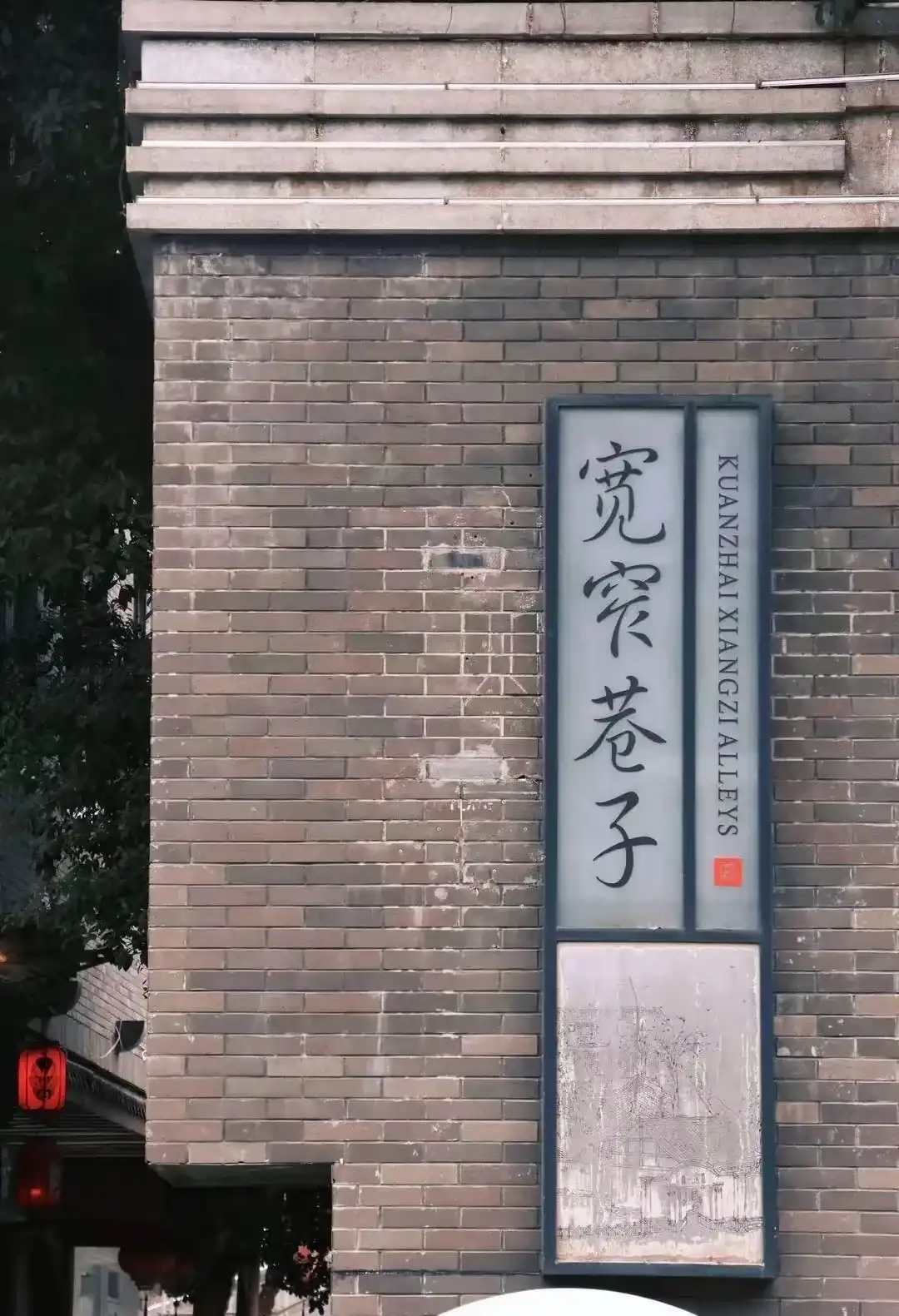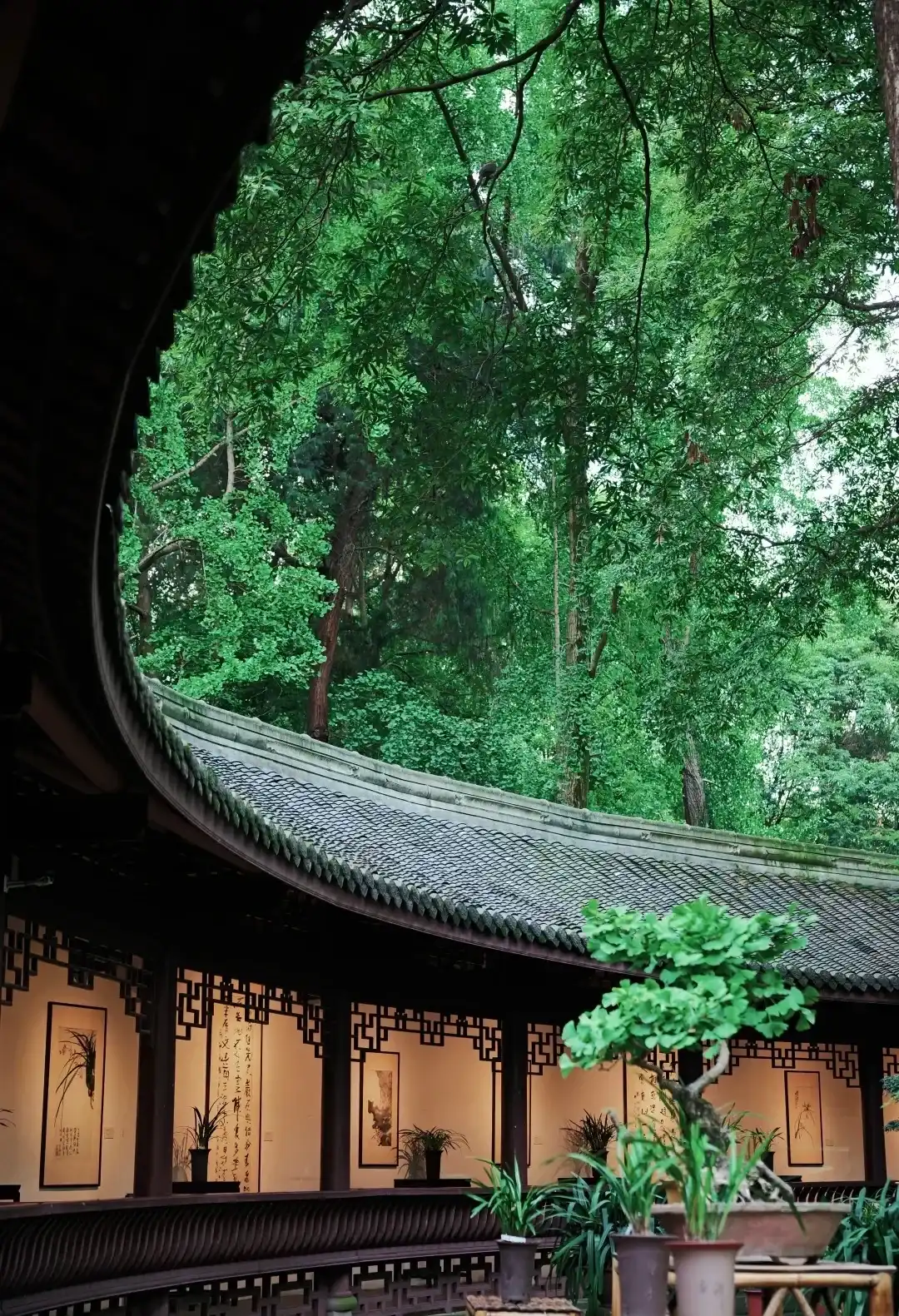

Journey To ChinaLast updated
Jinli Ancient Street guide
An old Chengdu name enters a modern street
“Jinli” is tied to Chengdu's brocade history and to names such as Jinguancheng and the Jin River. The district visitors see today began construction in 2000 under Chengdu Wuhou Shrine Museum. Its first folk-culture phase opened in 2004 and the waterside extension in 2009, using an ancient name as the cultural thread for a contemporary destination.
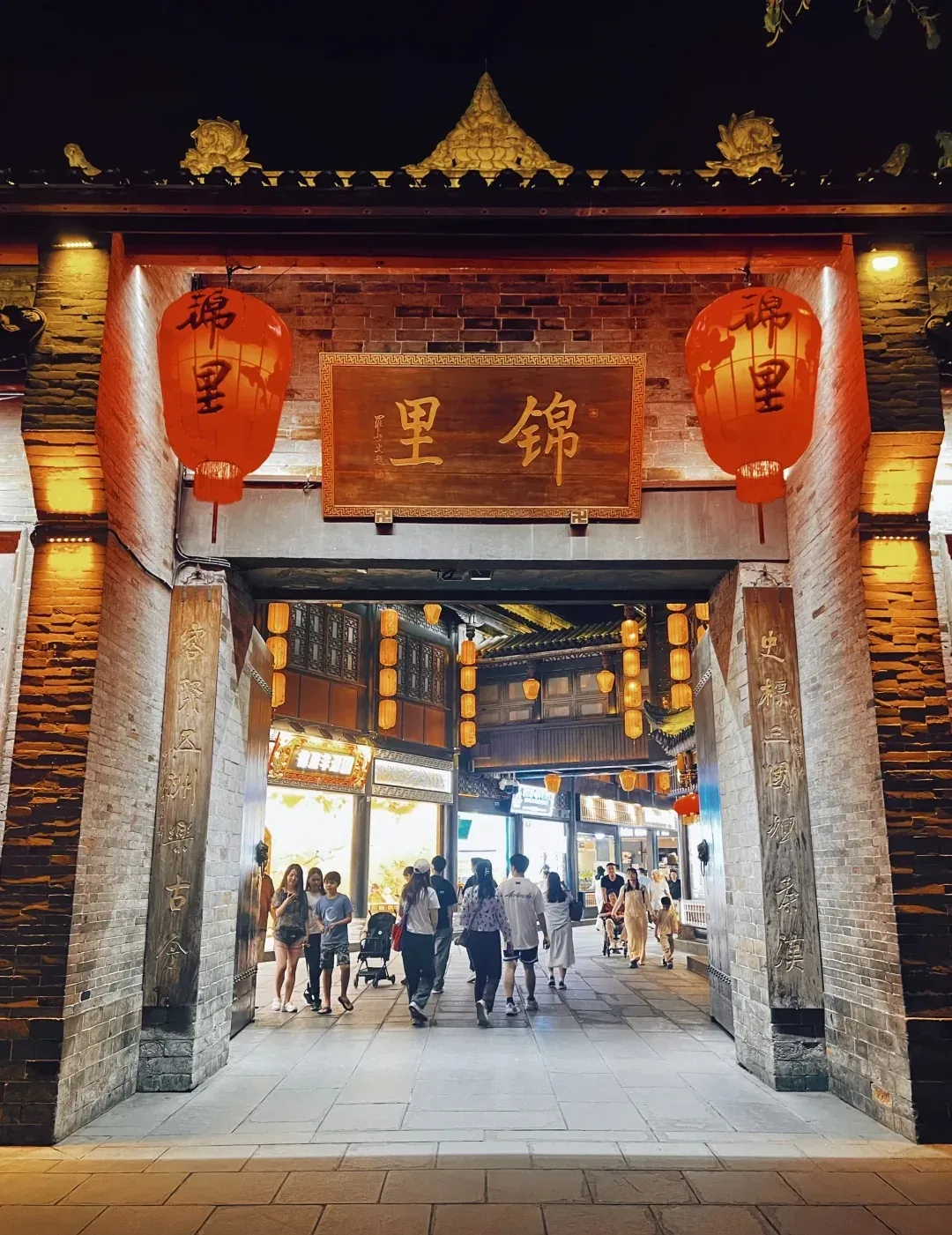
Narrow lanes, low eaves, and dense shop signs create a street-market scale beyond the gateway.
The district adjoins Wuhou Shrine and incorporates water and greenery from the former Nanjiao Park. Timber shopfronts, pitched roofs, walls, and overhanging eaves evoke late-Qing and early-Republican Sichuan architecture, while Three Kingdoms figures appear in plaques, stages, and cultural products.
Crafts fill the main lane; water reshapes the second half
Shu embroidery, brocade weaving, porcelain-body bamboo weaving, paper cutting, clay work, and sugar painting turn fibres, bamboo, paper, clay, and hot sugar into visible demonstrations of technique. Shops change, but watching the material being controlled is more revealing than a simple souvenir list.
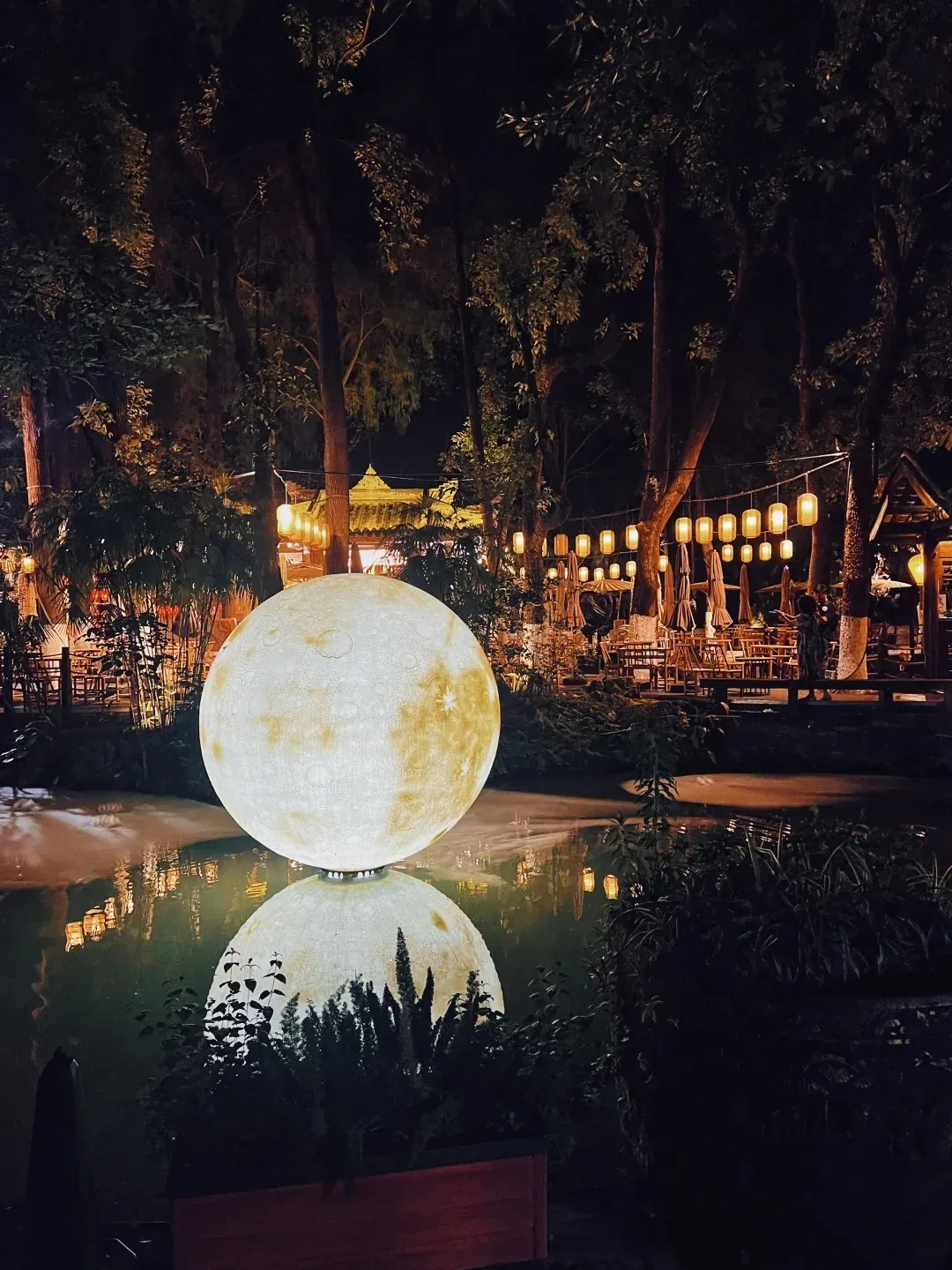
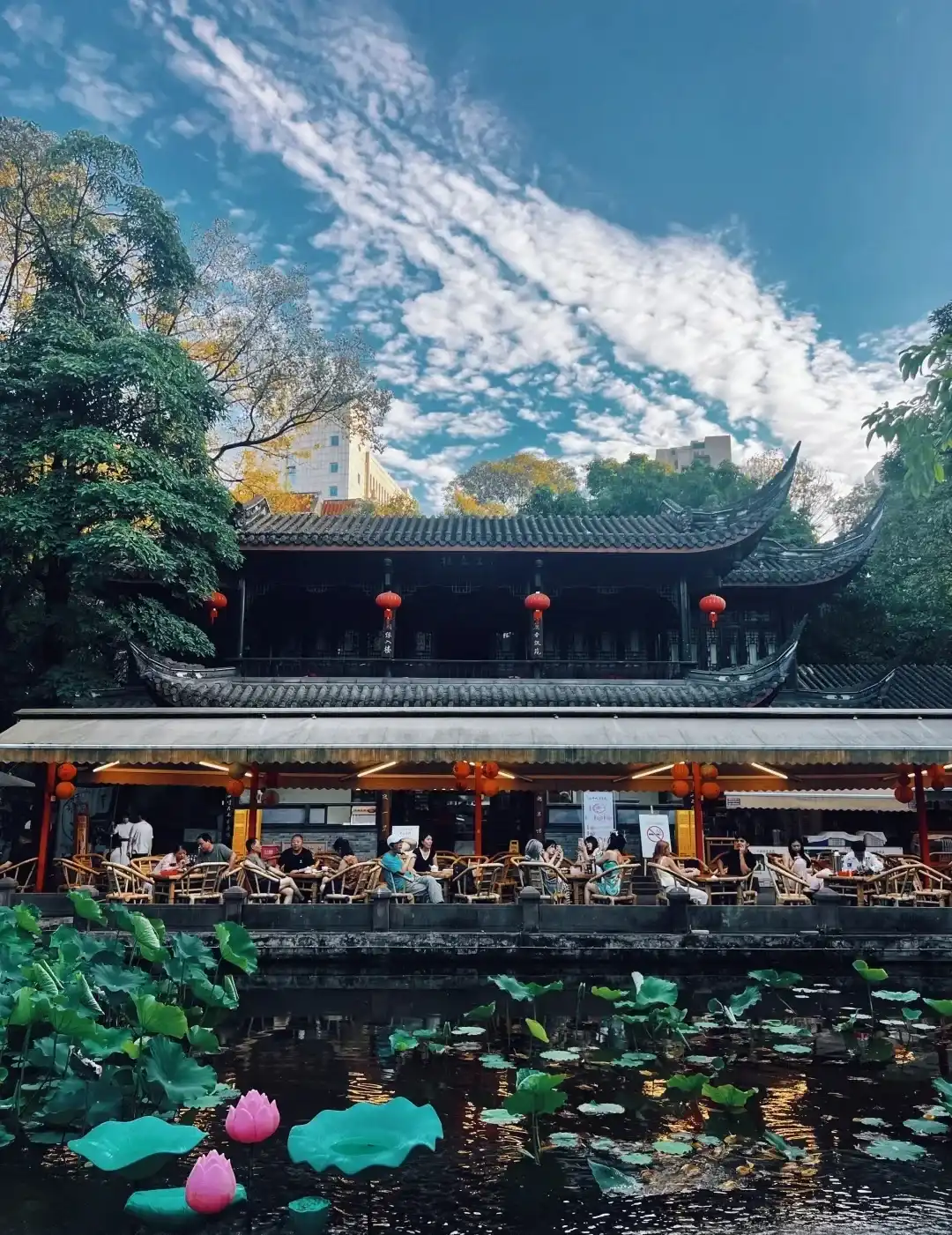
Seasonal decorations change; bridges, water, waterside buildings, and reflections remain the stable framework.
The waterside extension opens the lane into bridges, ponds, islands, and seating by the water. Curving paths, framed views, and small changes of level borrow from Sichuan garden design. As lanterns come on, reflections add a second layer beneath the eaves.
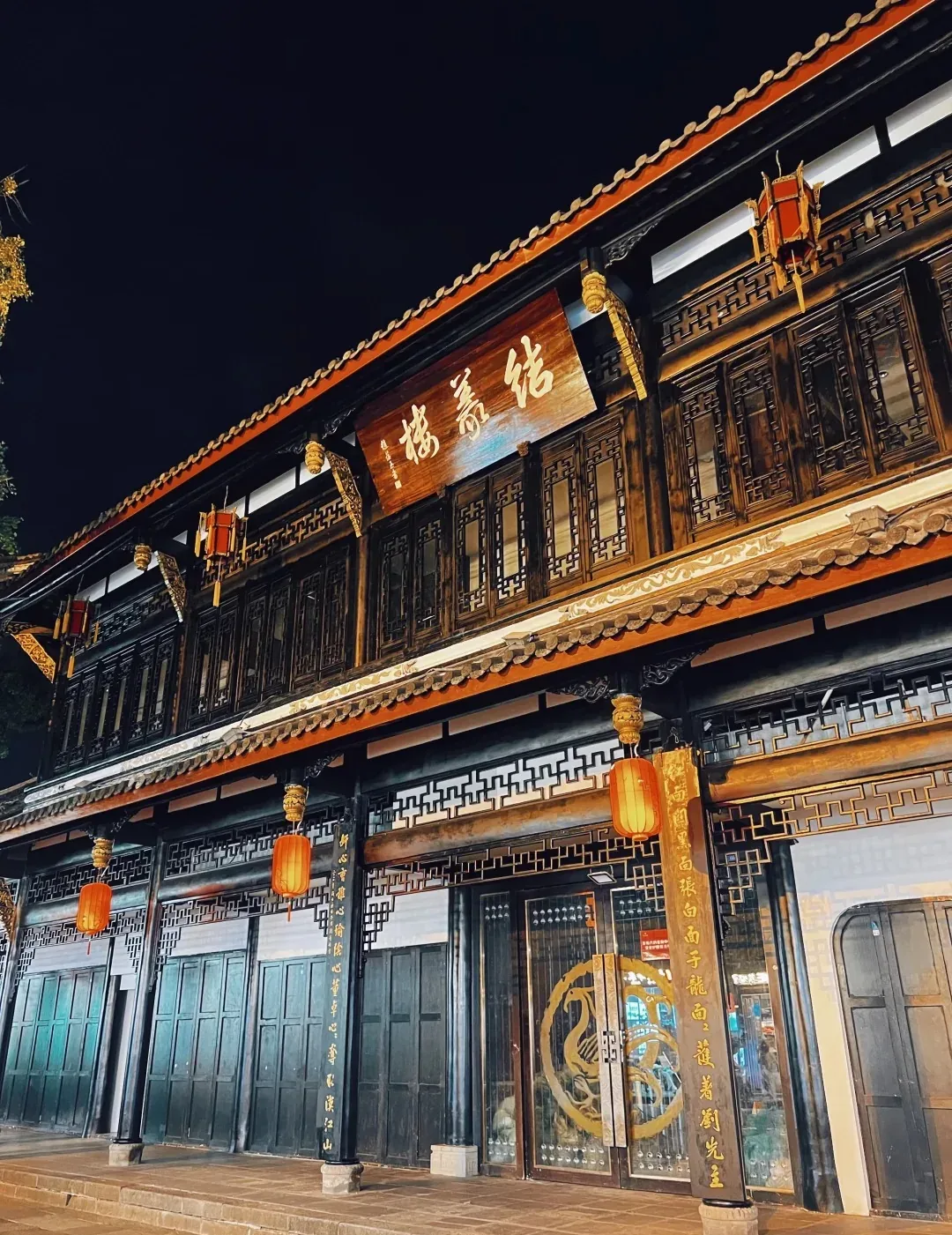
The façades evoke an older street, while the restaurants, shops, and performances are contemporary operations.
The public stage and other open areas may host short Sichuan-opera, music, or festival performances. Current programmes come from the day's notices; the stage itself still shows how public entertainment once sat within a market.
Move from Shu Han memory to Chengdu folk life
Wuhou Shrine and Jinli share a museum relationship and a physical boundary but offer different readings. The shrine uses halls, steles, and ruler–minister memorial ritual to tell Shu Han history. Jinli continues that memory through crafts, street entertainment, food, and night-time atmosphere.
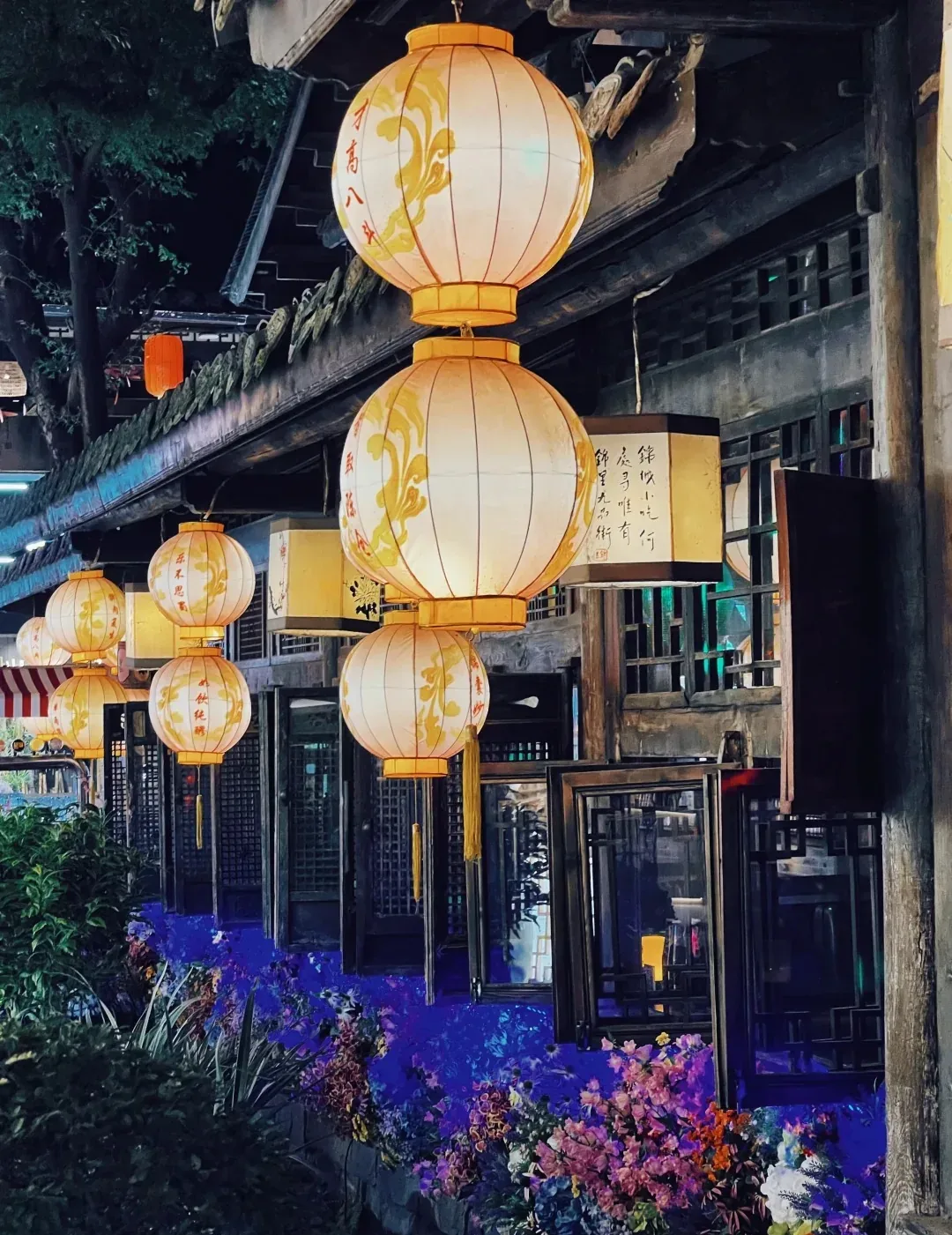
Warm lantern light compresses pedestrians, signs, and eaves into the depth of the narrow street.
The public lanes are generally free to enter, while food, performances, and hands-on activities are charged separately. A daytime visit to Wuhou Shrine followed by Jinli at dusk lets both places keep their distinct character.