
Journey To ChinaLast updated
Dujiangyan Irrigation System guide
Three works guide one river into the Chengdu Plain
Dujiangyan began in the third century BCE under Li Bing and his son. The Fish Mouth divides the Min River between an inner channel for irrigation and an outer channel for flood discharge. Flying Sand Weir releases excess water and helps move sediment. Bottle-Neck Channel, cut through the mountain, limits the water entering the plain.
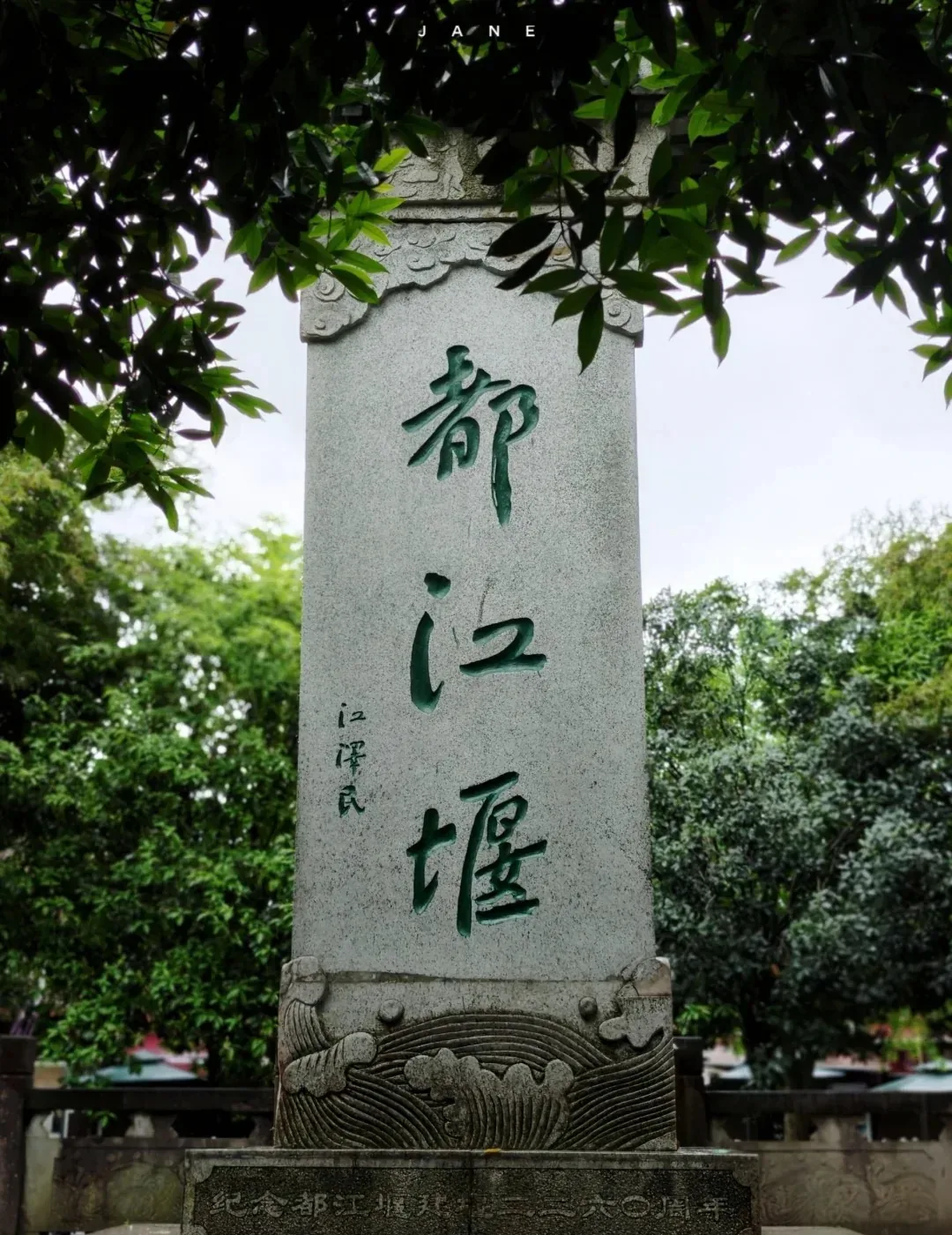
The heritage landscape begins before the principal waterworks come into view.
Together, the three elements use river shape, seasonal flow, and continual maintenance to distribute water, control floods, and manage sediment without blocking the Min with a high dam.
Walk from the controlled channel toward the river divide
Lidui Park brings visitors close to Bottle-Neck Channel and the Inner River. From there, paths and bridges lead toward Flying Sand Weir and Fish Mouth, allowing the mechanism to be read against the actual direction and speed of the water.
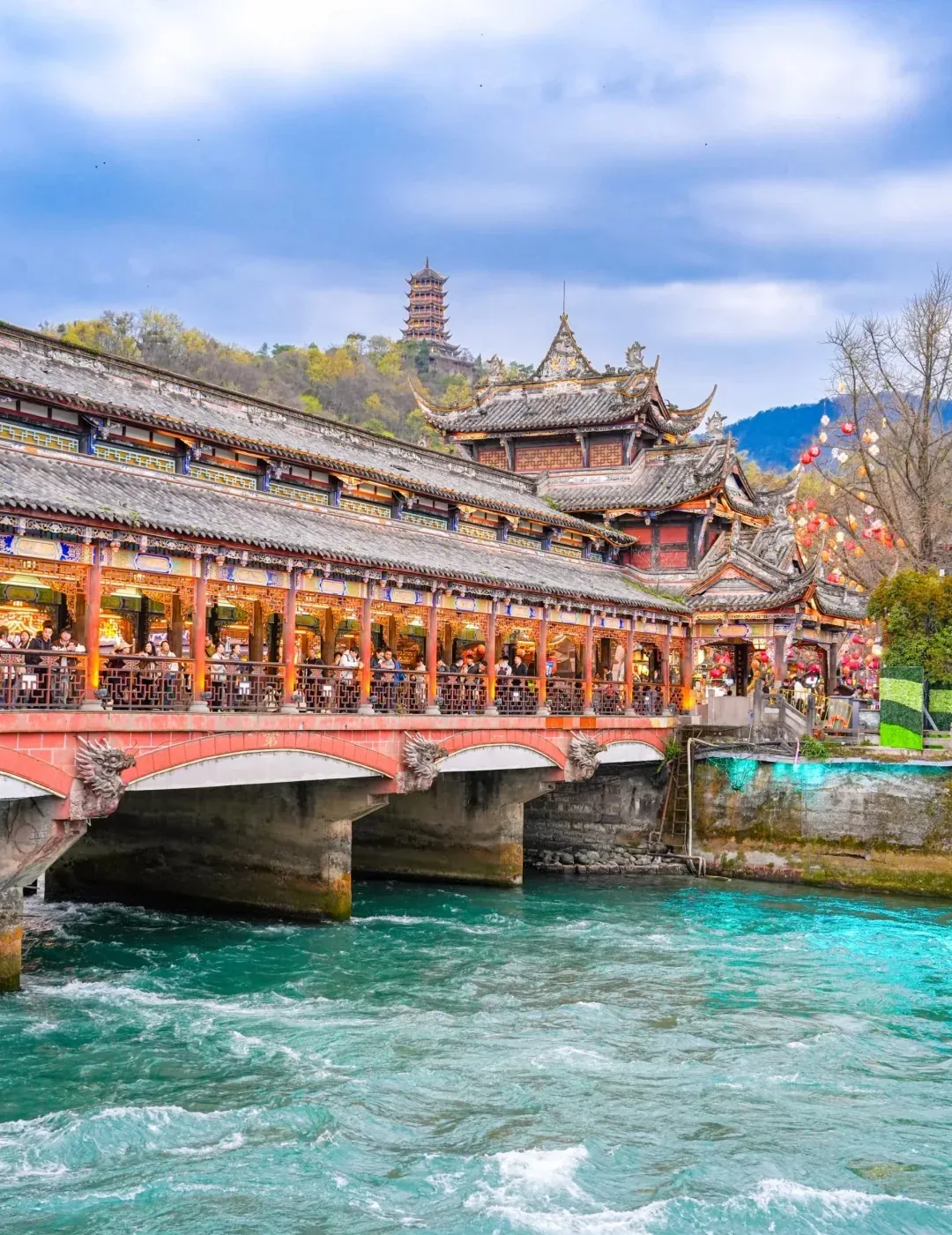
The force of the water makes the engineering problem immediately visible.
Anlan Suspension Bridge crosses the river near Fish Mouth. Its movement and open views reveal the width of the divided channels. Erwang Temple, set on the hillside, commemorates Li Bing and the long tradition of water management. Looking down from the temple connects the separate structures into one continuous river system.
Annual maintenance keeps an ancient idea working
Dujiangyan has always depended on recurring maintenance. Traditional dry-season work used timber tripods, bamboo cages, and stone to divert water, clear channels, and reinforce banks. Modern management adds concrete, machinery, monitoring, and gates. The enduring heritage lies both in the hydraulic principles and in the institution of maintaining them.
The Inner River becomes the city's waterfront
After Bottle-Neck Channel, the Inner River enters Dujiangyan's urban area. Guanxian Old Town developed around this water system, with gates, streets, food, and daily activity along the banks.
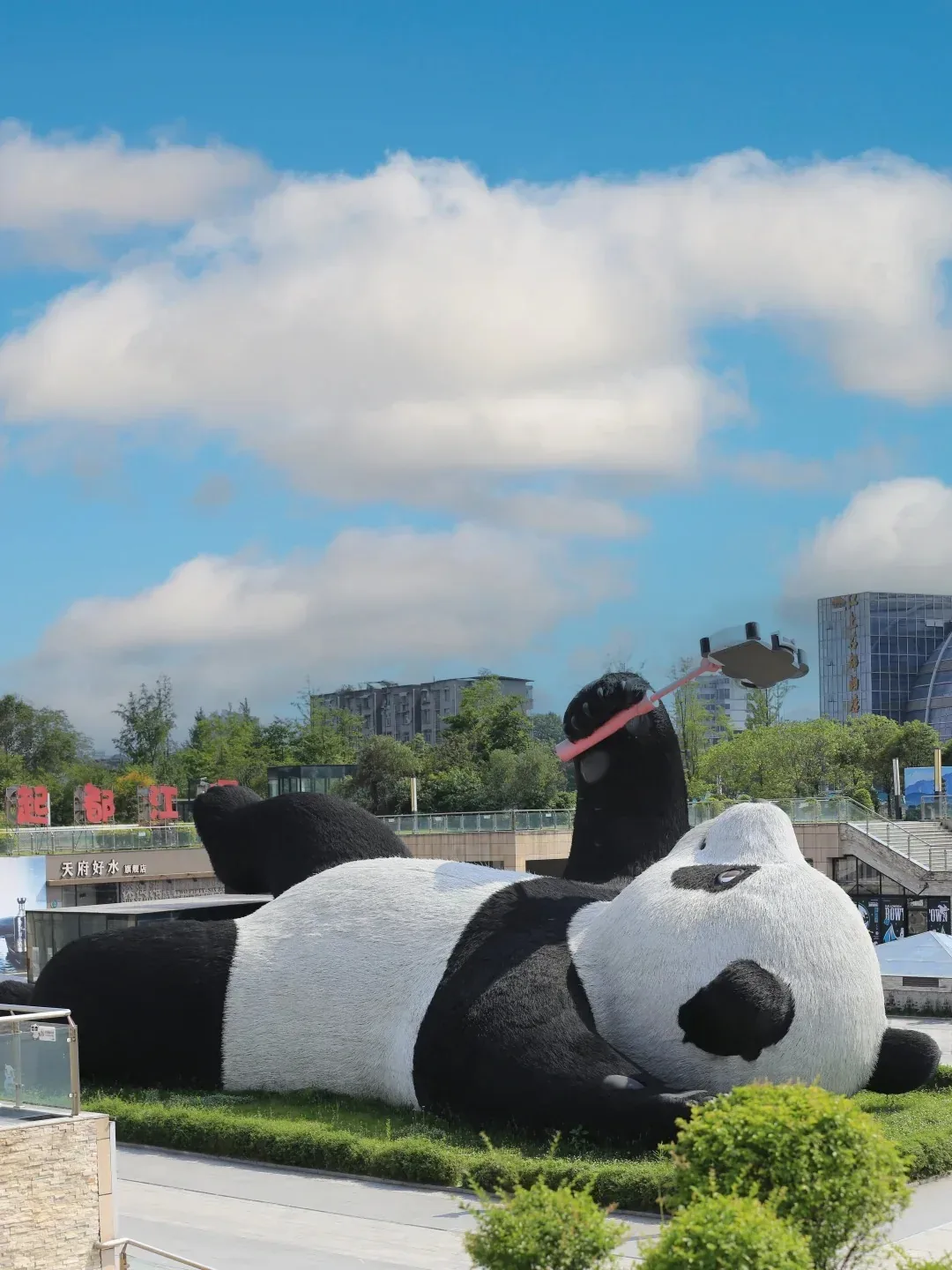
A contemporary ecological symbol joins the older water-engineering identity of the city.
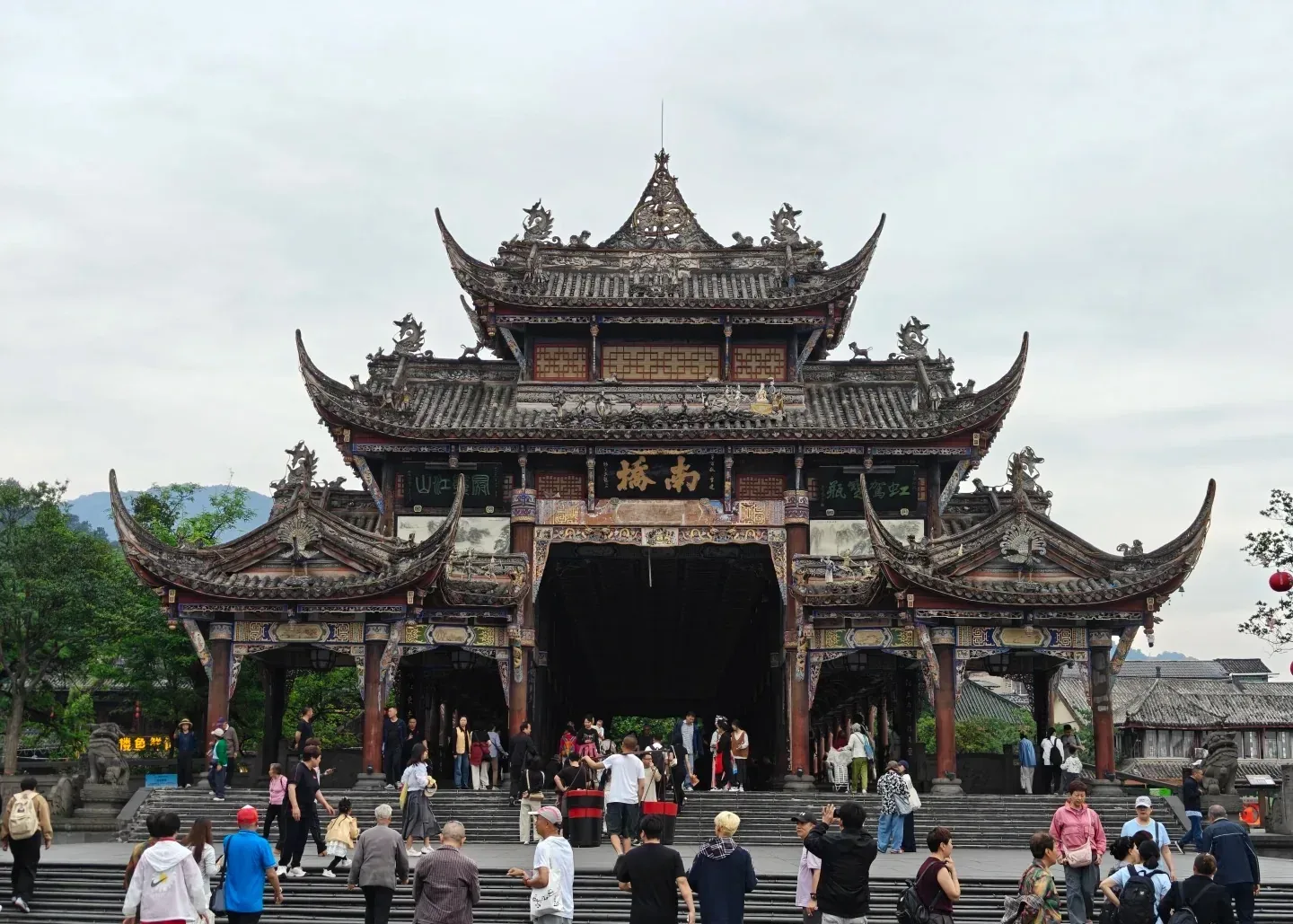
At Xuanhua Gate, the engineering narrative opens into the urban life of the old town.
South Bridge crosses the Inner River between the scenic area and the old-town waterfront. Daylight reveals the bridge structure, eaves, and flow; evening lighting extends along the channel, turning the still-working river into the centre of the night view.
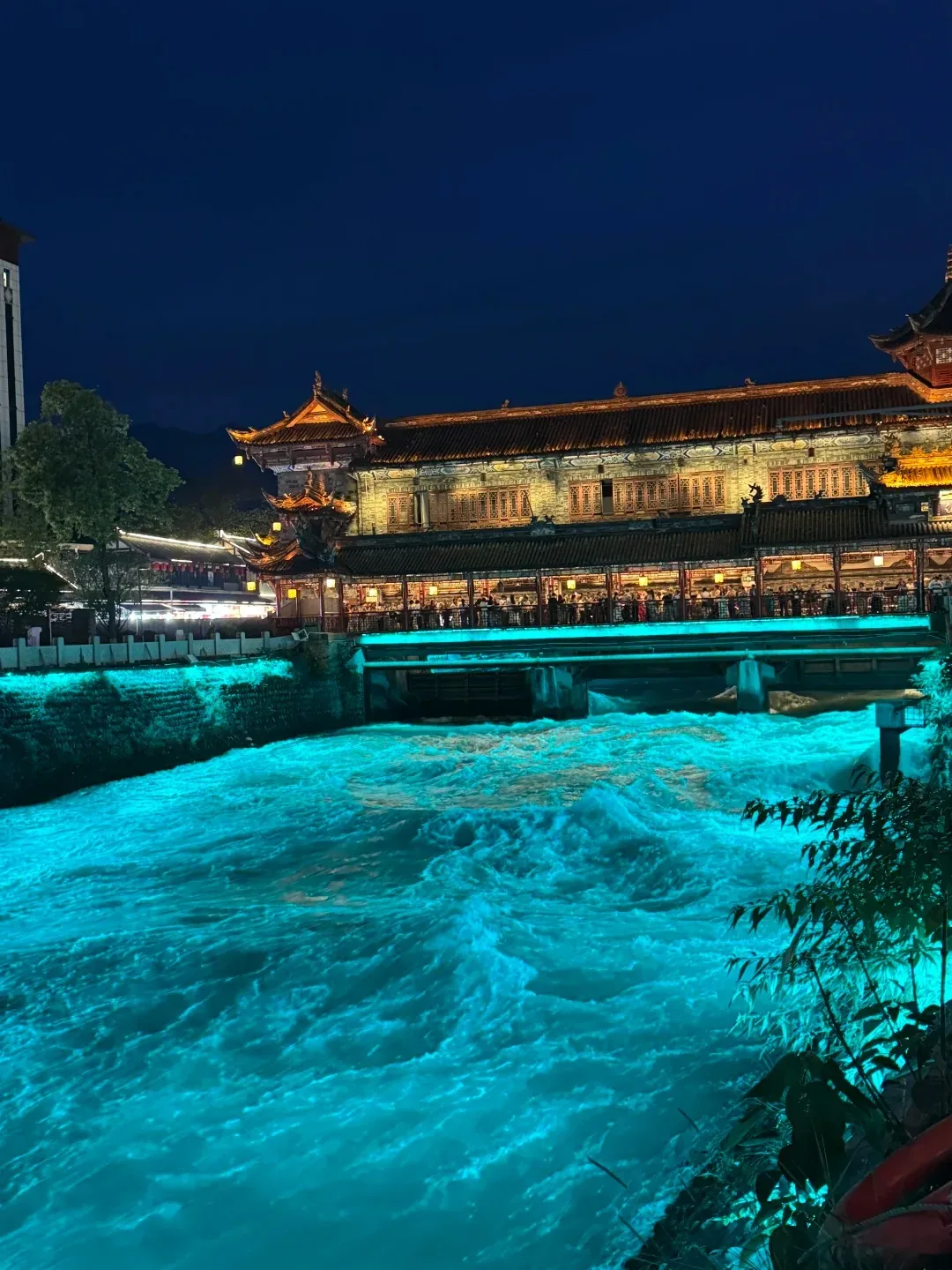
Lighting traces the course of the Inner River through the city.
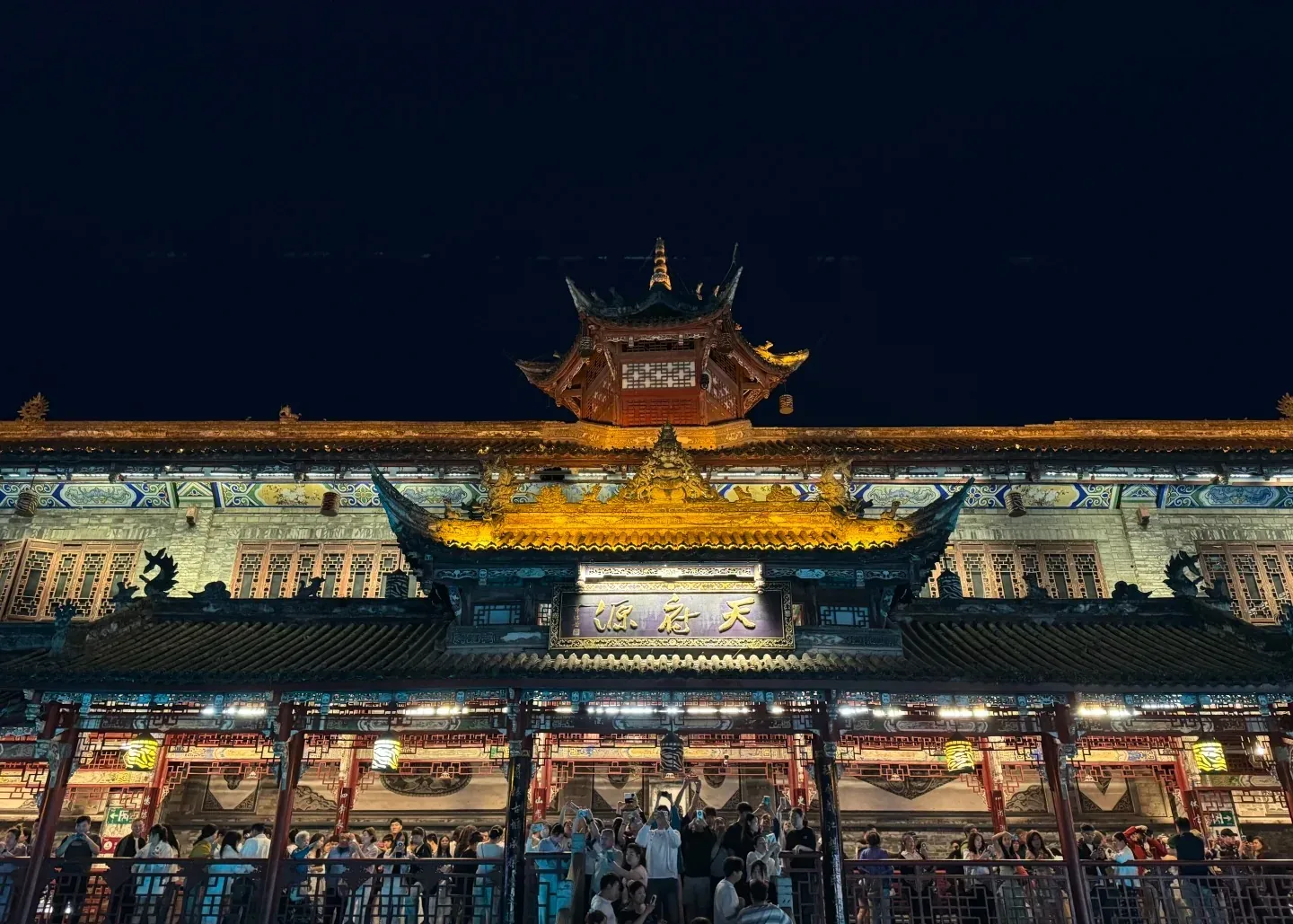
South Bridge links the banks and naturally extends the engineering visit into the old town.
Intercity trains from Chengdu serve Lidui Park and Qingchengshan directions; use the exact station on the current 12306 ticket. Dujiangyan and Mount Qingcheng share a World Heritage designation and make a coherent regional pairing, with separate tickets and substantial independent routes.