
Journey To ChinaLast updated
Chengdu Research Base of Giant Panda Breeding guide
A visitor window onto a protected population
Founded in 1987, the Chengdu Research Base of Giant Panda Breeding works on ex-situ conservation, breeding, veterinary care, genetic management, and public education. The enclosures open to visitors show only one part of that work: each animal's development from birth and nursery care to an independent adult life is supported by a much larger scientific and husbandry system.
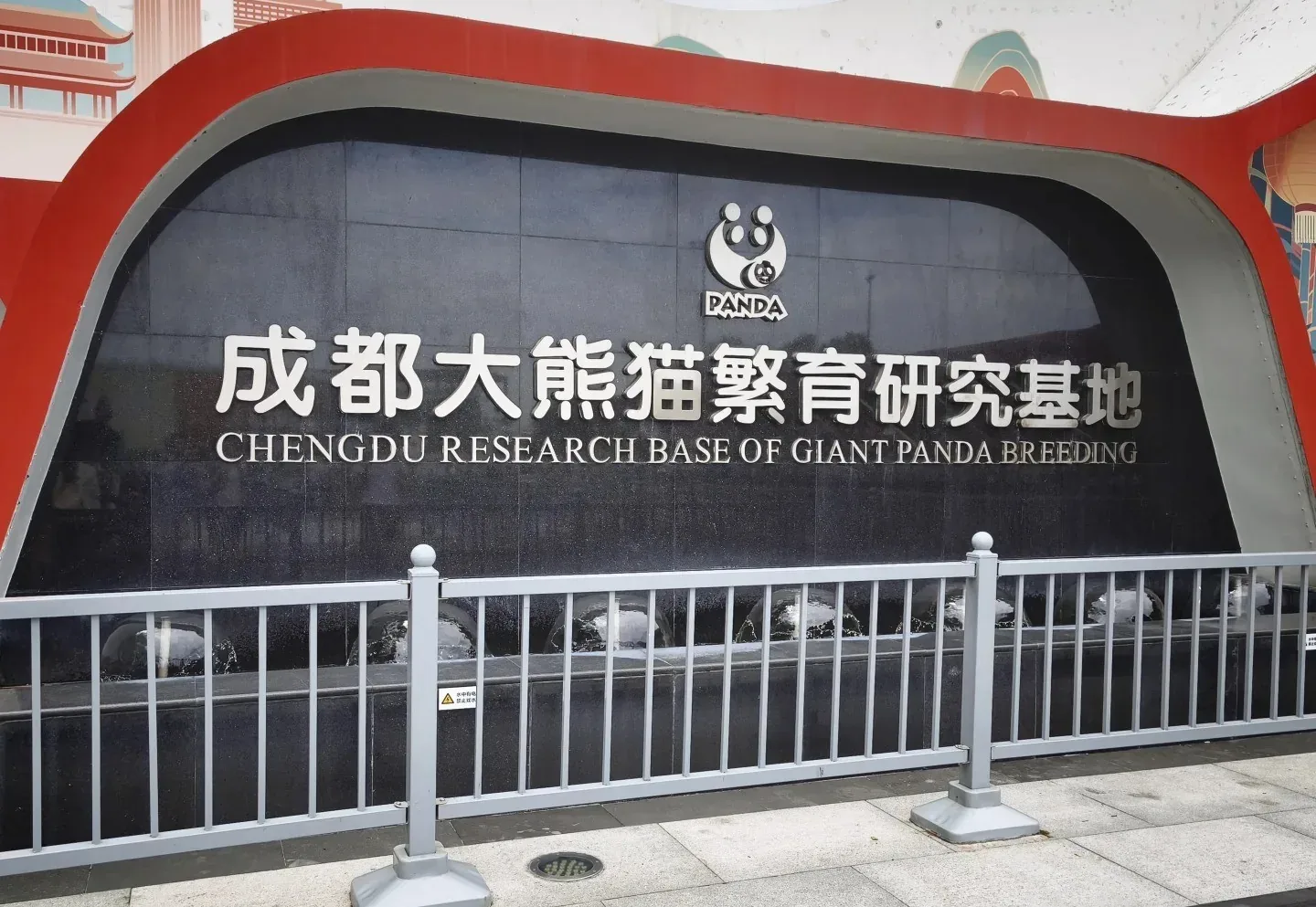
The entrance opens into a large bamboo park; use the current official map to locate animal houses, the museum, shuttle stops, and visitor services.
Adult giant pandas generally live alone. Sitting upright to strip bamboo, reclining while eating, walking a territory, and sleeping in a tree fork are all normal behaviours. Cubs and subadults are still learning and playing, so shared yards may reveal chasing, climbing, tumbling, and clear differences in body size. Animals visible in nursery areas depend on current breeding and care arrangements.
Feeding reveals how a bear adapted to bamboo
Giant pandas eat mainly bamboo while retaining the digestive system of a carnivore, so much of the day is devoted to feeding. Watch the forepaws and the enlarged wrist bone often called a “false thumb”: together they hold a stem while the incisors strip its outer layer and separate leaves from culm.
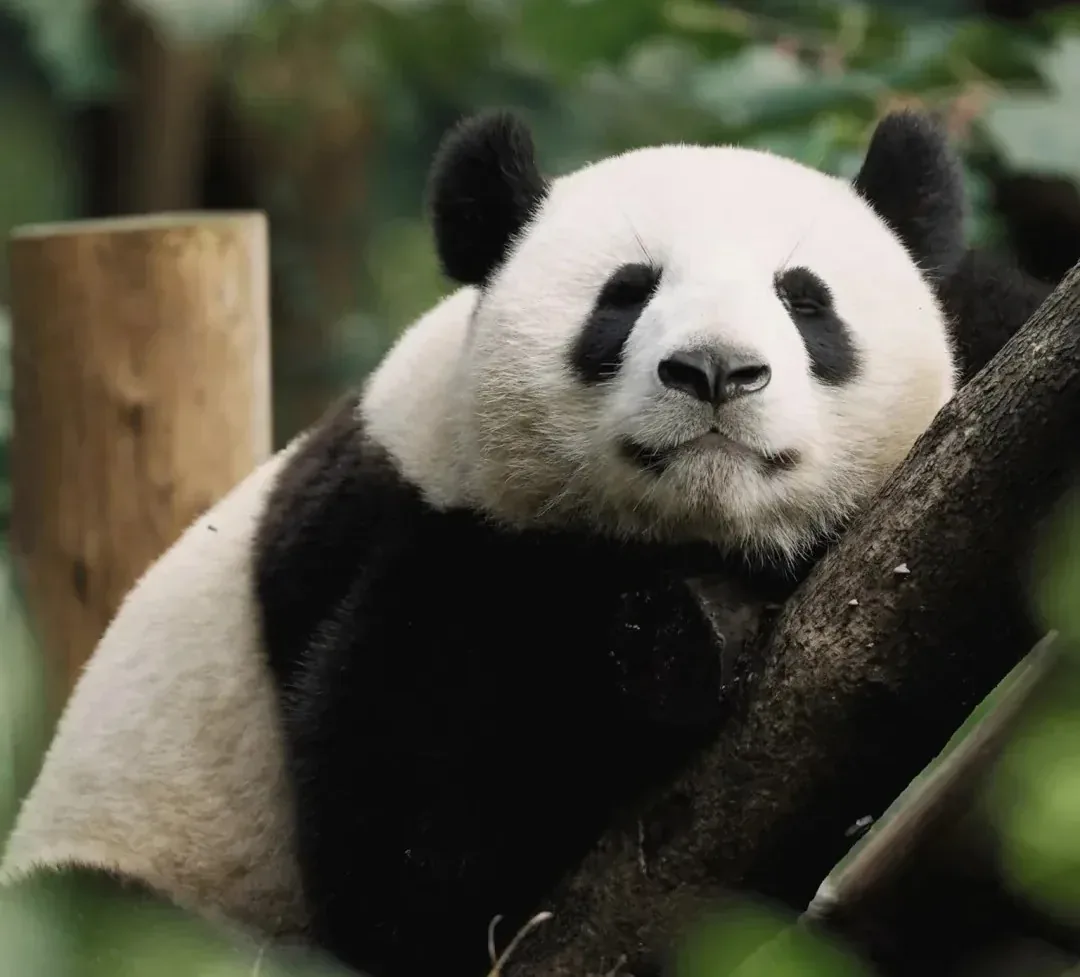
Tree trunks provide both climbing practice and raised resting places, especially for younger pandas.
Cooler mornings often coincide with fresh bamboo and greater outdoor activity. During hot weather, animals may move into climate-controlled rooms; screens and staff information explain the day's indoor and outdoor viewing better than a fixed online list.
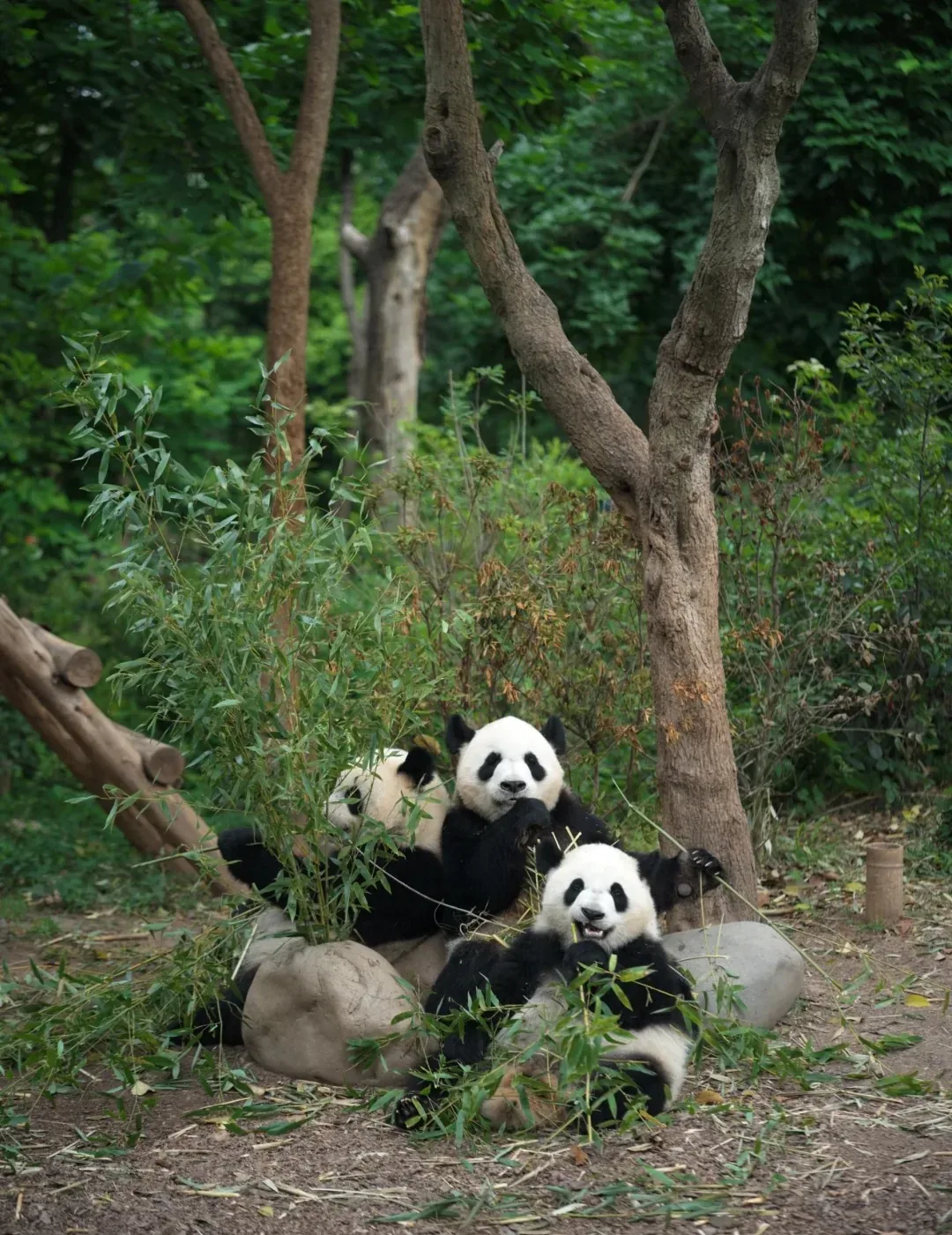
Young pandas may chase, climb, and share a bamboo pile, behaviour that belongs to their stage of development.
The museum extends the visit through eight million years
The Giant Panda Museum uses fossils, reconstructions, anatomical models, field equipment, and conservation cases to cover evolution, former distribution, bamboo adaptation, habitat surveys, breeding, and release research. It turns behaviours seen outside into questions that can be answered indoors: why the teeth and wrist are shaped this way, why adults spend time alone, and how wild populations are monitored.
Build a route around one area and the museum
The older South Gate area connects established panda villas and nursery buildings. The expanded West Gate side reaches Adventure Valley, Discovery Forest, and Infinite Hills, with groups of enclosures spread across sloping terrain. Current enclosure assignments change, making one main area a reliable basis for the route.
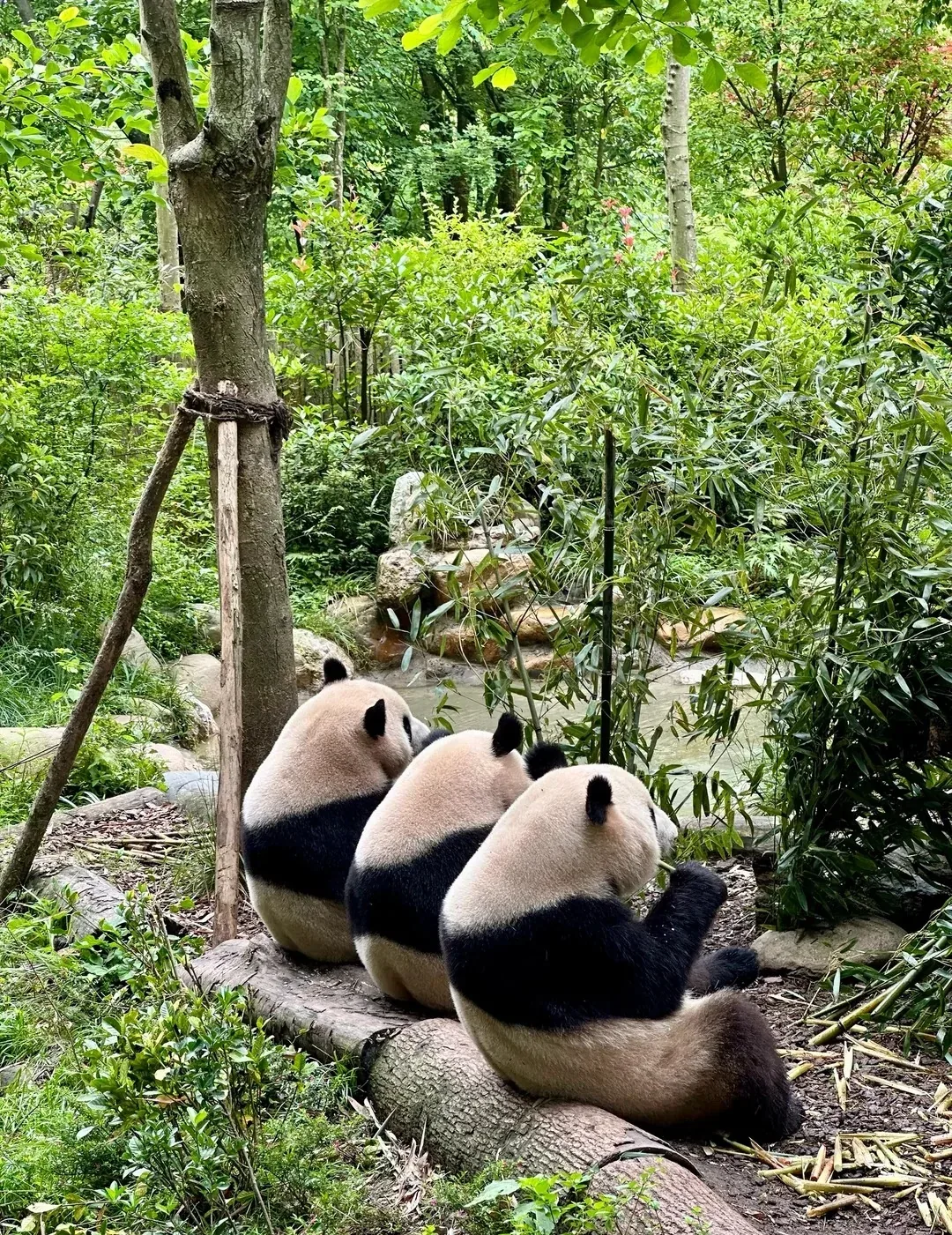
Posture, spacing, and responses to the surroundings are worth observing even when the animals face away.
The full park includes hills, bamboo paths, and long movements between zones. Mark one core area and the museum on the official map, then use the shuttle for a distant second zone if useful. Entry is real-name and time-slot based; carry the document used for booking. Inside, keep voices low and do not feed animals, knock on glass, or use flash.