Journey To ChinaLast updated
From suzao meat to a one-bowl meal
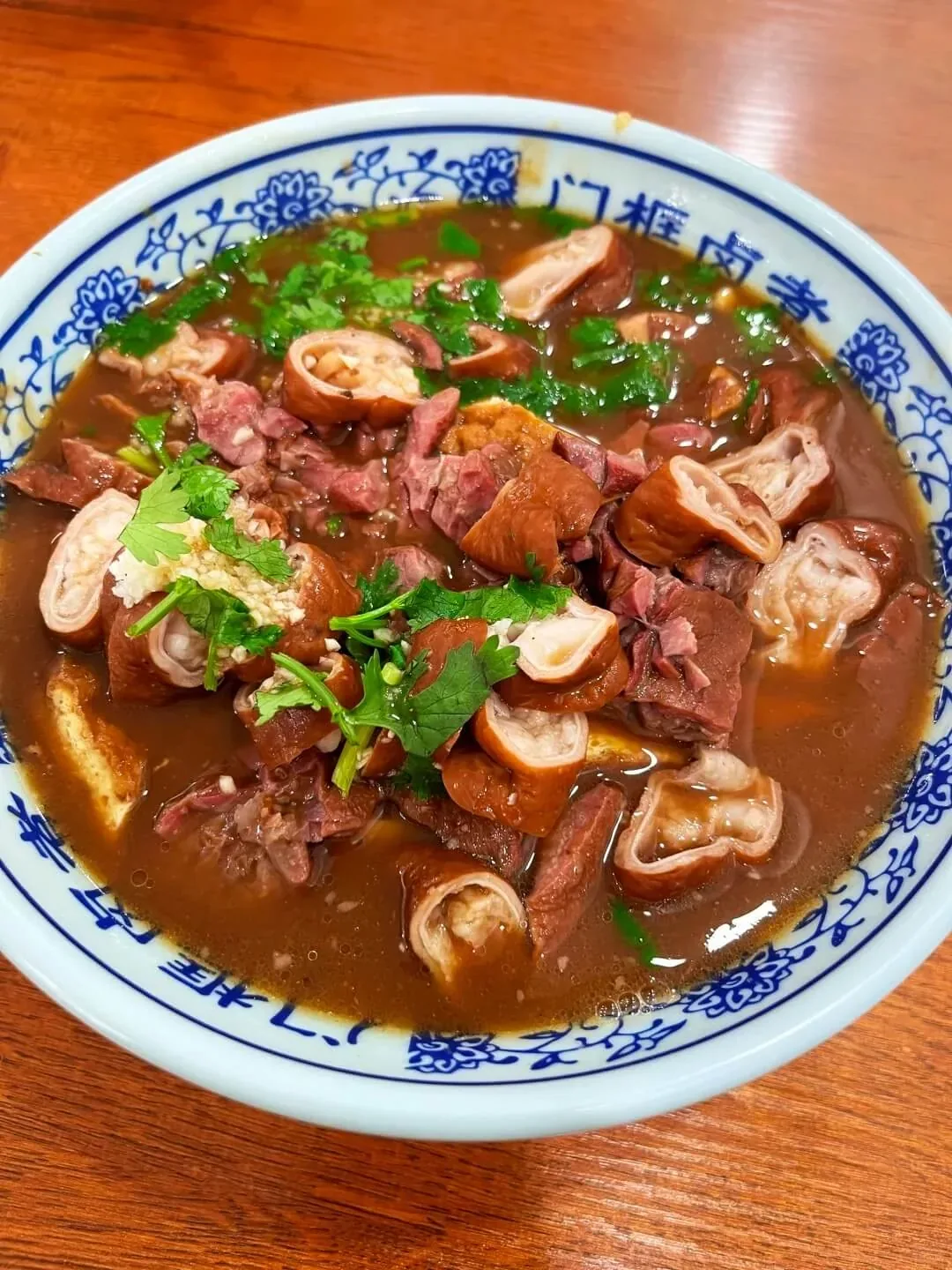
One documented line of origin leads to suzao broth and suzao meat, seasoned with soy, red yeast rice, sugar, aromatics and spices. As the preparation moved into everyday city cooking, pork lung and intestine became prominent and huoshao flatbread turned the broth into a filling meal. The history has several transmission stories, but the bowl clearly preserves a braising method reshaped by popular Beijing eating.
Bread, tofu, lung and intestine keep distinct textures
Huoshao is a dense wheat flatbread, not burnt bread. Cut into the broth, its centre absorbs liquid while retaining some chew. Fried tofu soaks up broth through its pores. Intestine is springy and fatty; lung is softer and more open-textured. Some shops add pork belly, liver or other cuts.
The chopping board is part of ordering
Specialist shops cut bread, tofu and offal at the counter before ladling over broth. Where adjustments are offered, “less intestine”, “more flatbread”, “no coriander”, “less garlic” or “no chilli” can be requested before the bowl is assembled. The core combination remains the identity of the dish.
Garlic sharpens the heavy braise, coriander adds freshness and chilli oil is usually added at the end. A bowl may be a full meal or shared so each component can be tasted separately.
Ingredient note: luzhu centres on pork intestine, pork lung and other pork cuts. Their springy, porous and fatty textures, together with a clear offal aroma, define the bowl.