Journey To ChinaLast updated
The whole breakfast takes shape on one griddle
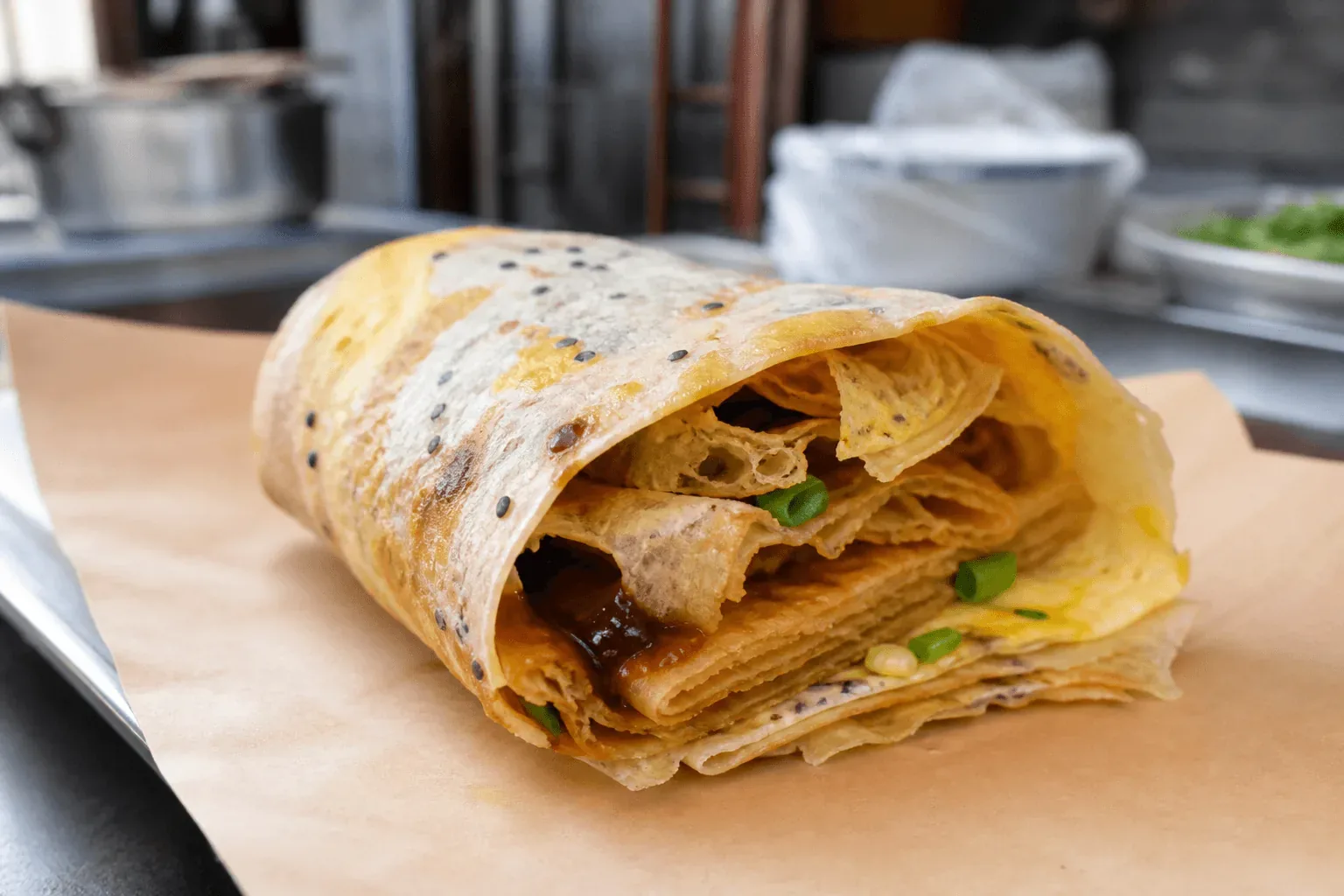
Batter is spread into a thin circle, an egg is broken across it, and scallion and coriander are scattered before the surface sets. The cook turns or folds the crepe, brushes on sweet bean sauce, chilli or fermented-bean seasoning, then adds lettuce, baocui crisp and optional fillings.
State chilli, coriander and extra fillings as the cooking begins. Useful phrases include “bu yao la” for no chilli, “bu yao xiangcai” for no coriander and “jia yi ge jidan” for an extra egg.
Baocui and youtiao create different centres
Beijing stalls commonly use a very thin fried cracker called baocui. Tianjin-style jianbing guozi often uses a youtiao or guobi cracker and follows its own batter and sauce traditions. Around Beijing, signs, grain mixtures and fillings show how stalls borrow and adapt these regional forms.
Wheat batter is soft; mung-bean or mixed-grain versions can be thinner and more aromatic. Lettuce adds moisture, while sausage and pork floss increase salt and weight. The menu should identify the base version and extras.
Fresh from the griddle is the defining moment
At first the wrapper is hot and flexible while the cracker remains dry. Steam from vegetables and sauce soon softens it, and a closed plastic bag accelerates the change. Eating nearby preserves the intended contrast.