
Journey To ChinaLast updated
Tian'anmen Square guide
Two very different designs occupy the same ground
Tian'anmen was built in 1417 as Chengtianmen and received its present name after reconstruction in 1651. It formed the southern gate of the Ming and Qing imperial city, leading north through the Meridian Gate to the palace. South of it, walls and covered corridors once enclosed a T-shaped ceremonial forecourt rather than today's open square.
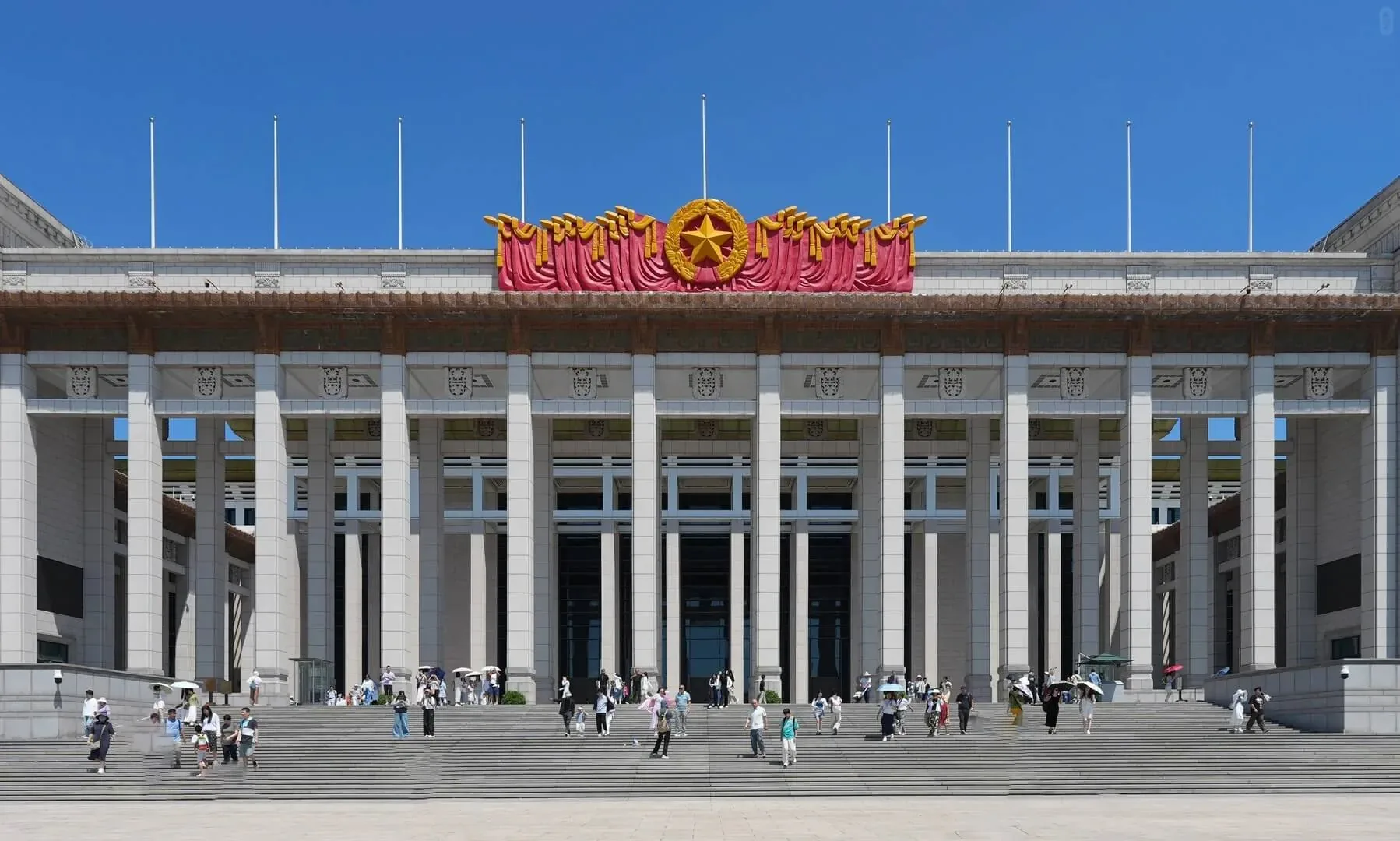
After the end of the imperial system, walls were removed and the space opened. The founding ceremony of the People's Republic of China took place here on 1 October 1949. Expansion in the 1950s added the Monument to the People's Heroes on the axis, the Great Hall of the People to the west and the museum building to the east; Chairman Mao Memorial Hall later defined the southern end.
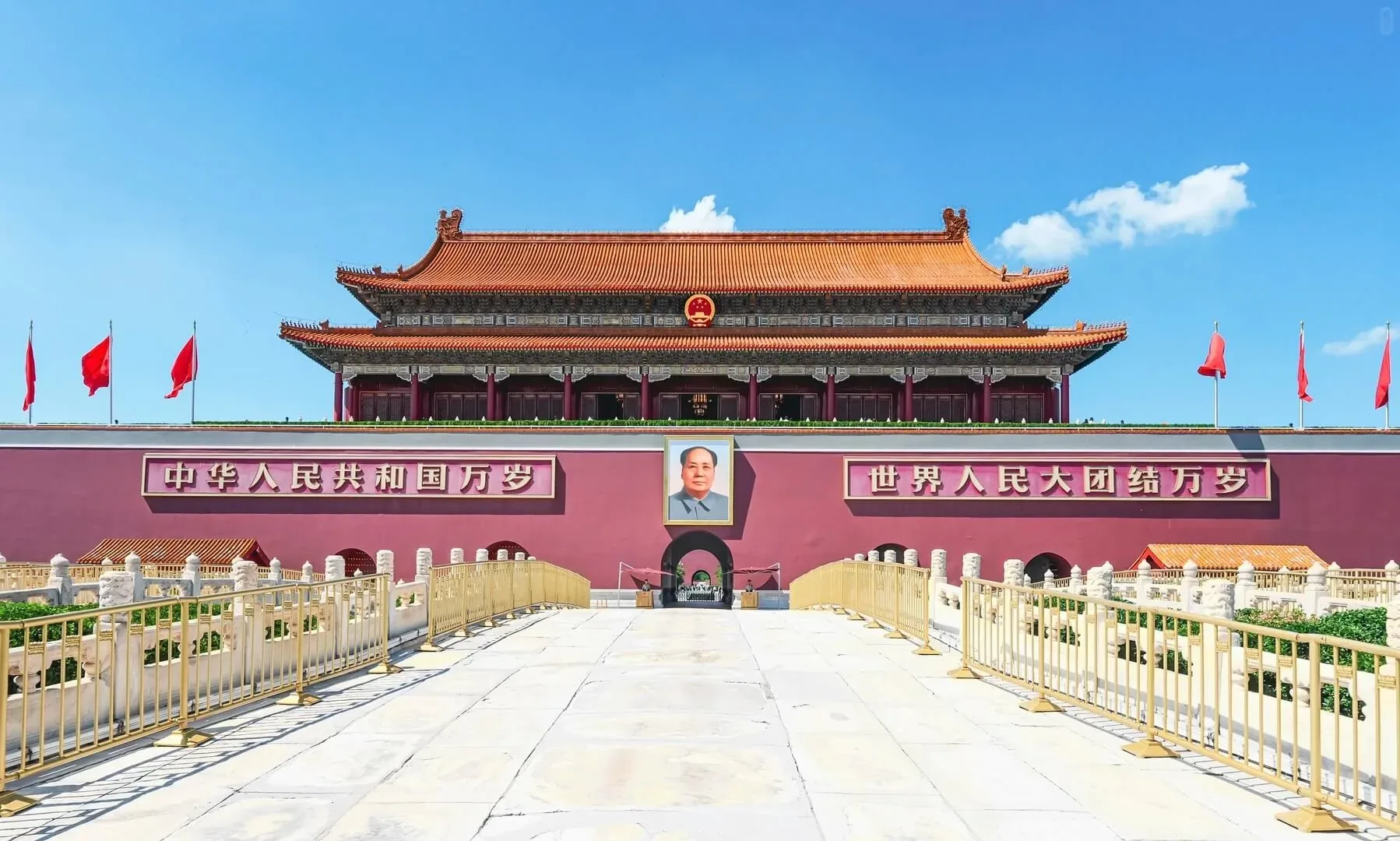
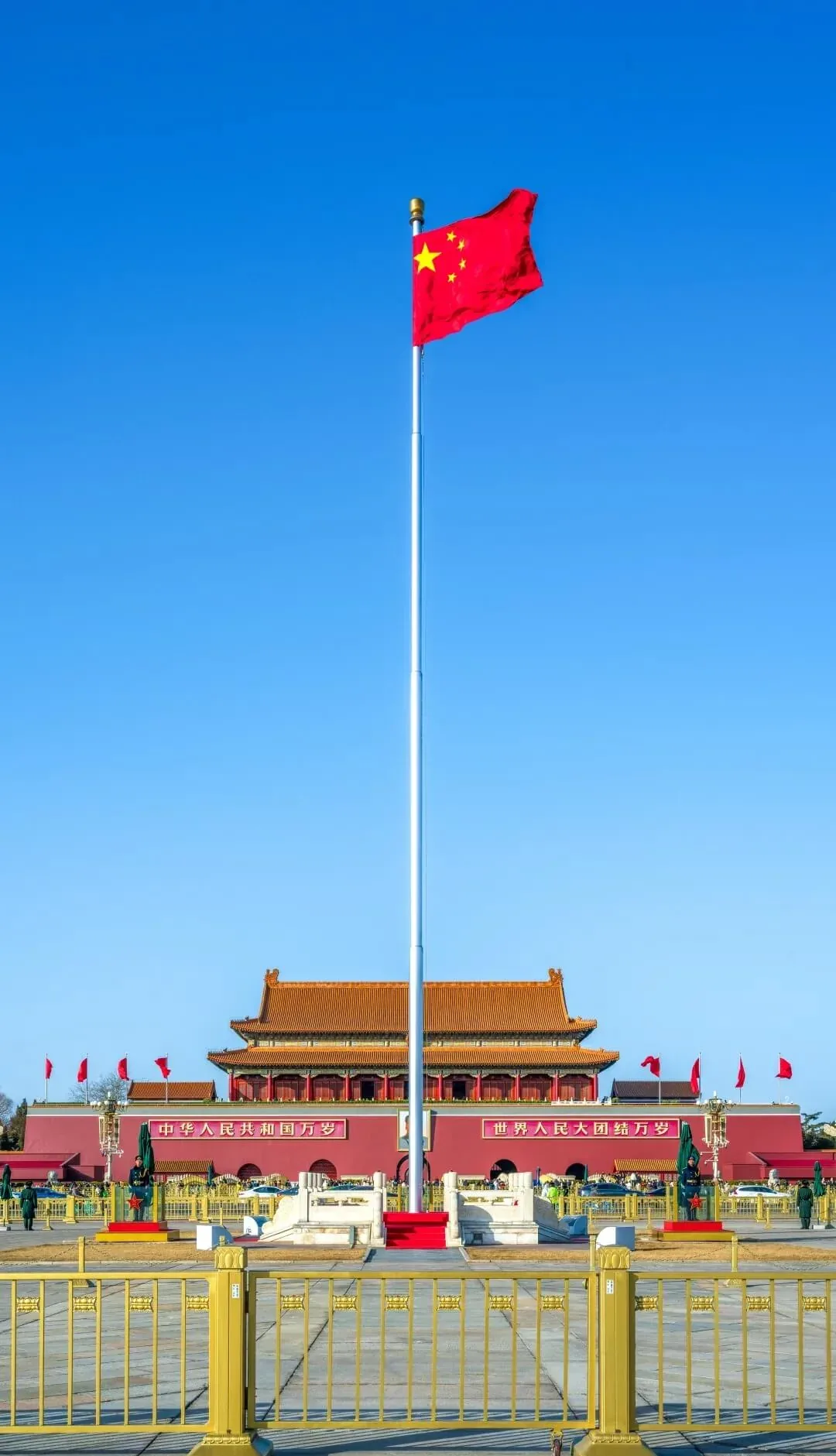
At sunrise, the guard crosses the Golden Water Bridge
The national flag is raised according to sunrise. The guard leaves the central passage of Tian'anmen, crosses the Golden Water Bridge and Chang'an Avenue, and marches to the flagpole on the square's north side. The anthem accompanies the flag to the top of the pole. Formations can be more elaborate on the first day of the month and major holidays; the official schedule gives the exact time.
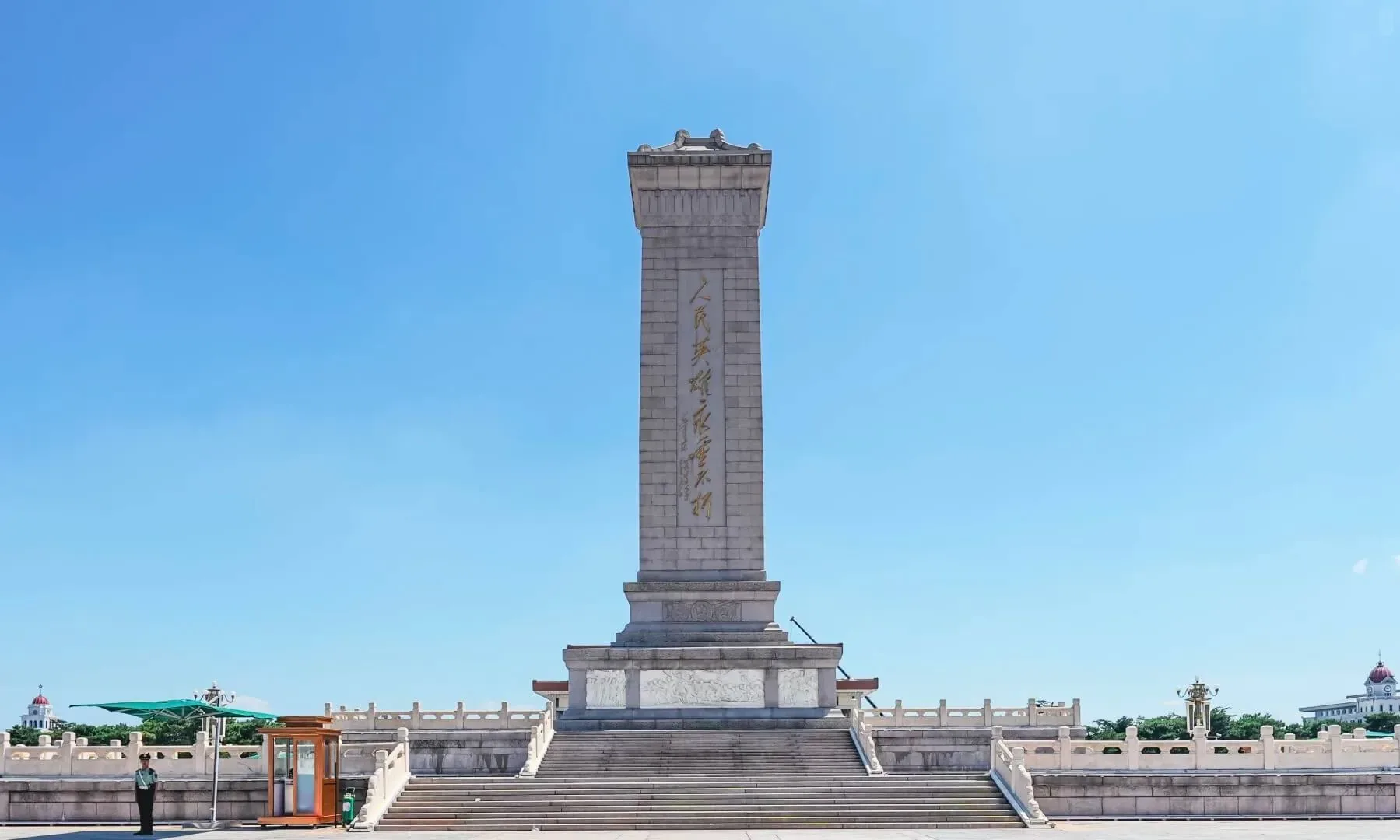
Ten reliefs circle the Monument to the People's Heroes
Construction of the monument was decided in 1949 and completed in 1958. Ten marble reliefs around the lower base form a chronological sequence from the destruction of opium at Humen and the Jintian uprising to the 1911 Revolution, May Fourth Movement, resistance against Japan and the campaigns leading to 1949.
The National Museum works best around one historical line
The National Museum occupies the east side. Its predecessor buildings opened in 1959; the present museum was created by combining the history and revolutionary museums and later expanding the complex. The Ancient China gallery provides a chronological route, while bronzes, ceramics, currency, costume and temporary exhibitions allow a subject-led visit.
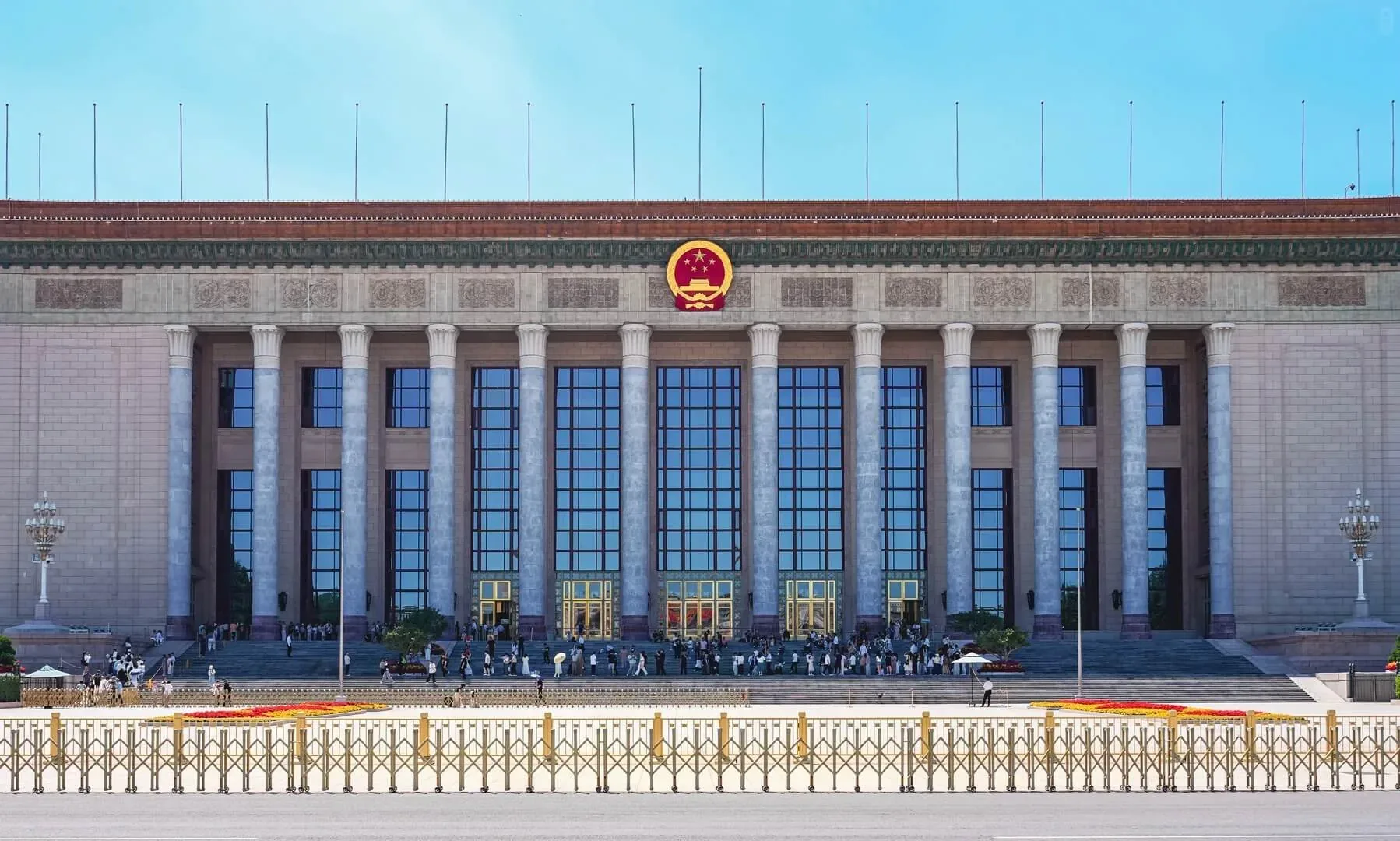
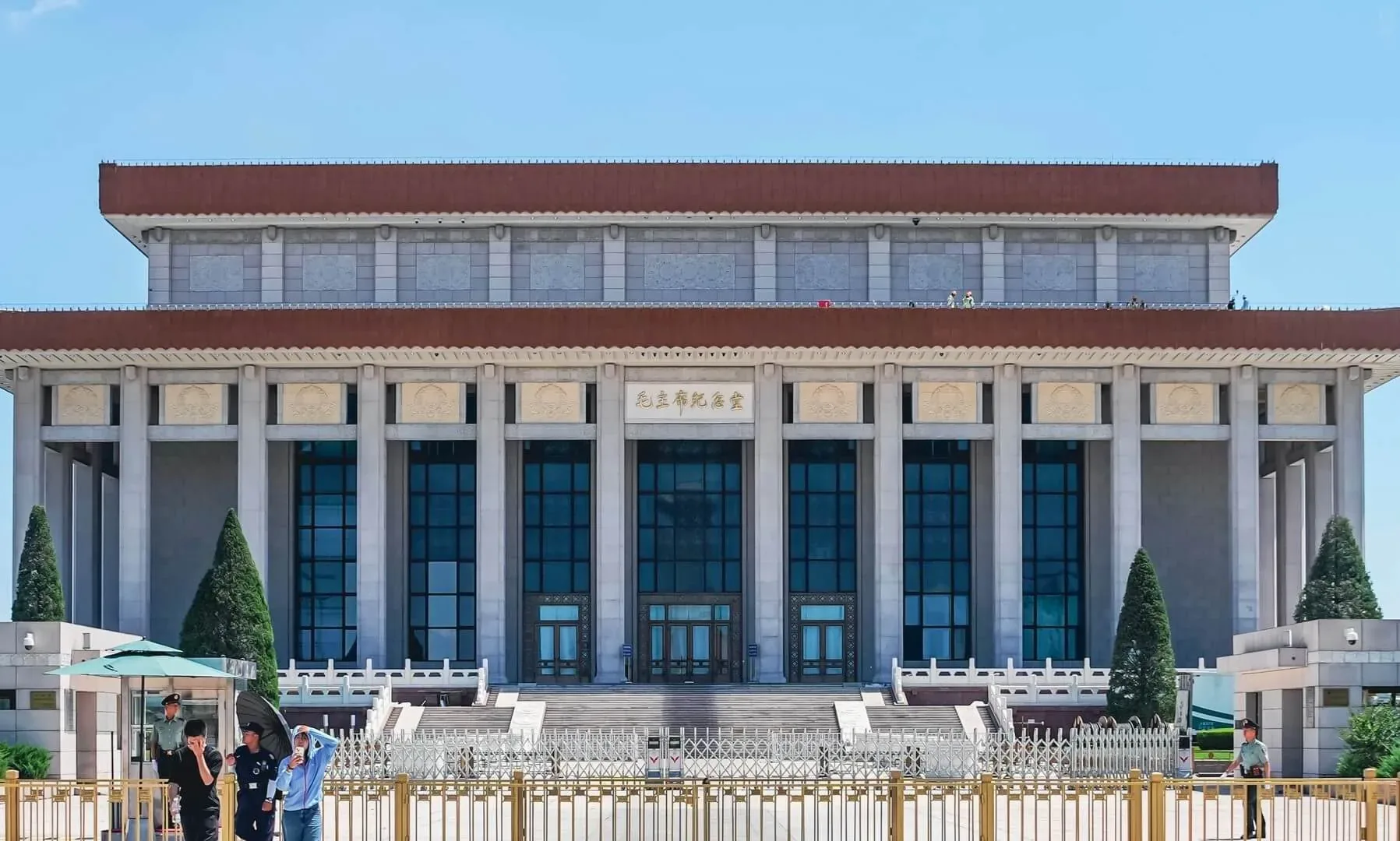
The southern and western buildings still serve state functions
Chairman Mao Memorial Hall stands south of the monument and uses a north-to-south visitor route through its ceremonial rooms. The Great Hall of the People was completed in 1959 and contains the Great Auditorium and halls named for provincial-level regions. It remains a working venue for national meetings and state events, so visitor access changes with its official use.
The square, flag ceremony, National Museum, memorial hall, Great Hall, Tian'anmen Gate and Forbidden City each use separate reservations. Confirmed time slots can be placed on one timeline, with security and the walking direction between entrances treated as part of the route. North lies the Forbidden City; south, Zhengyangmen and Qianmen; the former imperial altars now used by Zhongshan Park and the Working People's Cultural Palace sit to either side.