
Journey To ChinaLast updated
Beijing Olympic Park guide
The northern central axis runs from civic plaza to forest
The Olympic centre was planned as an extension of Beijing's central axis rather than a group of isolated stadiums. The Bird's Nest and Water Cube frame the main public space, the Olympic Tower rises farther north, and the landscape continues into the Forest Park. Earlier villages, farmland, wetlands and 1990 Asian Games facilities all formed part of the area before the Olympic redevelopment.
The Bird's Nest structure is also its exterior
The National Stadium opened for the 2008 Games. Its interlocking steel members carry loads, brace the bowl and create the building's public image at the same time. Walking around the stadium shows how the apparent tangle changes into clear primary columns, secondary members and openings.
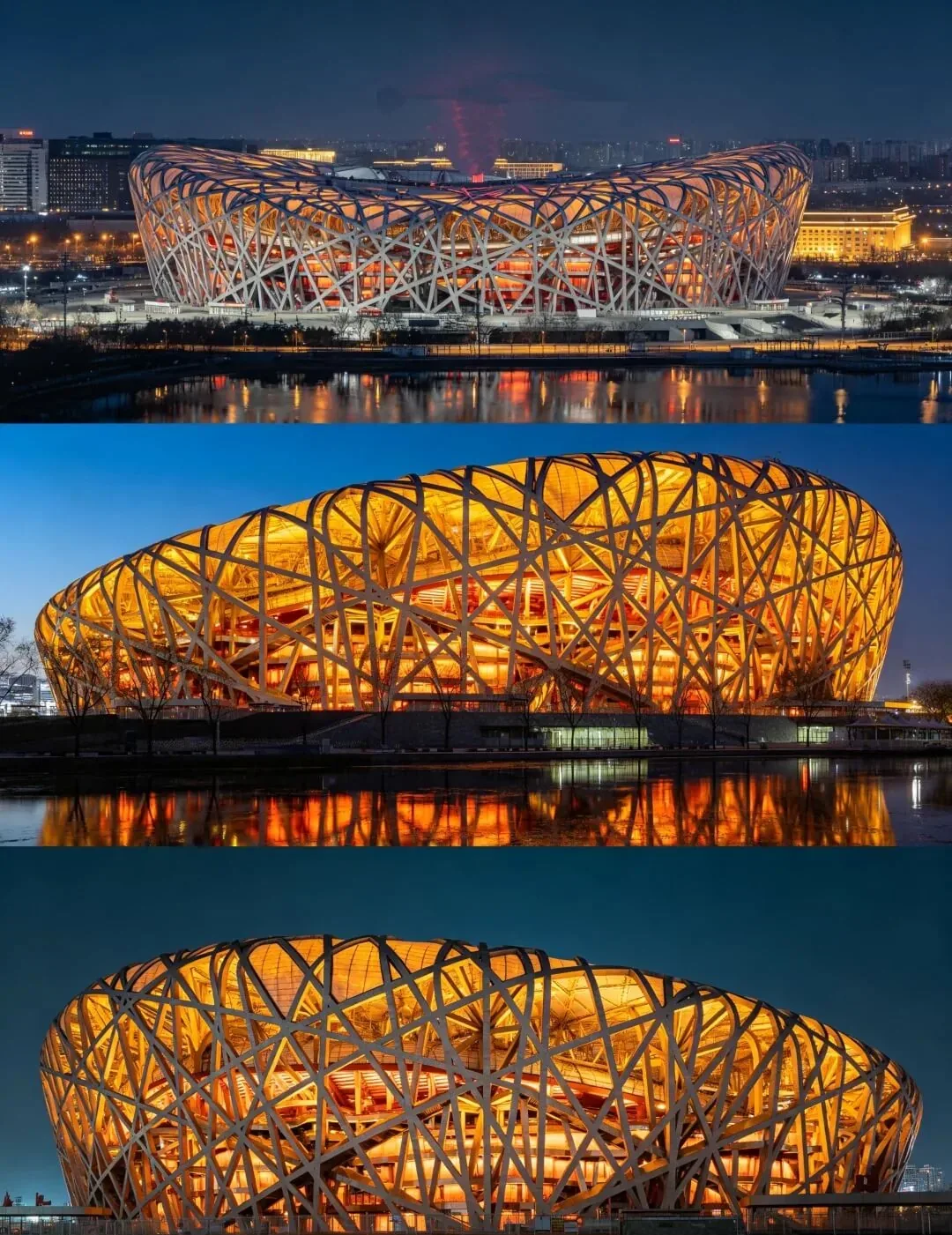
The stadium returned for the opening and closing ceremonies of the 2022 Winter Games. Tours, events and temporary attractions use different parts of the building, so entry depends on the day's programme.
The Water Cube became the Ice Cube
The National Aquatics Center's blue cushion façade encloses the swimming venue used in 2008. For 2022, a removable system built curling sheets above the pools, allowing the building to change between water and ice uses while keeping the main structure.
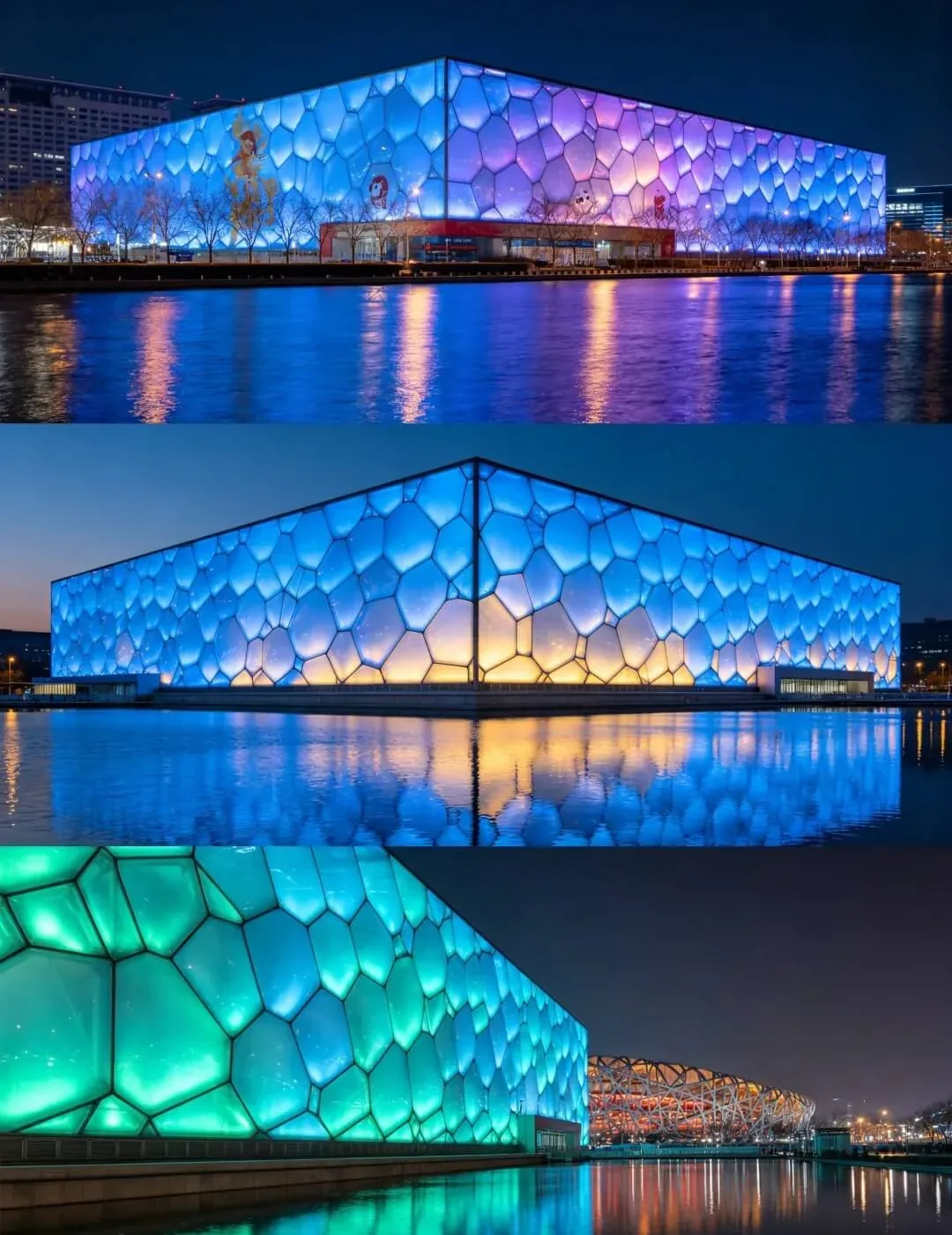
The tower and forest extend the visit north
Five unequal shafts form the Olympic Tower, whose observation level looks south across the venues and north into the Forest Park. The park itself is a large landscape of lakes, hills, running paths and woodland rather than a small garden beside the stadiums.
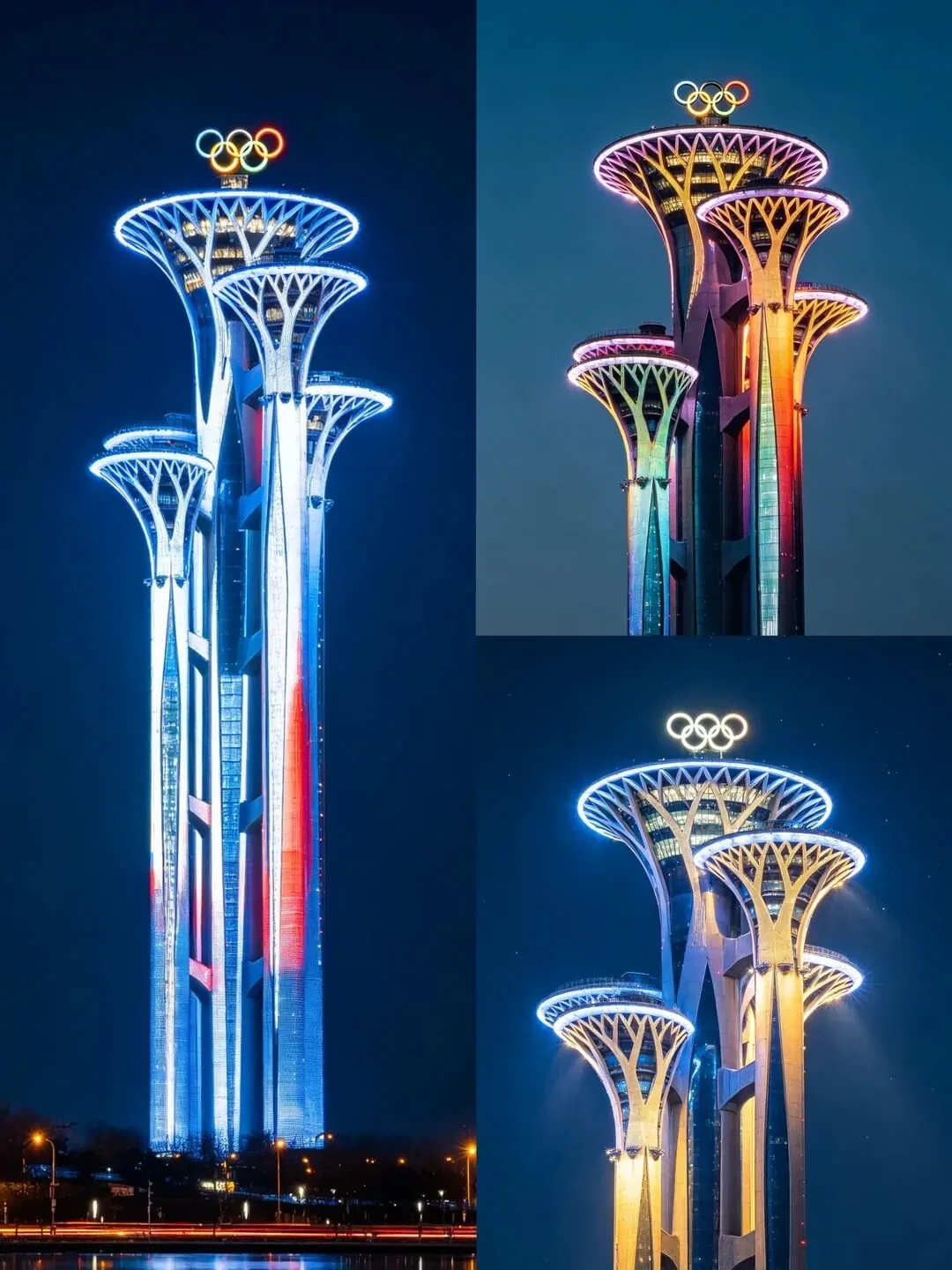
Daylight reveals the steel and membrane structures; evening illumination changes their outlines. Olympic Sports Center station is close to the Bird's Nest, while Olympic Park station serves the main axis and Water Cube. Concerts and sports events can change tourist access and crowd controls, making the venue calendar part of route planning.