
Journey To ChinaLast updated
Qianmen Street guide
Zhengyangmen gave Qianmen its name and direction
Zhengyangmen formed the principal southern gate of Beijing's Inner City. The gate tower, archery tower and barbican once controlled entry on the central axis. Roads outside the gate led south through the commercial Outer City, and the everyday name “Qianmen”, meaning the front gate, spread to the whole district.
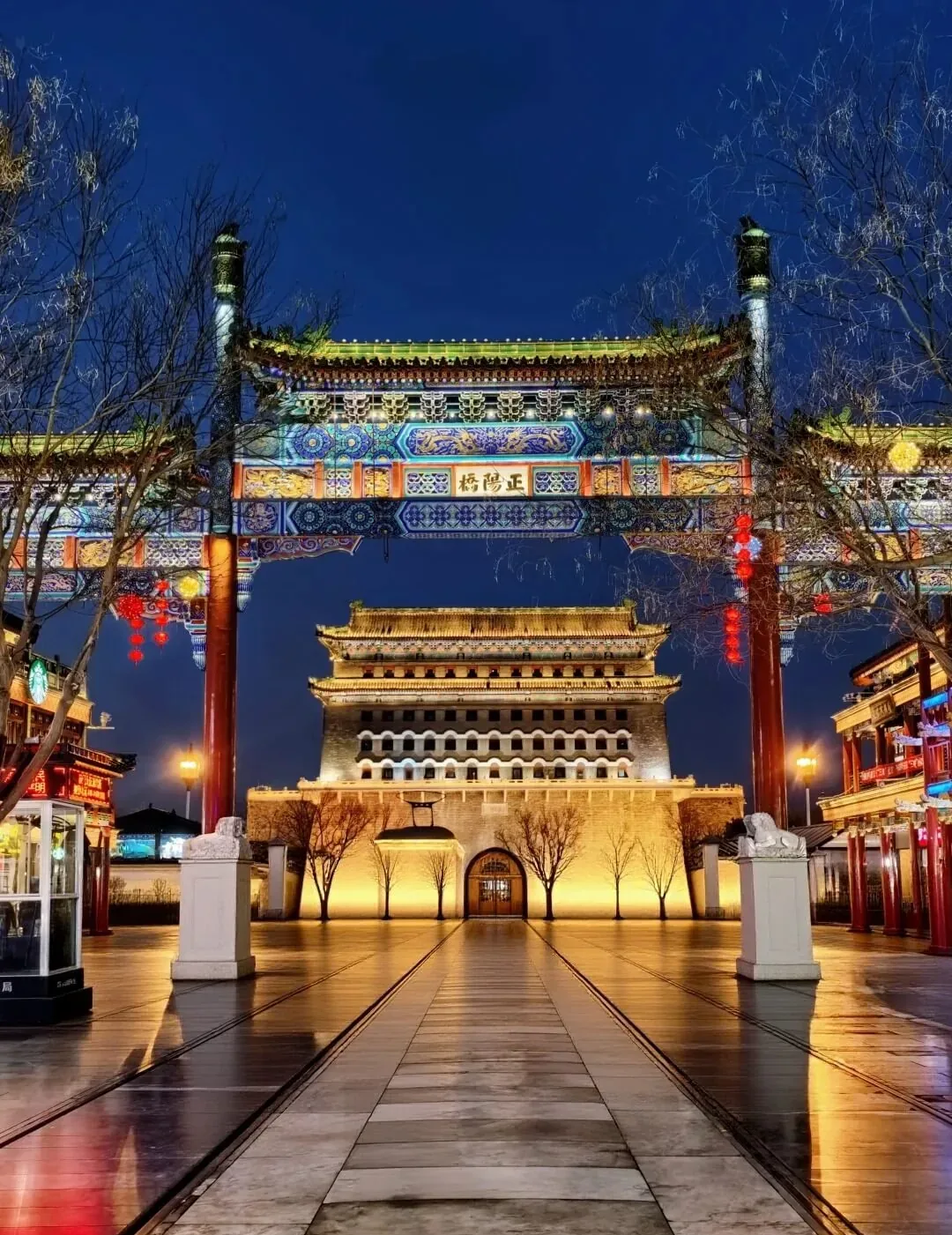
Looking north aligns the commercial street, archway and Zhengyangmen on the same axis that continues towards Tian'anmen and the imperial city.
Trade grew outside the formal imperial city
Merchants, theatres, restaurants, inns and guild halls concentrated outside the gate, close to official traffic but beyond the tightly controlled Inner City. Dashilan became known for long-established medicine, shoes, silk, tea and entertainment businesses. Xianyukou developed a strong food identity. Xiheyan and nearby lanes held guild halls for officials and merchants arriving from other provinces.
Today's main street was extensively reconstructed, so its façades should be read alongside older shop buildings and street patterns in the side lanes. Fires, war, demolition and modern restoration all changed the district. The value lies in seeing those layers together, not in treating every frontage as an untouched Qing original.
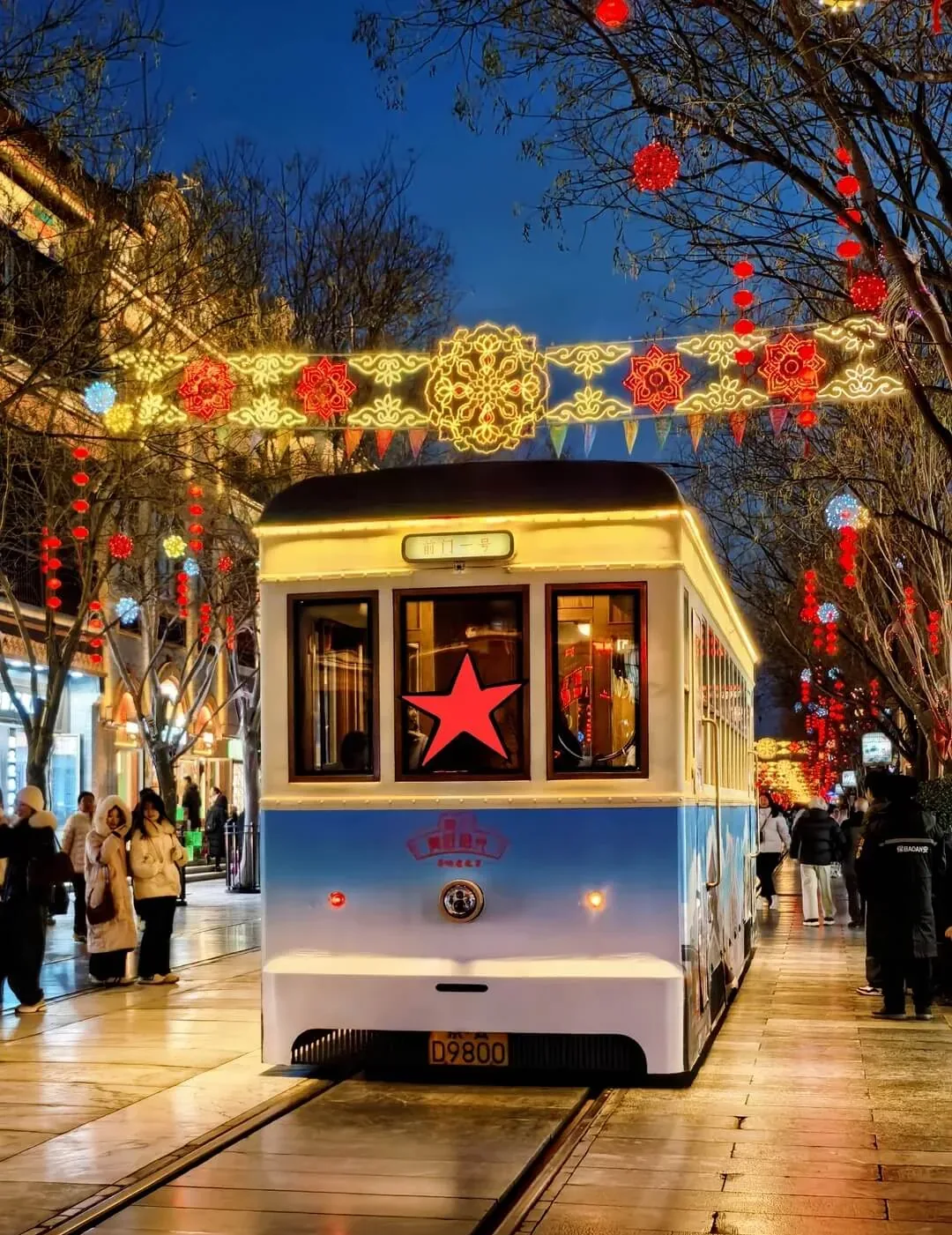
The tram recalls Beijing's early public transport
The short sightseeing tram borrows the appearance of the electric streetcars that began operating in Beijing in the 1920s. It is an attraction on the pedestrian street, with its own operating and ticket arrangements, but the rails also recall how modern transport once entered the old gate district.
Four nearby streets divide the experience
The main Qianmen Street gives the clearest central-axis view and the most unified restored streetscape. Dashilan offers denser historic shopfronts and theatres. Xianyukou concentrates food businesses, while Xiheyan leads towards smaller lanes and former guild-hall areas. A walk can move between them according to architecture, shopping or food rather than treating Qianmen as one straight retail strip.
Tian'anmen Square lies north beyond Zhengyangmen, but uses separate reservations, security routes and entrances. Continuing south reaches the Tianqiao area and, farther on, the Temple of Heaven, extending the central-axis story from imperial gate to commercial street and ritual landscape.