
Journey To ChinaLast updated
Great Wall guide
A defence system shaped by mountains
Beijing's Great Wall is a network of walls, passes, beacon towers, forts and garrison settlements rather than one continuous visitor site. Ming builders strengthened routes through the northern mountains where armies, trade and communication could pass. Watchtowers provided observation and shelter; beacon signals carried warnings; branch walls closed side valleys.
Badaling guarded the northern approach to Juyong Pass
Badaling's surviving wall belongs mainly to the Ming system. Its gate town and walls controlled the north end of the Guan'gou valley leading towards Beijing. The north and south routes leave the gate town in different directions, so the site makes the relationship between a pass, a settlement and long ridge walls unusually easy to read.
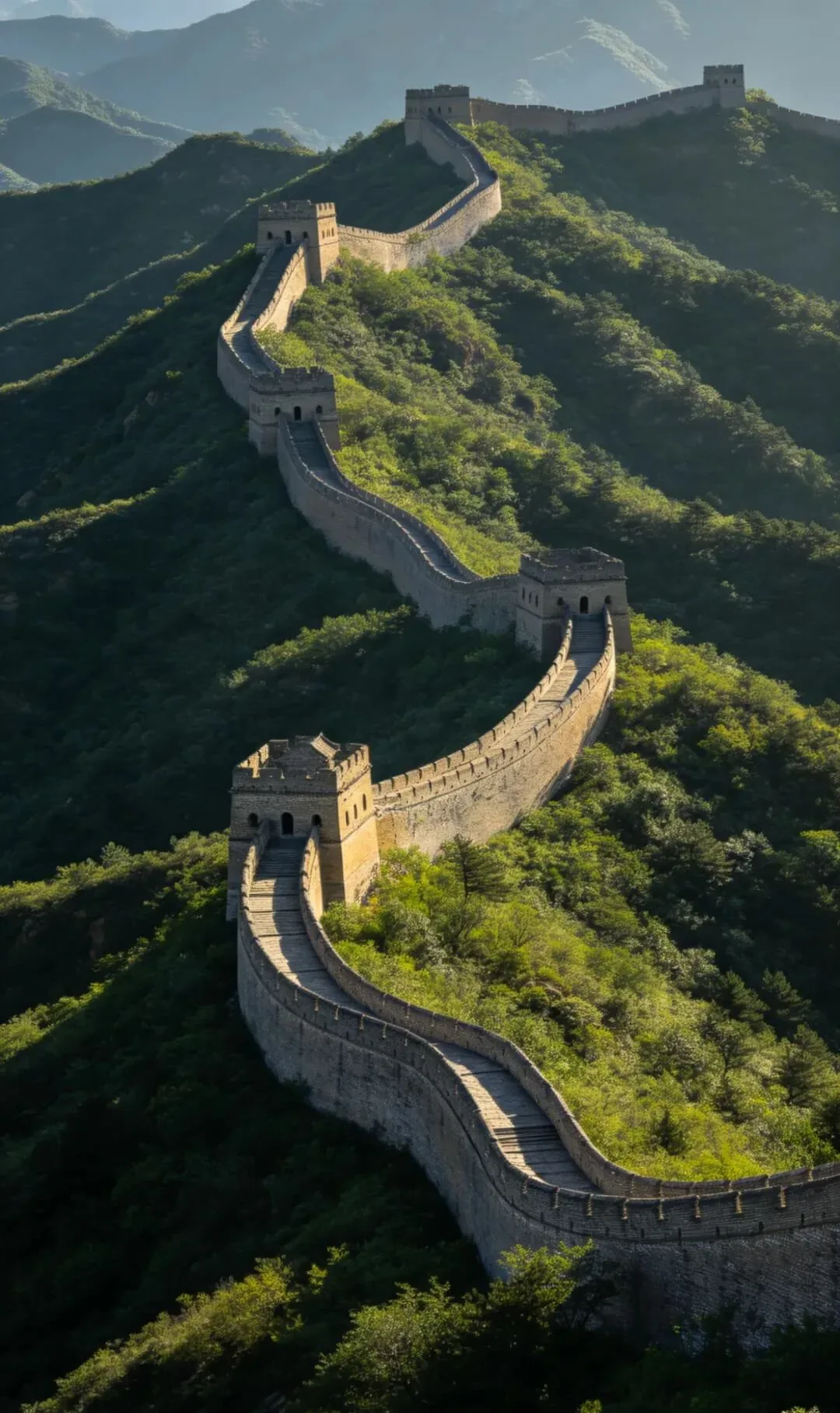
The northern route passes a sequence of prominent towers and broad views around North Tower Eight. Some slopes are steep, and return time changes with walking distance and cable-car traffic. The southern route gives another angle on the gate town and includes sections where repaired masonry and more fragmentary fabric can be compared.
High-speed rail links Beijing North or Qinghe with Badaling Great Wall station. The S2 suburban railway and bus 877 are alternatives. Entrance, cableway and other uphill transport use separate tickets.
Mutianyu combines dense towers with branch walls
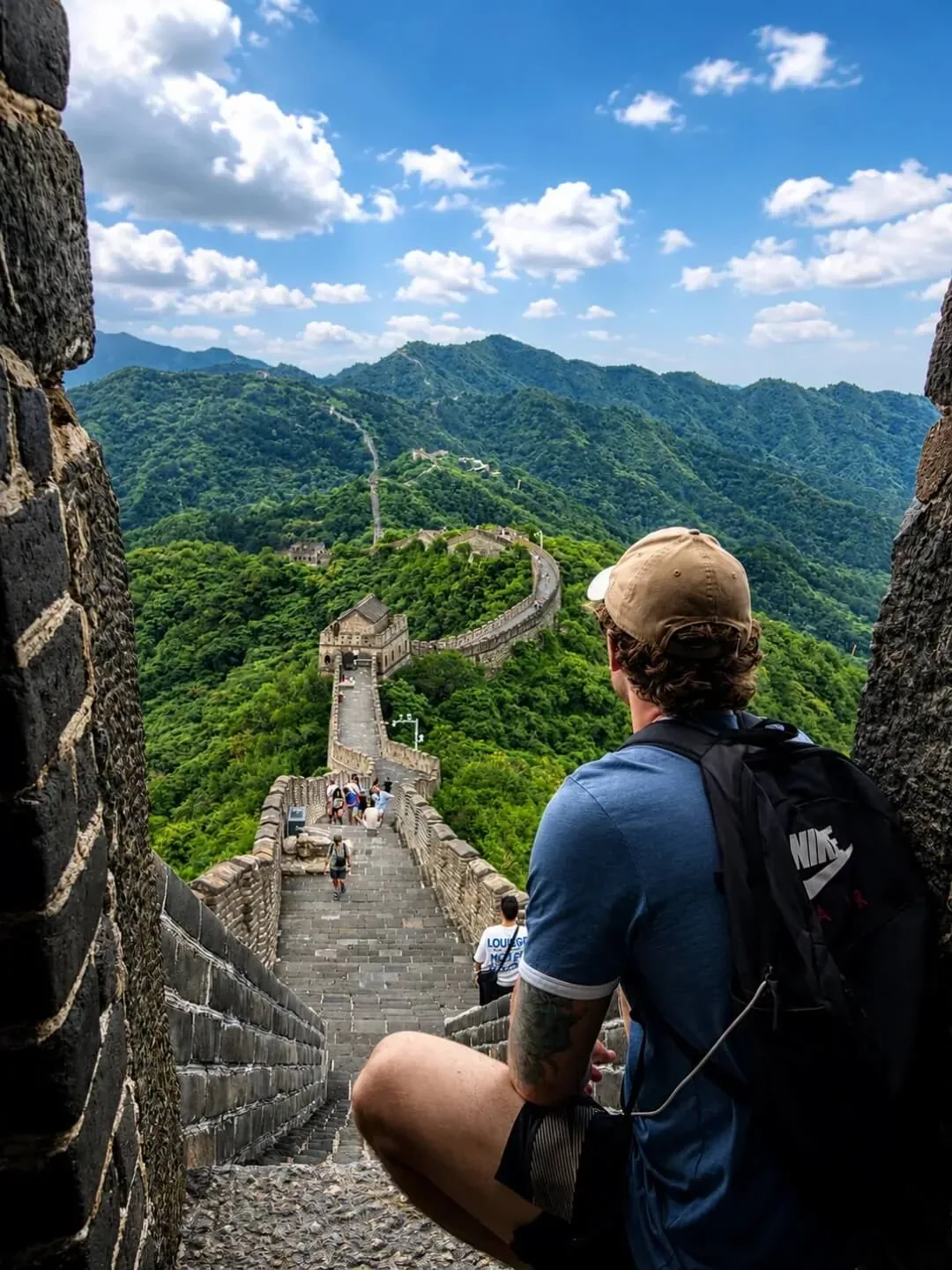
Defences existed in the Mutianyu area by the Northern Qi period, while the visible wall is mainly Ming. It lies between the Juyong and Gubeikou directions. Towers are closely spaced, crenellations appear on both sides in places, and branch walls close secondary ridges.
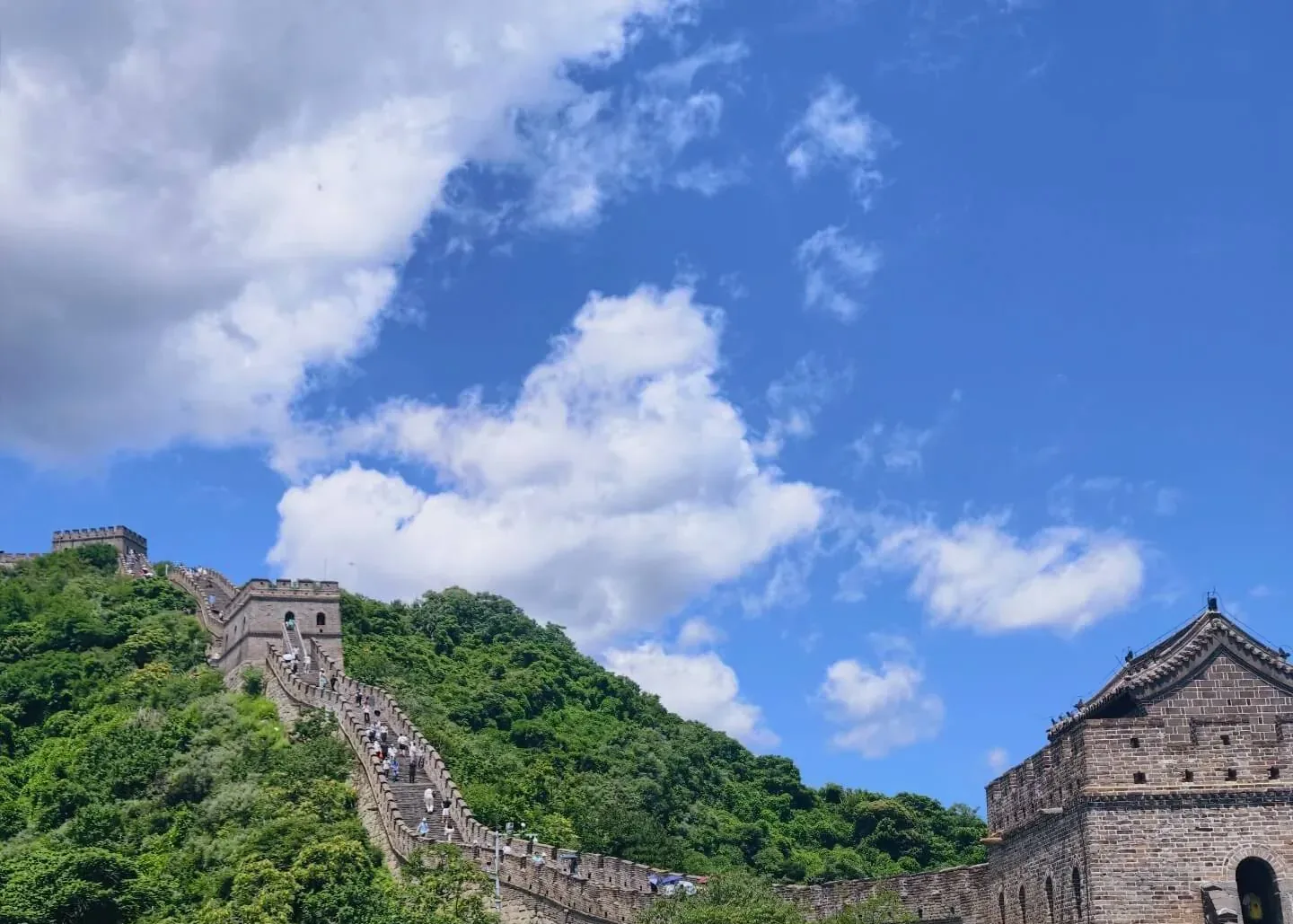
Cable-car access near Tower 14 serves the higher central section. A chairlift and toboggan operate nearer Tower 6 under a different company, so the products and return points need to be matched when buying. The wall includes uneven steps, steep pitches and long ridge views.
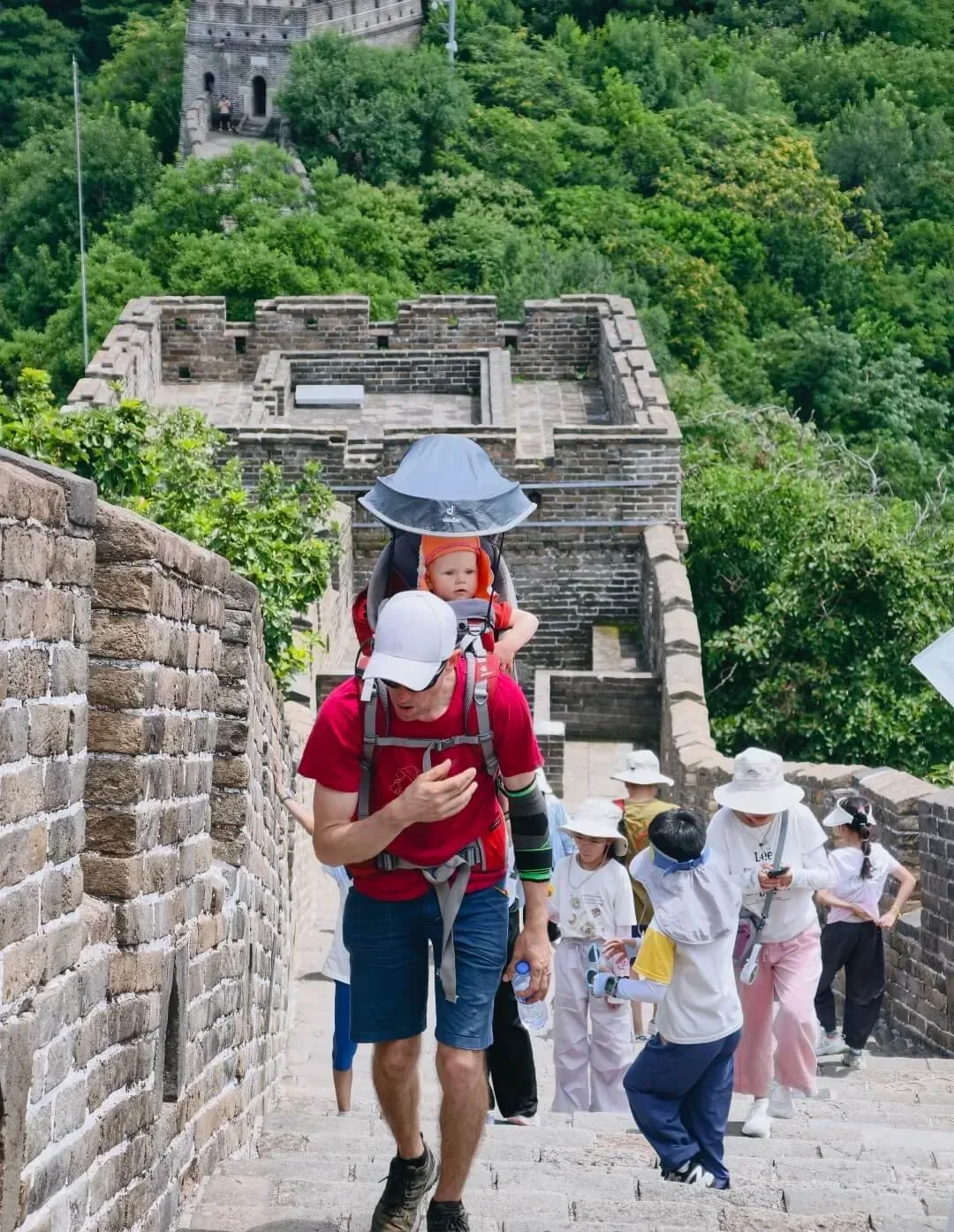
Public transport commonly involves bus 916 Express to Huairou and a local connection; direct visitor coaches reduce transfers. Mountain weather can close cableways or exposed sections. Shoes with grip, water and sun protection suit both sites, while the official notices determine which routes are open.