
Journey To ChinaLast updated
Temple of Heaven guide
One complex for sacrifice, prayer and imperial preparation
The Yongle emperor built the original complex in 1420, when Heaven and Earth were worshipped together. Separate worship of Earth moved north in 1530, leaving the Temple of Heaven with two main ritual groups: the Circular Mound Altar for the winter-solstice sacrifice and the Hall of Prayer for Good Harvests for the spring prayer for grain. The emperor prepared in the Palace of Abstinence, offerings were made in divine kitchens, and musicians trained in the Divine Music Administration.
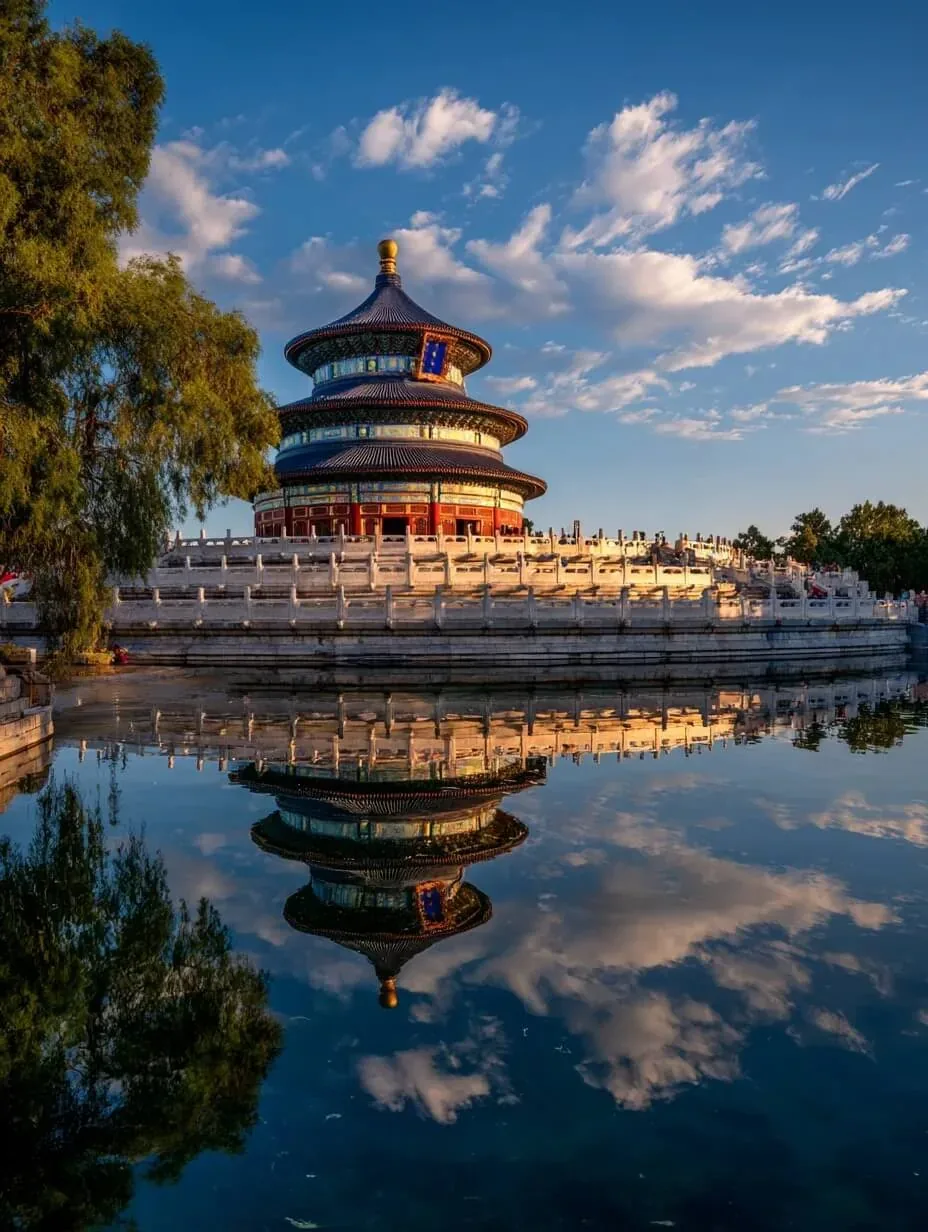
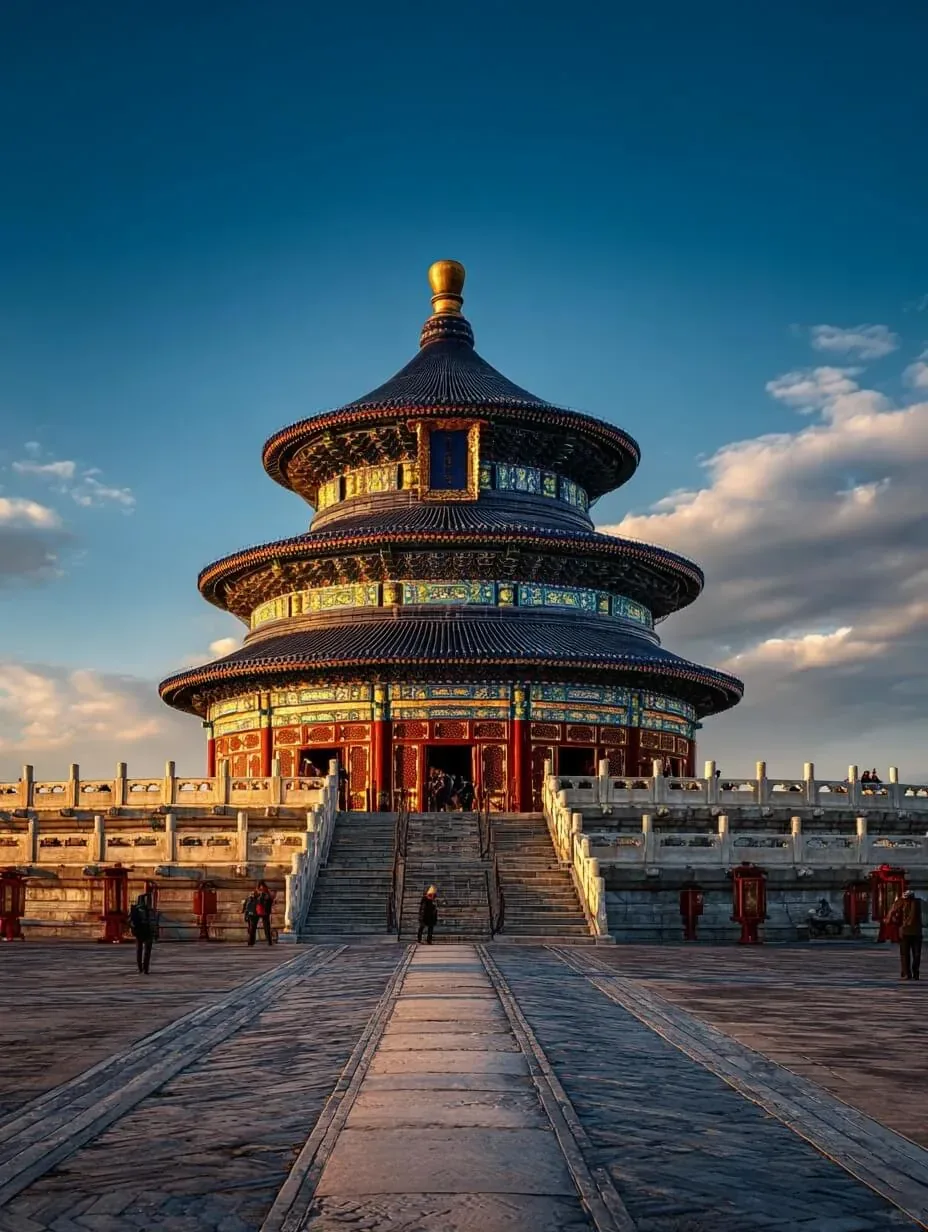
The triple blue roof refers to Heaven. The circular hall, square courtyard and white-marble terraces make cosmological ideas visible in architecture.
The Hall of Prayer changed before it acquired today's blue roof
The present building is the result of several transformations. An earlier square hall was replaced by a circular structure with differently coloured roof tiers; the Qing court later made all three tiers blue. Lightning destroyed the hall in 1889, and the reconstruction was completed in 1896. Inside, column groups are traditionally associated with the four seasons, twelve months and twelve two-hour periods.
The Danbi Bridge was a ceremonial road
The raised road between the northern and southern altar groups is called the Danbi Bridge. Its central route was reserved for the gods, with the emperor and officials using adjacent paths according to rank. Near the Hall of Prayer, the Long Corridor connected the Divine Kitchen and slaughter pavilion with the altar so offerings could move under cover.
At the Imperial Vault of Heaven, the circular enclosure creates the acoustic effects associated with the Echo Wall. Farther south, the Circular Mound uses repeated groups of nine in paving, steps and balustrades. Stand at the centre and the stone surface can reinforce the voice, an effect that supported the ritual focus of the platform.
A former imperial precinct became a city park
The Temple of Heaven opened as a public park in 1918. Ancient cypresses, chess games, singing and morning exercise now fill spaces once governed by court access. The East Gate gives a direct route to the Hall of Prayer; a south-to-north walk follows the ceremonial sequence from the Circular Mound. The Palace of Abstinence and Divine Music Administration add the emperor's preparation and ritual sound to the better-known blue-roofed buildings.
The nearby Xiannong Altar carried the complementary imperial rites of agriculture. Its architectural museum and cultivated field explain how sacrifice to Heaven and the emperor's symbolic ploughing belonged to the same capital ritual system. Qianmen can follow as a separate walk along the central axis into Beijing's historic commercial district.