
Journey To ChinaLast updated
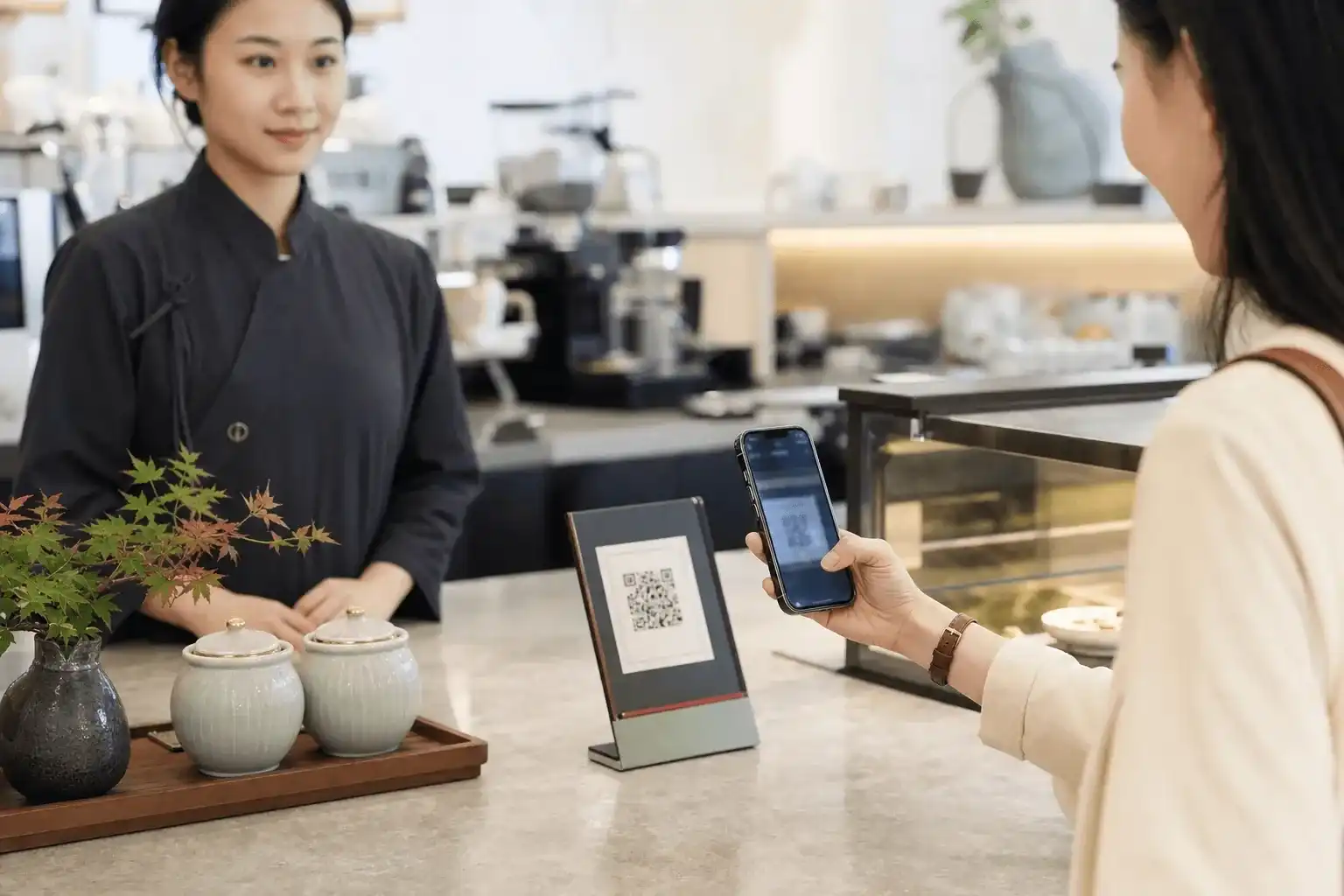
Choose how you will enter the station
China does not have one nationwide metro QR code. Each city runs its own network, fares and mobile ticketing service. Move to another city and you will usually need to select that city in the app and activate a new code.
If Alipay or WeChat is already registered, verified and connected to a working card, a transport code is the least fiddly option for several days of travel. It also saves you from finding the destination on a ticket machine before every journey. A single-journey ticket is often quicker for one or two rides, a weak mobile connection or an account the local service will not accept.
Keep a fallback. Use the phone most days, but carry some renminbi cash. The queue at a fare gate is a poor place to begin passport verification.
Using an Alipay metro code
Alipay is the clearest starting point for a foreign visitor because its Transport section covers metro services in many cities. Set up the account first with our Alipay guide for foreign visitors, including the mobile number, identity details and payment card.
Activating the code
- Open Alipay and choose
Transporton the home screen. - Check the city at the top of the page. Change it manually if the location is wrong.
- Select
Metro. Bus and metro services may use separate codes. - Tap
Get now,Claim nowor the activation button shown in the current version. - Read the local operator's terms, authorise the requested account details, complete identity verification if asked and select a payment method.
- Return to the code and check both the city and the transport type before approaching a gate.
The labels change with the city, language and app release. The route through the app is more consistent: Transport, city, Metro, then the local activation page.
A foreign card that pays successfully in a shop will not automatically work with every city's transport service. The local operator sets its own account, identity and payment conditions. If activation fails, do not keep changing the passport name in the hope that one variation will pass. Buy a single-journey ticket instead.
Using a WeChat transit code
WeChat transit codes can be just as convenient, but support for international accounts varies more than ordinary Weixin Pay purchases. Shanghai explicitly supports its public transport code for international users through a WeChat Mini Program. Other cities may ask for a different mobile number, identity record or payment method.
People who already use Weixin Pay can check our WeChat guide for foreign visitors, then look for the local service:
- Search WeChat for
乘车码,Transit QR Code, or the city name followed by地铁乘车码. - Prefer a verified transit-code Mini Program or one published by the local metro operator. Check the city before granting access.
- Choose the metro service and read the agreement.
- Complete real-name verification and enable automatic fare payment when prompted. Copy any identity details from the passport without dropping or rewriting names.
- Once the code appears, confirm that it covers the metro. Some local codes work only on buses, ferries or another mode.
Many transit Mini Programs remain mostly in Chinese. If the city does not offer a suitable service, or the code will not accept an overseas card, try Alipay. If that fails too, use a ticket machine. Installing several local transport apps for one ride rarely improves the afternoon.
Scanning at the fare gate
Alipay and WeChat codes work in much the same way at the gate.
- Open the code before joining the queue and check the city and transport type.
- Use a gate with a QR scanner. Ask staff before using a staffed or accessible lane.
- Hold the phone over the scanner rather than pressing it against the glass. Wait for a green arrow or acceptance tone before walking through.
- At the destination, exit with the same account and the same type of transport code. The fare is normally charged after the journey.
One phone and one code are for one passenger's complete journey. Do not pass a group through on the same screen or send a screenshot to a friend. Transit codes refresh and a captured image may no longer work.
A shop payment code is not a metro code. Alipay's Pay screen and WeChat's Money screen produce codes for purchases. The gate needs the code inside Transport or the local transit Mini Program.
If the gate rejects the code, step back and try once more. Do not climb the barrier or squeeze behind the passenger ahead. Station staff can inspect the code page and entry record if the second attempt fails.
Buying a single-journey ticket
No transport code? No problem. Most stations have self-service ticket machines, and machines in major cities commonly include an English interface.
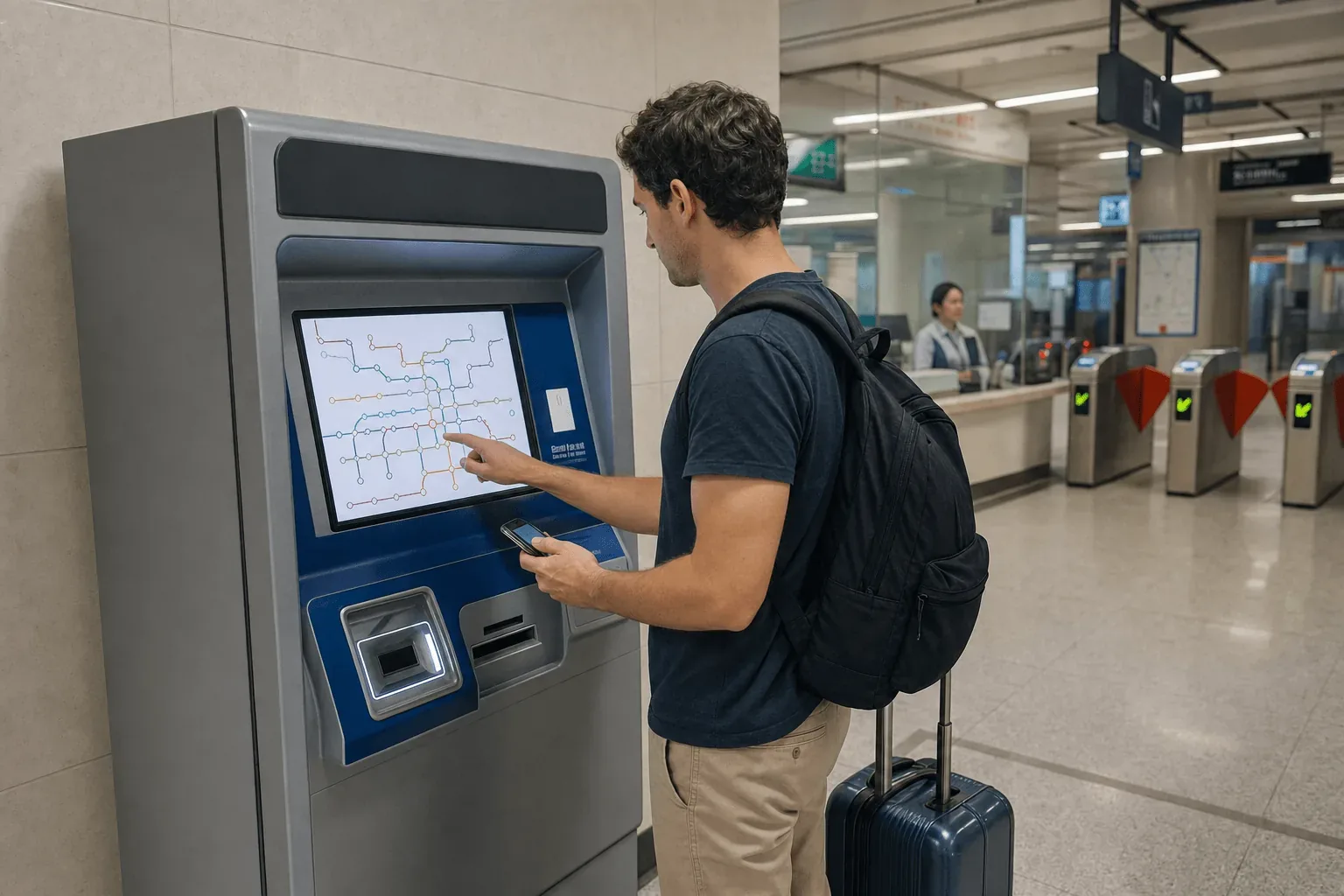
The usual process is straightforward:
- Select
English, then choose the single-journey ticket screen. - Find the destination by line and station. Some machines also accept a station-name search.
- Select the number of tickets and check the destination and total fare.
- Pay using one of the methods shown on that machine.
- Collect the token, card or paper QR ticket. Check the return tray if the screen mentions change.
- Follow the diagram on the gate to scan, tap or insert the ticket. Keep it until you have left the destination station.
The physical ticket is not the same everywhere. One city may issue a reusable plastic token, another an IC card, and another a printed QR ticket. Follow the gate and ticket instructions in front of you rather than copying a passenger from a different network.
Paying by Alipay or WeChat
QR payment at a ticket machine is separate from the transport code used at the gate. Machines normally follow one of two patterns:
- If the machine displays a merchant QR code, open
Scanin Alipay or WeChat, scan the machine and confirm the fare. - If the machine asks for your payment code, open Alipay
Payor WeChatMoneyand hold the dynamic code over the payment scanner.
Wait for the ticket after payment. Do not pay again because the machine pauses for a few seconds. If the phone shows a completed charge but no ticket appears, keep the transaction record and ask station staff for help.
Paying with RMB cash
Some machines accept banknotes or coins, but accepted denominations, change and machine status vary. Small, flat RMB notes are the useful kind. If there is no cash button, the machine repeatedly returns the note, or cash acceptance is suspended, go to the station service centre.
The staffed service centre is the more dependable cash fallback. Show the Chinese name of the destination, state how many tickets you need and pay in renminbi. A landmark's English name may not match the nearby station name, so keep the station name on the phone as well.
Check the city, station and exit
A line may split into branches, run express and stopping services, or use platforms signed by the final station rather than compass direction. Before entering, check the line number, terminus and interchange. At the destination, check the exit number too. Opposite exits at a large station can put you a long walk apart.
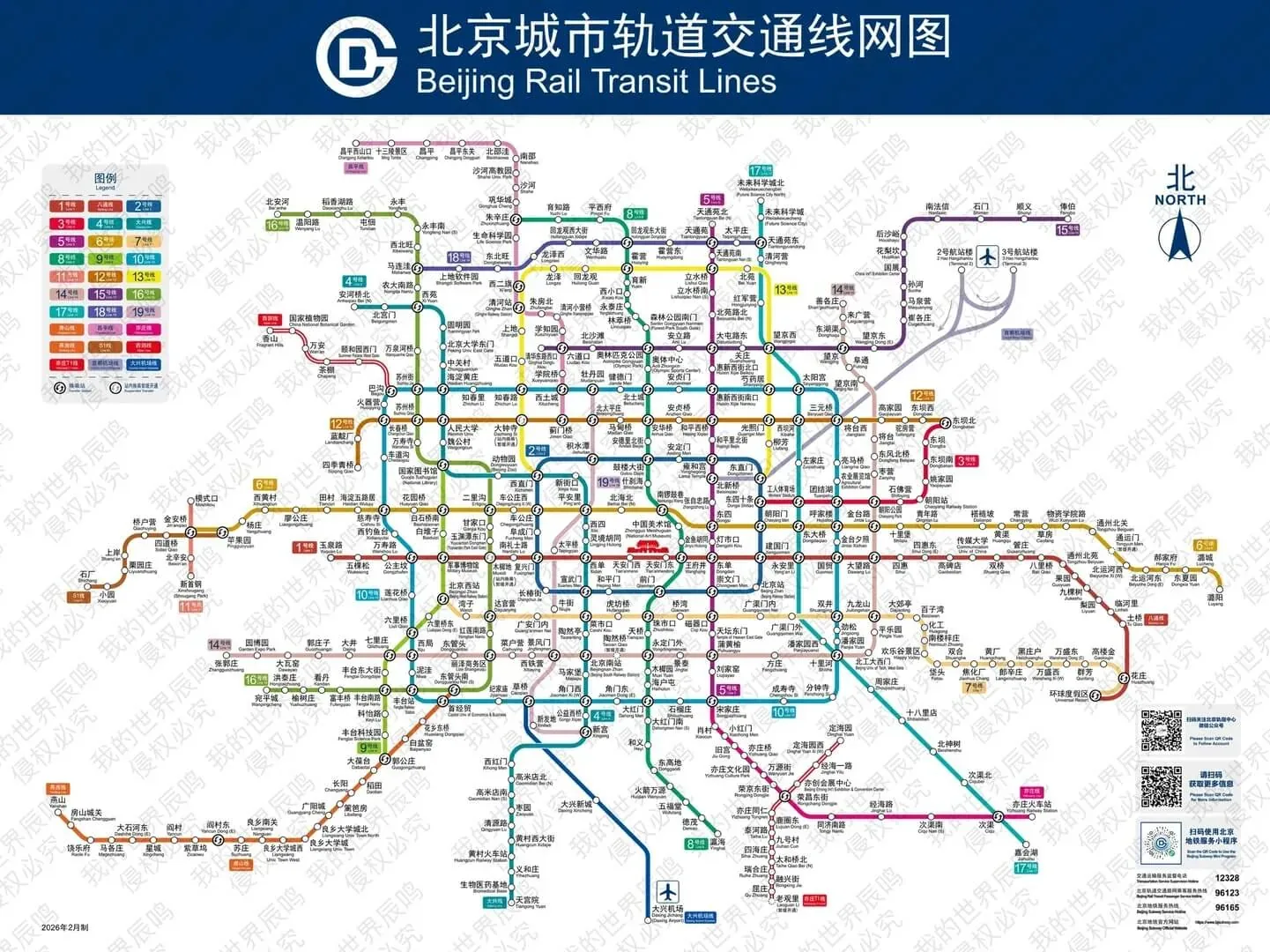
The map above is a Beijing example. It is here to show the scale of a city network, not to plan a journey in Shanghai, Guangzhou or anywhere else. Use the current local operator map, station notices or a reliable navigation app for routes, first and last trains and temporary changes.
Airport expresses, maglev lines, suburban rail and intercity services may have separate fares or ticketing. A different bank of gates is a good reason to stop and read the sign instead of assuming the existing code covers it.
Security checks and interchanges
Many metro systems screen bags before the fare gates. Put luggage on the conveyor; staff may ask to inspect a water bottle separately. Morning and evening peaks can add queues at both security and interchanges, so leave more time when connecting to a flight or train.
After the gate, follow the line colour, number and terminus to the correct platform. Interchange corridors can be surprisingly long. A transfer that looks like one neat dot on a map may involve a ten-minute walk. Let passengers leave the train before boarding and keep the doorway clear.
Keep the phone charged and connected until you exit. If you bought a physical ticket, keep that instead. Many systems collect the ticket card at the exit gate.
When the code or ticket fails
The code will not appear
Check the city, metro or bus selection, mobile connection, identity status and payment method. After changing cities, the code on screen may still belong to the previous one. A working shop payment account does not prove that the local transport service is active.
Entry worked, but exit does not
Do not switch to another app and force a second record. Show the service centre the app used, entry time and station. Entering with Alipay and trying to exit with WeChat creates two incomplete journeys.
The phone is flat or offline
Go to the service centre. Before entry, buy a physical ticket. If the journey has already started, staff can inspect the record and handle the exit. Borrowing a stranger's code creates yet another unresolved trip.
The destination changed
Distance-based networks normally let a passenger pay the extra fare before exit, though the exact process is local. If the ticket will not open the destination gate, use the service centre rather than buying a new entry ticket.
A practical setup before the first ride
- Register Alipay or WeChat, finish identity checks and test the payment card before the trip.
- Activate the local code in the hotel or station concourse, away from the fare-gate queue.
- Keep mobile data and battery power available so the code can open when needed.
- Save the destination and hotel names in Chinese, along with the nearest station and exit.
- Carry a little RMB cash. It still buys a ticket when the phone, card or account does not cooperate.
Official references
- A Guide to Working and Living in China as Business Expatriates 2025, covering single-journey metro tickets, cash, mobile payments and the Alipay metro-code workflow for foreign visitors.
- Payment service guide for overseas visitors to China, explaining the basic use of Alipay, Weixin Pay, bank cards and RMB cash.
- Basic Information of Beijing Subway, with local examples for Alipay transport codes, ticket machines, staffed counters and payment methods.
- In Shanghai Weixin Pay benefits expats, international users, confirming Shanghai's public transport QR code for international WeChat users.
- How to take metro in Shanghai, showing local apps, Alipay, WeChat, transport cards and single-journey tickets.
Fares, QR-code coverage, identity checks, overseas-card support, cash equipment and operating hours vary by city and change over time. Follow the local operator, station signs and the agreement shown in the app.