
Journey To ChinaLast updated
West Lake guide
A lake shaped by more than a thousand years of Hangzhou history
From the eastern shore, the water opens toward mountains on the south, west and north, while the modern city stands immediately behind. This meeting of “cloud-wrapped hills on three sides and a city on the fourth” is West Lake's defining composition. Pagodas, temples, bridges, islands and gardens occupy ridges, bays and turns in the shoreline. As a walker or boat changes position, willow branches, arches and pavilions become foreground frames, while distant hills and pagodas appear, disappear and return.
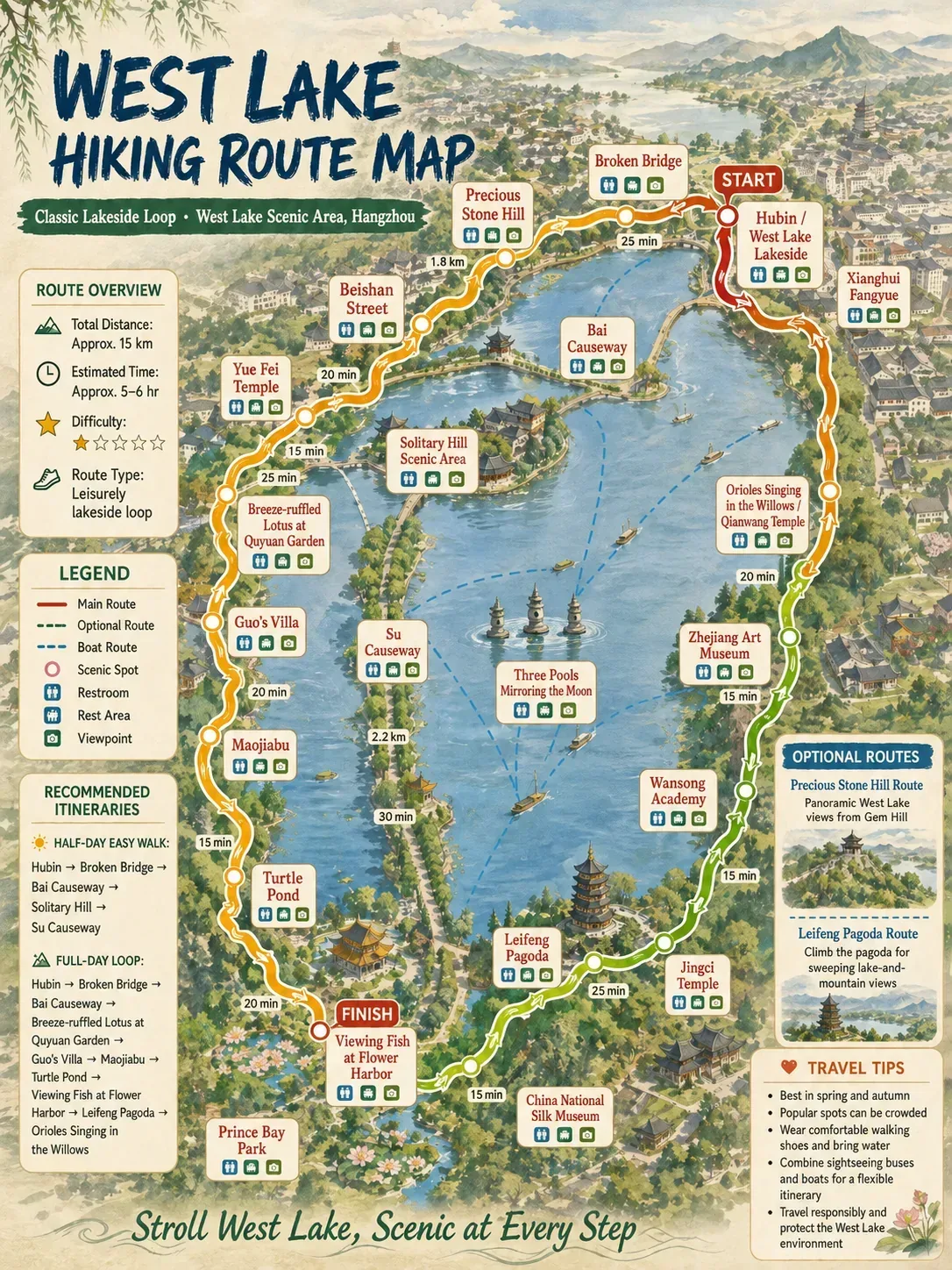
The map shows the relationship between Bai Causeway, Su Causeway, Xiaoyingzhou Island and the northern and southern shores; each area develops a different theme.
During the Wuyue kingdom, the Qian rulers dredged the lake, controlled floods and built Buddhist temples, linking the water with city safety, daily supply and religious scenery. In the Northern Song dynasty, Su Shi directed another major dredging. His memorials described the lake's roles in water supply, irrigation and transport, while the removed silt and aquatic plants formed the basis of Su Causeway. A piece of hydraulic engineering became both a way to preserve the lake and a route for moving through its scenery.
After the Southern Song established its capital at Lin'an, West Lake became central to urban life and aesthetic culture. Names such as Spring Dawn at Su Causeway, Lotus in the Breeze at Crooked Courtyard, Autumn Moon over the Calm Lake, Lingering Snow on Broken Bridge and Evening Bell at Nanping Hill combined season, light, sound and location into a way of looking. They direct attention toward spring mist, moving summer lotus leaves, autumn moonlight, the contrast of snow on a bridge and temple bells travelling across water. Continued dredging, garden construction and island building in the Ming and Qing periods gradually produced the familiar “two causeways and three islands.”
Lakeside, Bai Causeway and Solitary Hill: from modern Hangzhou into cultural history
At Longxiangqiao (龙翔桥), city streets reach almost directly to the eastern shore. Hand-rowed boats wait near the willows, the lake opens westward, and Leifeng Pagoda marks a southern ridge. Walking north leaves more of the urban frontage behind as Broken Bridge, Bai Causeway and Solitary Hill come into view.
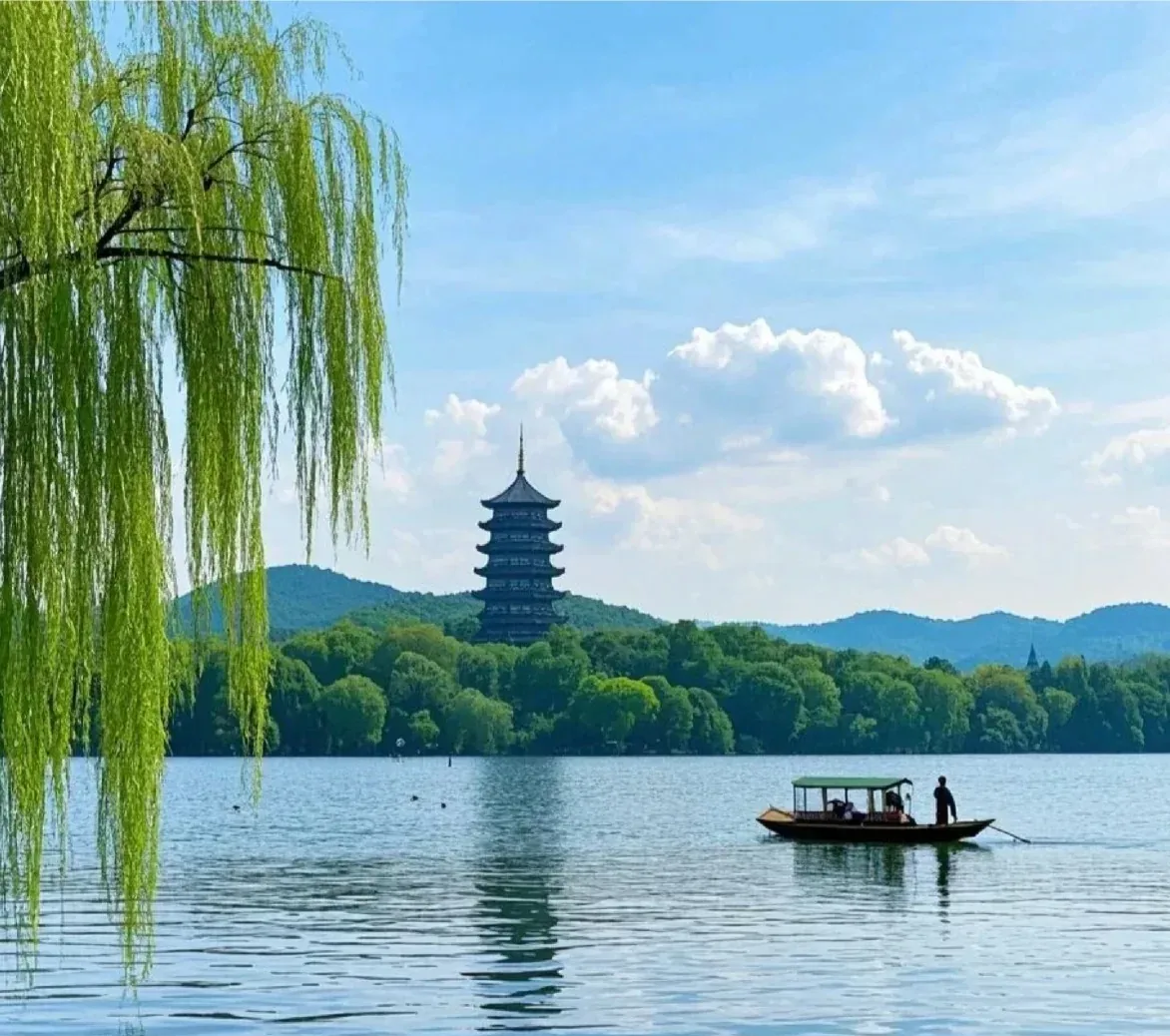
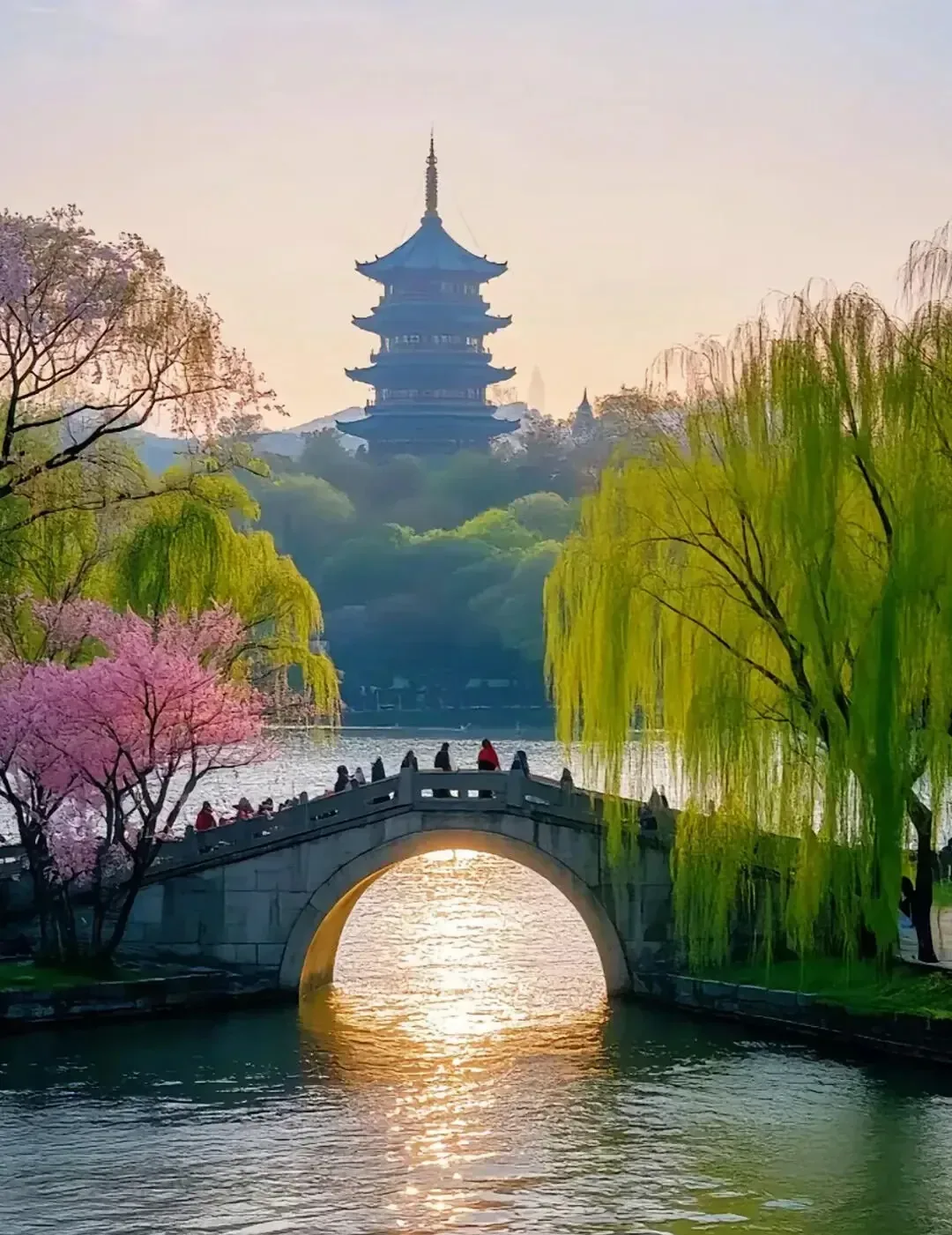
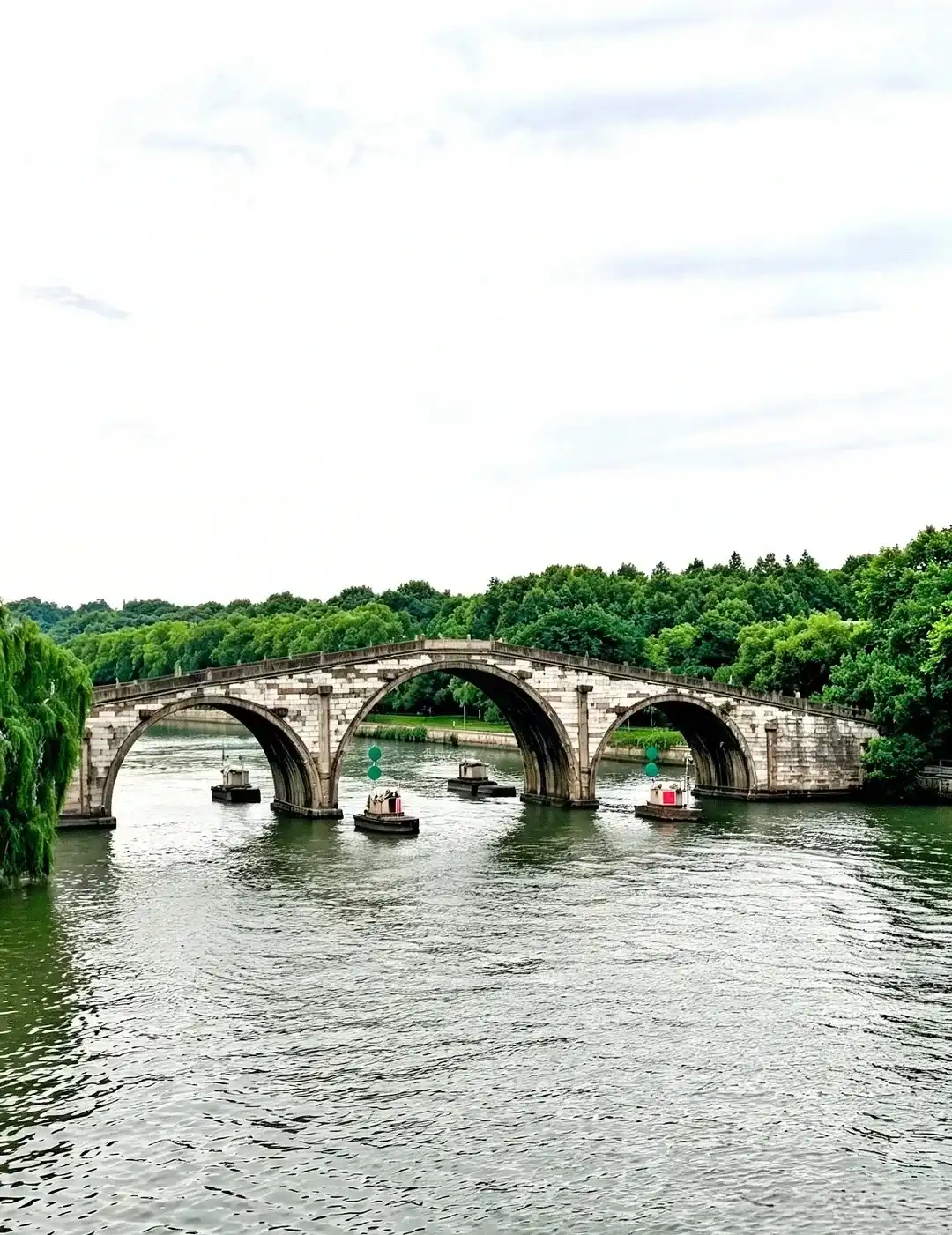
Broken Bridge is best known through Lingering Snow on Broken Bridge. The image of snow melting on one side of the bridge while white remains on the other gives an ordinary crossing a strong sense of time and weather. In other seasons, the bridge still changes direction dramatically: east looks back toward the city, west enters Bai Causeway, and south opens across the water to Leifeng Pagoda. Spring willow, summer lotus and low morning light reshape the same edges and reflections.
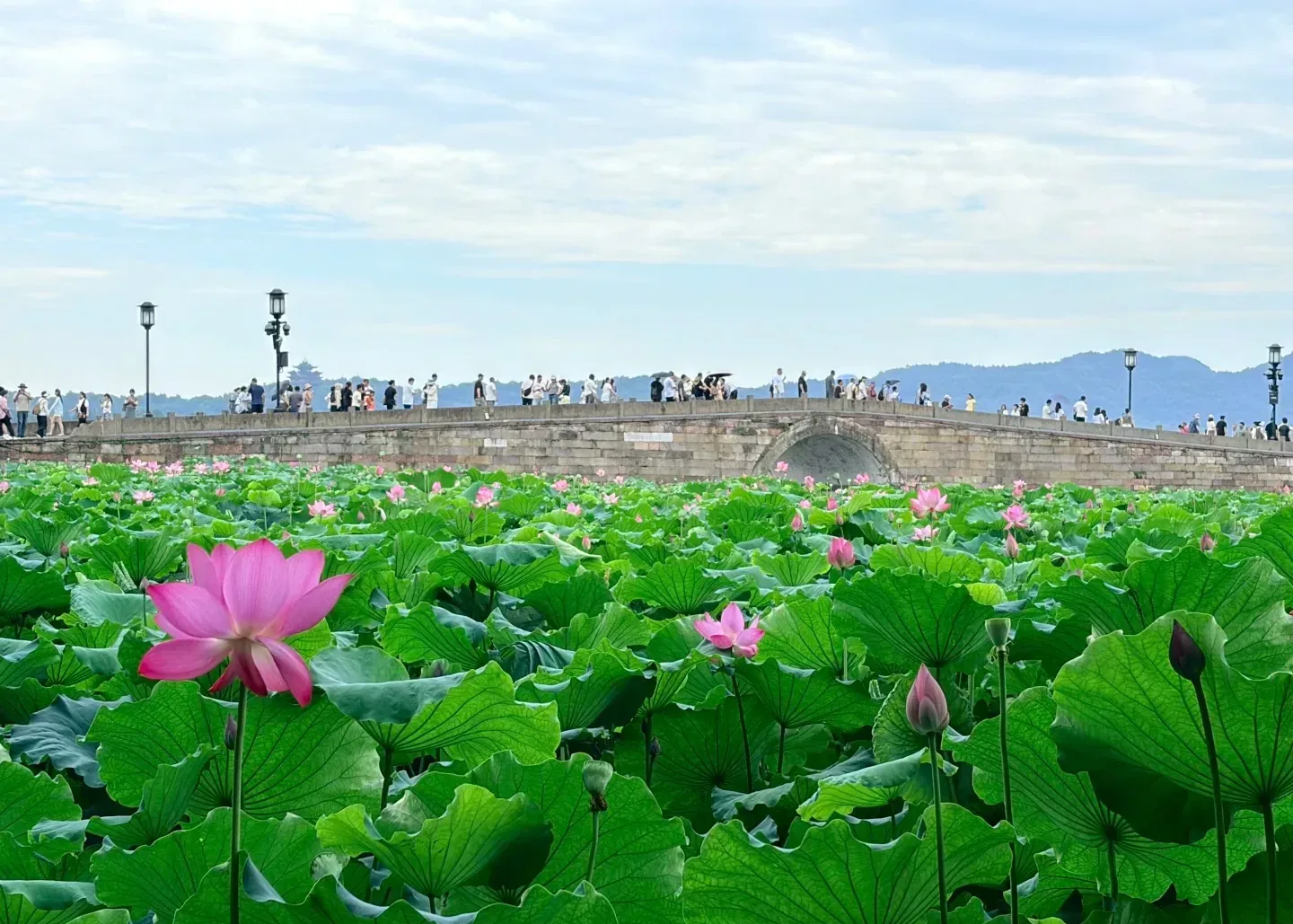
Bai Causeway links the bridge to Solitary Hill. Here the walk shifts from open lakeside scenery into Hangzhou's cultural history. Poet Lin Bu's retreat and plum-blossom tradition return to life during the late-winter flowering season. Wenlan Pavilion once held a copy of the imperial Complete Library of the Four Treasuries; the Zhejiang Provincial Museum and China Seal Engraving Museum add objects, painting, calligraphy and seals; the hillside pavilions and stone inscriptions of Xiling Seal Engraver's Society connect the island hill with modern epigraphy and seal art. Solitary Hill forms a compact cross-section of Song literary culture, Qing book collecting and the modern museum system.
Autumn Moon over the Calm Lake occupies a low terrace on the southeast side of the hill, where a broad water surface magnifies moonlight and distant mountains. Continuing west toward Xiling Bridge and Beishan Street adds literary memory and Republican-era architecture. The northern shore therefore progresses through several periods: modern lakeside, classical causeway, cultural institutions on Solitary Hill and twentieth-century streetscape.
Six bridges turn Su Causeway into a long axis across the water
Su Causeway runs north to south through the western lake, rising over six bridges. At each crest, water on both sides, islands and distant hills open together; descending brings willow, peach trees and shoreline plants back into the foreground. This repeated expansion and contraction keeps the causeway from feeling like a straight road. Its hydraulic role organises the water, while its bridges repeatedly rearrange near and distant views.
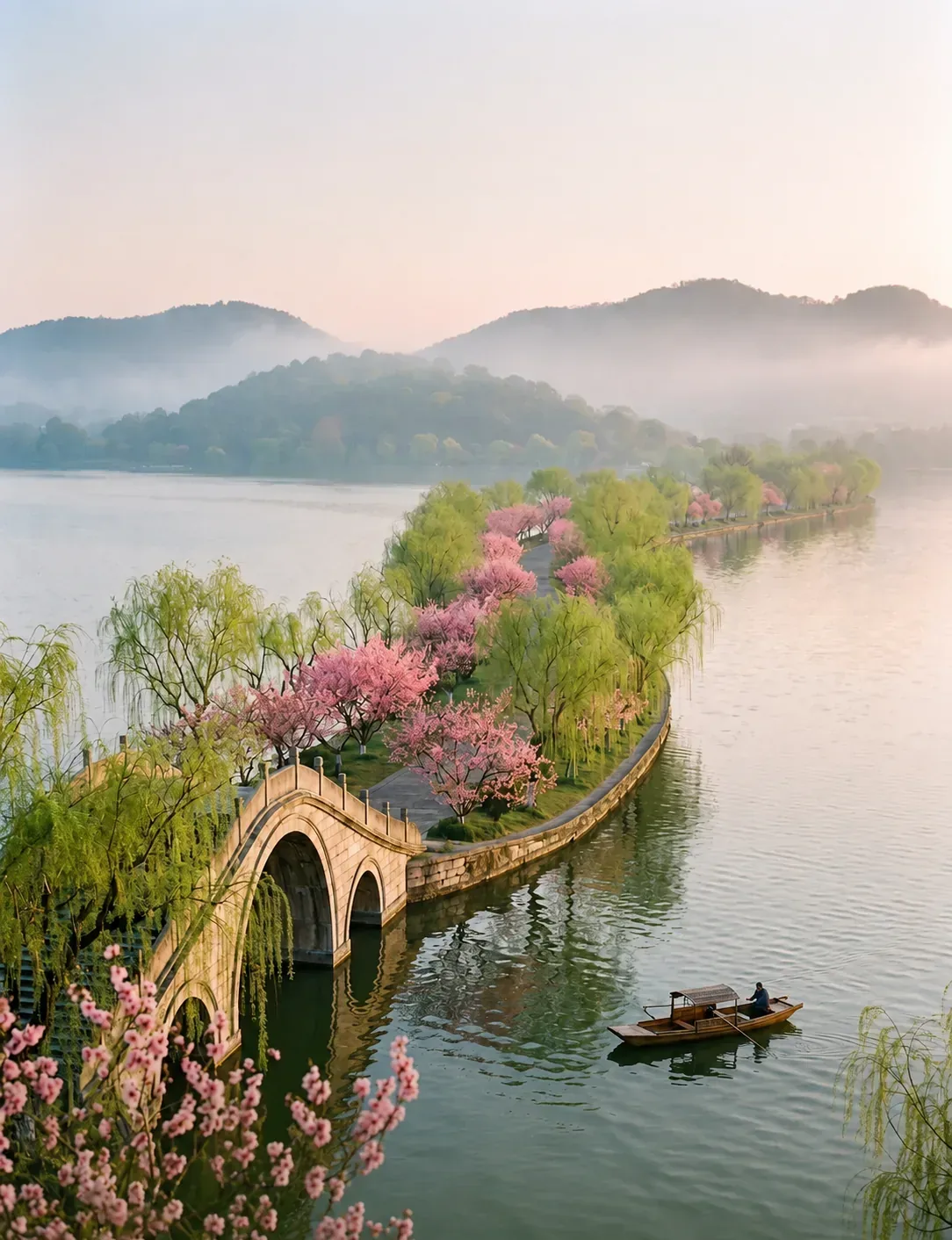
At the northern end, Lotus in the Breeze at Crooked Courtyard retains the memory of an old wine-making area and its lotus ponds. In summer, broad leaves spread among bridges and covered walks, and wind moves across them in continuous layers. During spring and autumn, the structure of water courts, winding bridges and tree shadows becomes easier to read. The scene's name describes a moving combination of plants, breeze and water.
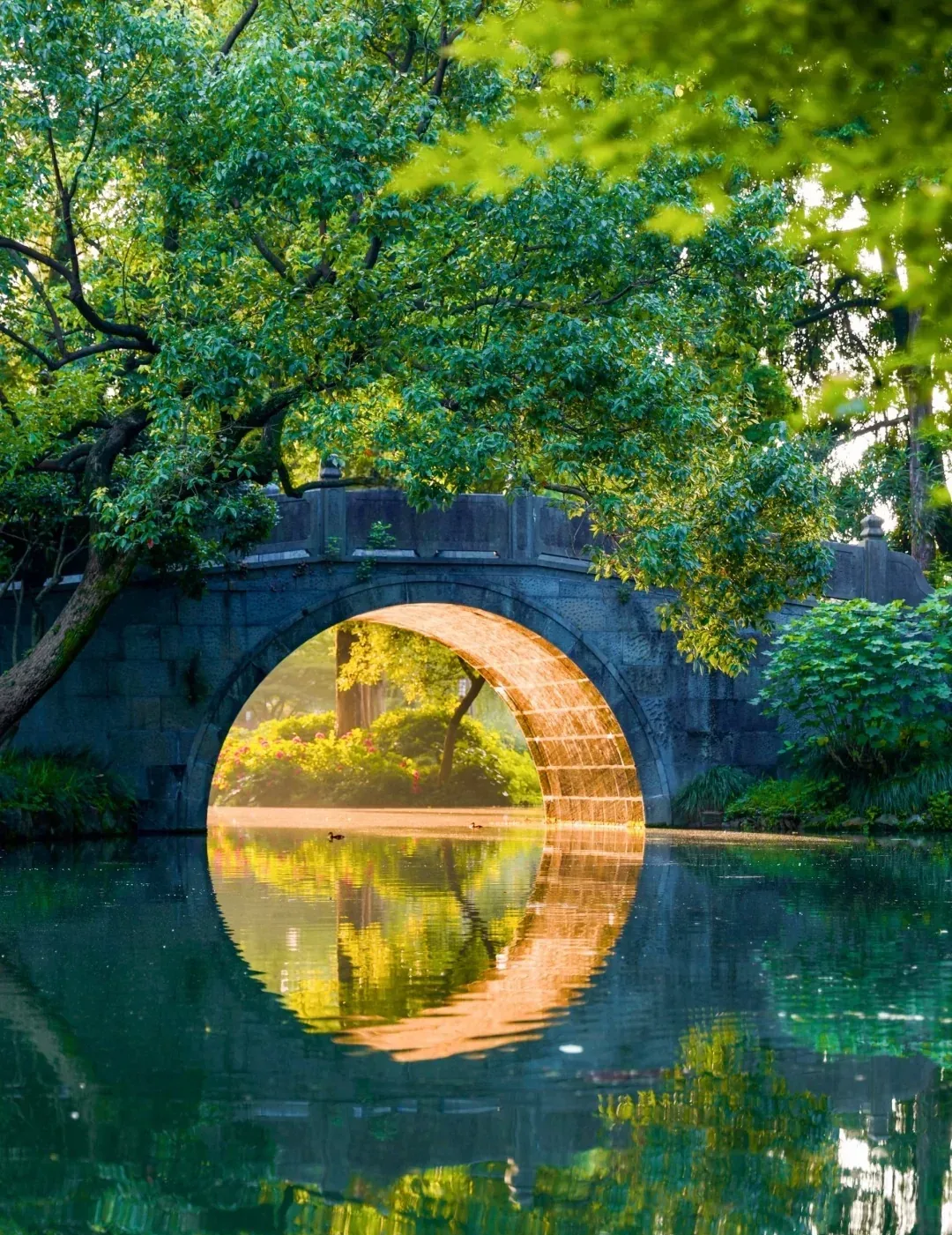
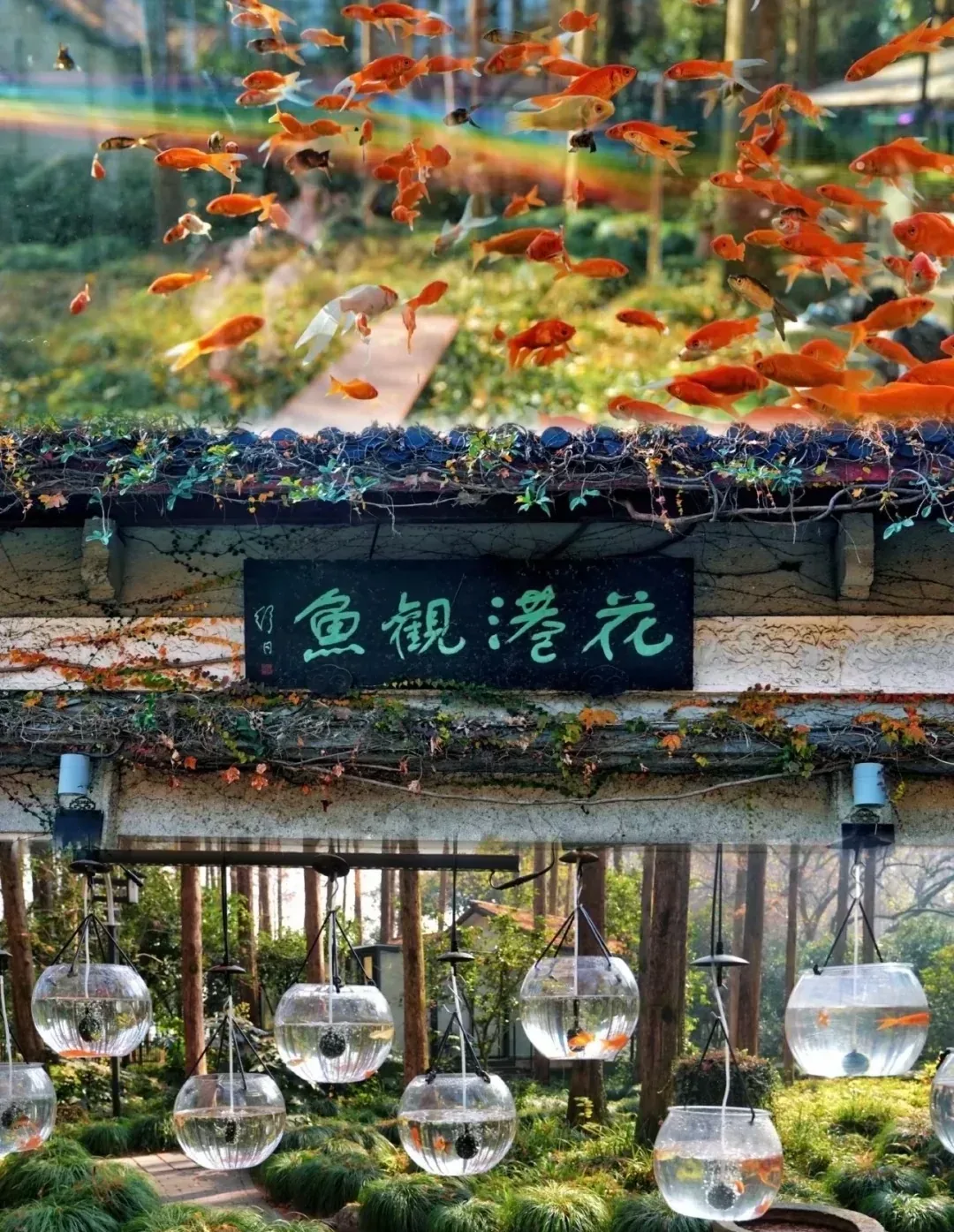
The southern end enters Viewing Fish at Flower Harbor. Its red-carp pond is the most recognisable element, but canals, water courts, peony gardens, lawns and woodland fill a much larger garden. Open lake scenery becomes a sequence of smaller framed waters viewed from banks, bridges and windows. A north-to-south walk can connect the lotus ponds, six changing bridge views and enclosed gardens into one coherent experience.
Xiaoyingzhou: an island in the lake enclosing another lake
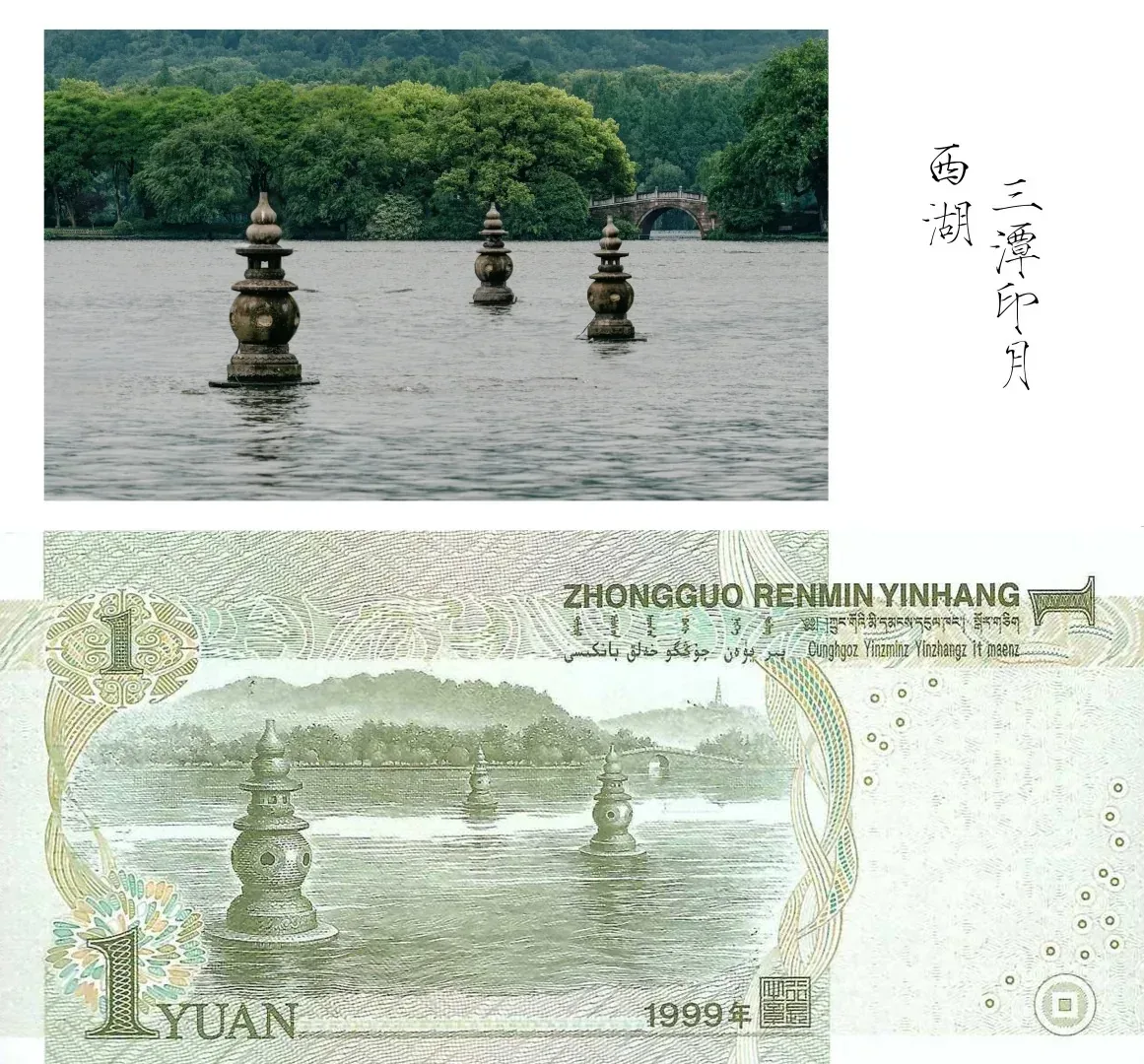
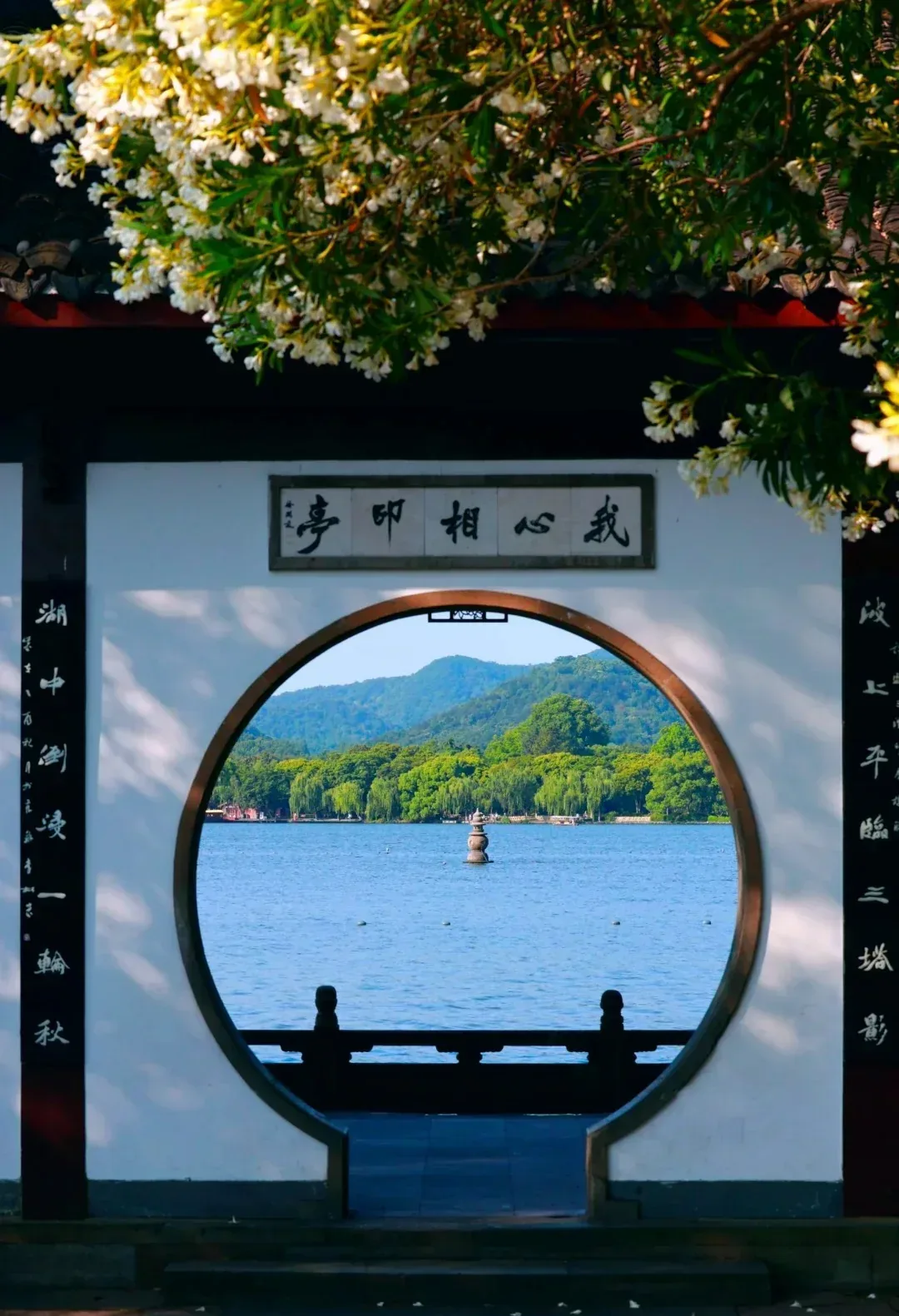
Xiaoyingzhou, the island associated with Three Pools Mirroring the Moon, is reached by boat. West Lake surrounds the island, while causeways and bridges enclose smaller waters inside it. A zigzag bridge turns among water courts, and pavilions, patterned windows and moon gates repeatedly shift the view. From shore it appears as one green island; once inside, water remains the centre of the composition.
Three stone pagodas south of the island continue the tradition of older markers used in managing the lake, although their present form developed later. Circular openings in the pagoda bodies inspired images of lantern light and reflected moon around the Mid-Autumn season. Three Pools Mirroring the Moon became the most recognisable of the Ten Scenes and appears on the reverse of China's one-yuan banknote. By day, different shores of the island align the three pagodas with Leifeng Pagoda and the mainland; at dusk, reflections deepen the distance between stone, water and mountains.
Boat products may offer a lake circuit, a landing on Xiaoyingzhou or a seasonal night trip. Ticket pages and pier signs state whether the boat lands, which shores can be used for departure, and the day's operating period. The return shore can become part of the route when continuing toward Lakeside, Flower Harbor or the Yue Fei Temple area.
The southern shore: Wuyue memory, temple bells and Leifeng Pagoda
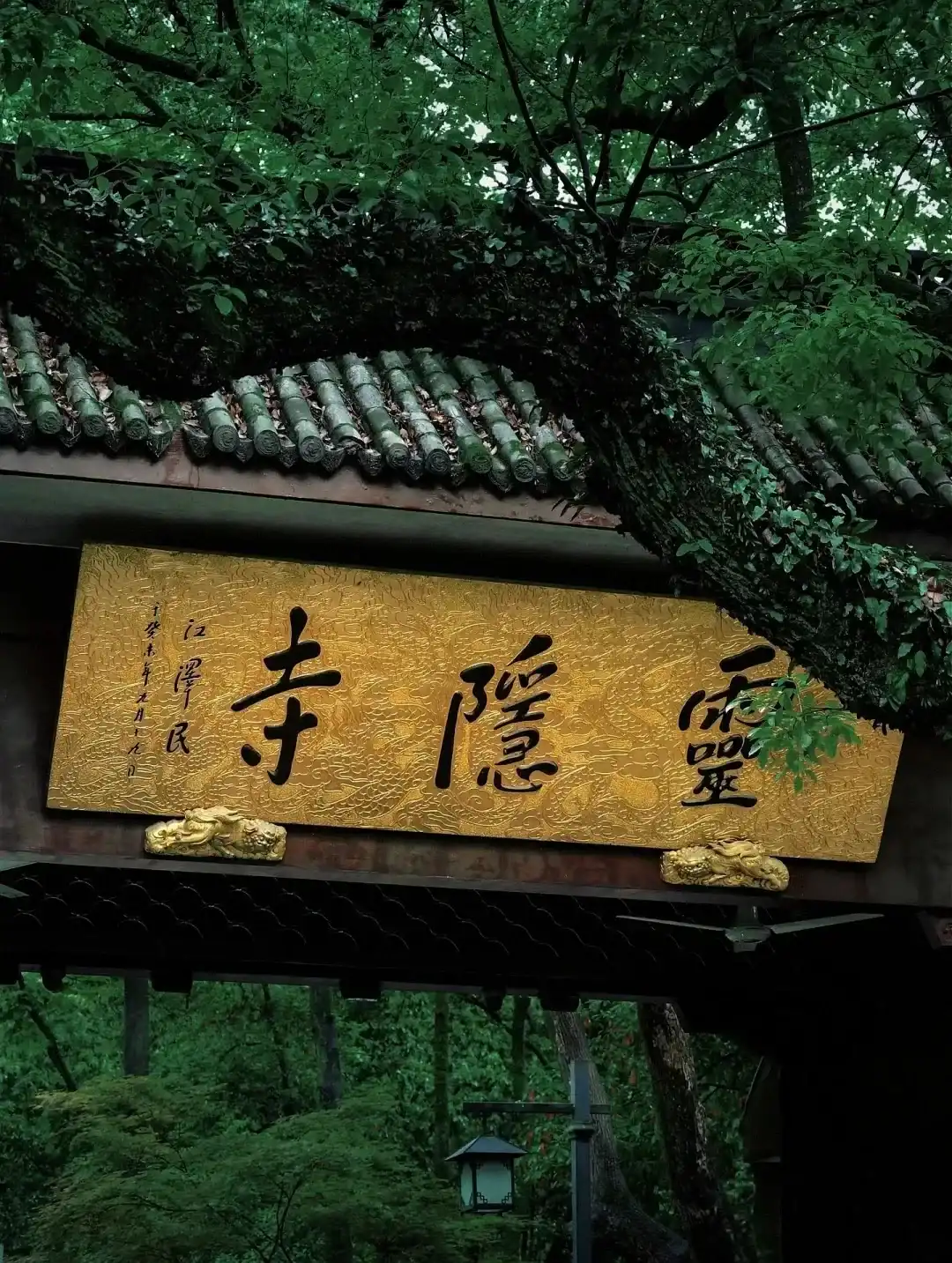
The southern route extends from Lakeside toward Qianwang Temple, Orioles Singing in the Willows, Jingci Temple and Leifeng Pagoda. Qianwang Temple remembers the rulers of Wuyue and their relationship to early dredging, seawall management and Hangzhou's development. Orioles Singing in the Willows creates a closer waterside landscape through spring birdsong and trees. Together, these sites connect the management of the city before the Southern Song with its later temple-and-pagoda scenery.
Jingci Temple stands below Nanping Hill and gives Evening Bell at Nanping Hill its soundscape. Bells travel from the temple through slope, trees and water, changing with distance. Leifeng Pagoda rises on the adjacent hill and repeatedly appears between Nanshan Road trees, temple windows and openings along the shore. The southern walk is shaped by those changing distances and the many frames through which the pagoda can be seen.
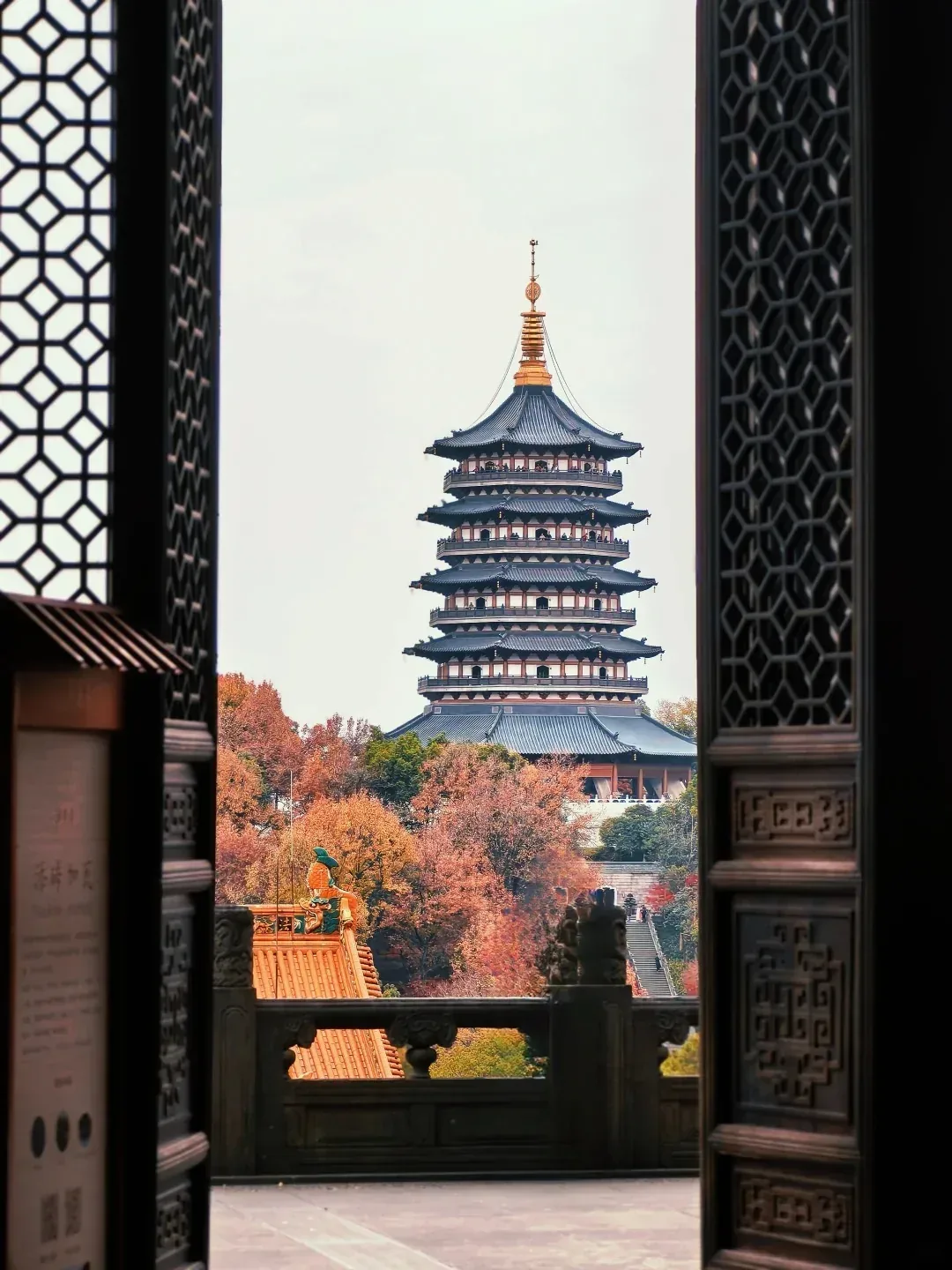
Viewing Fish at Flower Harbor, Prince Bay Park, Jingci Temple, Leifeng Pagoda and Nanshan Road occupy neighbouring parts of the southern shore. They can be connected through gardens, seasonal planting, temple history or pagoda views. Continuing east returns toward Lakeside, Wushan and Hefang Street; northwest leads back through Su Causeway toward Crooked Courtyard and Yue Fei Temple.
One lake, transformed by season and time of day
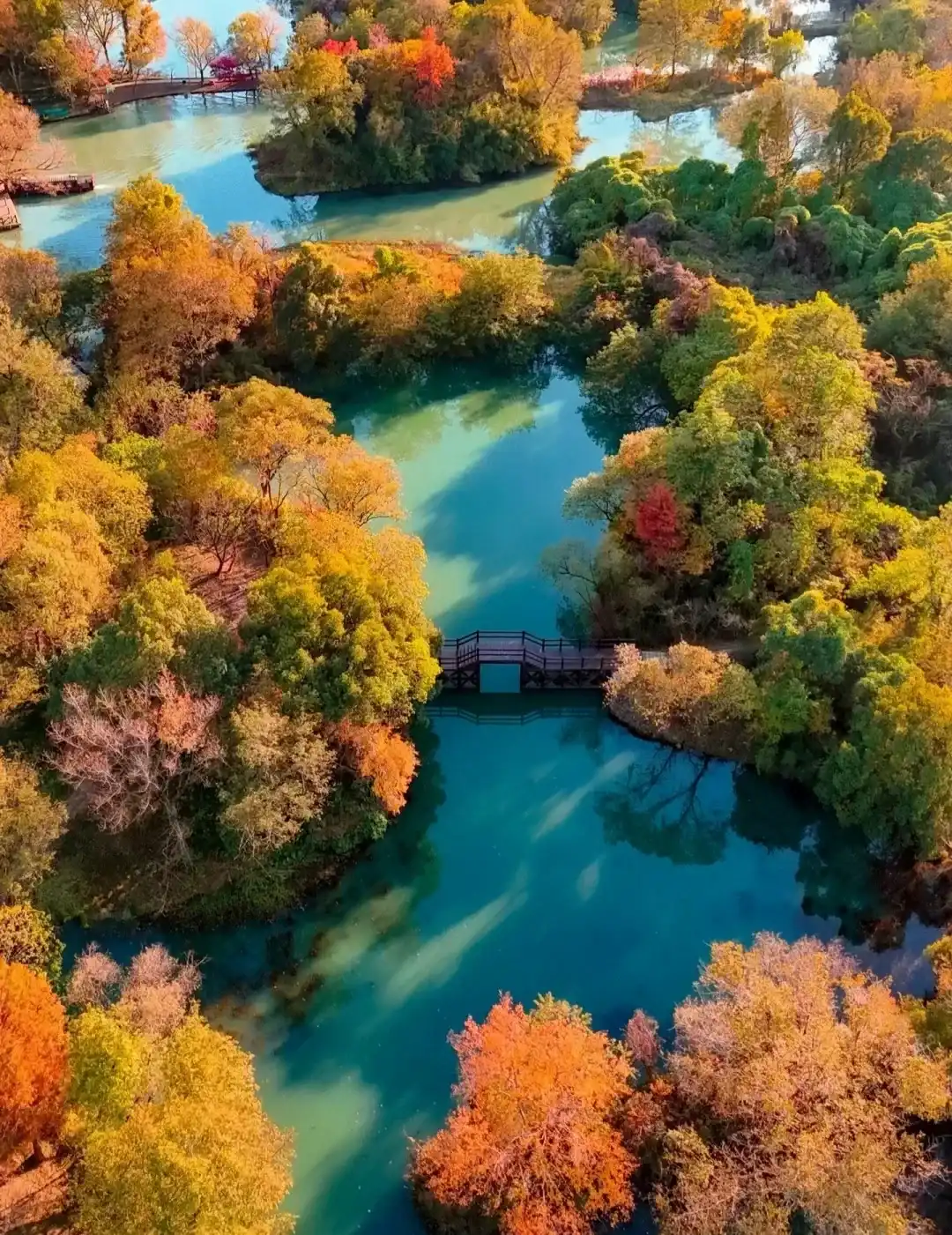
Spring brings more than peach and willow: morning mist settles along Su Causeway and the last plum blossoms linger on Solitary Hill. Summer fills Crooked Courtyard and Flower Harbor with lotus, water reflections and shade. Clear autumn air strengthens the mountain layers from Autumn Moon over the Calm Lake, Beishan Street and the southern shore. In winter, reduced foliage reveals the outlines of bridges and causeways, while snow gives Broken Bridge and the hills the strongest resemblance to a classical painting. Mornings emphasise quiet water, daytime reveals garden detail, evening backlight sharpens pagodas and ridges, and night boats turn shore lights and reflections into the main scene.
Each part of West Lake can form a complete visit. Lakeside—Bai Causeway—Solitary Hill follows the city and its cultural history; Crooked Courtyard—Su Causeway—Flower Harbor brings together hydraulic design, bridges and gardens; Xiaoyingzhou belongs to boat travel and island water courts; Qianwang Temple—Jingci Temple—Leifeng Pagoda builds a southern route of history, sound and changing viewpoints. These areas can be linked according to season, accommodation and the next destination.