
Journey To ChinaLast updated
Qingshan Lake Water Forest guide
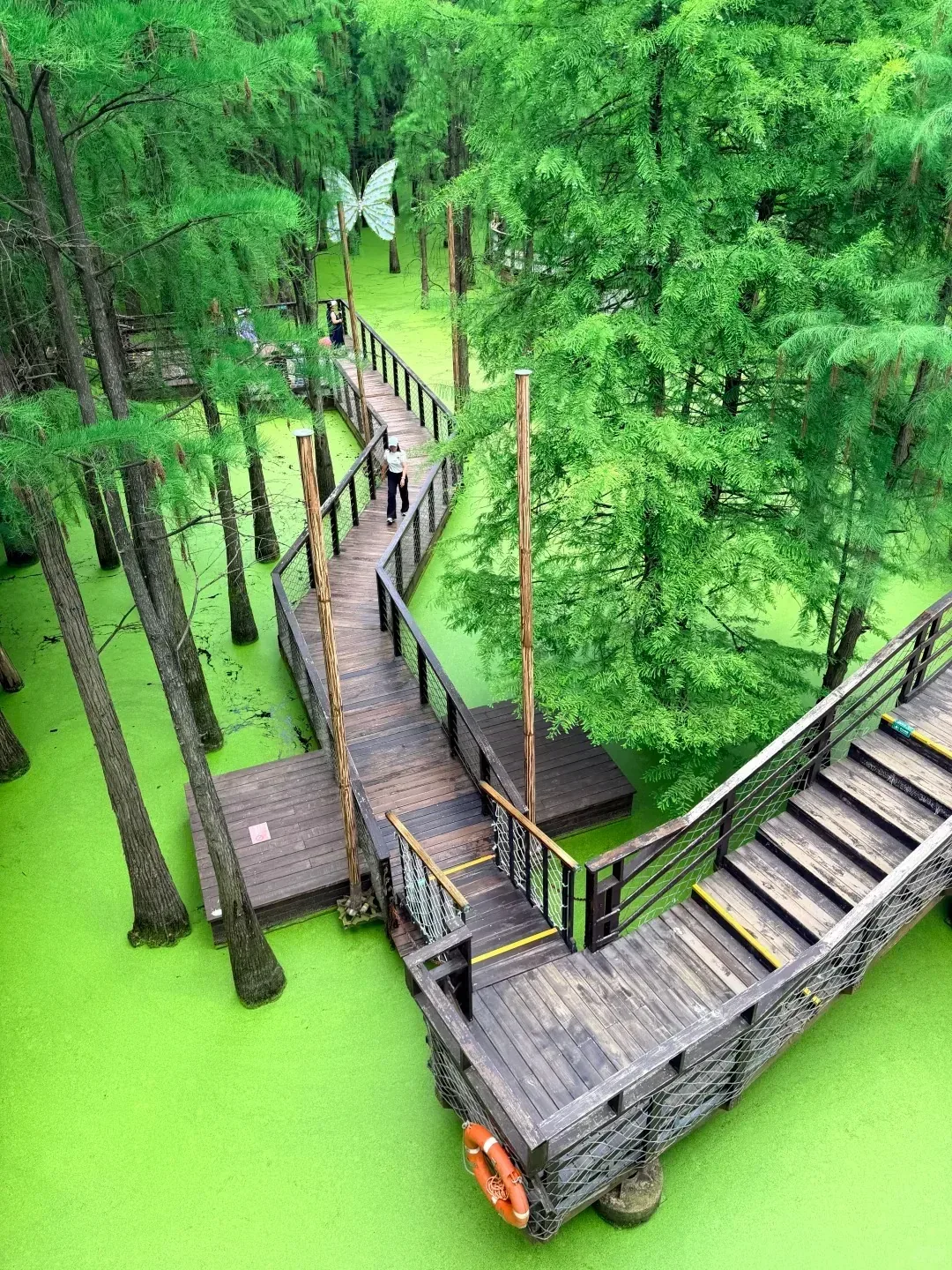
Walk into the flooded forest
Bald cypress and dawn redwood grow in broad stands across the shallows of Qingshan Lake. During the wet season, water spreads through the trees and the boardwalk winds between their reflections. Link the forest with the lakeside greenway to explore on foot, by bicycle, or from the water.
The scene comes from a reservoir environment and water-tolerant trees growing together over time. Close up, leaf shape, crown form, and the base of each trunk help distinguish different cypresses. Lower water exposes mud and roots; higher water joins the reflections into a continuous second forest. Duckweed, wind, rainfall, and sunlight keep the famous green surface in constant change.
Three distances through the same landscape
The boardwalk places trunks around the viewer and reveals channels, roots, and reflected light. The greenway pulls back to show the forest as one section of a much larger reservoir shore. Water activities approach the woodland edge at yet another height. Choosing one as the main experience and another as a contrasting viewpoint gives the lake a clearer sense of scale.
See the matcha-green water from late spring to autumn
The matcha-green water usually lasts from late spring through autumn, with the richest color in summer and early autumn. By late October, the cypress foliage begins turning orange and red, with the strongest layers of color usually arriving in mid-to-late November.
Come early for birdsong
More than 260 bird species have been recorded in Qingshan Lake National Forest Park. The wetlands are especially active in summer, and park staff recorded pheasant-tailed jacanas breeding here in August. Walk quietly beside the water in the early morning for clear birdsong and better birdwatching; signs along the greenway also introduce local species and their calls.
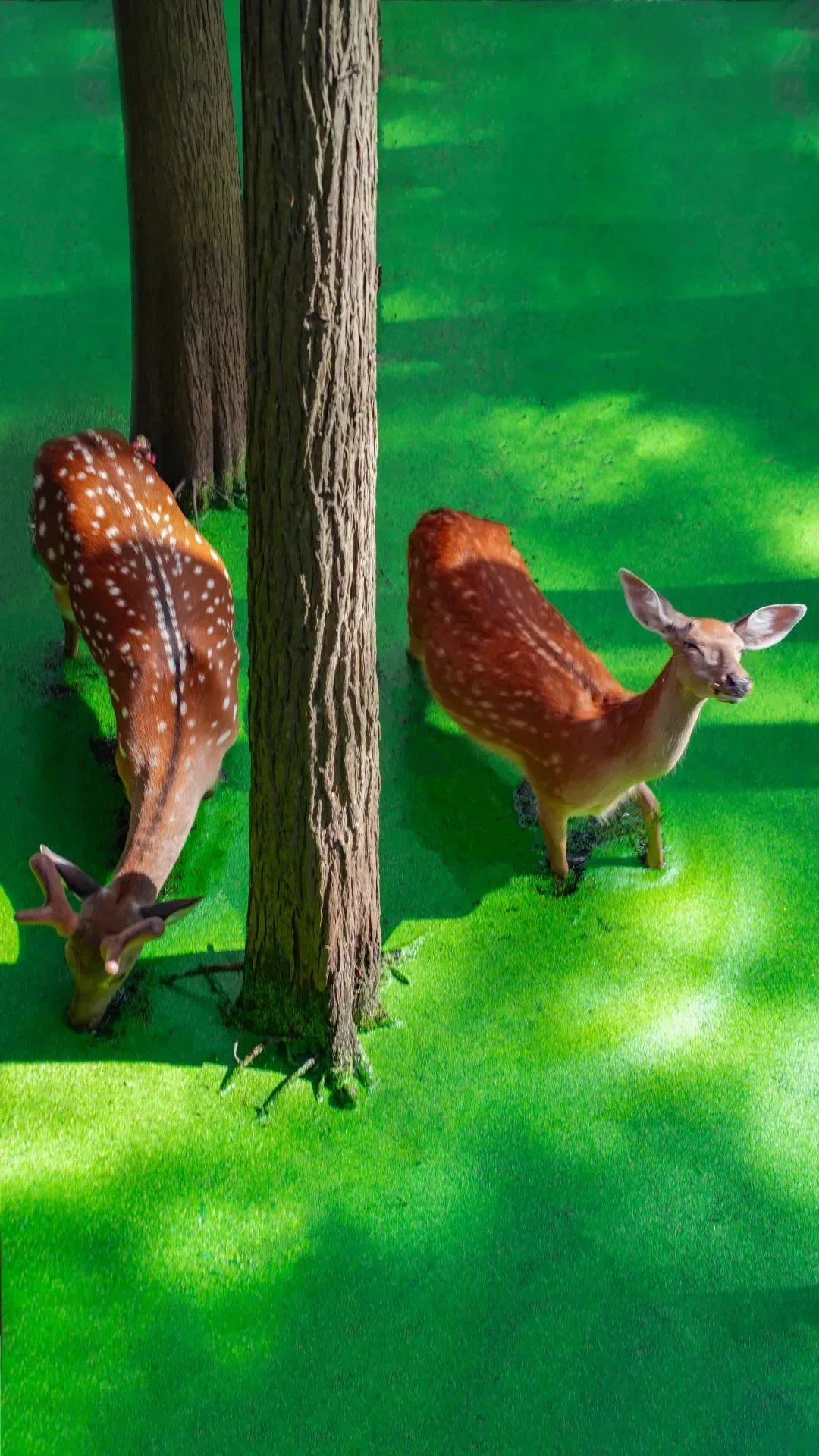
A sika deer walks beside the green lakeshore.
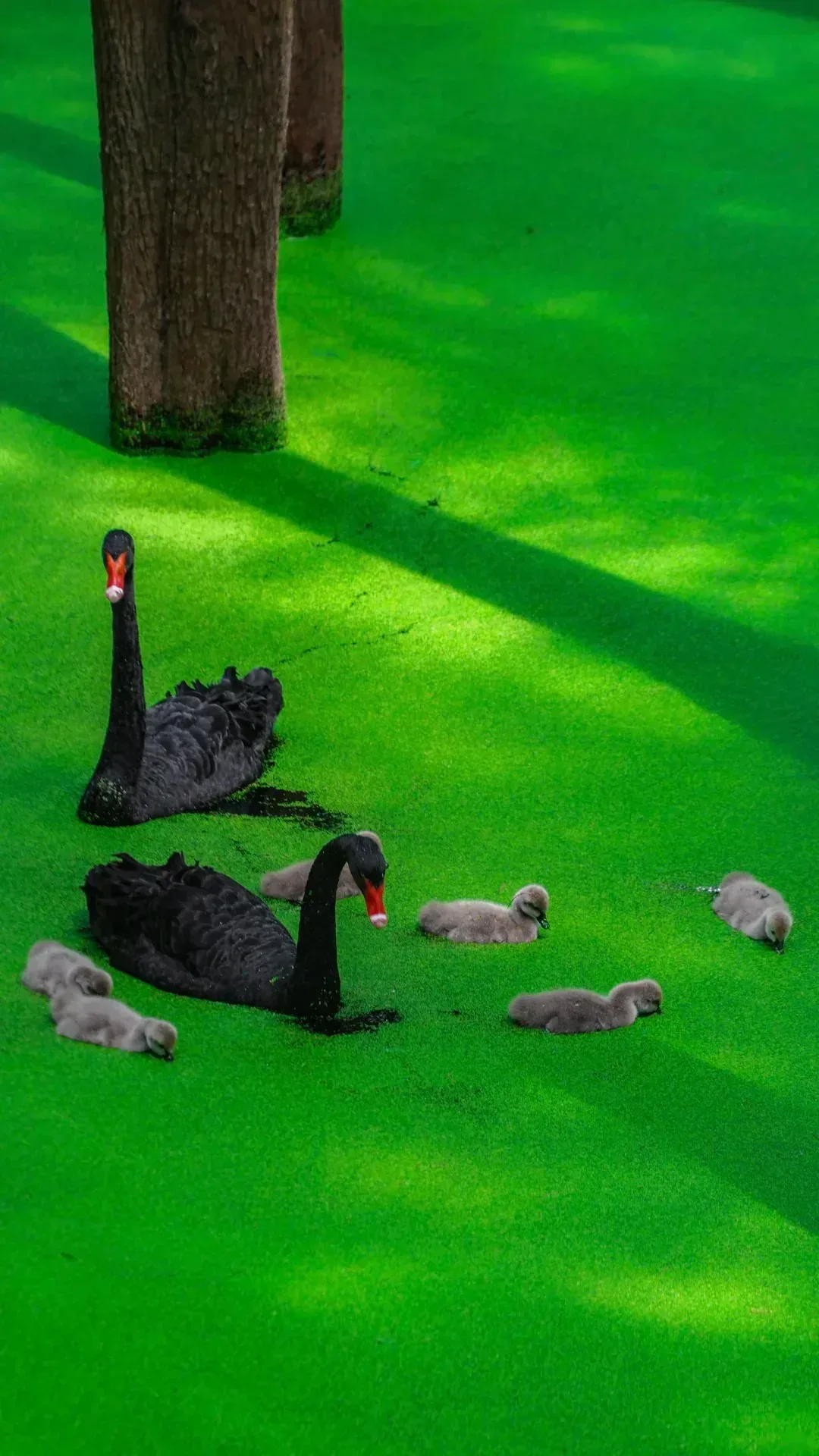
Black swans and their young cross the water between the trees.