
Journey To ChinaLast updated
Wulong Three Natural Bridges guide
A collapsed cave roof left three natural bridges
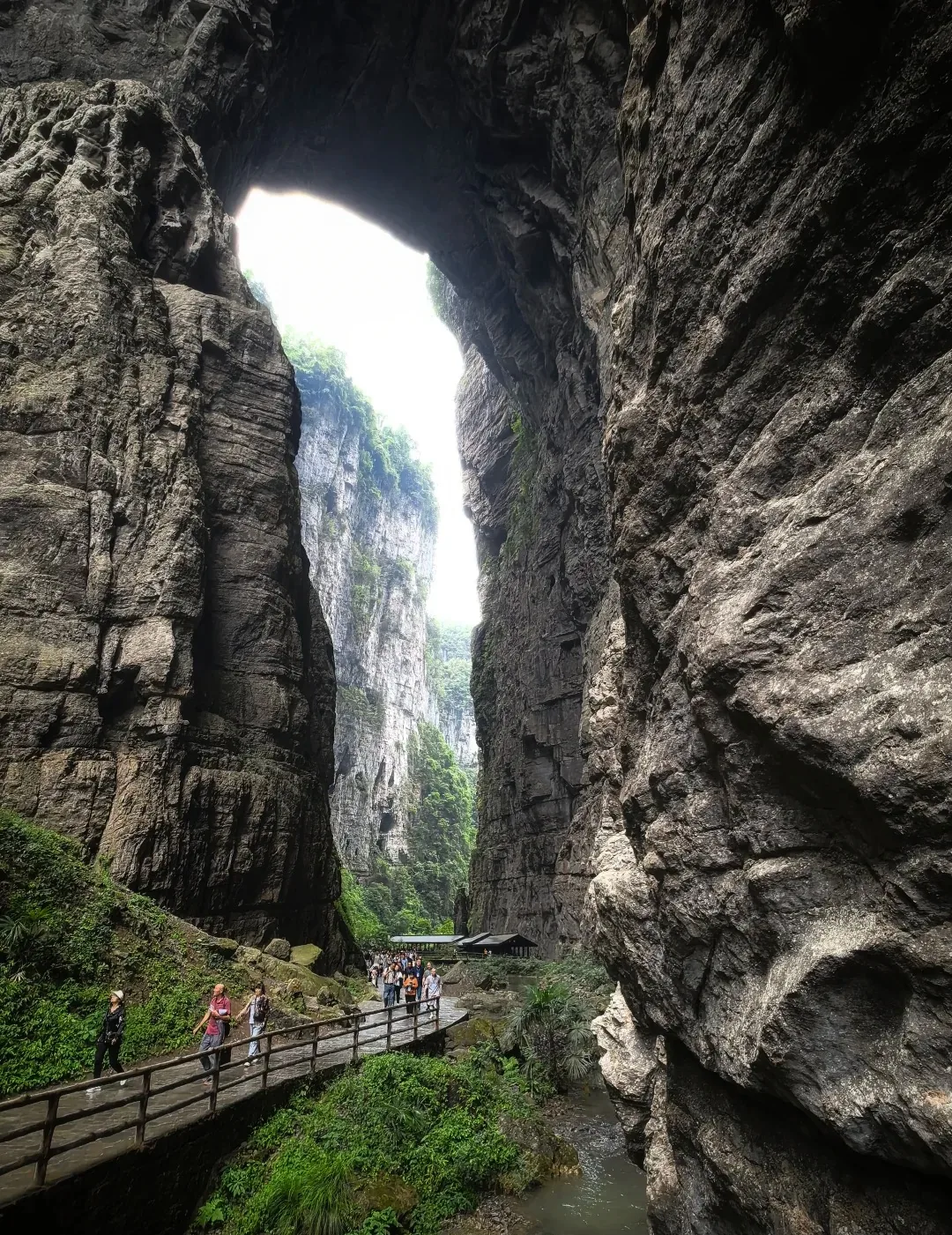
Groundwater dissolved fractures beneath Wulong's high limestone plateau, enlarging them into caves and underground rivers. Where roofs collapsed, sinkholes opened; where rock remained spanning the valley, natural bridges survived. Tianlong, Qinglong and Heilong stand within roughly 1.2 kilometres, separated by two sinkholes.
The arches preserve the shape of ancient cave chambers. Vertical scarps mark collapse, while solution holes and water streaks record continuing erosion. This sequence of plateau, sinkholes, roofless caves and natural bridges is part of the South China Karst World Heritage property.
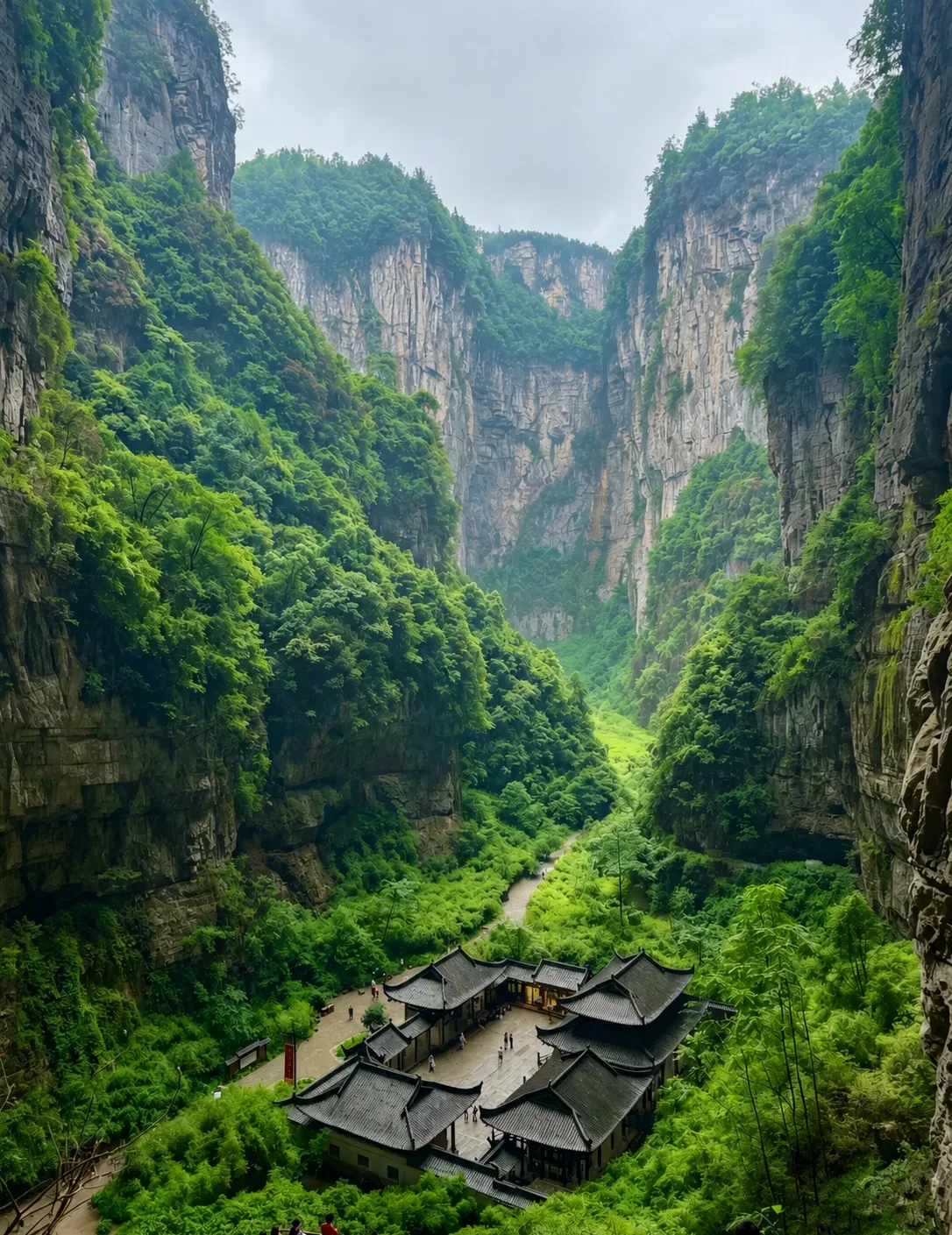
Each bridge preserves different evidence
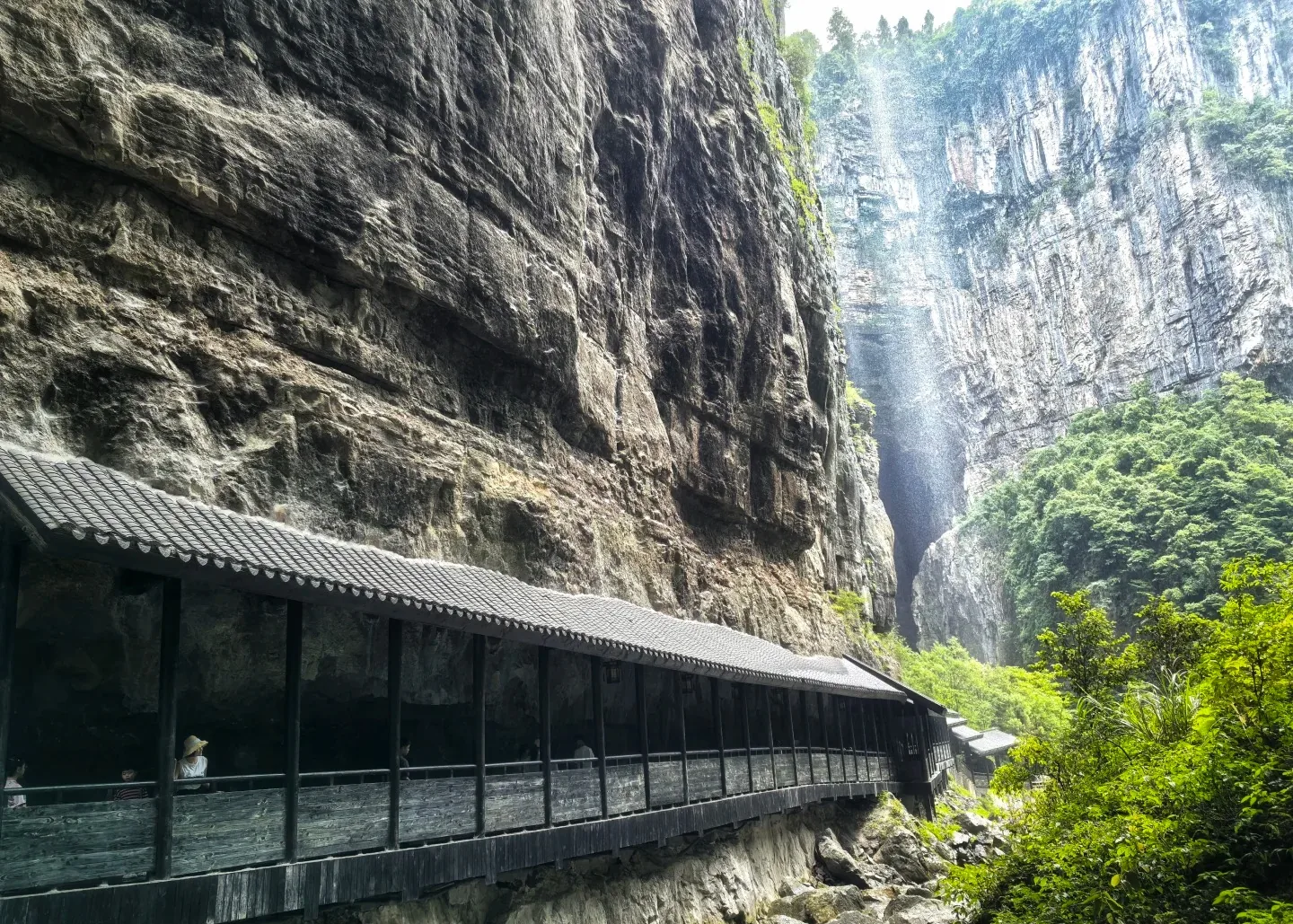
Tianlong has two openings and first frames Tianfu Posthouse against the cliff. Qinglong offers a broader arch and bright collapse faces. Heilong is darker and more enclosed, with solution cavities, water marks and hanging springs whose flow changes after rain.
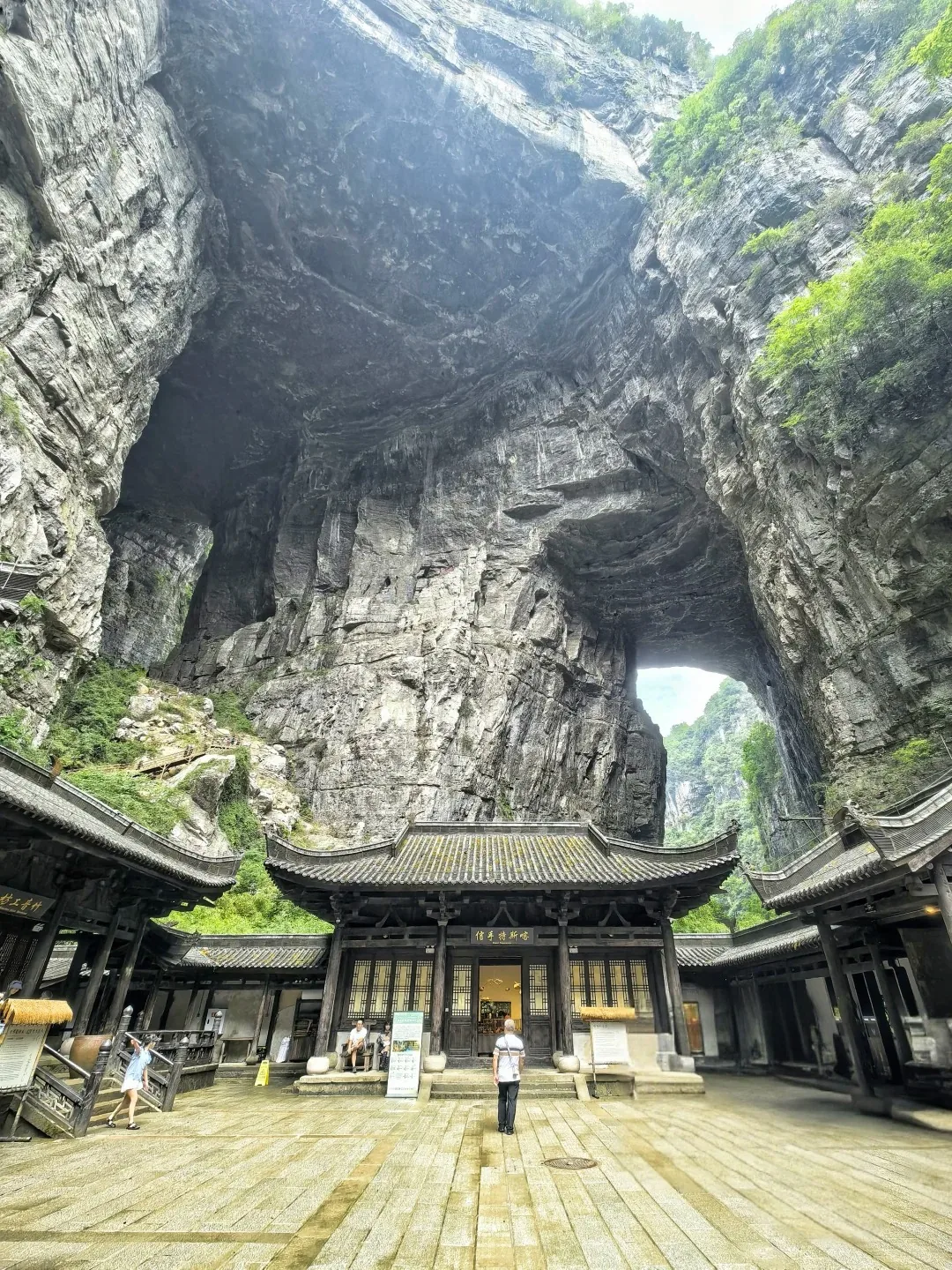
The reconstructed posthouse provides a familiar human scale beneath the rock mass.
The visitor route is a geological cross-section
The entrance lies on the upper plateau. Lifts or paths descend to the valley, and the route then follows boardwalks through the three bridges before shuttle transport reconnects with the visitor system. The floor is cooler and more humid than the open plateau, and rain changes both water flow and surface conditions.
High-speed rail reaches Wulong South from central Chongqing, followed by regional transport toward the Xiannüshan visitor center and the attraction. Train, transfer and ticket combinations should be checked for the travel date.