
Journey To ChinaLast updated
People's Liberation Monument (Jiefangbei) guide
A monument with three names and one continuous civic role
The first structure on this site was the wooden Spiritual Fortress built in 1940. It was replaced in 1947 by the Monument to Victory in the War of Resistance and renamed the People's Liberation Monument in 1950. Those changes record wartime endurance, national victory and Chongqing's liberation without removing the monument from everyday city life.
The 27.5-metre octagonal structure rises from a bluestone base to a clock tower. An internal spiral stair connects eight levels, while four clock faces address the radiating streets. At ground level, the stonework, nanmu door, inscription and clock can be read against towers from a very different era.
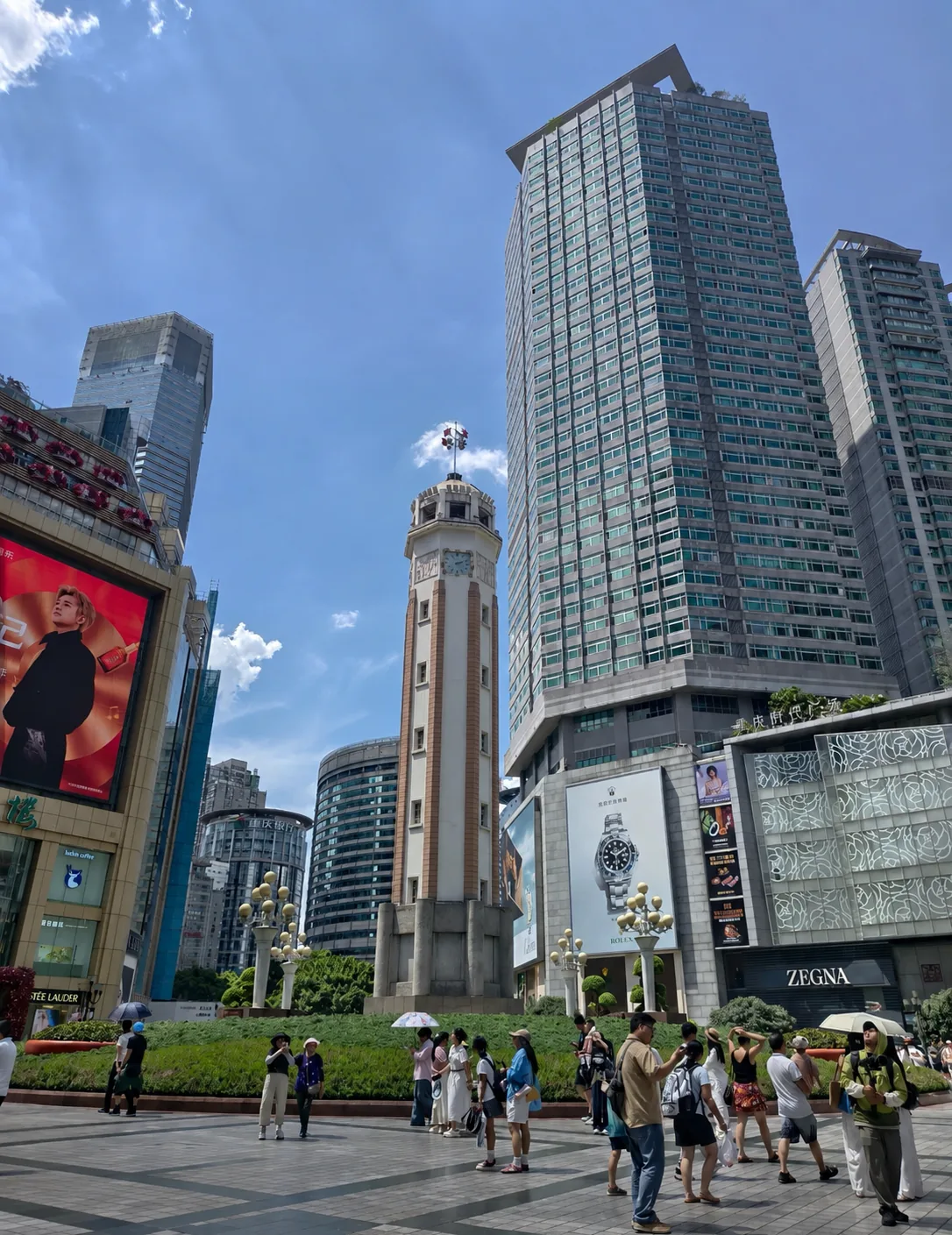
After dark the slender memorial remains legible among shop signs and high-rise façades.
The memorial became the center of a pedestrian city
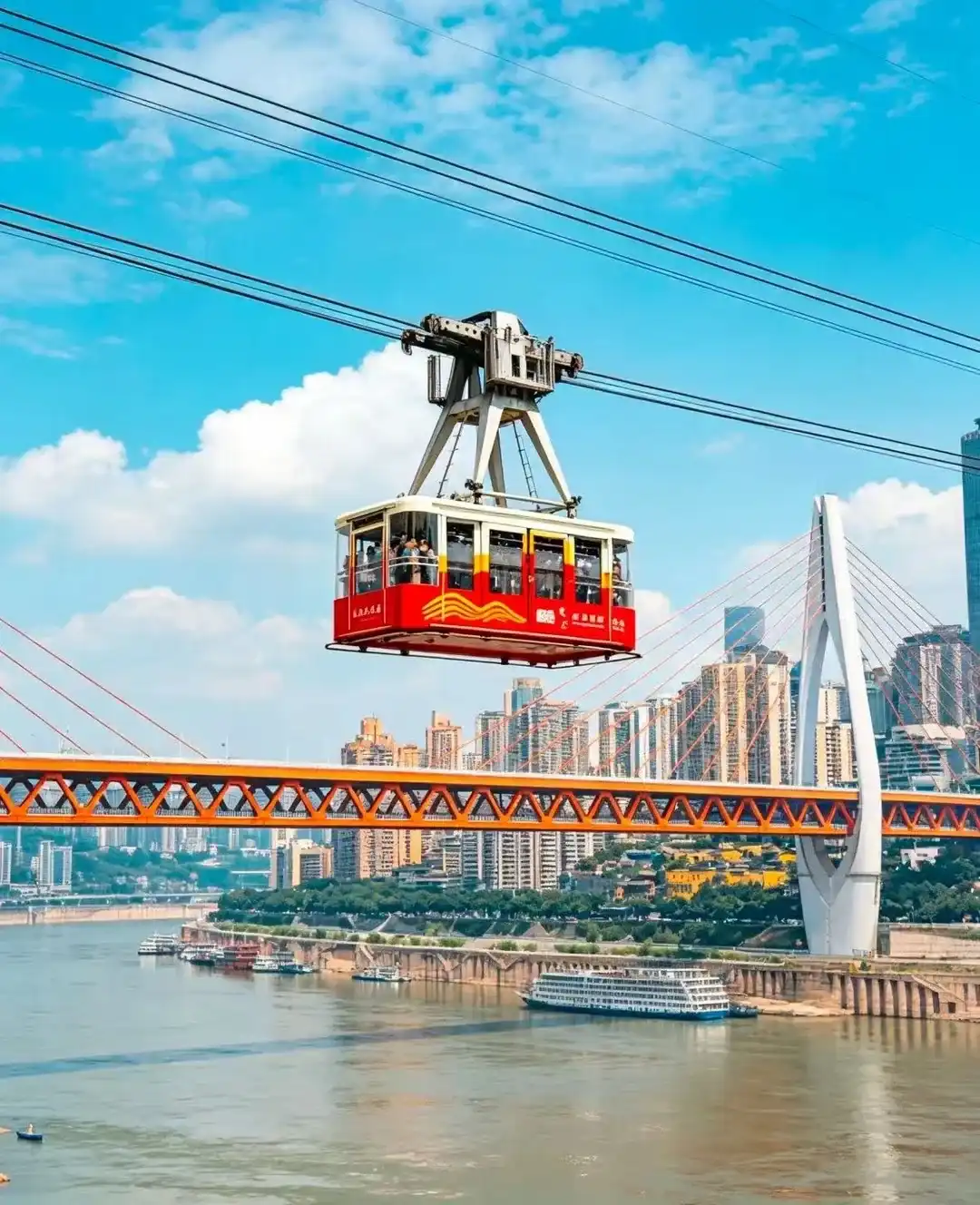
This was already the commercial heart of the old city, where streets linked gates, offices, shops and river wharves. The central shopping plaza created in 1997 shifted the immediate area toward pedestrians. Bayi Road now leads into food and everyday retail, Linjiangmen toward Kuixinglou and the Jialing cliff, and Xiaoshizi toward Hongya Cave, Huguang Guild Hall and the cableway.
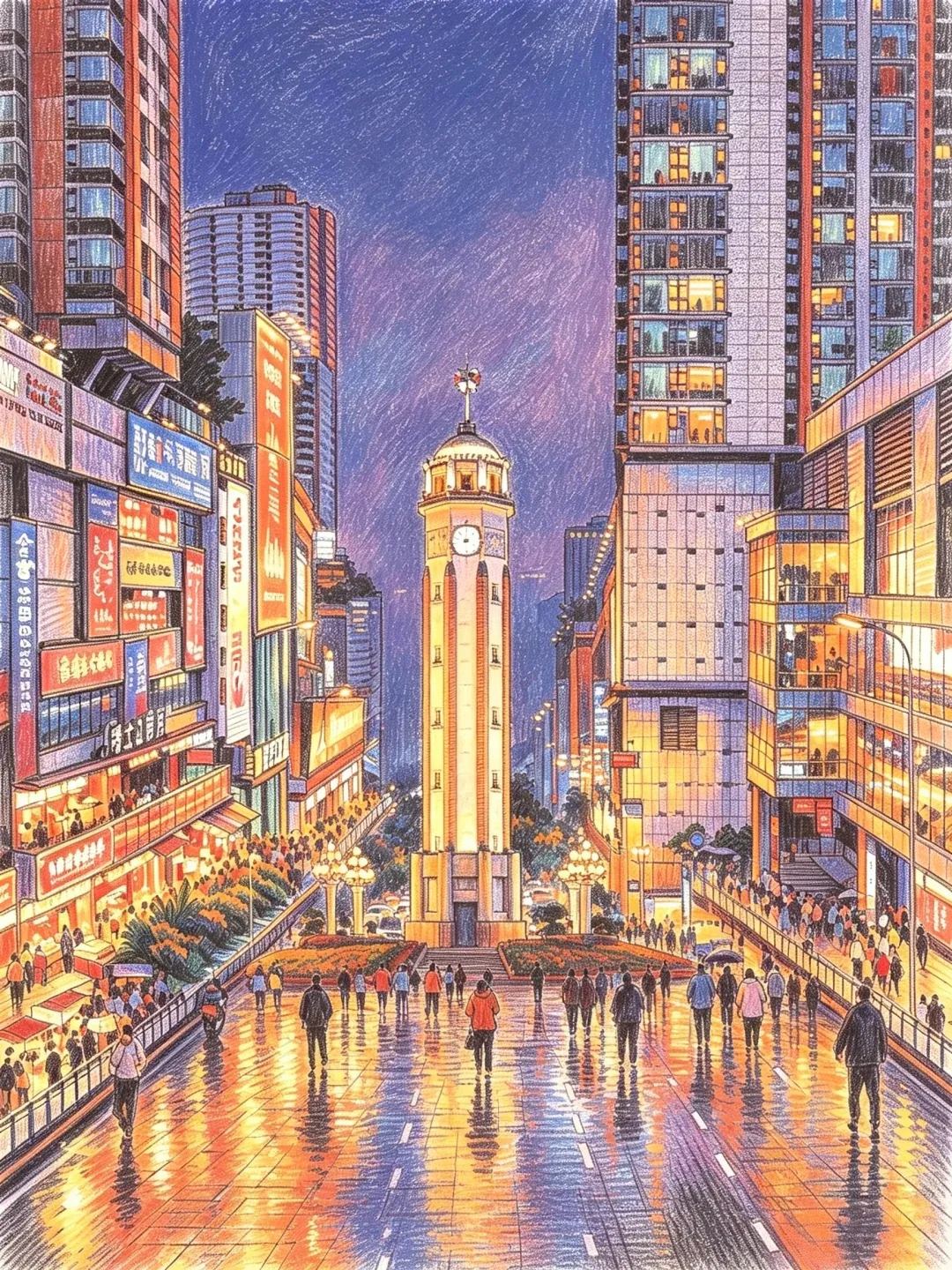
The open square lets commemoration, commuting and street life continue in the same place.
Walking around the monument once is useful: each radiating street replaces the backdrop with another piece of Chongqing. The landmark is therefore both an object of remembrance and a practical compass for exploring the central district.