
Journey To ChinaLast updated
Liziba Monorail Station guide
The train-through-building view is a coordinated engineering solution
Liziba opened with Line 2 in 2004. The railway needed to pass a steep, densely built riverbank while housing occupied the same limited site. Designers coordinated the two functions but used a station-and-bridge separation system: rail and station have independent supports and vibration control, while the residential structure surrounds them.
Line 2 uses straddle-beam monorail, whose turning and climbing ability suits Chongqing's terrain. From outside, trains appear to enter an apartment block; onboard, the passage feels like an ordinary enclosed station. Both perspectives show real public transport working within a difficult slope.
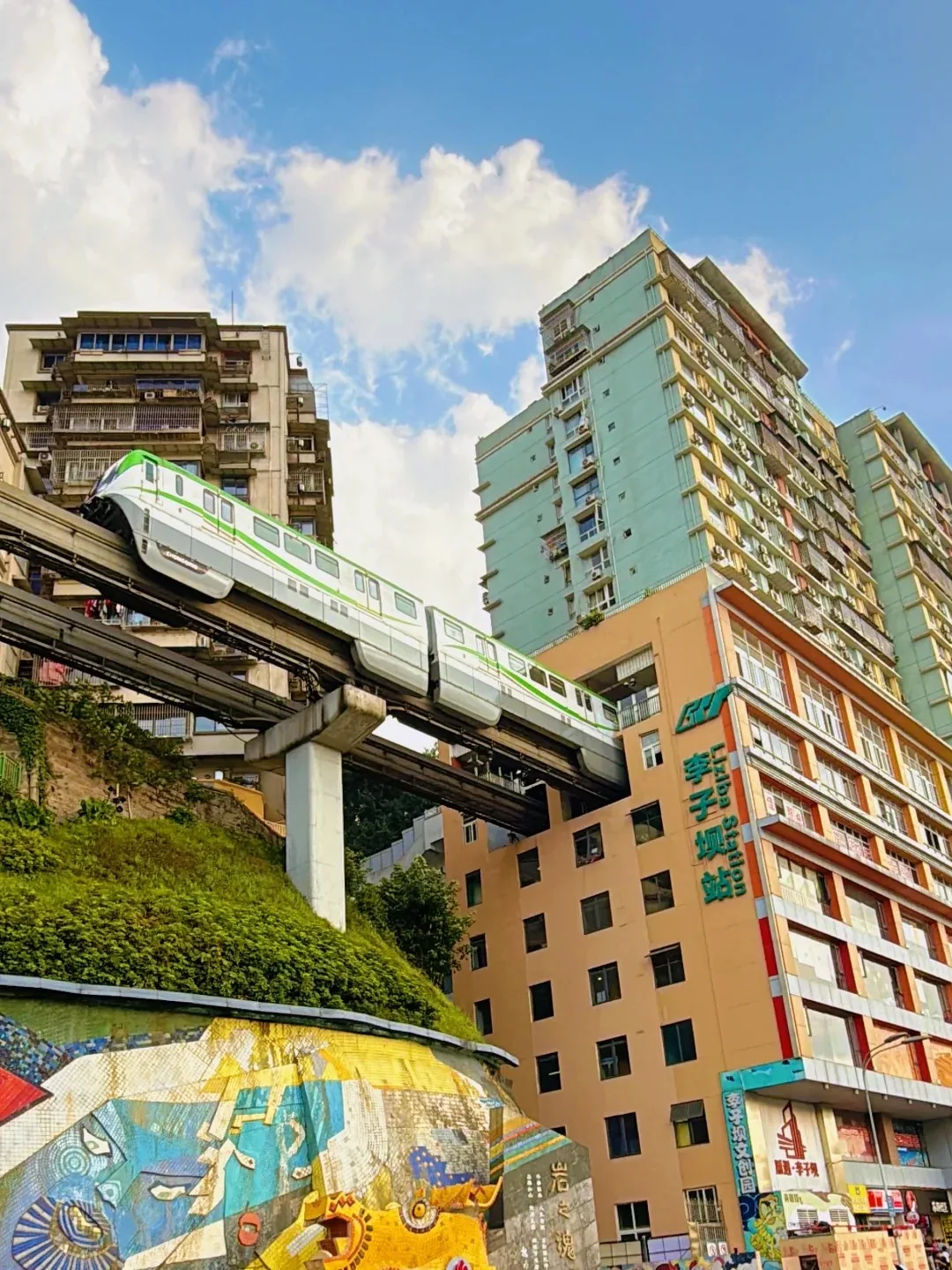

Separate structural systems share one compact urban site.
Three viewpoints explain the same place
The 1,367-square-metre platform below the station faces the curve where trains enter and leave. Riding Line 2 adds views of the Jialing River, hillside roads and towers; walking from the platform up through the station makes the vertical distance between street levels tangible.
Nearby, the Liziba Wartime Heritage Park and the route toward Fotuguan add another layer of history. The monorail belongs to 21st-century Chongqing, while preserved buildings and layered roads show how successive periods adapted the same riverbank. Area renewal during 2026 may alter pedestrian routes, so current signs are the best guide on arrival.