
Journey To ChinaLast updated
Ciqikou Ancient Town guide
Ceramics and the Jialing River gave the town its present name
The settlement was known as Baiyanchang in the Song dynasty. The Jialing River met Phoenix and Qingshui creeks nearby, allowing cargo to transfer between boats and inland roads. Ceramics from the Shaping kilns passed through the wharf in the Ming and Qing periods, and the everyday name Ciqikou—porcelain port—gradually replaced the older one.
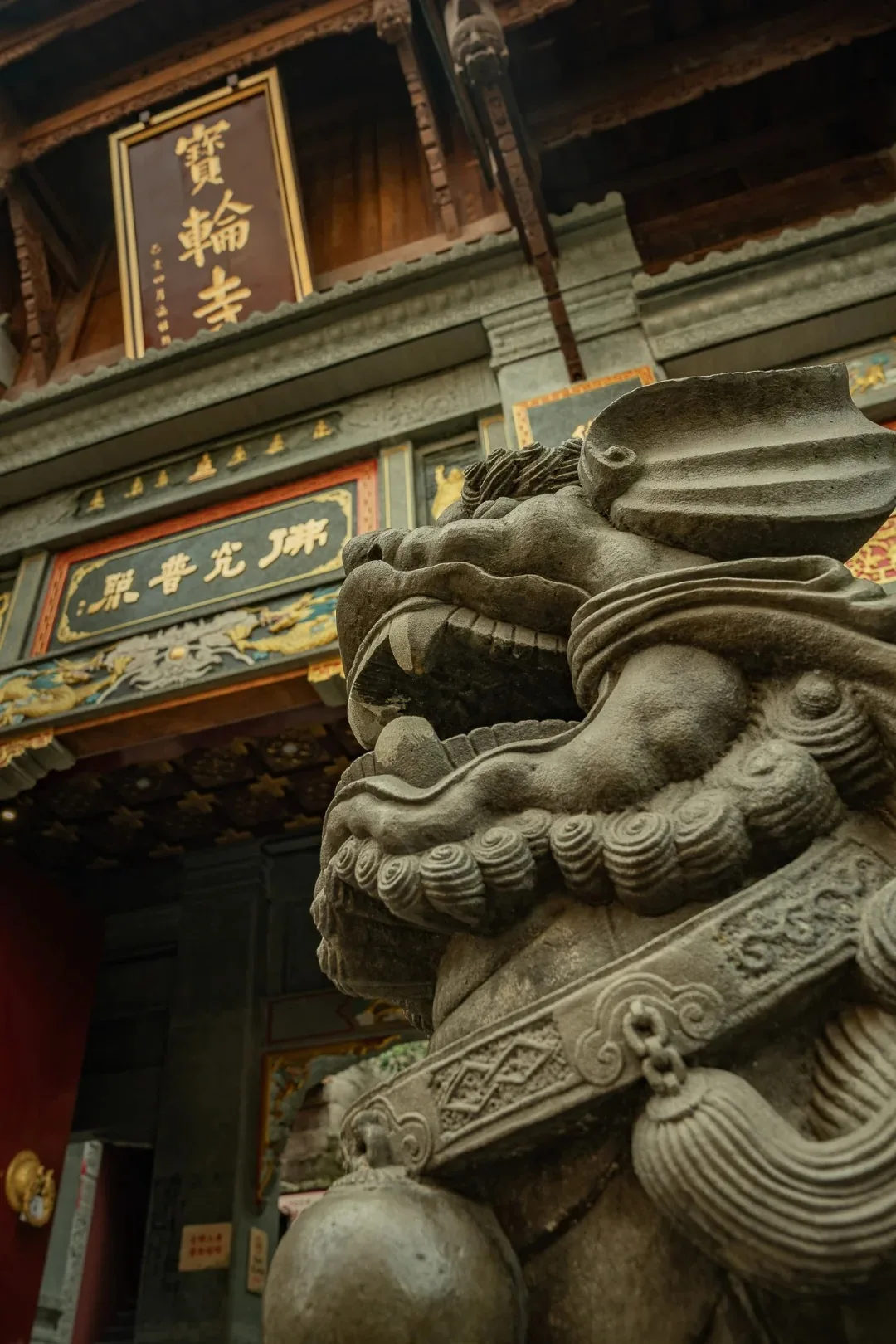
Boat crews, merchants, pilgrims and residents supported warehouses, shops, tea houses, guild halls and temples. The local story that the Jianwen Emperor once hid at Baolun Temple gave rise to the name Longyin Town; it remains part of local memory alongside the documented ceramic trade.
Rivers, creeks and three hills shape every lane
The main street occupies only one level of a town enclosed by the Jialing, two creeks and the Ma'an, Jinbi and Fenghuang hills. Smaller alleys reveal timber-frame houses, courtyard walls and stone steps; moving toward Baolun Temple or the river makes the relationship between settlement, slope and wharf clearer.
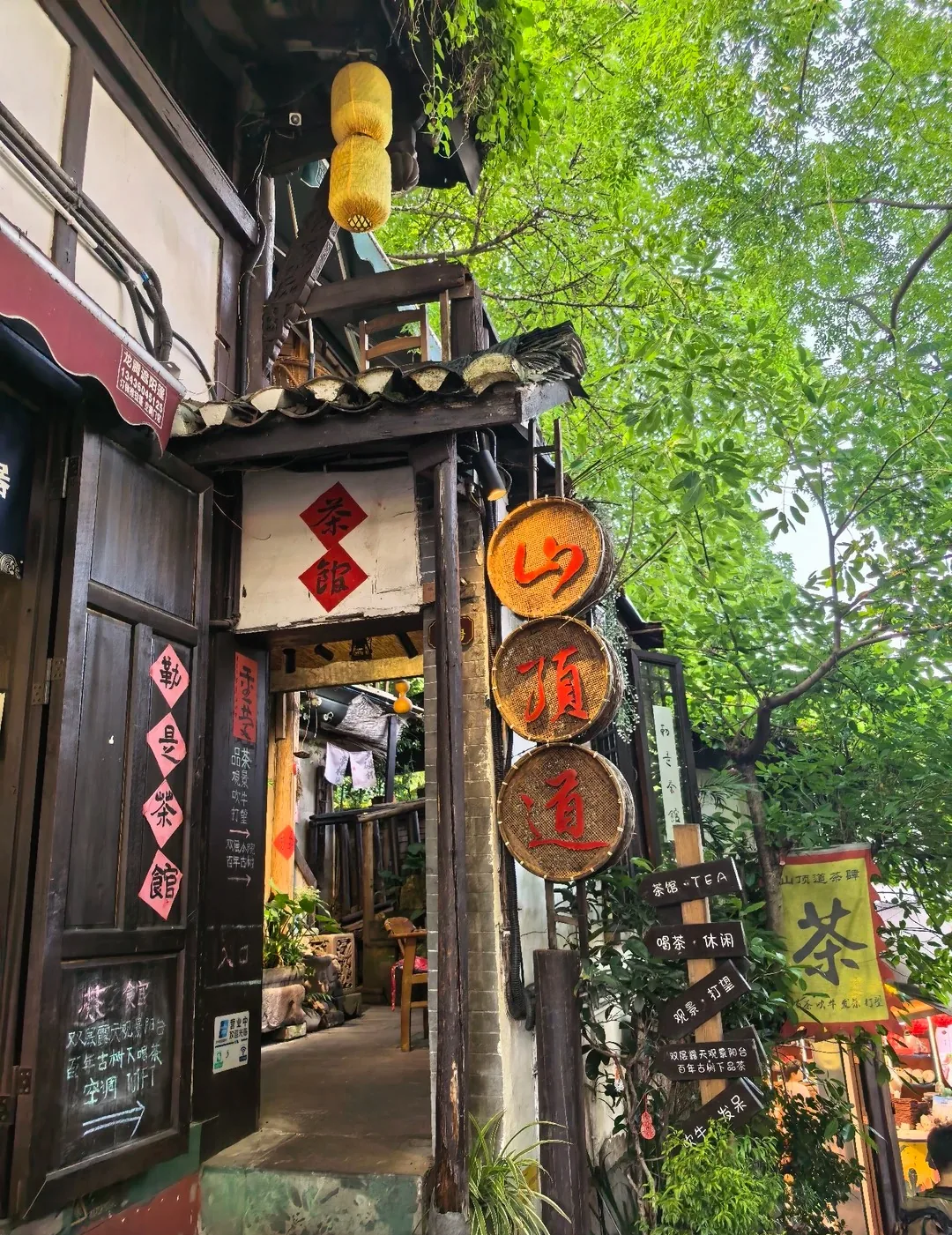
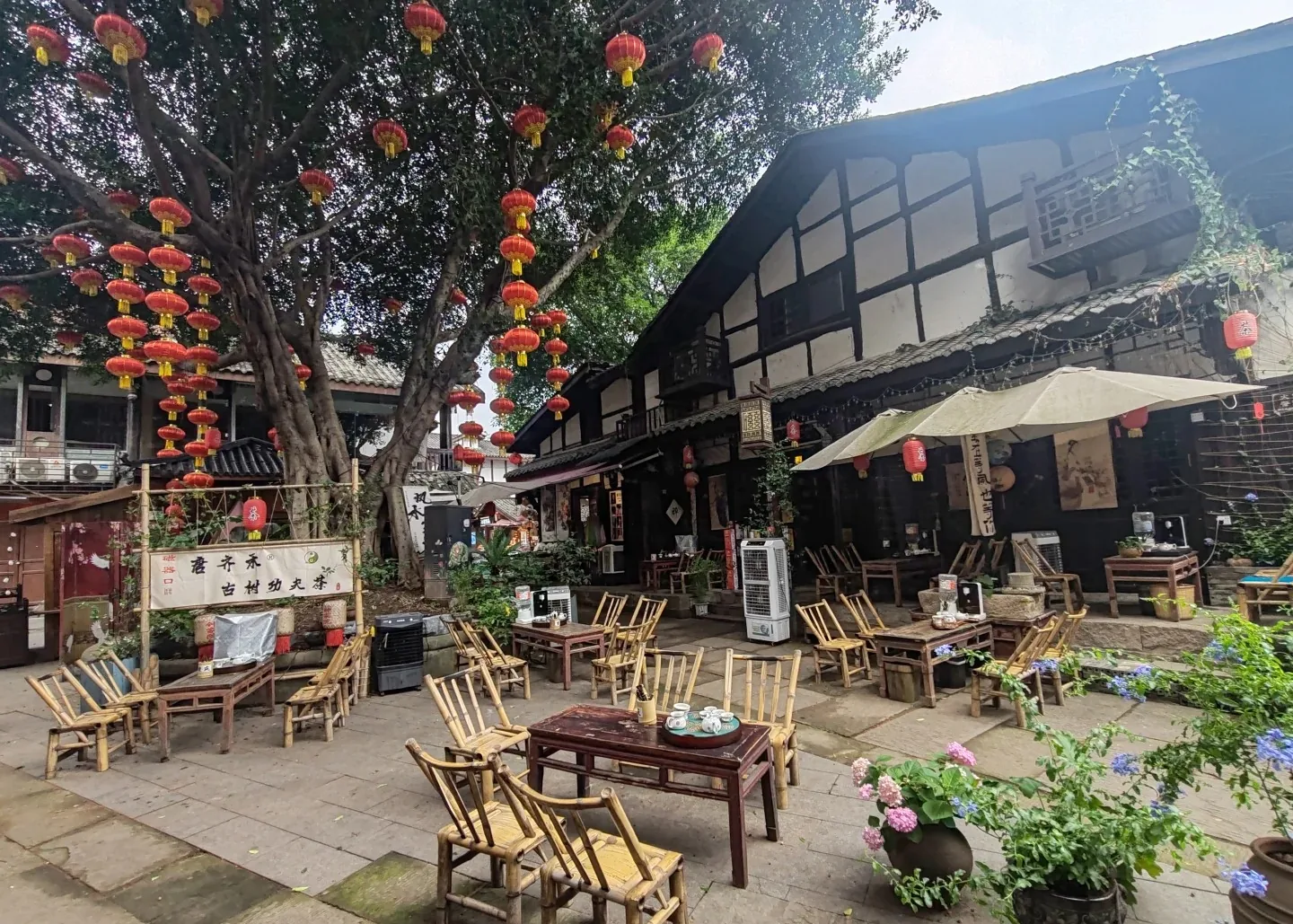
Tea houses and wharf food keep the market-town rhythm alive
Tea houses gave travelers and boat workers somewhere to exchange news, hear storytelling and wait. A lidded cup at a street-facing table still turns the visit into an opportunity to watch the town rather than simply pass through it.
Chen-style twisted dough is the best-known snack today, while maoxuewang, tofu sheets and salted peanuts also reflect strong-flavored wharf food. Maoxuewang commonly includes duck blood, tripe and intestine in a numbing, spicy broth; individual kitchens can explain their ingredients and heat level.

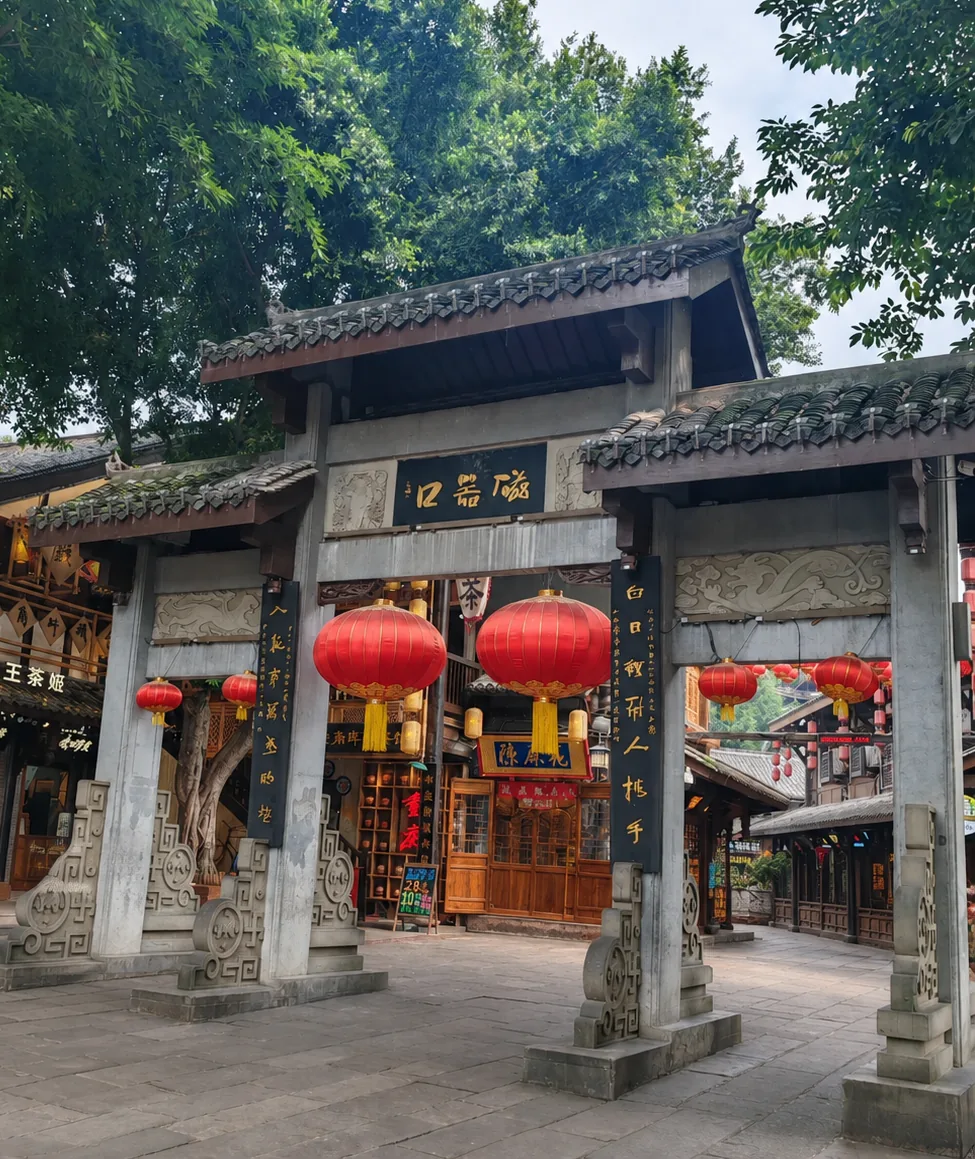
The gateway marks an entrance, while the historic town continues into side lanes, slopes, temples and the waterfront.