Journey To ChinaLast updated
The red broth changes throughout the meal
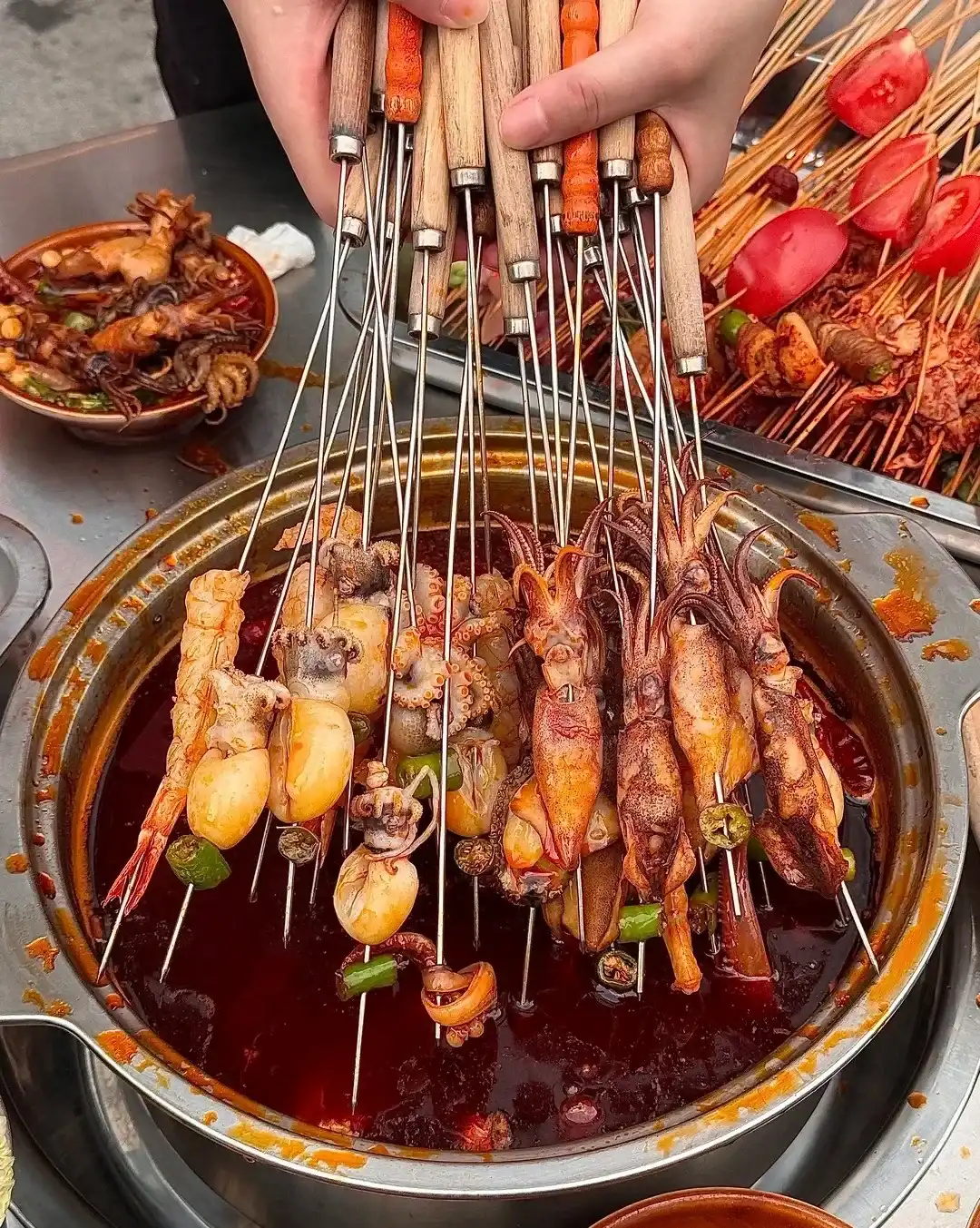
When Chengdu hot pot reaches the table, the surface is often covered with chillies, Sichuan peppercorns, and a layer of fat. As it boils, the oil distributes spice through every ingredient; later, meat, tofu, and vegetables return flavour and body to the broth. Diners add food in batches and share responsibility for its doneness.
Classic red broth commonly uses beef tallow, which gives a deep aroma and sets firm when cool. Clear-oil broth uses vegetable oil and feels lighter. Mushroom, tomato, or mild broth can occupy one side of a divided pot when the table wants more than one flavour. Chengdu “mild” still retains chilli and peppercorn, so describe your normal spice level when ordering.
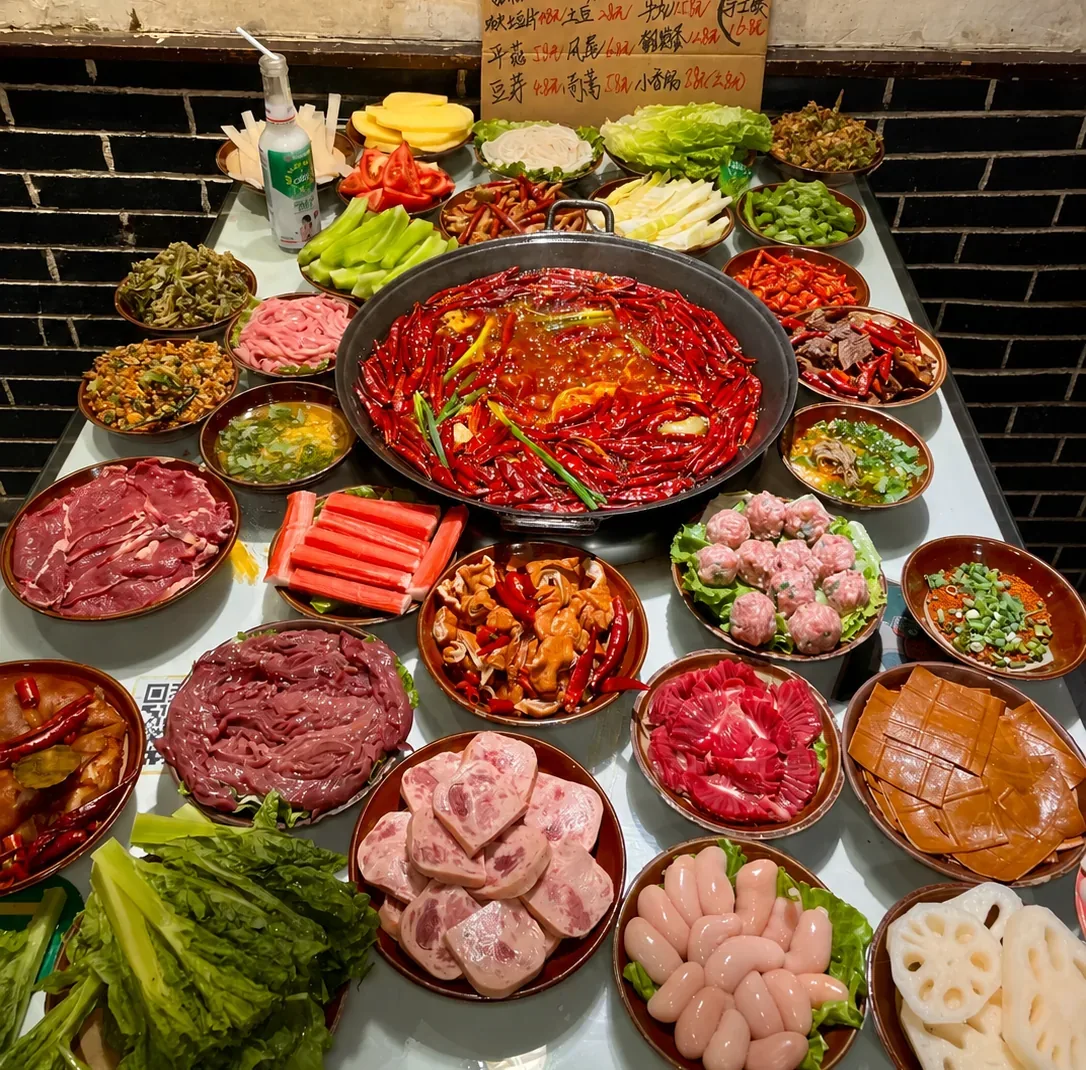
Different ingredients reach their best texture at different speeds; cooking in batches gives the meal its layers.
Sesame-oil dip cools, carries garlic, and personalises each bite
A common Chengdu dip begins with sesame oil and garlic, with coriander, spring onion, oyster sauce, fresh chilli, or vinegar added to taste. A light coating carries aroma and cools food just lifted from the pot. A dry dip of chilli powder, pepper, peanuts, or sesame gives fried foods and meats a more concentrated finish.
Tripe, duck intestine, and aorta are chosen for crunch
Mao du is textured cattle stomach, duck intestine is thin and springy, and huanghou is the large blood vessel of a pig or cow. Their appeal lies in crispness after brief cooking. Thickness, pot temperature, and restaurant preparation affect the timing, so the server's guidance is more useful than repeating a fixed counting slogan.
Menus may also list blood curd, poultry gizzard, pork brain, large intestine, or kidney. Learning the names makes it easy to choose according to personal diet. Beef, fried pork, lotus root, potato, celtuce, gongcai, mushrooms, tofu skin, frozen tofu, sweet-potato noodles, and leafy vegetables spread the meal across tender, crisp, absorbent, and chewy textures.
Ordering and cooking give the table its rhythm
A balanced opening order might include one or two choices from crisp offal, meat, tofu products, root vegetables, greens, and noodles, with more added later. Thick meat, balls, and roots need longer cooking; tripe and intestine are cooked as they are eaten; tofu and noodles absorb the developed broth toward the end. Keep raw-food utensils separate and cook poultry, thick meat, and balls through.
Ice jelly, brown-sugar rice cakes, soy drinks, or tea can change the palate between bites. Pot, condiment, seating, and ingredient charges vary by restaurant and are shown on the current menu.
Flavour and special-ingredient note
Red broth has pronounced chilli heat, Sichuan-pepper numbness, and often a beef-tallow base. Tripe, duck intestine, aorta, brain, large intestine, and kidney are offal or unusual cuts. The two sides of a divided pot can share splashes and utensils.