Journey To ChinaLast updated
“Dandan” was a noodle stall carried on a shoulder pole
One end of the pole held a stove, pot, and noodles; the other held bowls, seasonings, and prepared toppings. Limited space favoured ingredients ready to assemble, fine noodles, and small portions that could be served quickly in a busy street.
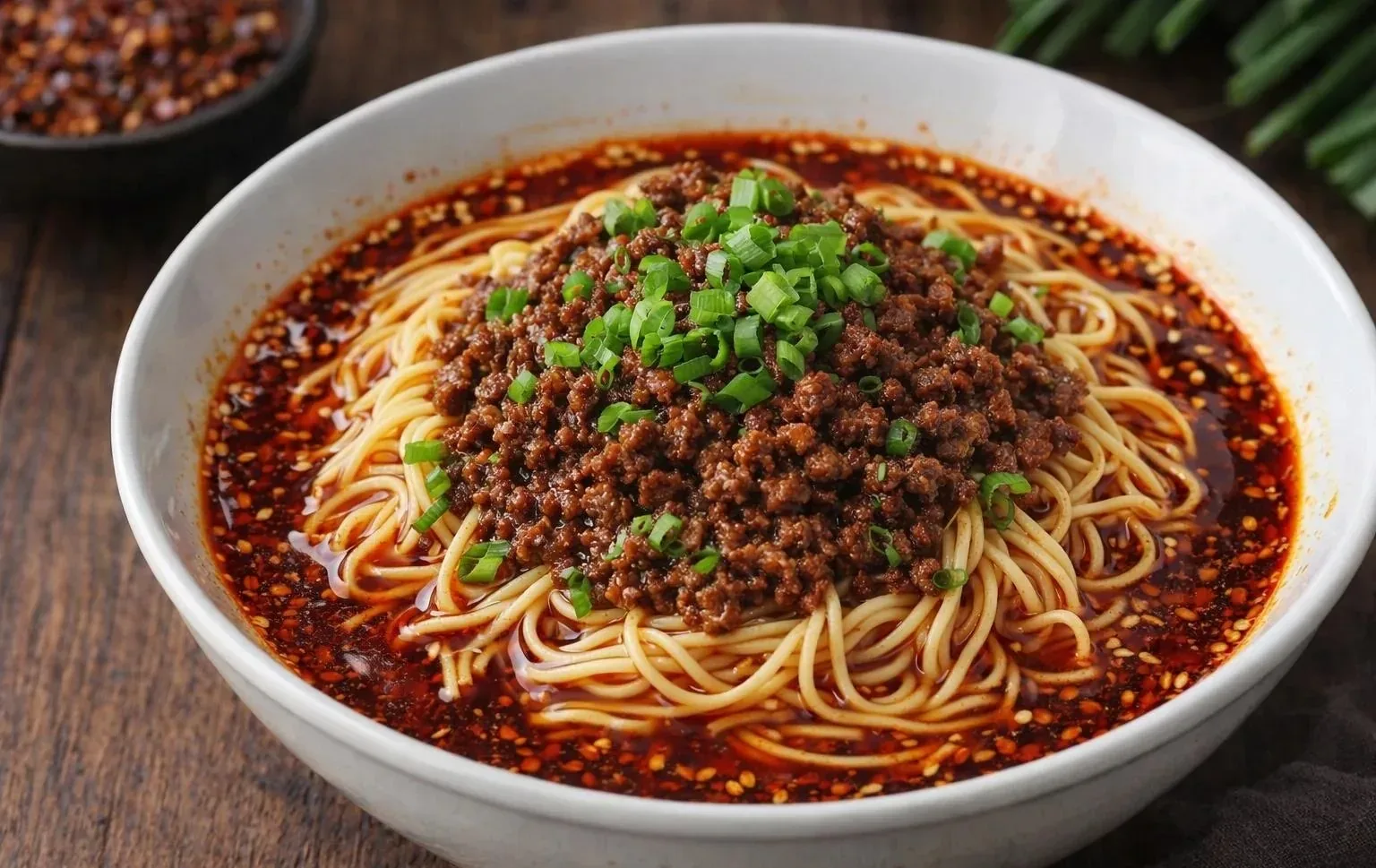
The mince and preserved vegetable are only the top layer; the soy, chilli oil, pepper, and stock wait at the bottom.
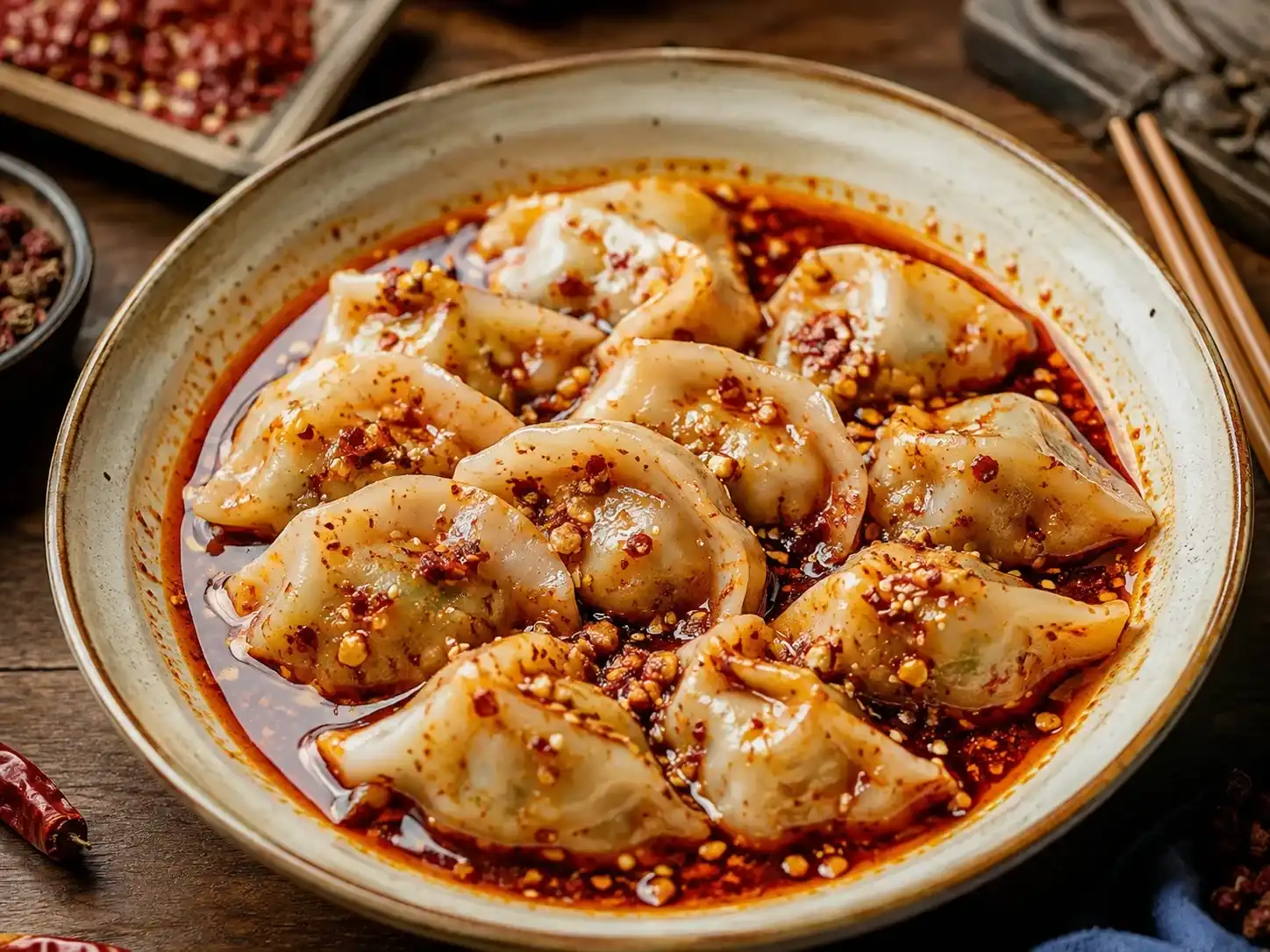
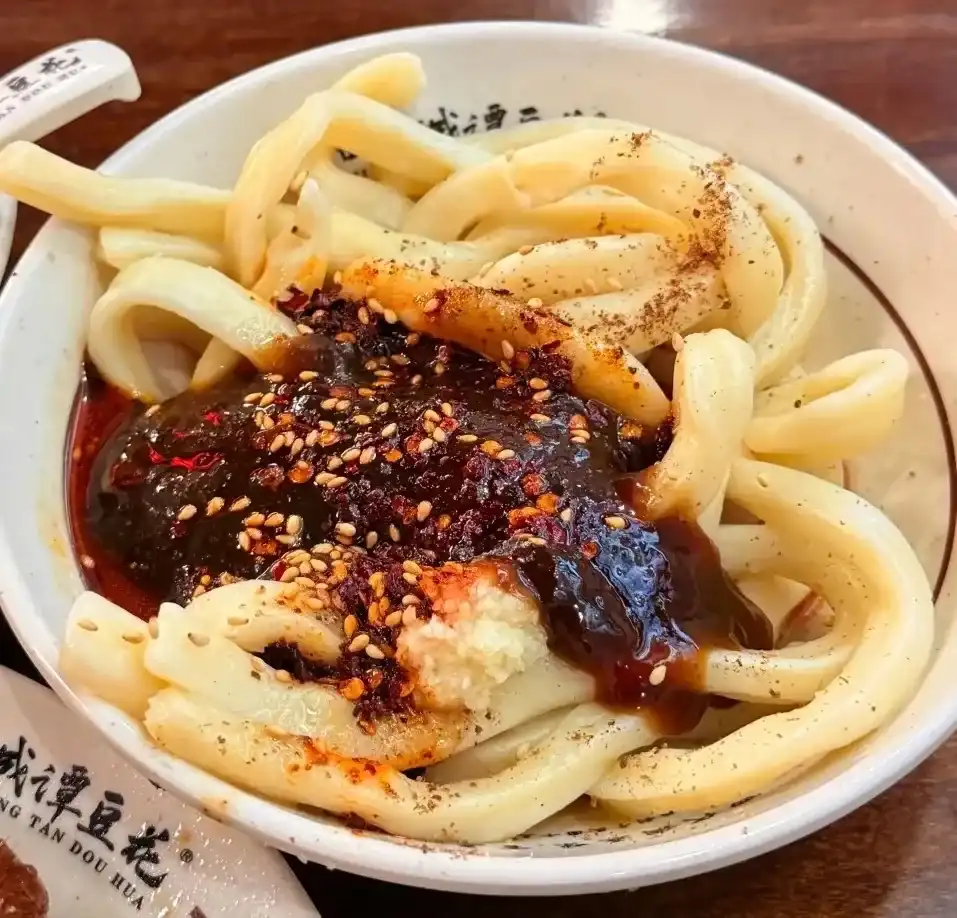
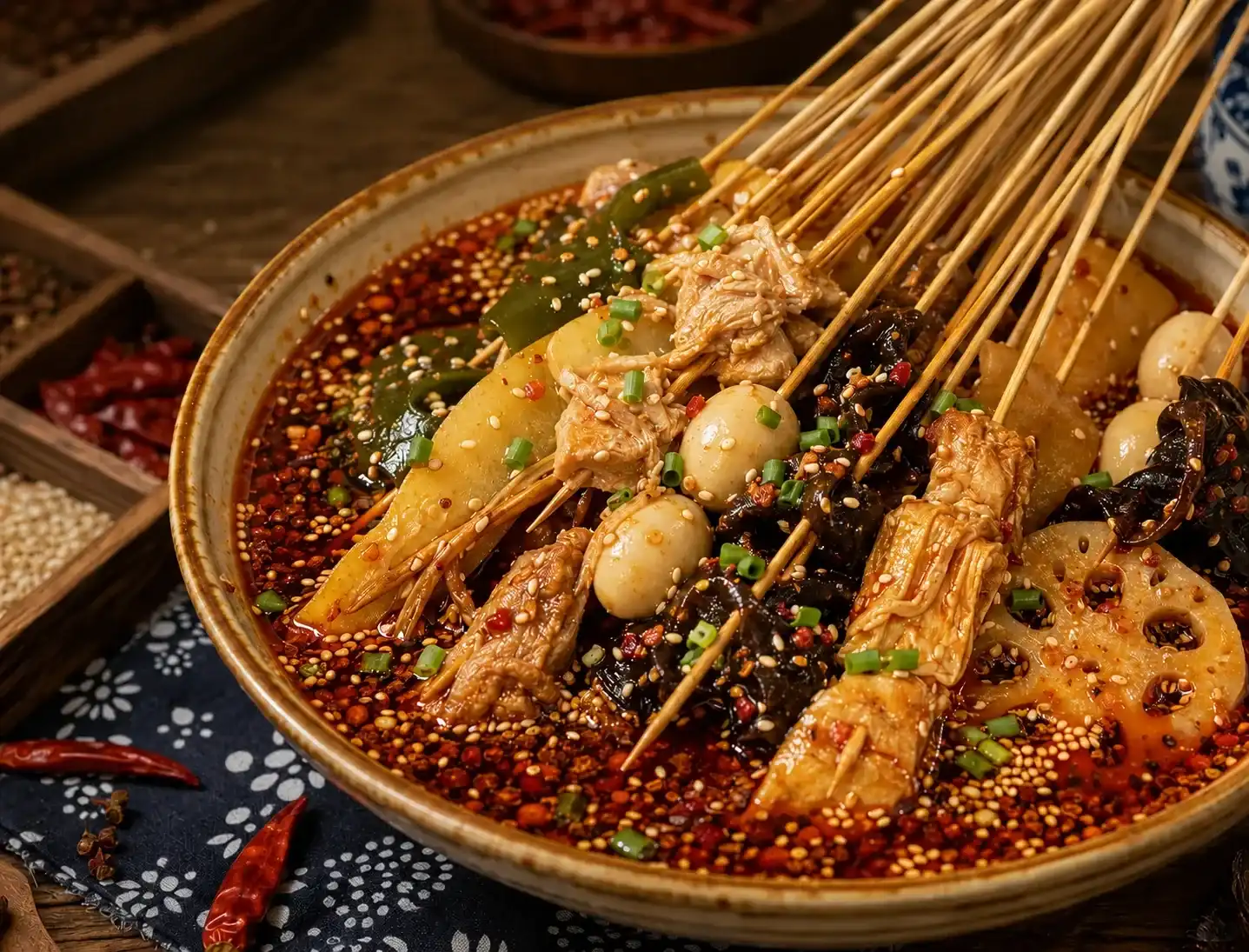
Fixed shops retain that compact structure. A small bowl can stand alone or join Zhong dumplings, sweet-water noodles, and other Chengdu snacks as a comparison of textures and seasonings.
Pork mince and yacai bring crispness and fermented savour
Minced pork is fried until loose and aromatic. Finely chopped yacai contributes fermented saltiness and a slight sweetness. Spring onion, sesame, or peanuts may add fresh or crunchy notes. Fine noodles have enough surface area to catch all these small pieces.
The bowl base usually combines aromatic chilli oil, Sichuan pepper, soy sauce, garlic, and a little noodle water. Vinegar or sesame paste varies by shop. Drier Chengdu bowls differ from the large soupy or heavily sesame-based versions that developed elsewhere.
Mix from the bottom while the noodles are hot
Lift noodles from the base repeatedly until the red oil, yacai, and pork cover each strand. The noodles continue absorbing liquid as they stand, so prompt mixing preserves their smooth, springy texture. The small bowl, fine noodle, base seasoning, fermented vegetable, and crisp mince together define the Chengdu style.