Journey To ChinaLast updated
A bridge-side dish became a Sichuan classic
The history of the Chen Mapo Tofu restaurant is traced to 1862 near Chengdu's Wanfu Bridge, where porters and oil workers needed an affordable, hot dish that worked with rice. Tofu and minced meat provided substance; broad-bean paste, fermented black beans, chilli, and peppercorn concentrated the flavour. That street-food background remains visible in the dish's close relationship with steamed rice.
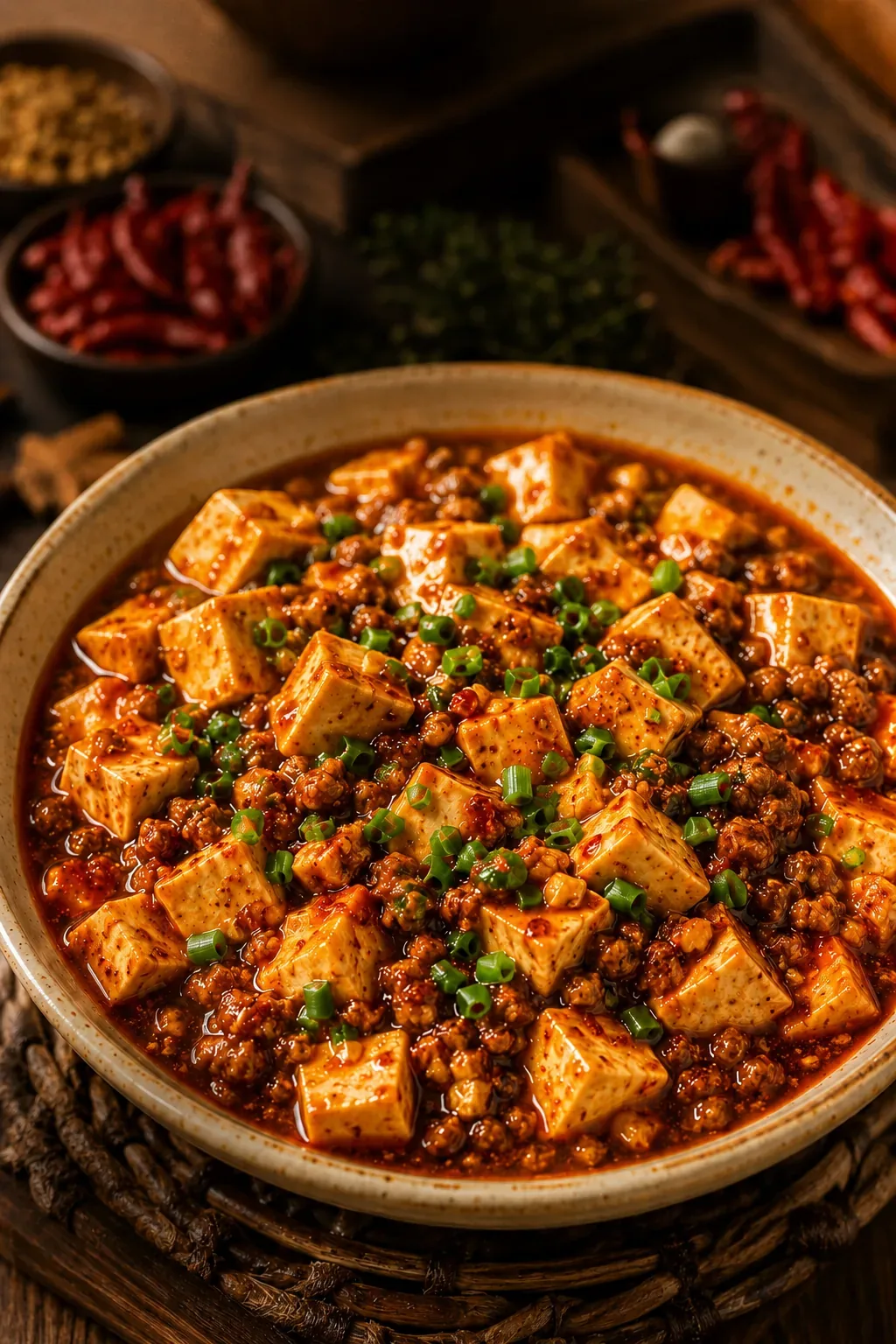
Intact tofu cubes, granular meat, and sauce clinging to the surface reveal whether the textures are working together.
Eight qualities happen at once
The traditional description uses eight ideas: numbing, spicy, hot, intact, crisp, tender, fresh, and fragrant. Peppercorn brings a lifted numbing aroma; chilli and Pixian broad-bean paste provide colour and heat; tofu arrives very hot but remains whole; crisp-fried beef contrasts with its softness; black beans, stock, and meat contribute fermented and savoury depth.
Balance matters. Pepper aroma, tofu, and beef should remain distinct, while the sauce clings without becoming gluey. Lift from below with a spoon so tofu, meat, and sauce arrive together.
Repeated light thickening keeps the tofu whole
Tofu may be briefly blanched or warmed to reduce raw aroma and improve resilience. Broad-bean paste, black beans, and chilli are fried into red oil; minced beef is browned separately; tofu is then moved gently through the sauce. Starch slurry added in stages adjusts for the water released by tofu and forms an even coating without rough stirring.
Pepper powder is commonly added near the end so steam carries its aroma upward. Traditional versions use beef, although pork and meat-free versions also exist.
Flavour and ingredient note
Traditional mapo tofu contains minced beef, chilli oil, fermented broad-bean paste, and Sichuan pepper. The tofu holds considerable heat when it reaches the table.