Journey To ChinaLast updated
“Zha” means frying the sauce slowly
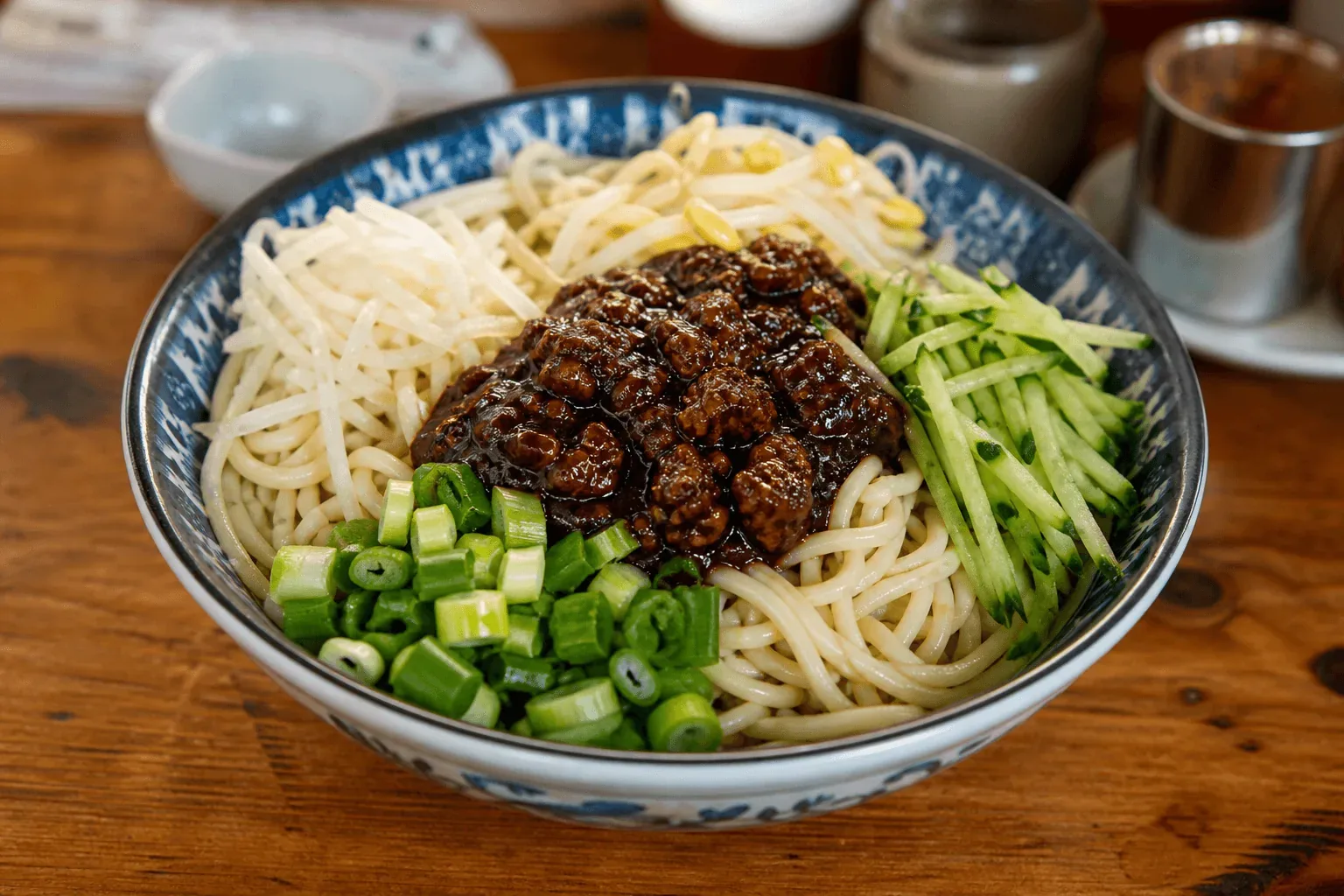
The name zhajiang refers to sauce cooked in oil, not deep-fried noodles. Yellow soybean paste or sweet flour sauce is fried with diced pork until water cooks away and the mixture becomes dark, glossy and concentrated. That concentration gives a small spoonful enough salt and savoury depth for a large bowl of noodles.
Hot guotiao'er or rinsed guoshui noodles
Freshly drained hot noodles are called guotiao'er. They stay warm and springy but absorb thick sauce quickly. In summer, noodles may be rinsed in cool water and served as guoshui mian, giving a cleaner, firmer bite. Asking “guo bu guo shui?” tells the restaurant which temperature and texture you want.
Vegetable toppings change with the season
Cucumber, bean sprouts, radish, celery, cabbage, green soybeans and garlic are common, but a fixed set of eight or twelve toppings is not universal. Their crunch and moisture balance the dense sauce. Add the sauce in small spoonfuls and mix from the bottom; the correct amount depends on its saltiness.
Raw garlic and vinegar are optional table additions. Meat-free noodles still require confirmation that the sauce itself contains no pork or animal fat.