Journey To ChinaLast updated
Two similarly named passenger stations
Zhangjiajie West Railway Station and Zhangjiajie Railway Station are separate places. Both are in Yongding District, but they serve different types of train and sit on different sides of the journey to the city and scenic areas.
- Zhangjiajie West Railway Station (张家界西站) is in the Shadi area north of central Yongding and is the principal station for high-speed and other EMU trains. It is normally the first station to search for services from Changsha, Guangzhou or Chongqing, and for onward travel to Furong Town, Fenghuang Ancient Town or Huaihua. The station lies on the northbound road out toward Wulingyuan, the national forest park and the Grand Canyon, though it is still outside the scenic areas.
- Zhangjiajie Railway Station (张家界站) is a conventional-rail station in Guanliping. It is beside Zhangjiajie Central Coach Station and the lower-station area of the Tianmen Mountain cableway. When the chosen train calls here, it provides a direct arrival point for Tianmen Mountain and central Yongding.
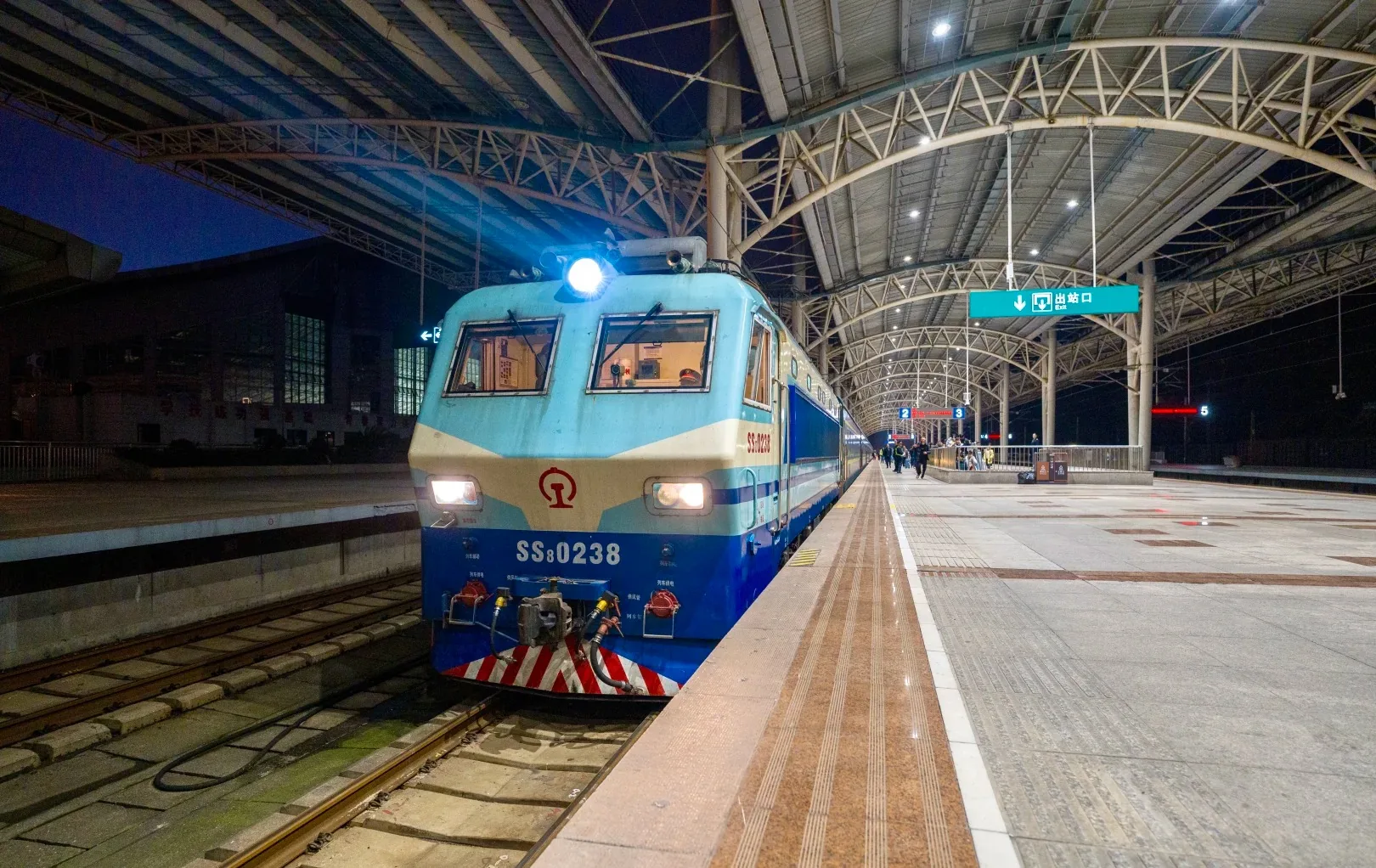
Zhangjiajie Railway Station handles conventional passenger trains. The complete station name on the ticket is more reliable than the general phrase “Zhangjiajie train station.”
Three travel corridors meet at Zhangjiajie West
Zhangjiajie West is where the Qianjiang–Zhangjiajie–Changde Railway and the Zhangjiajie–Jishou–Huaihua High-speed Railway meet. Eastbound trains run through Taoyuan and Changde into Changsha and the wider Hunan network. Westbound services continue through Sangzhi, Longshan, Laifeng, Xianfeng and Qianjiang toward Chongqing. Southbound high-speed trains pass Furong Town, Guzhang West, Jishou East and Fenghuang Ancient Town before reaching Huaihua South and connections with other national lines.
These corridors make the west station useful for more than arriving in Zhangjiajie. The southbound railway provides a clear sequence for an itinerary combining Zhangjiajie, Furong Town and Fenghuang, while the east–west corridor links the Wuling mountain region with Changsha and Chongqing. Stops and timetables change with each railway schedule, so use China Railway 12306 for the travel date.
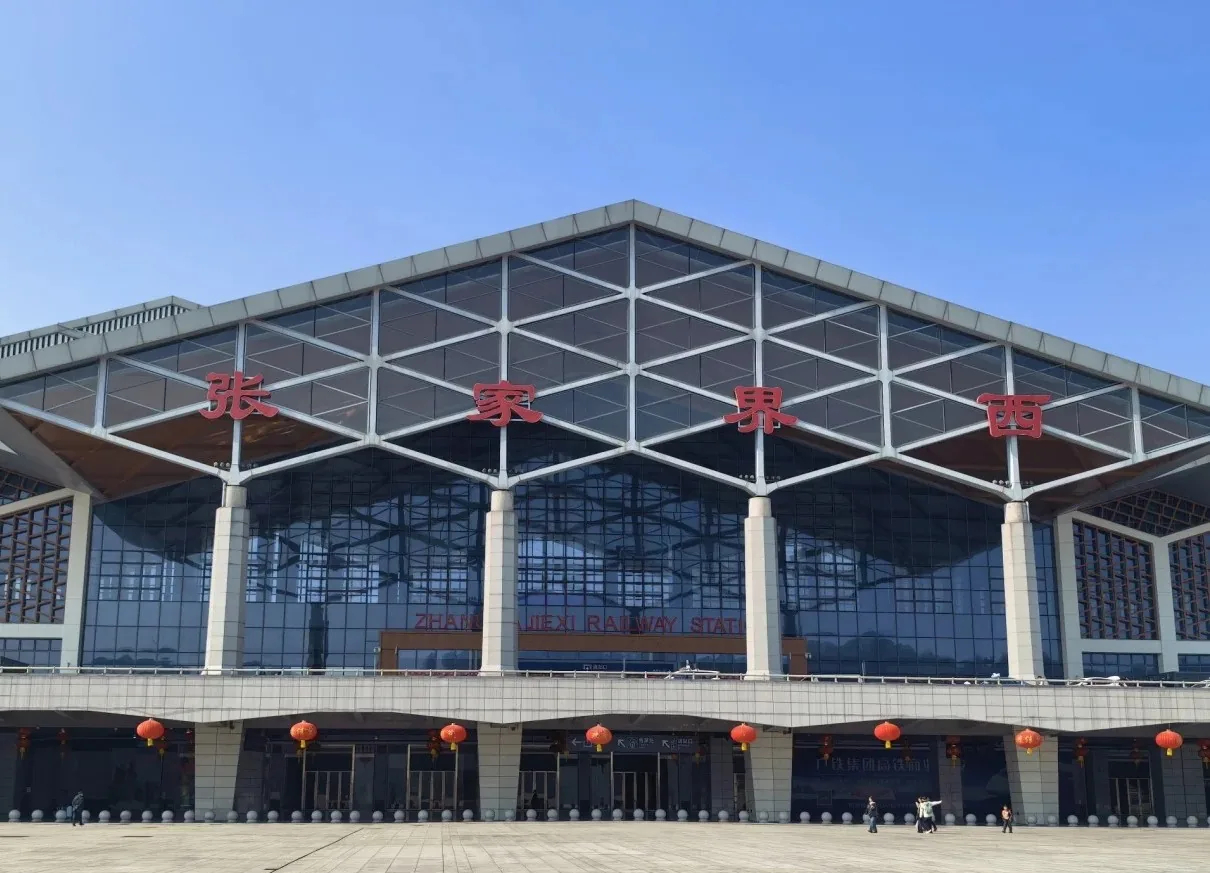
The full Chinese name 张家界西 identifies the west station for navigation, pickups and meeting messages.
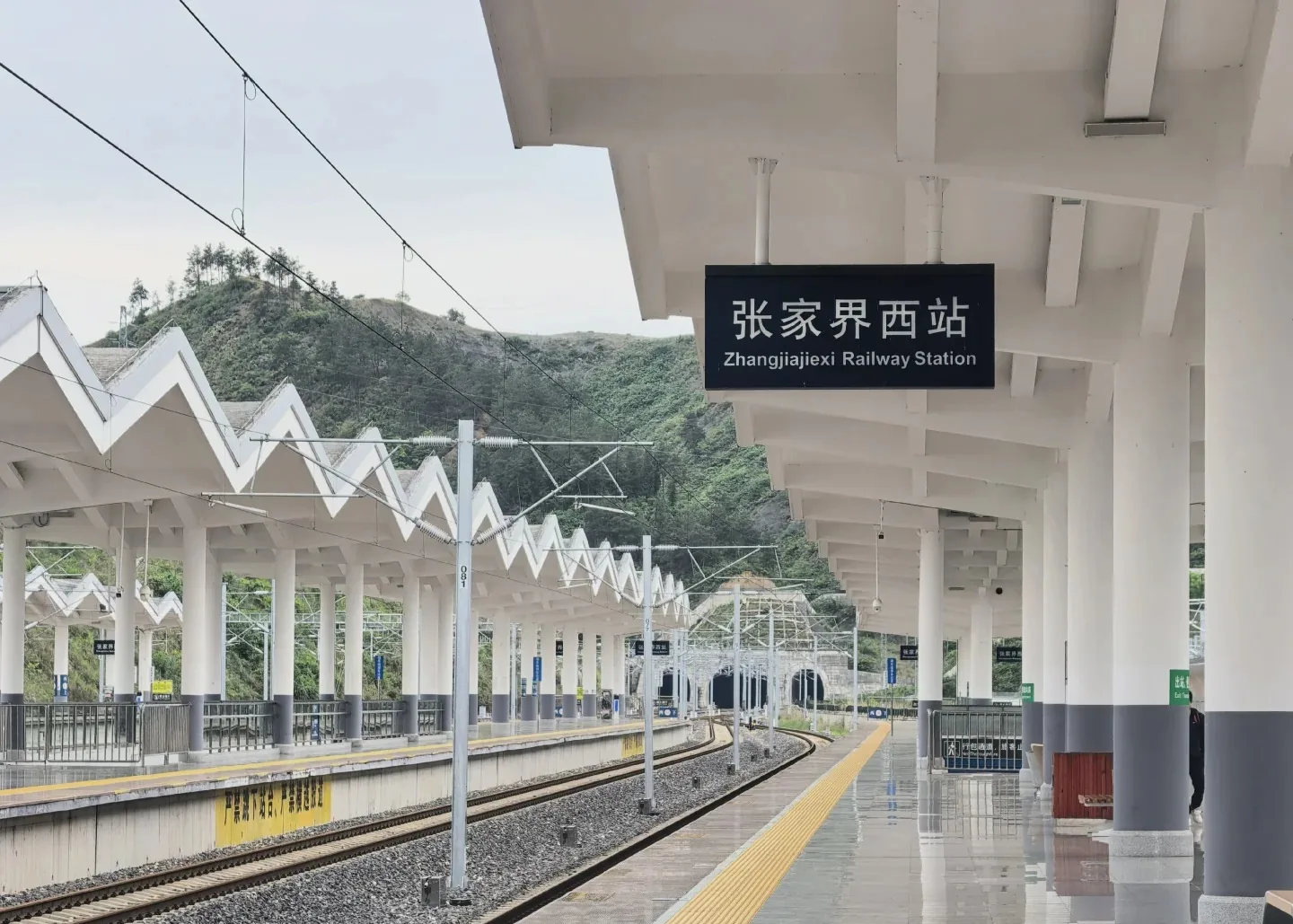
EMU and high-speed services leave in several directions; train number, gate and platform displays identify the correct route through the station.
Continuing from the station to the scenic areas
A railway arrival is normally followed by a road transfer. Central Yongding, Tianmen Mountain, Wulingyuan, the national forest park and the Grand Canyon lie in different directions, so match the station with the accommodation area and exact scenic entrance.
Zhangjiajie's city-to-scenic-area buses use the high-speed station, conventional station, coach station and airport as transport nodes. Routes connect Wulingyuan, the national forest park, Tianzi Mountain, the Grand Canyon and other major areas. Travellers staying in Wulingyuan or going directly from Zhangjiajie West to a scenic area can use Xiangyuexing to check current routes, buy tickets and view vehicle information.
For Tianmen Mountain or a hotel in central Yongding, Zhangjiajie Railway Station has the closer location when the booked train actually stops there. Most high-speed passengers arrive at Zhangjiajie West and continue by scenic-area bus, city bus, taxi or ride-hailing car.
Use the full station name for tickets and pickups
Keep the exact station name from the ticket in map searches, pickup bookings and hotel messages. Zhangjiajie West (张家界西站) and Zhangjiajie (张家界站) cannot be shortened to the same destination; the English phrase “Zhangjiajie train station” can also be ambiguous.
Travellers using a passport should carry the original document used for the booking and allow time for security, identity checks and finding the departure gate. When continuing to Wulingyuan or another scenic area, confirm the next transport booking and hotel address alongside the railway ticket so every part of the arrival points to the same place.