Journey To ChinaLast updated
Terminal 3 and the Satellite Concourse
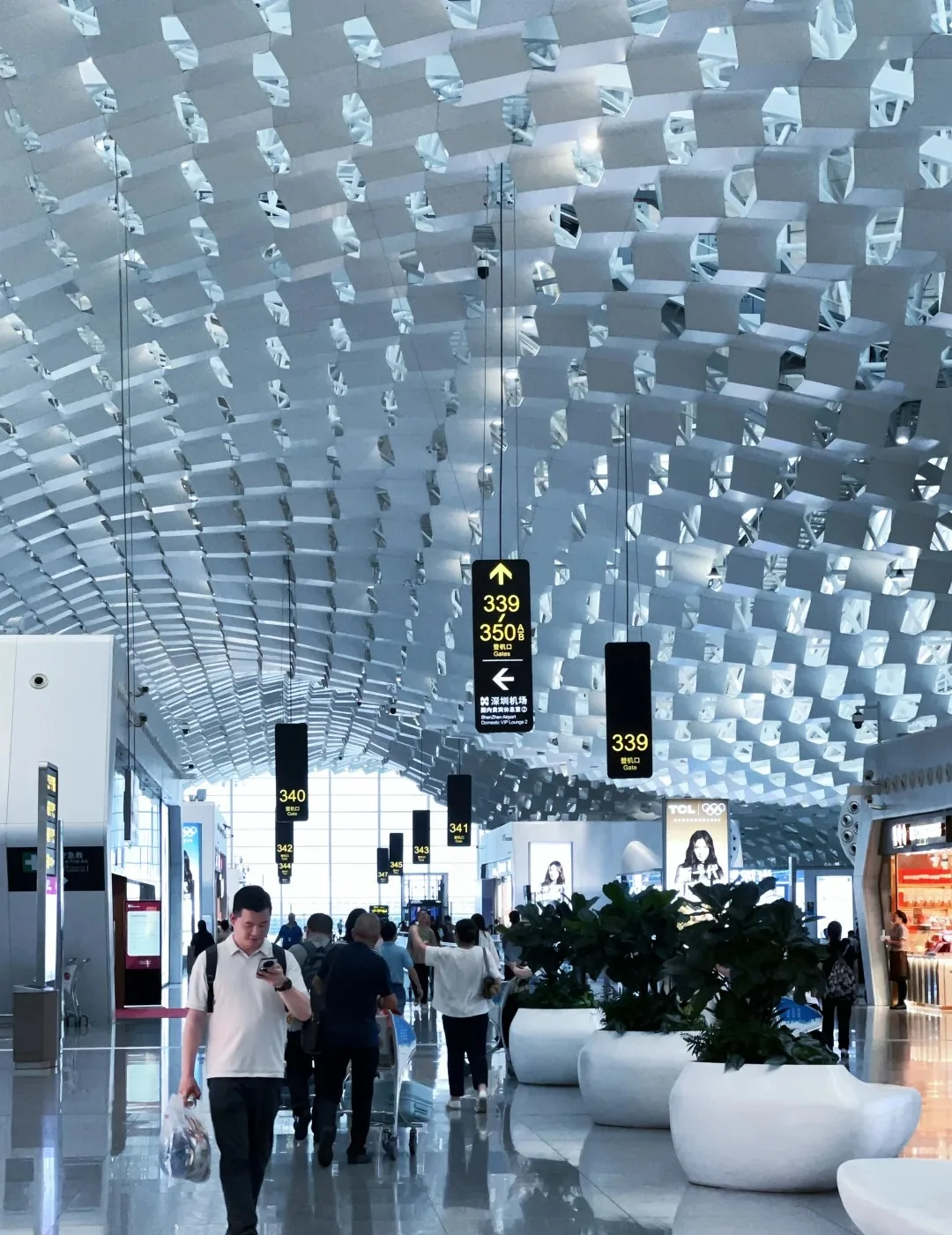
Shenzhen Bao'an International Airport (深圳宝安国际机场) stands on the eastern shore of the Pearl River Estuary in Bao'an District. Terminal 3's cross-shaped piers, honeycomb metal skin, and broad daylit interior make the building easy to recognize. Its southern side connects to the Ground Transportation Center (地面交通中心, GTC), where metro, intercity rail, buses, and road transport enter the airport complex.
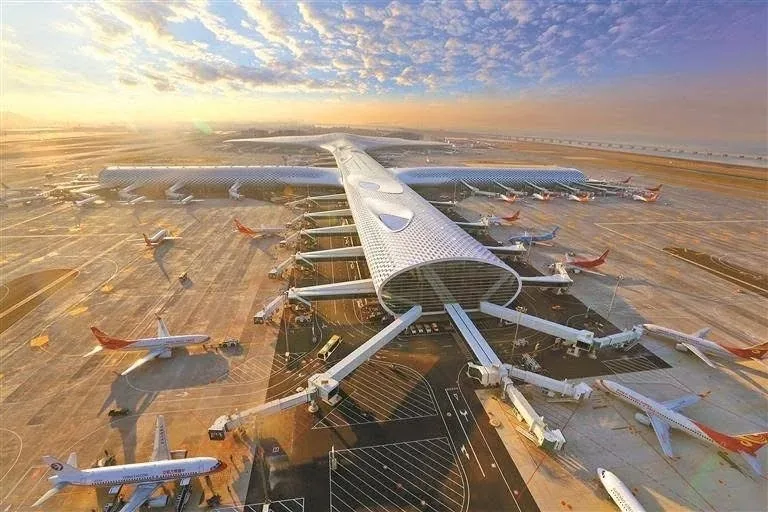
Terminal 3 handles check-in, security, arrivals, and most waiting areas; the Satellite Concourse sits airside. Gate numbers reveal the route: gates 301–378 are in T3 and gates 501–583 are in the satellite. For a 5xx gate, clear security in T3 and follow signs to the automated people mover. There is no need to return landside, but the train and additional walk should be included in the time needed to reach the gate.
Floors, signs, and gates inside T3
Check-in, departures, arrivals, and ground transport occupy different levels. In the large interior, the most reliable wayfinding combines floor, function, and door or gate number instead of relying only on a flat map.
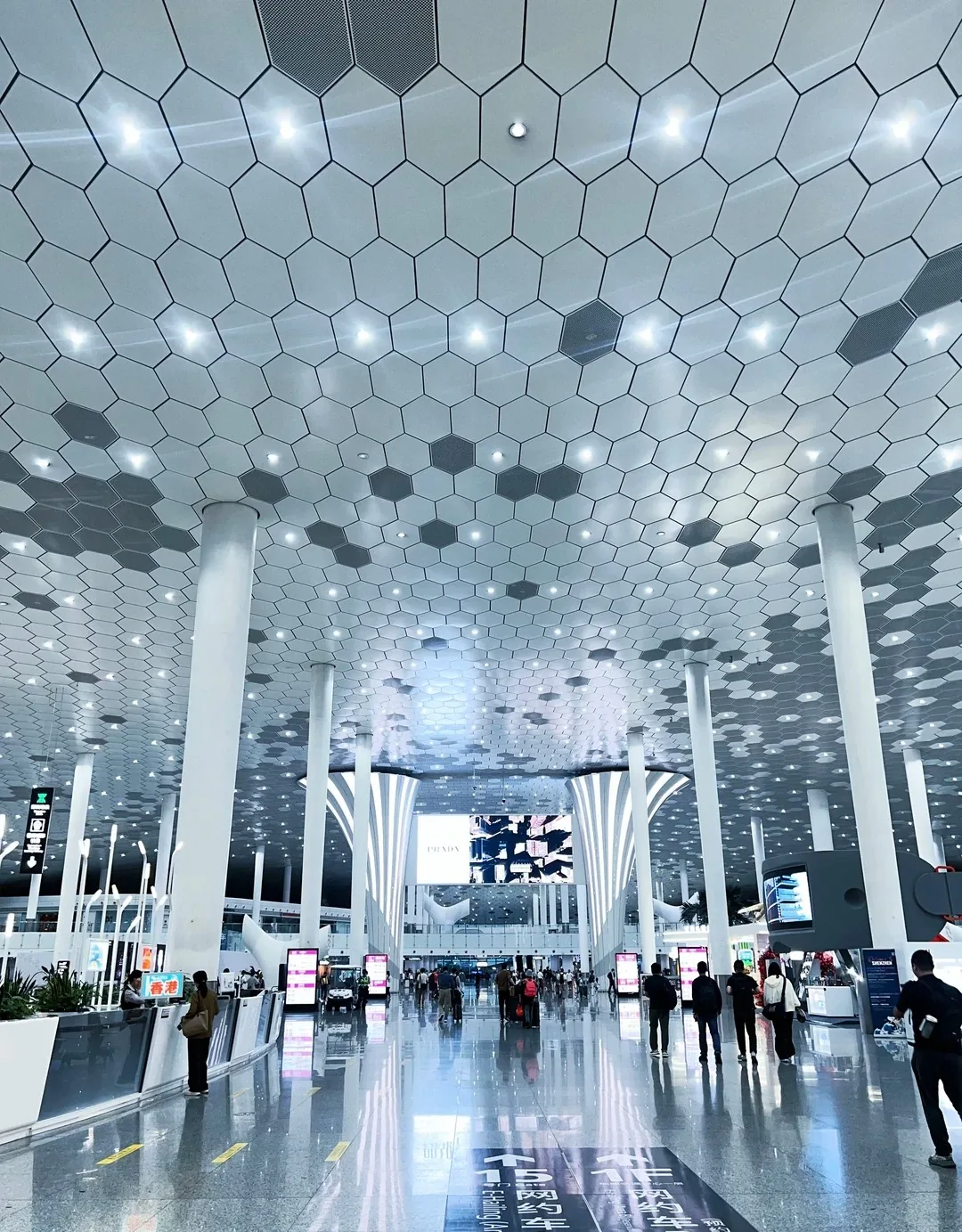
Flight screens and boarding passes identify a T3 or Satellite Concourse gate. Passengers travelling with children, reduced mobility, or substantial cabin luggage should allow extra time for a 5xx gate. Lifts and accessible routes are available; arrange any assisted-travel service with the airline or airport in advance.
The Ground Transportation Center
After baggage claim, follow signs for Ground Transportation Center or 地面交通中心. The GTC is connected to T3 rather than being a distant terminal. Metro Line 11 and the Suishen Intercity Railway are below ground, while taxis, ride-hailing, airport coaches, long-distance buses, and the ferry-terminal shuttle leave from different levels and door zones.
Current airport guidance directs taxis toward Door 13, ride-hailing mainly toward Door 15, and airport-coach ticketing and boarding near Door 17. Construction or holiday traffic control can change queues, so use the signs visible on arrival. For a ride-hailing pickup, confirm Zone A or B, the lane, and the plate number to avoid waiting on different levels.
Metro Line 11 into the city
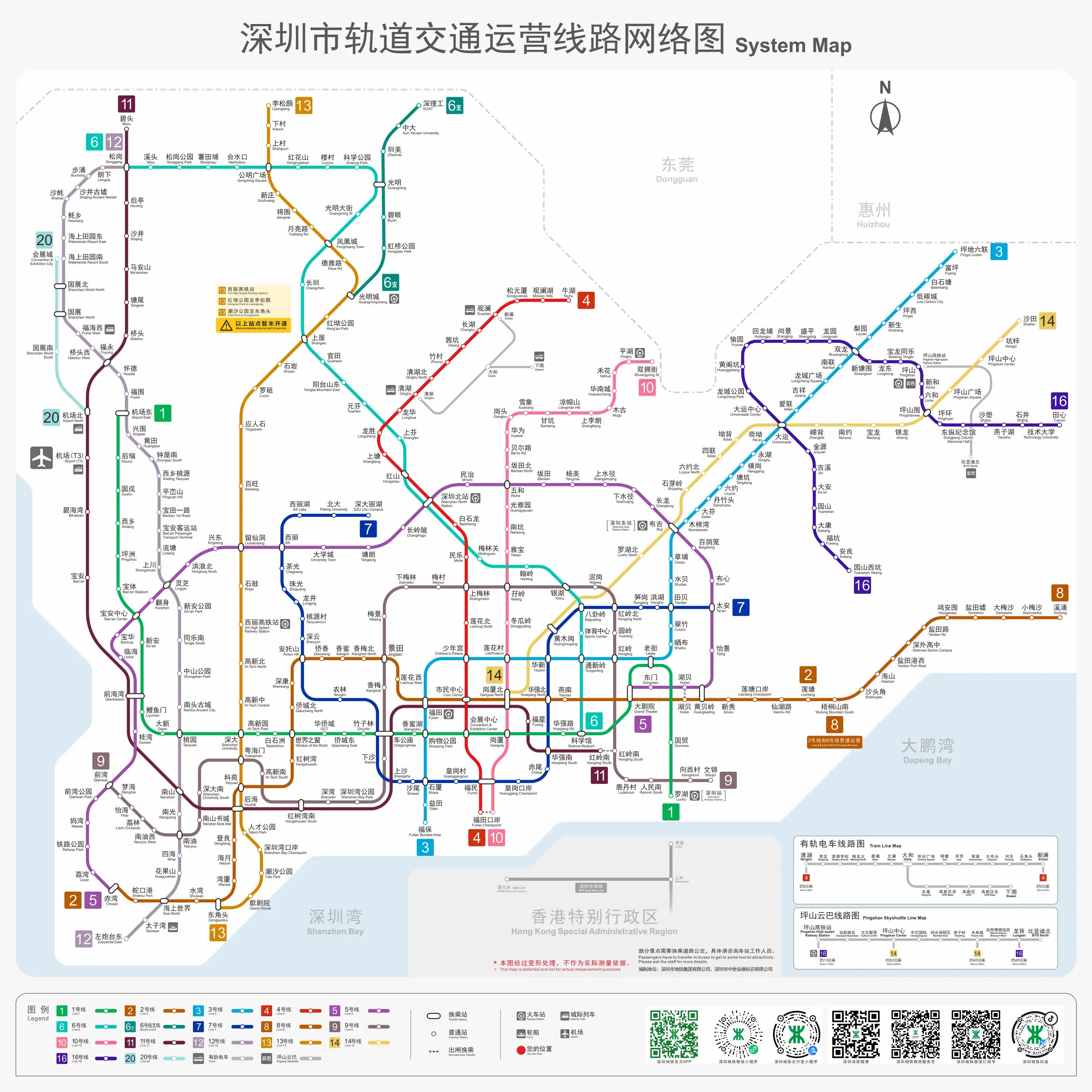
Airport Station (机场站) on Line 11 runs east through Bao'an, Qianhaiwan, Nanshan, Houhai, Chegongmiao, and Futian to Gangxia North and beyond. Hotels in Qianhai, the Nanshan technology area, Houhai, or central Futian are often direct or one interchange away. Luohu, Huaqiangbei, Shenzhen North Railway Station, Yantian, Longgang, and Pingshan require a route chosen around the hotel's exact location.
Line 11 has standard and business-class cars with different fare rules. A normal single-journey ticket does not by itself validate business-class travel; complete the additional validation before entering that waiting area. Last trains, stopping patterns, and temporary extensions change, so check Shenzhen Metro information on the day.
Late-night arrivals
Official taxis and ride-hailing serve the airport throughout the night and are useful for a direct hotel drop-off. Join the taxi queue, or use the pickup zone assigned in the ride-hailing app. Save the hotel's Chinese name, full address, and telephone number, especially when its English name is shared by more than one property.
Airport Express here means the airport coach network, not a railway train. Routes cover parts of Futian, Nanshan, Longhua, Longgang, and Pingshan, with some services filling gaps after the metro closes. Stops and operating times change frequently; check the counter near GTC Door 17 or current airport information. For a group with luggage, compare the whole-car fare and the distance from the coach stop to the hotel.
Hong Kong, Macao, and nearby cities
Shenzhen Airport Station beneath the GTC also serves the Suishen Intercity Railway toward Dongguan and other corridor stops. It is a separate railway and ticketing system from Metro Line 11: follow Intercity Railway signs and use the train shown by the official rail ticket channel.
Cross-boundary coaches to Hong Kong leave from designated GTC zones. Routes may serve central Hong Kong, Hong Kong International Airport, or theme-park areas and can use different checkpoints. Confirm the exact terminus, travel documents, baggage conditions, and border-processing time before buying.
The airport ferry terminal requires a shuttle from T3. Ferry tickets are issued to named passengers, schedules vary by date, and Macao or other cross-boundary journeys require valid documents and observance of check-in cutoffs. Verify same-day operation through the airport or service counter rather than relying on an old timetable screenshot.