Journey To ChinaLast updated
Six railway stations across Shenzhen
This guide covers six stations useful to travellers: Shenzhen North, Futian, Shenzhen, Shenzhen East, Shenzhen Pingshan, and Guangmingcheng. They lie in Longhua, central Futian, Luohu, Buji, Pingshan, and Guangming rather than in one downtown rail precinct. Shenzhen North carries the widest range of high-speed and long-distance traffic; Futian brings the Guangzhou–Shenzhen–Hong Kong corridor into the CBD; the other four serve distinct intercity, conventional-rail, eastern, or northern markets.
- Shenzhen North Railway Station (深圳北站) · Longhua: the largest high-speed hub, with broad interprovincial, Hong Kong, and Xiamen–Shenzhen choices. Search it first for the widest timetable, long-distance high-speed rail, or hotels near Metro Lines 4, 5, and 6.
- Futian Railway Station (福田站) · Futian CBD: an underground stop for Hong Kong and selected Guangzhou services. Prefer it when the train actually stops there and the hotel is in Futian, Chegongmiao, Houhai, or along Line 11.
- Shenzhen Railway Station (深圳站) · Luohu: beside Luohu Port, and a major Guangzhou–Shenzhen intercity terminus with some other services. Compare it first for Guangzhou's central stations, Luohu accommodation, or a connection in the border district.
- Shenzhen East Railway Station (深圳东站) · Buji: primarily a conventional long-distance station. Use it when the ticket says Shenzhen East or when a suitable train and accommodation are around Buji or western Longgang.
- Shenzhen Pingshan Railway Station (深圳坪山站) · Pingshan: an eastern Xiamen–Shenzhen Railway node for Chaoshan, Xiamen, and nearby eastern districts. It can prevent a westward backtrack when the desired train stops here.
- Guangmingcheng Railway Station (光明城站) · Guangming: a smaller northern stop on the Guangzhou–Shenzhen–Hong Kong corridor. It is useful for Guangming-based travellers only when the selected service calls there.
These are search priorities, not interchangeable tickets. Compare the departure station, arrival station, train type, and hotel-to-station time; after booking, the full station name in the 12306 order is the only correct boarding location.
Shenzhen North Railway Station
Shenzhen North is in Minzhi, Longhua District. With 11 platforms and 20 tracks, it is Shenzhen's largest and busiest integrated rail hub. The Guangzhou–Shenzhen–Hong Kong high-speed line connects Guangzhou, Dongguan, and Hong Kong West Kowloon; the Xiamen–Shenzhen corridor runs east toward Huizhou, Chaoshan, Xiamen, and Fujian, while other high-speed services reach major inland regions. It is usually the first station to search for long-distance high-speed rail or the largest choice of departures.
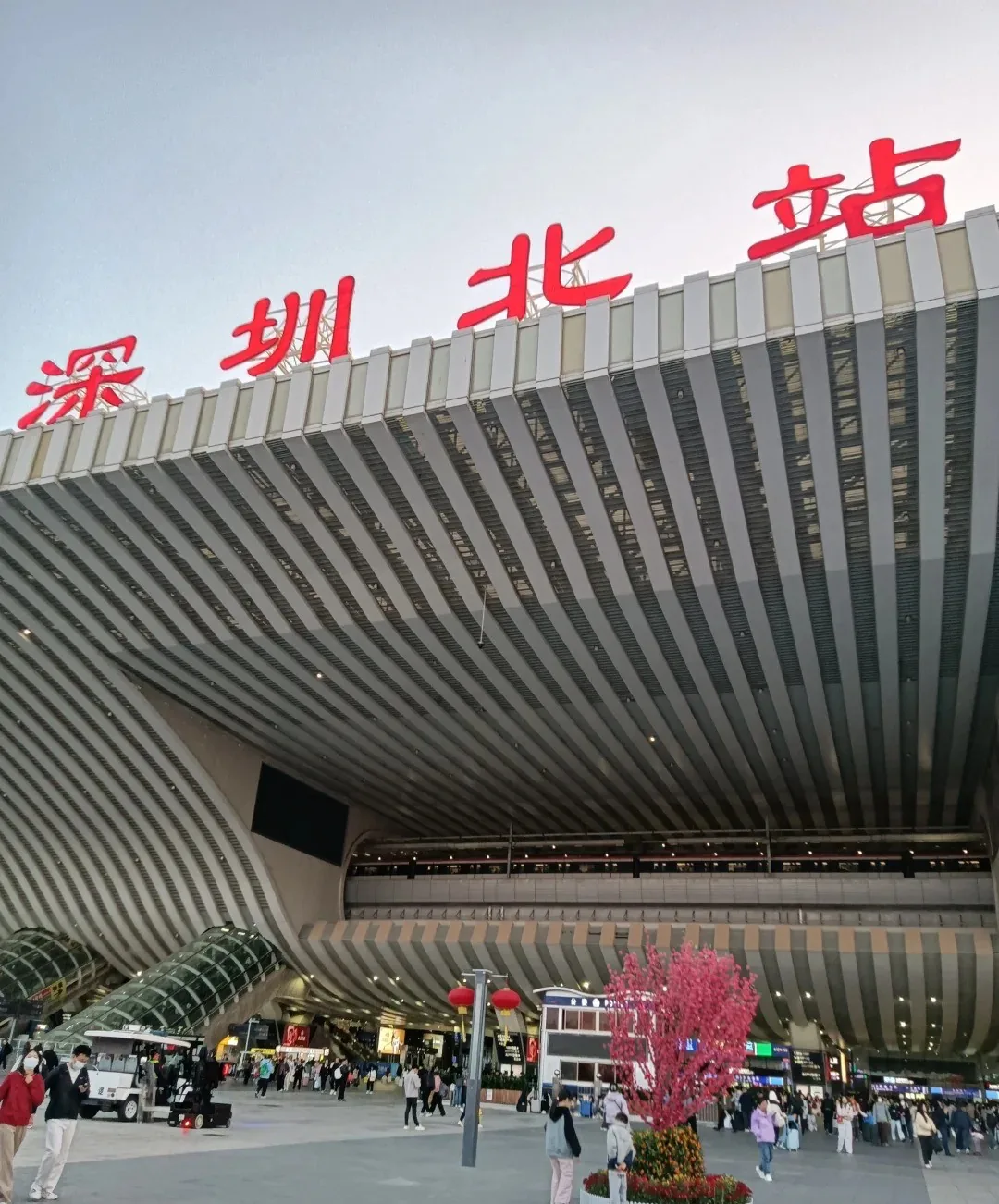
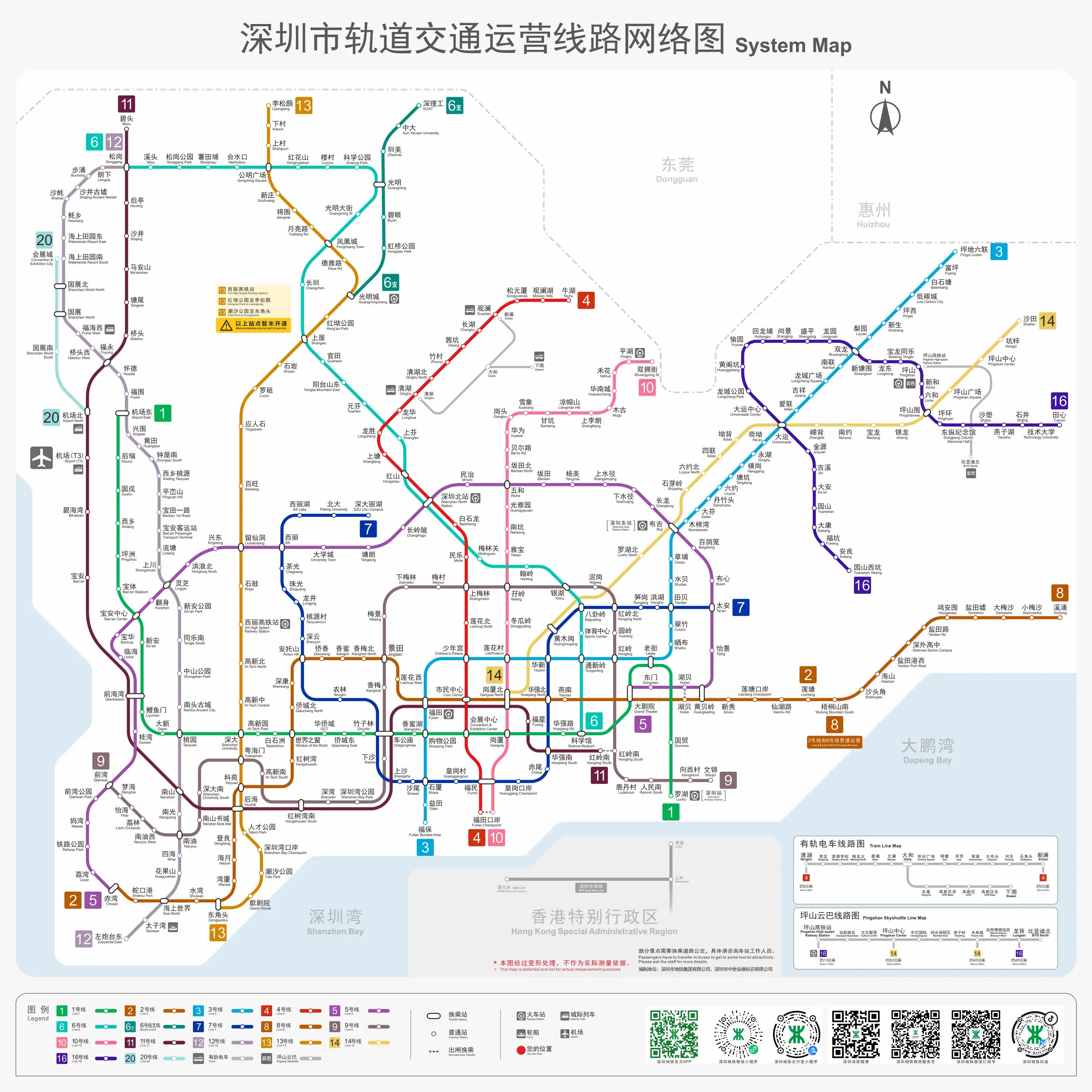
Metro Lines 4, 5, and 6 approach from different axes. Line 4 links Longhua with Futian, Line 5 reaches Buji and Qianhai, and Line 6 runs toward Guangming and central Shenzhen. The station is especially convenient from Longhua; from Nanshan, Luohu, or eastern Shenzhen, include the cross-city metro ride and internal walk.
The east and west squares, metro level, entrances, and elevated waiting hall form a large multi-level complex. After reaching Shenzhen North metro station, continue along High-speed Rail / Railway signs to security and identity checks. Drivers should confirm east square, west square, and the drop-off level so companions do not end up on opposite sides.
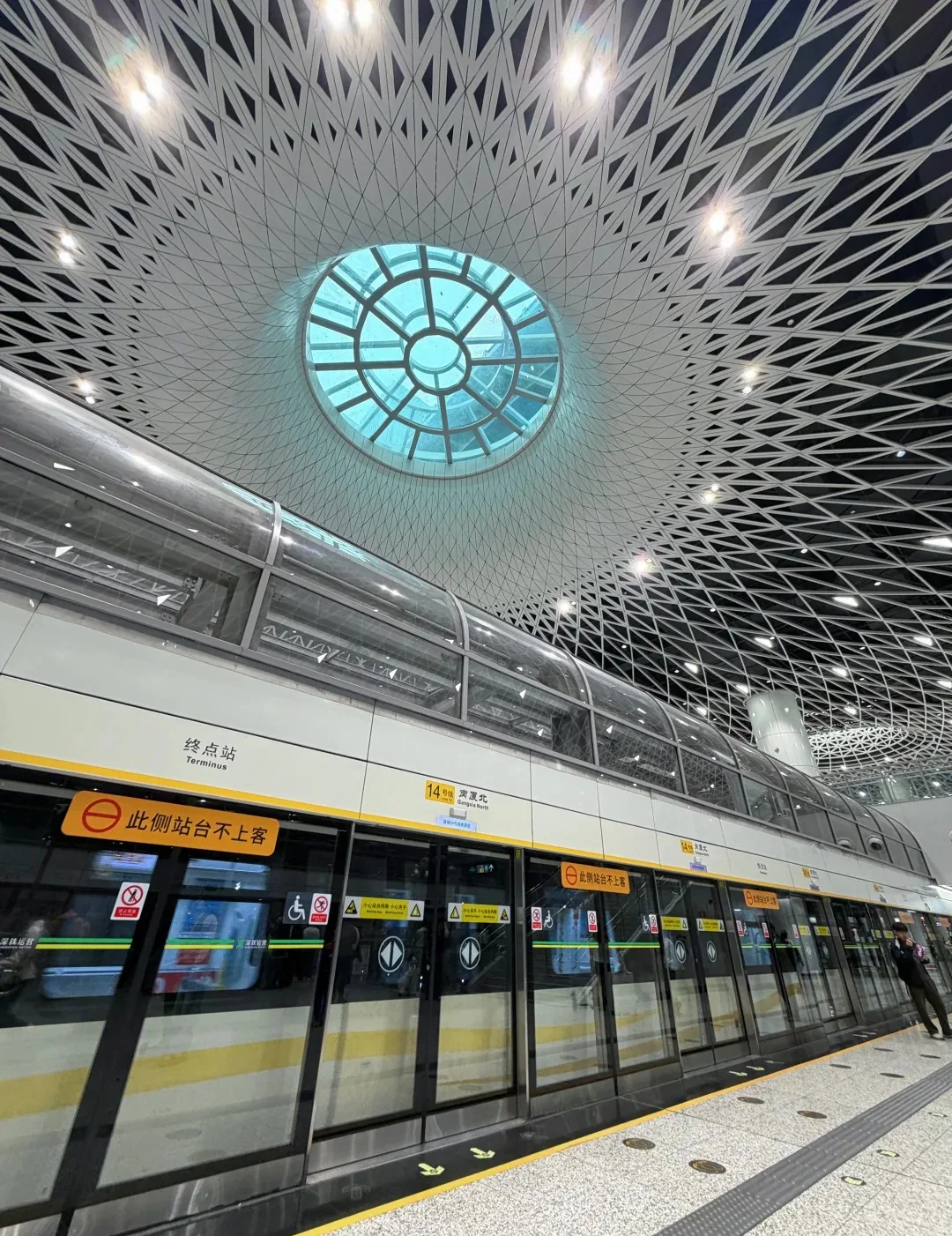
The elevated hall spans many platforms. Train number, departure time, and gate identify the correct waiting area; the platform is reached after ticket inspection. Some trains originate here and others stop only briefly, so use the live station display rather than a saved screenshot.
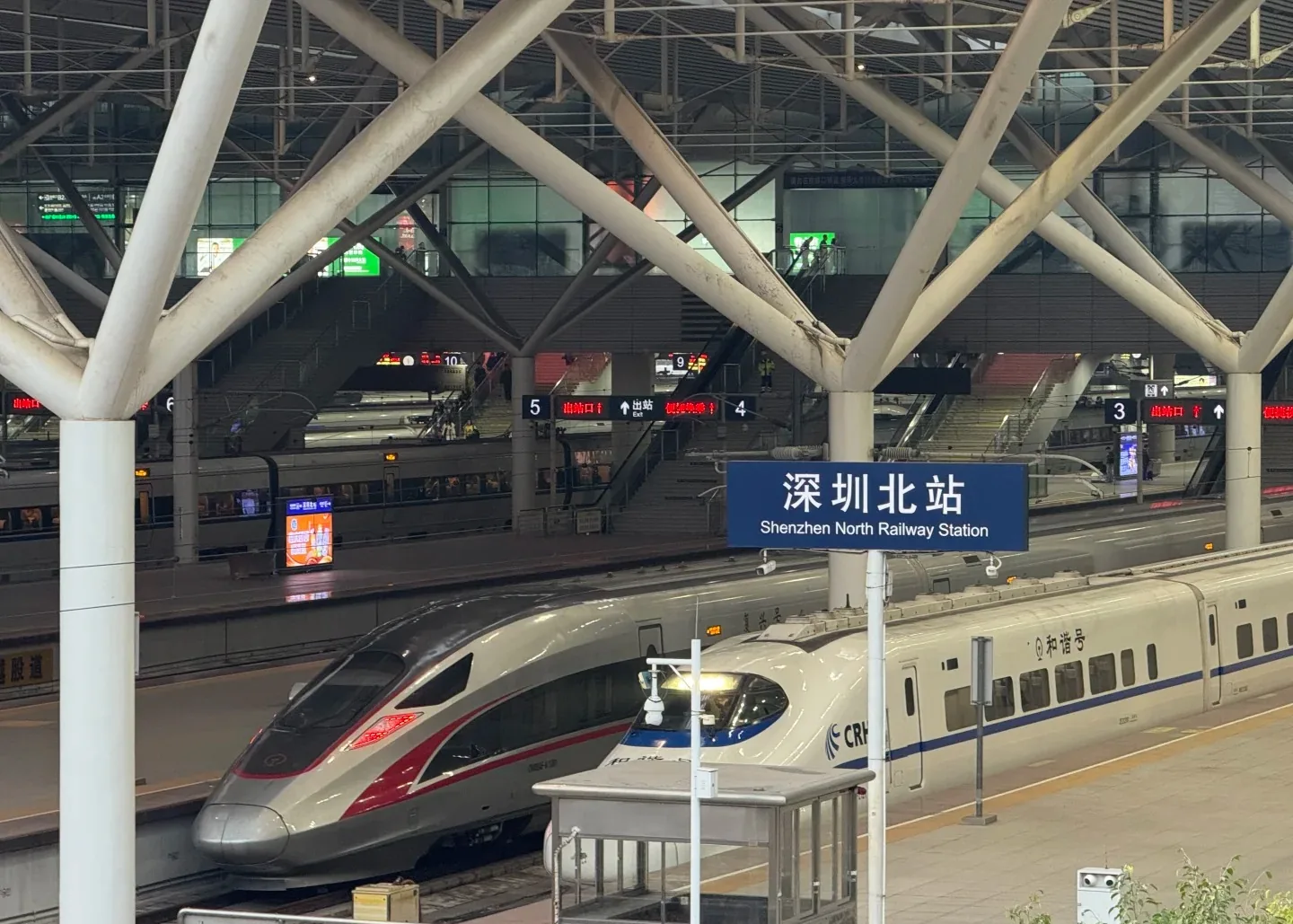
For Hong Kong West Kowloon, Shenzhen North generally offers more train choices and suits Longhua or Buji. If a service stops at Futian and the hotel is in central Futian or Nanshan, Futian can remove a substantial city detour. Compare both the timetable and door-to-station journey.
Futian Railway Station
Futian is an underground station beneath the Shennan Avenue and Yitian Road area, with four platforms and eight tracks. It places high-speed rail in the CBD and is the first mainland high-speed station after Hong Kong West Kowloon; selected Guangzhou-bound services also call. Convention and Exhibition Center, Civic Center, Shopping Park, and the wider Futian business district are nearby.
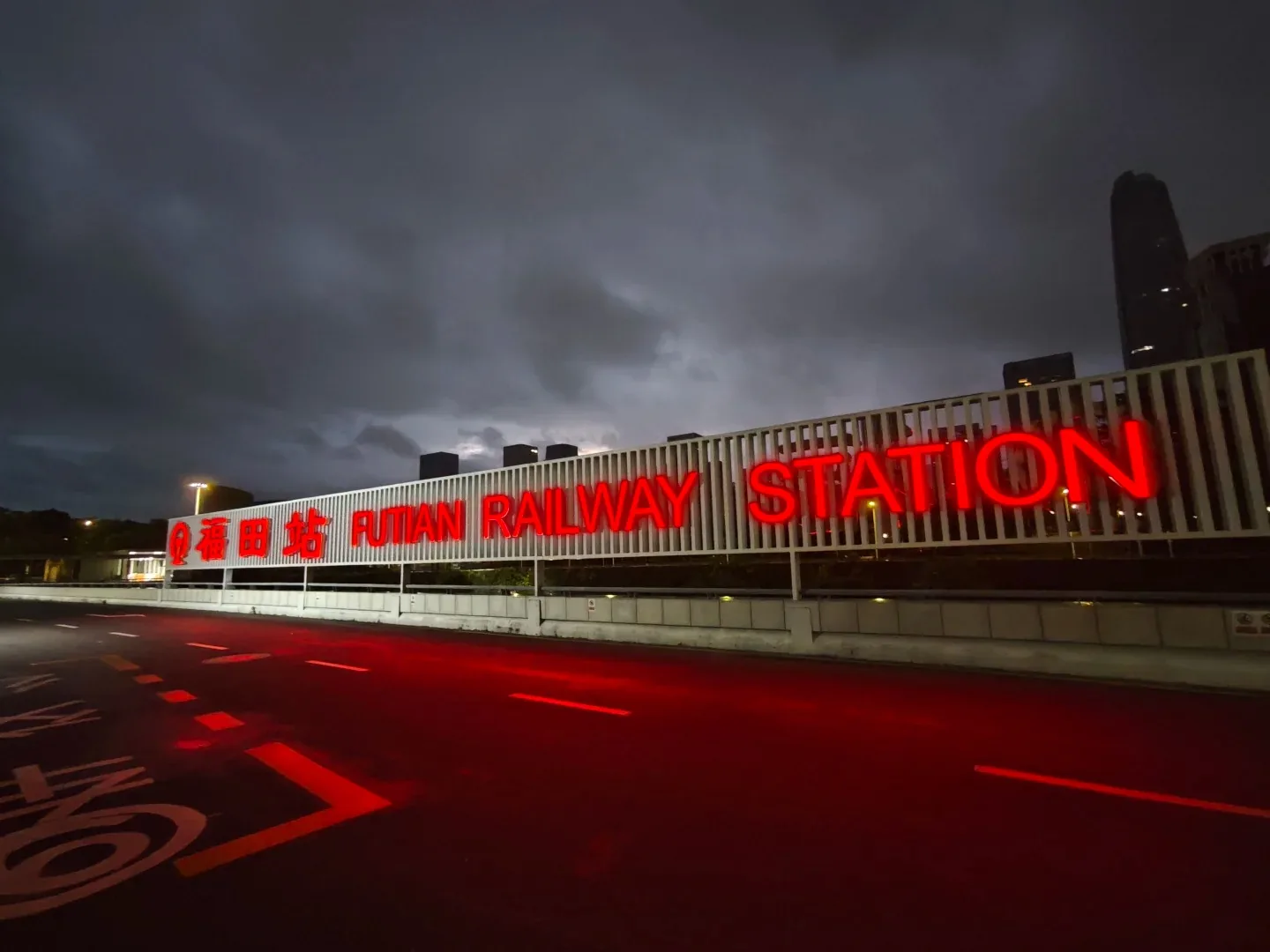
Metro Lines 2, 3, and 11 meet at Futian. The station is often more direct than Shenzhen North from Futian, Chegongmiao, or the Line 11 corridor, provided the selected train stops here. Follow High-speed Rail signs rather than a shopping-mall exit; metro concourses, underground retail space, and the national-rail area overlap but still require separate security and identity checks.
Futian has fewer trains than Shenzhen North, and some services pass without stopping. “Near the hotel and served by the train” is the useful test. Search both Futian and Shenzhen North in 12306 for Hong Kong or Guangzhou journeys.
Shenzhen Railway Station in Luohu
A ticket showing only Shenzhen (深圳站) means the station on Jianshe Road in Luohu, beside Luohu Port and Metro Line 1's Luohu Station (罗湖站). This four-platform, eight-track border hub is a principal Guangzhou–Shenzhen intercity terminus and also handles selected EMU and conventional services. Its defining role is access between Luohu and central Guangzhou rather than the broad high-speed network of Shenzhen North.
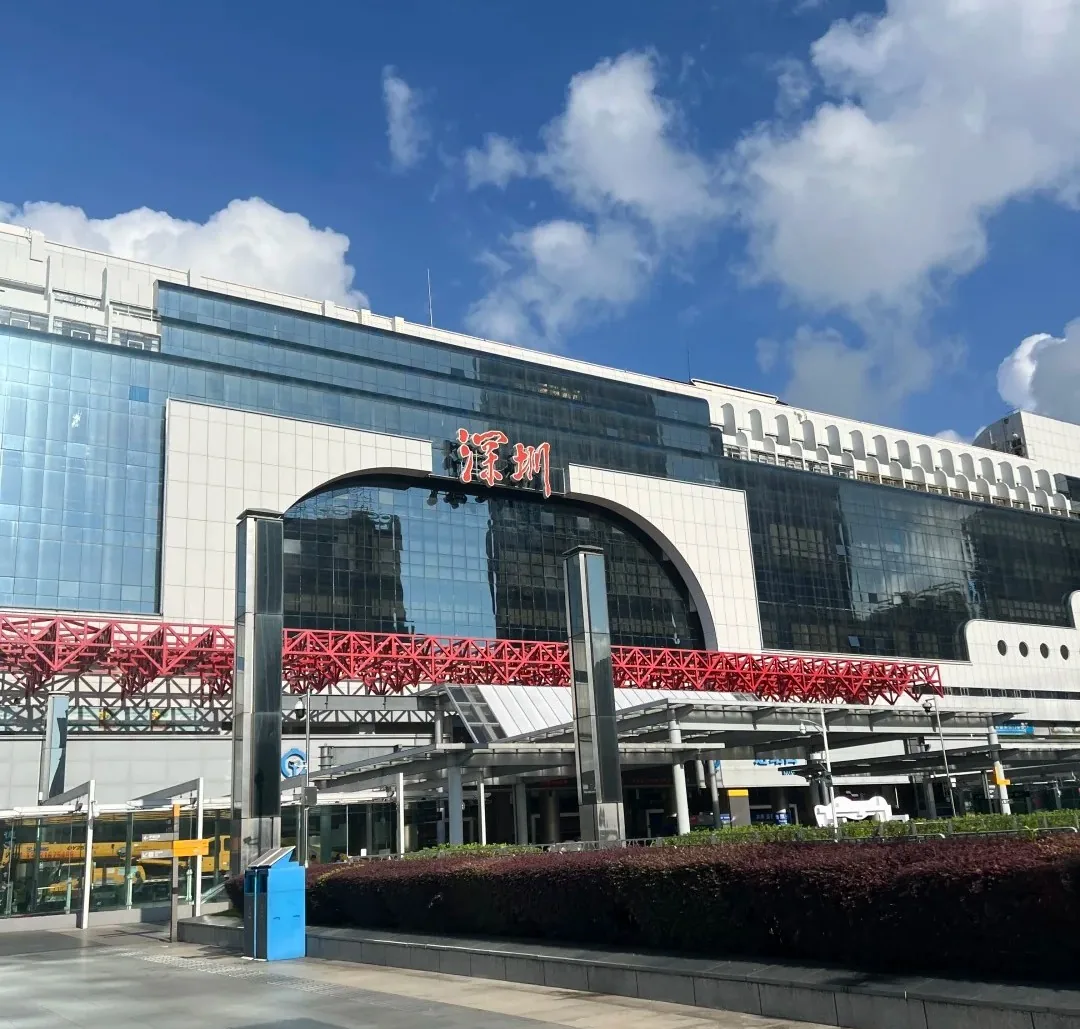
Compare Shenzhen Station first from Luohu, Guomao, or Laojie, or for trips to central Guangzhou. Guangzhou East, Guangzhou, Guangzhou Baiyun, and Guangzhou North serve different parts of that city, so the Guangzhou arrival station matters as much as the Shenzhen departure.
The metro, national-rail station, coach facilities, and Luohu Port share a busy precinct. Rail passengers enter the station building; Hong Kong-bound border passengers use separate immigration channels. Shenzhen and Shenzhen North are far apart—one directional word changes the whole journey.
Shenzhen East Railway Station in Buji
Shenzhen East, formerly Buji station, is in Buji, Longgang District. Its four platforms and eleven tracks mainly handle conventional interprovincial trains along traditional rail corridors, making it a different gateway from Shenzhen North's high-speed operation.
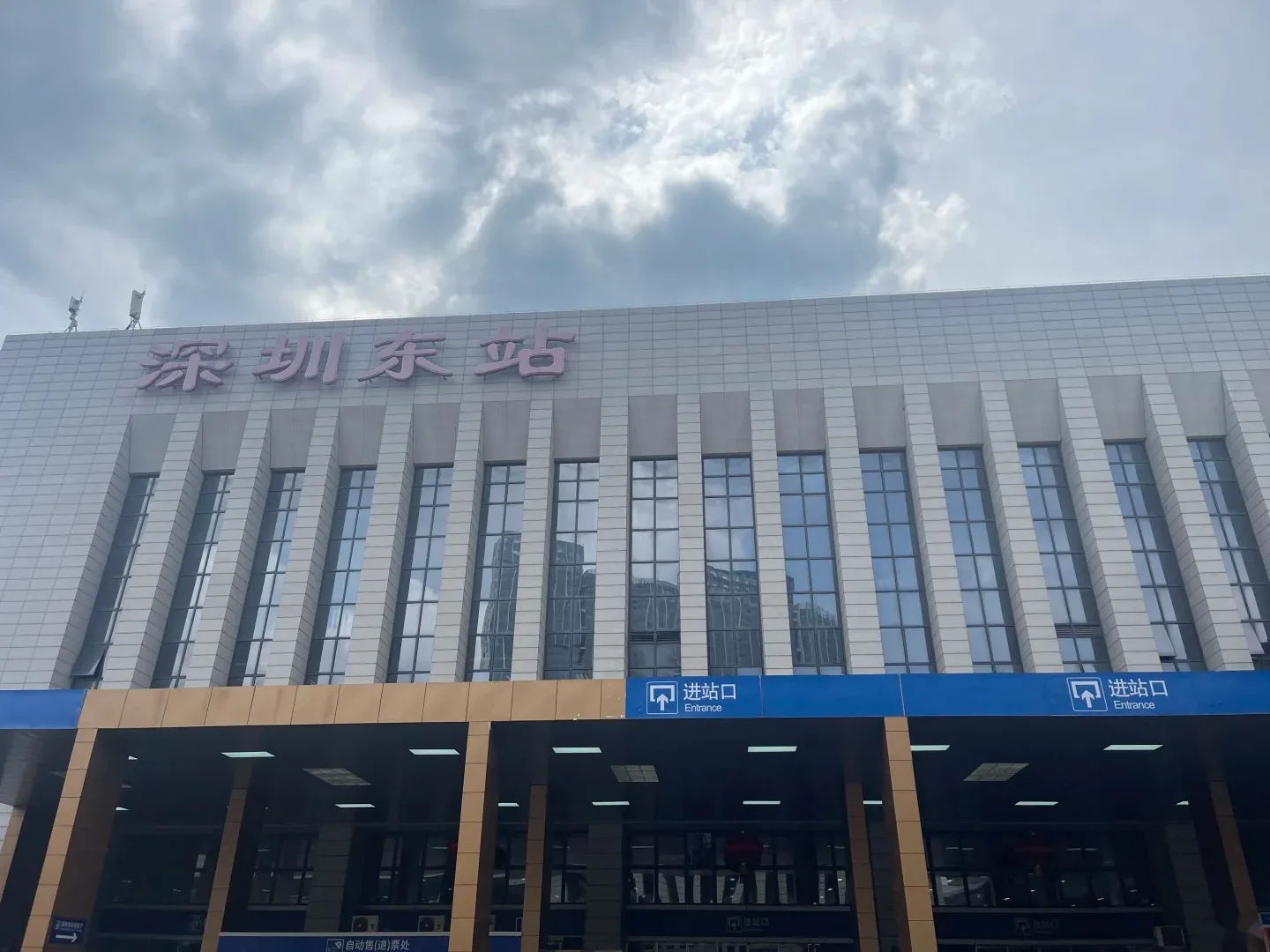
Use it when the ticket says Shenzhen East or when a suitable conventional train and the hotel are near Buji or western Longgang. The connected metro station is called Buji (布吉), served by Lines 3, 5, and 14. Follow Shenzhen East Railway Station signs after leaving the metro; the two names identify the same hub but cannot be substituted when buying a rail ticket.
Road, bus, metro, and rail traffic overlap around Buji. A car booking should specify the railway entrance, while metro users should rely on station wayfinding. Identity check, security, waiting, and boarding procedures still apply to conventional trains.
Shenzhen Pingshan Railway Station
Shenzhen Pingshan is in eastern Shenzhen on the Xiamen–Shenzhen Railway. Its four platforms and eight tracks serve trains toward Chaoshan, Xiamen, Fujian, and other destinations on the eastern corridor, while providing a rail entrance for Pingshan and eastern Longgang.
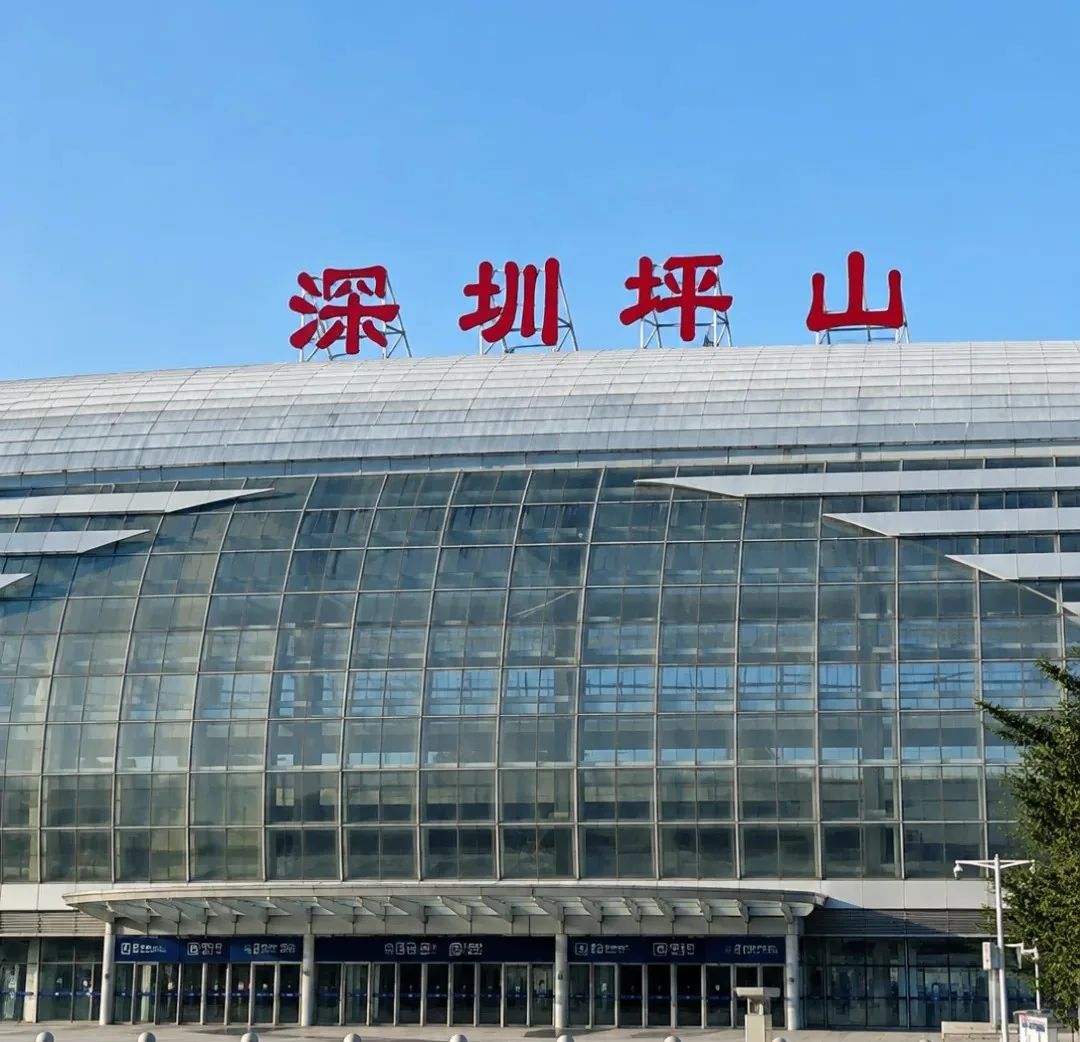
When an eastbound train stops here, travellers staying in Pingshan or eastern Shenzhen can avoid travelling west to Shenzhen North. From Futian, Nanshan, Bao'an, or Longhua, Shenzhen North generally has more trains and may still produce the better whole journey. Compare the actual stop, fare, and access time.
Metro Line 16 serves Pingshan Station, with local buses and the Pingshan SkyShuttle distributing passengers farther. These are separate systems with their own station processes. Search both Shenzhen Pingshan and Shenzhen North before booking, then travel to the exact station printed on the ticket.
Guangmingcheng Railway Station
Guangmingcheng is a two-platform, four-track regional station in northern Shenzhen on the Guangzhou–Shenzhen–Hong Kong high-speed line. It serves Guangming Science City, Fenghuangcheng, and nearby residential and business areas.
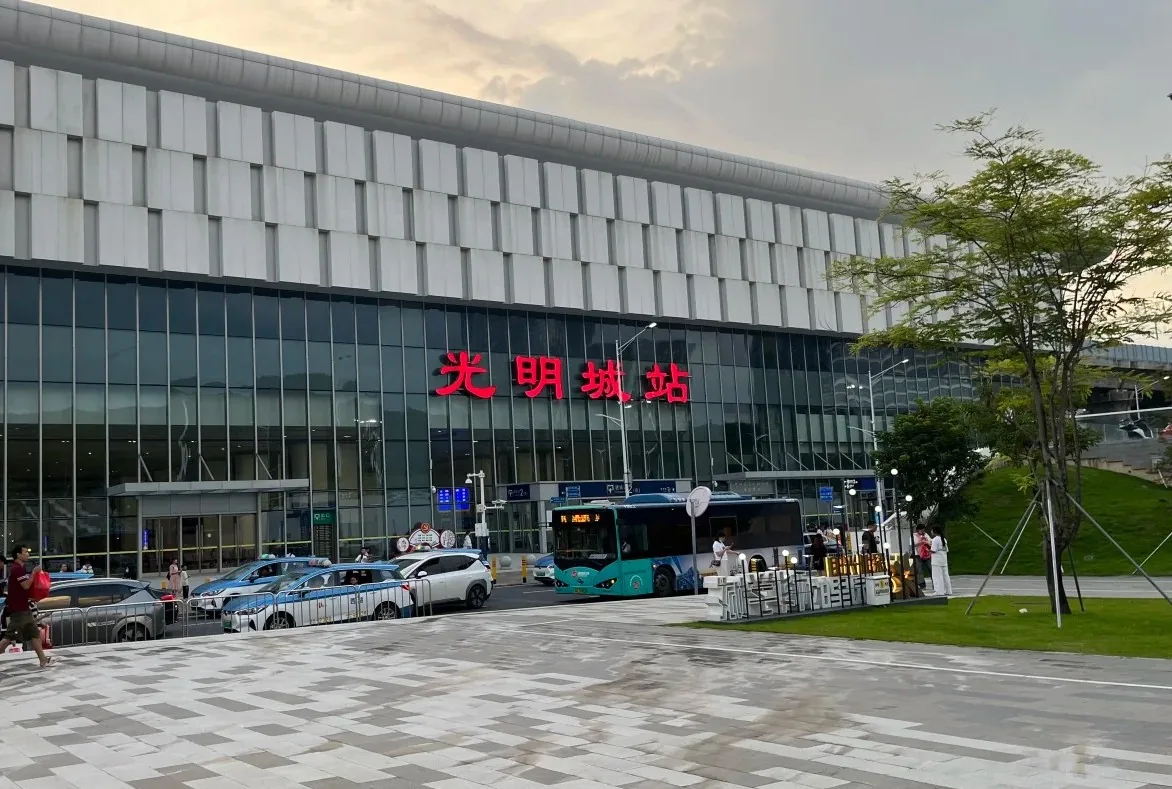
It can shorten access from Guangming when a Guangzhou-, Dongguan-, or Hong Kong-bound service stops here. Because it is smaller and receives fewer trains than Shenzhen North, confirm the stop before comparing local access. The Line 6 Branch reaches Guangmingcheng; buses and taxis complete local distribution. For hotels in Futian, Nanshan, or Luohu, Shenzhen North may provide a better balance of train choice and city travel.
Cross-boundary trains and document checks
Both Shenzhen North and Futian have trains to Hong Kong West Kowloon. Cross-boundary high-speed rail uses named tickets and the original valid document used for purchase. Passports that cannot be read by an automatic gate can be checked at a staffed channel. Allow time at West Kowloon for identity checks, security, immigration, and customs.
For every Shenzhen rail trip, keep the exact ticket name—深圳北, 福田, 深圳, 深圳东, 深圳坪山, or 光明城—consistent across maps, car drop-offs, and meeting messages. International passengers should carry the original passport linked to the booking.