Journey To ChinaLast updated
Spiced stock seasons the meat before hot oil crisps the skin
The Chinese name uses hongshao, but Guangming squab is not served in a pool of thick red-braising sauce. The bird is blanched and gently cooked in a master stock scented with star anise, cassia, dried tangerine peel, sand ginger, liquorice and other spices. Once the seasoning has reached the meat, a brief hot-oil baste or fry turns the surface glossy gold to brown-red while keeping savoury juices inside.
The two-stage technique is clearest just after the bird reaches the table. The teeth meet a lightly crisp skin, then tender meat and warm juices; the stock's fragrance lingers beneath the skin and around the bones. As the bird cools, the aroma and juices recede and the skin softens, making this a dish to share early in the meal.
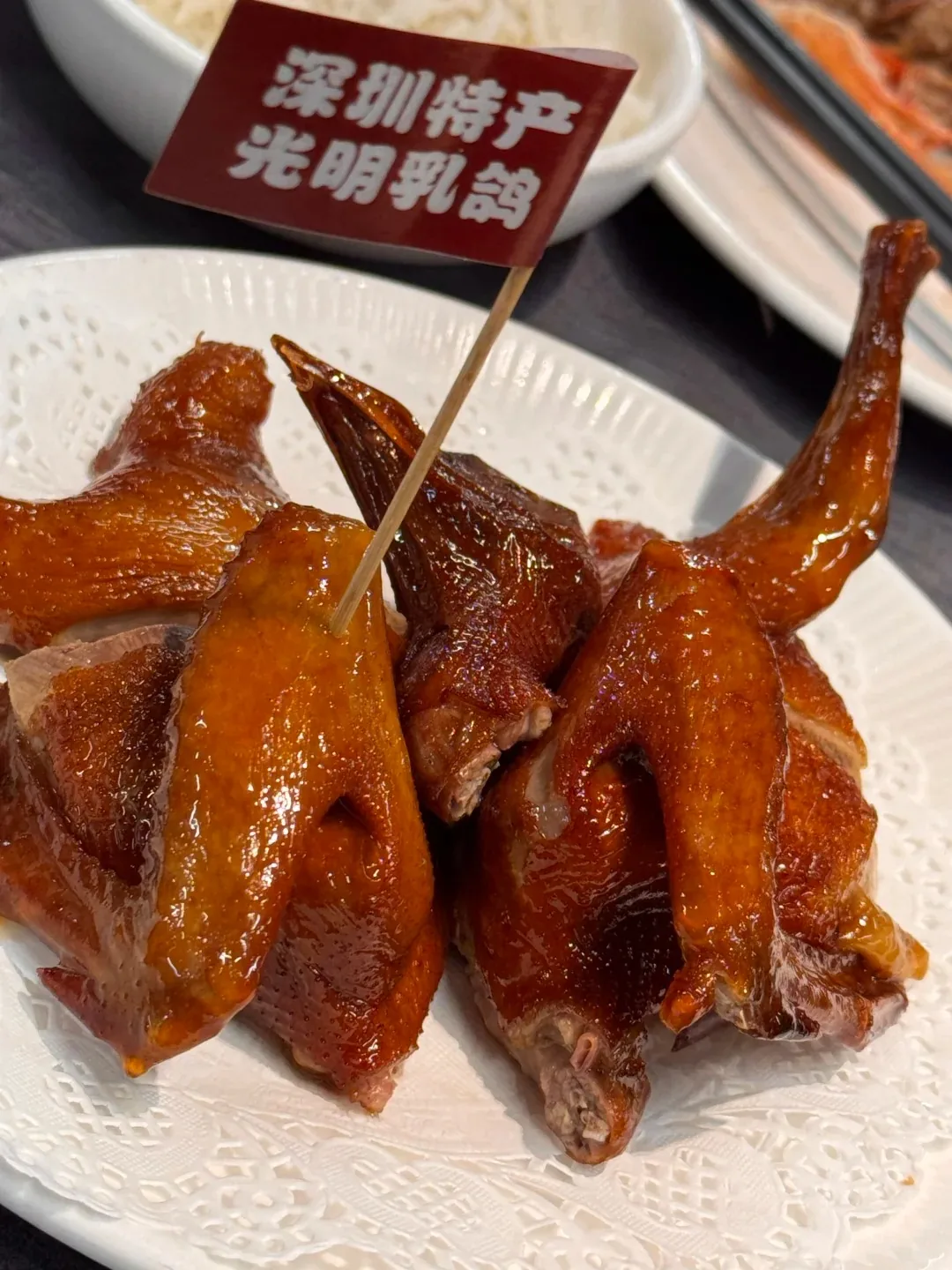
The leg, wing and breast remain recognisable after chopping; the glossy skin comes from the brief hot-oil finish after poaching.
One small bird contains several textures
Squab is compact and menus commonly price it by the whole bird before the kitchen chops it for serving. Breast pieces are orderly and mild; the legs are firmer and carry a higher skin-to-meat ratio; wings and back pieces hold less meat but more of the stock and bone-side aroma. One bird divides quickly at a shared table, so both the number of birds and the rest of the order matter when choosing a portion.
The chopped pieces retain many fine bones. Eating is closer to picking up and nibbling each piece than cutting large boneless slices with a knife and fork. Check the breastbone, wing tips and chopped edges as you eat; skin, meat and the morsels near the bone provide the full range of the dish.
A Shenzhen flavour shaped by Guangming Farm
Guangming Farm was established in 1958 and later developed large-scale pigeon, dairy and meat-processing operations. From the late 1970s, returned overseas Chinese settled and worked in its farming communities. Squab, colostrum and sweet corn consequently became known as the Three Treasures of Guangming.
Guangming Guesthouse, opened in the 1980s, gave the farm's produce a lasting restaurant setting, and the squab became widely recognised in the following decade. It is now found across Shenzhen, but the Guangming name still carries the history of farm-raised pigeons, returned-overseas-Chinese communities and the city's early agricultural industries.
Bone-in serving note
Squab is normally chopped through the bone. Small fragments may remain around the breast, wings and back, so identify the bones before nibbling each piece.