Journey To ChinaLast updated
Crisp skin, rendered fat and thick meat arrive together
Once Gongming roast goose is chopped, its layers are easy to see. The glossy red-gold skin is thin and crisp, fat melts beneath it, and the goose meat is thicker and deeper in flavour than duck. A hot piece begins with toasted skin and a light crackle, then gives way to rich fat, meat juices and the stronger savouriness around the leg and bone.
A representative traditional method uses dark-brown goose and moves through selection, marinating, treating the skin and roasting. Seasoning reaches the cavity and meat, the skin treatment helps the surface colour evenly, and lychee-wood charcoal contributes a warm roasted aroma. Goose breed, fuel and seasoning vary by restaurant, but crisp skin, tender meat and bone-side aroma remain useful signs of the Gongming style.
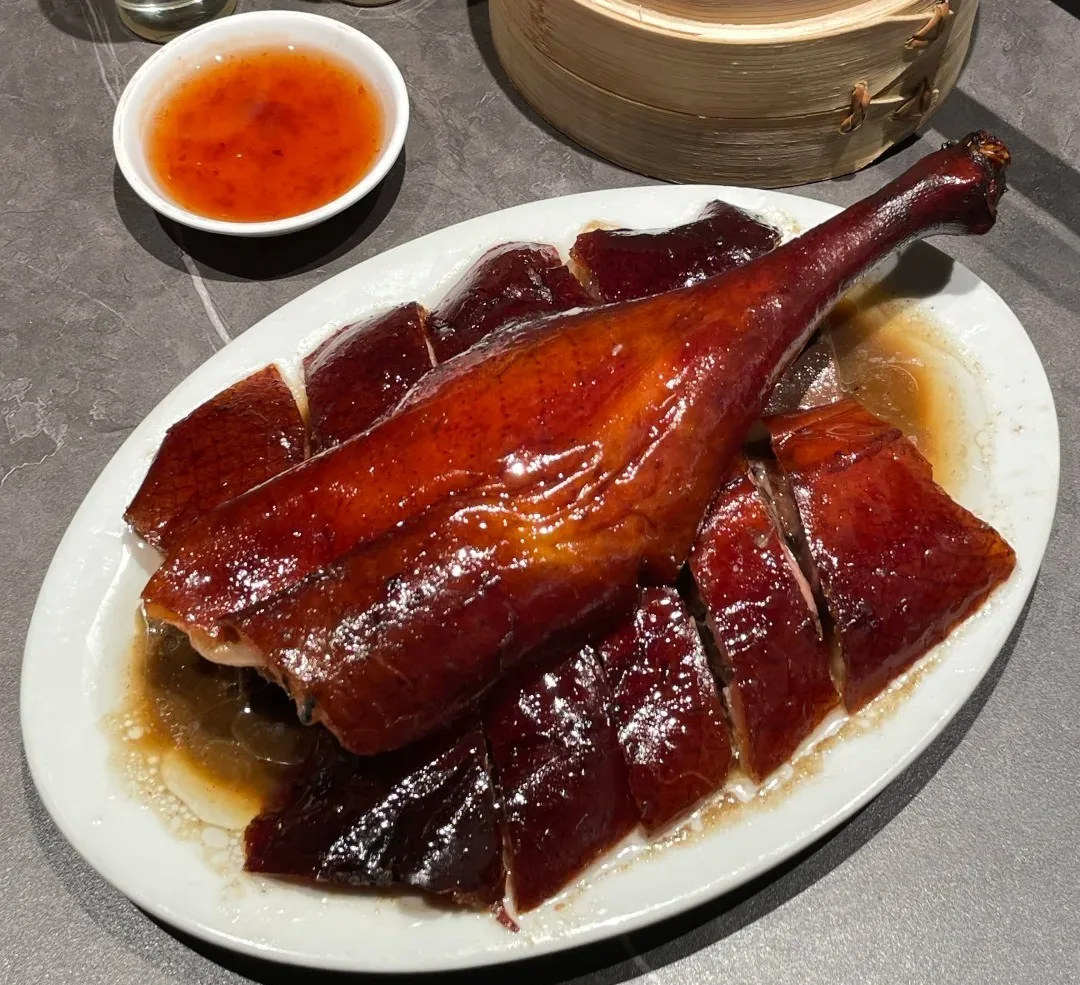
Leg and breast-back pieces make the thickness of the meat, rendered fat and aroma near the bone easy to compare.
Gongming goose and Peking duck create different meals
The bird is the first difference. Gongming roast goose uses goose, normally producing a larger carcass, thicker meat and a fuller balance of meat and fat. Technical standards for Peking duck specify Beijing duck, with particular attention to crisp skin and tender duck meat.
Seasoning and roasting also pursue different results. Gongming traditions include marinating, treating the skin and roasting over lychee-wood charcoal, allowing seasoning to reach the meat and cavity. Peking duck is prepared as a shaped carcass with treated skin and cooked in either a hung or closed oven; the hung-oven style uses an open fruitwood flame and places exceptional emphasis on the skin. Both can offer crisp skin and wood aroma, but Gongming goose foregrounds seasoned thick meat and flavour near the bone.
The service style is the easiest distinction to spot. Roast goose is chopped through the bone and ordered by a serving, quarter, half or whole bird, commonly with plum sauce or its own juices. Peking duck is sliced into thin leaves or strips and wrapped in pancakes with sweet bean sauce, scallions and cucumber. On an English menu, roast goose signals bone-in chopped pieces; Peking duck signals sliced meat and a pancake set.
A roast-meat landmark of old Gongming market town
Gongming roast goose had established a reputation by the first half of the 20th century. Guangming District records associate Chen Abao with its creation in 1939 and note wider recognition as a local product in 1952; local oral records also describe the craft passing to a later generation.
Its growth belongs to Gongming's old market town, once an important place for trade, gatherings and movement between surrounding communities. A whole cooked bird could be carried away, chopped and shared, fitting naturally into that market life. Gongming roast goose is now sold beyond Guangming District, but the old town still explains how farming produce and Cantonese roast-meat craft became a northern Shenzhen speciality.
Bone-in serving note
Roast goose is normally chopped through the bone, and small fragments may remain at the cut edges. Identify the bones around the leg, wing and back pieces before eating.